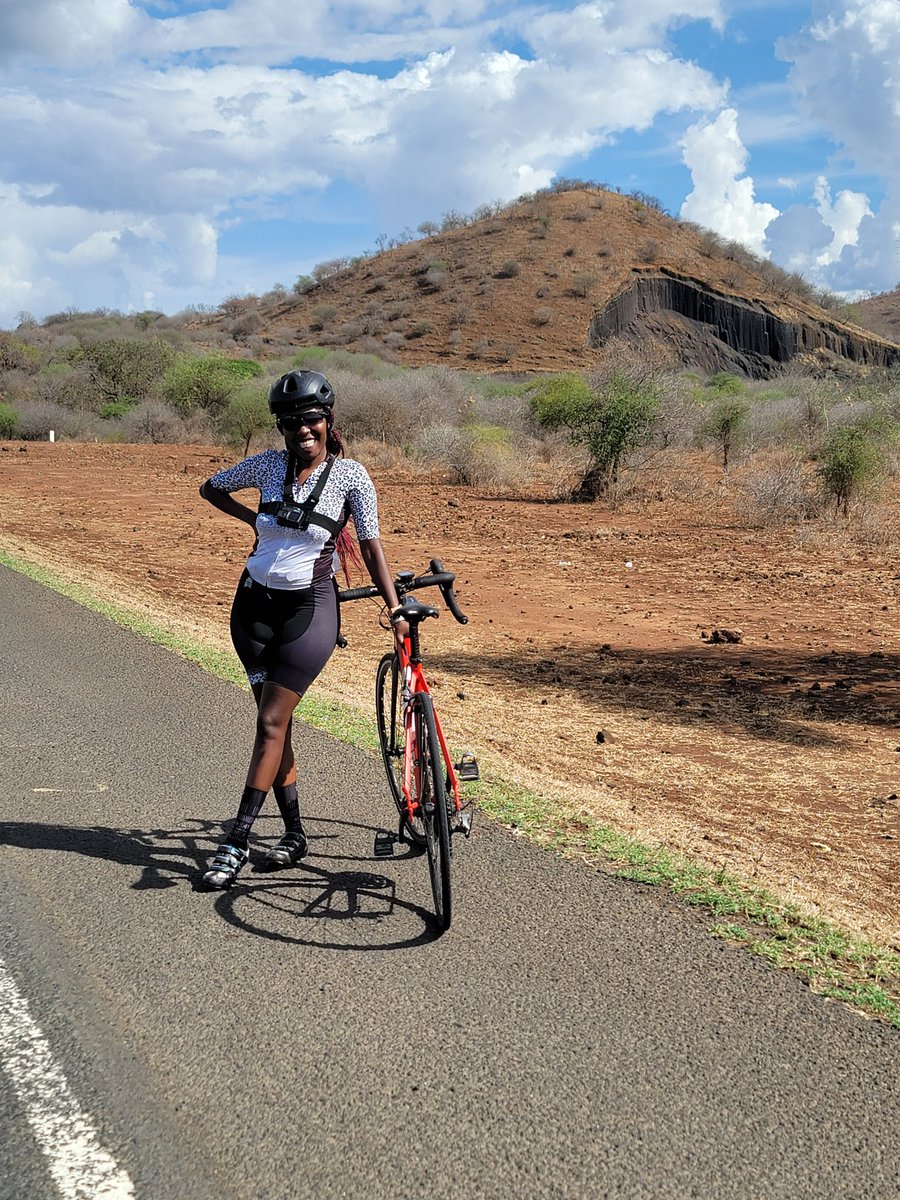
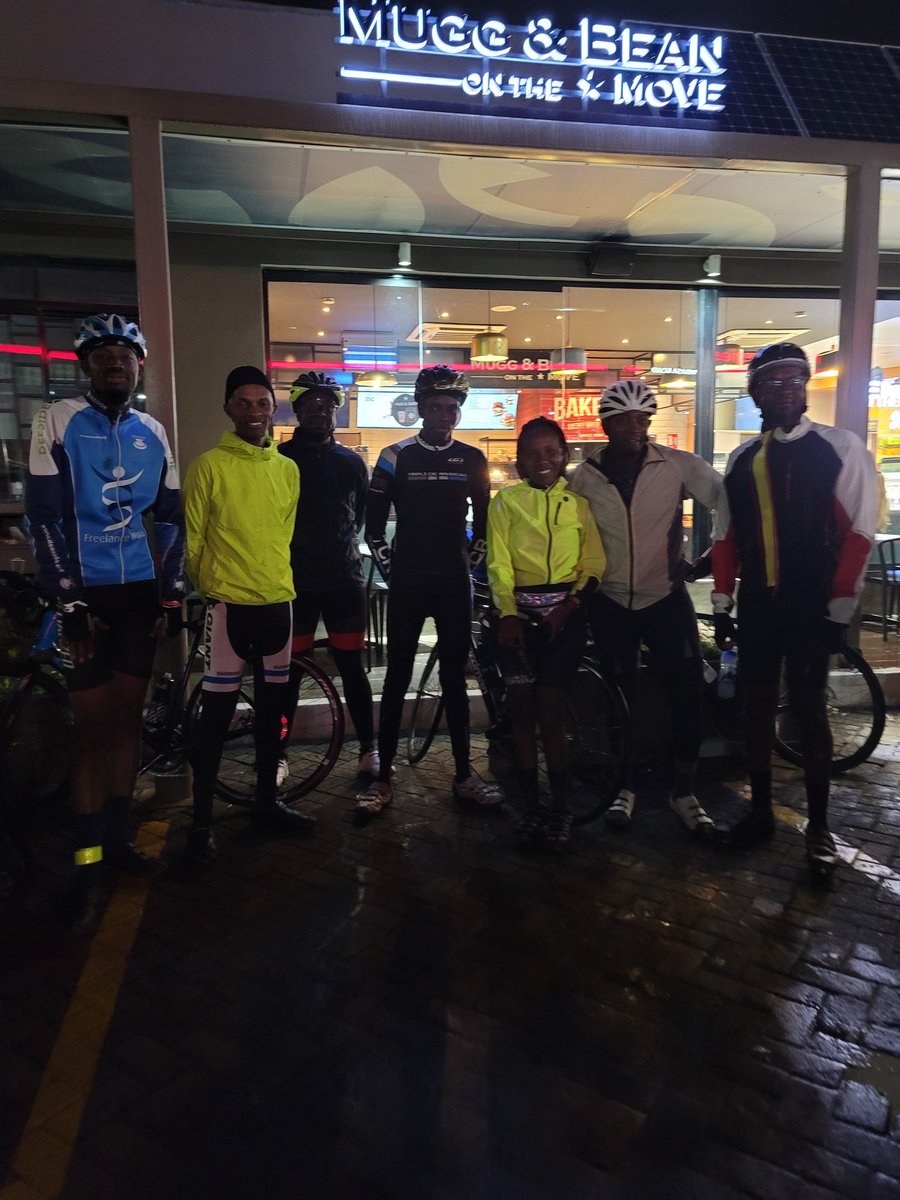
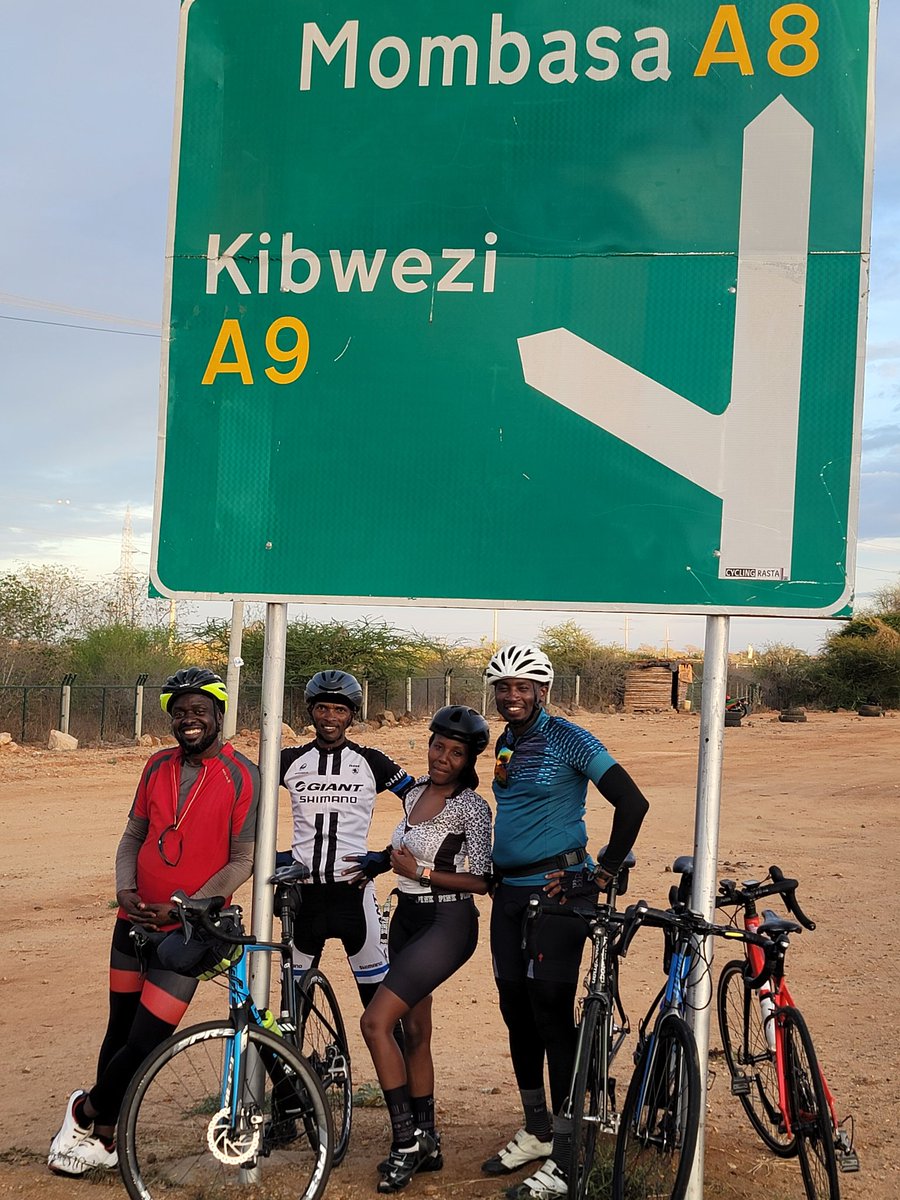
I'm feeling good today. Let me do a recap of the Nairobi- Malindi cycling tour. Day 1. I was with 5 guys. I was the only lady. This was the longest stretch! By the time I was in Machakos I didn't think I'd be able to finish 189kms. I actually thought of just
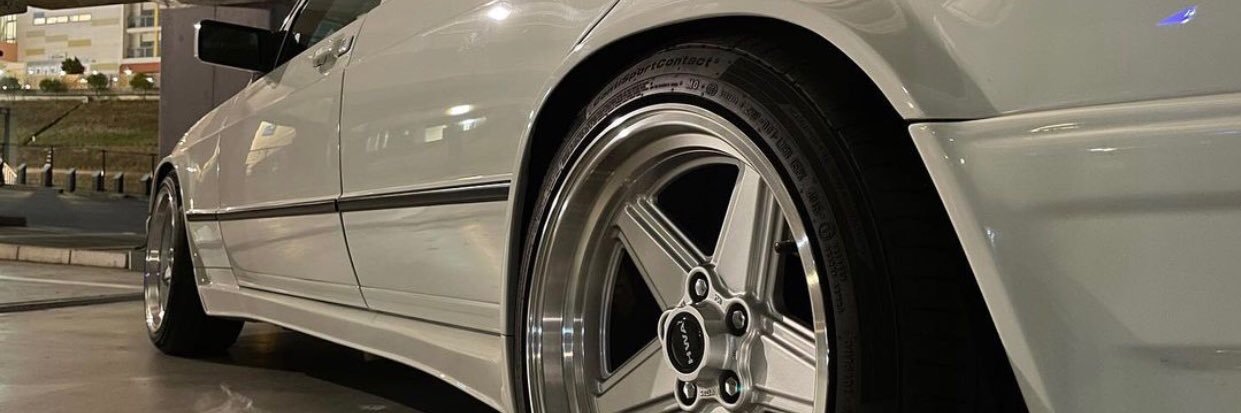
These powerful engines and more have been placed already & available for our event NAIROBI>MALINDI [Safari Kenya], Slot are up and available start booking now for your Minutes/Hours Ride&Snap With these engines.
Limited Slots Available•
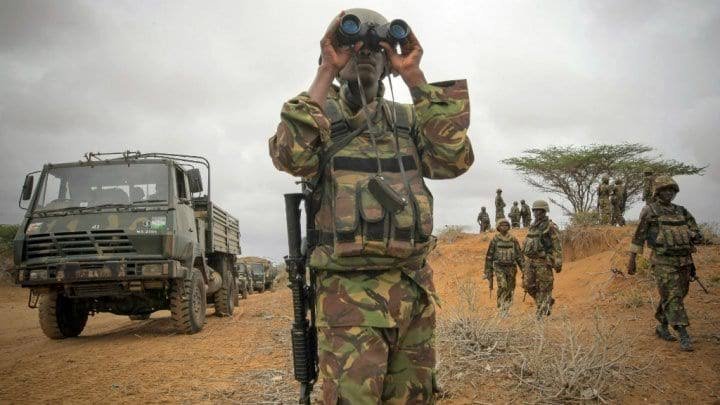
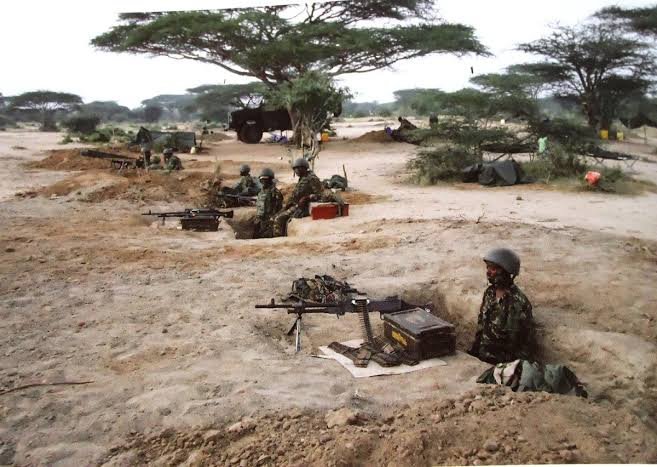
HOW KDF CAPTURED AFMADOW
Daily Nation
In 2009, a group of men posing as businessmen hired a truck and militiamen and made their way to Afmadow, an Al-Shabaab stronghold in Somalia, to buy contraband sugar and bullets. Their plan was to transport them across the border from the lawless nation to Kenya.
“We know that you will be troubled by Kenyan officials at the border,” an Al-Shabaab commander told them as they packed their wares. “They will need a bribe to let the sugar in. Worry about the sugar, but leave the bullets problem to us.”
Assured, the militias packed the thousands of illicit rounds of ammunition into the sugar sacks, then set off to look for pistols, which they acquired at Sh6,000 apiece.
At the Kenyan border area of Dobley, they bribed Administration Police officers with Sh3,000 for each truck that they let in, then headed for the Liboi Military Camp.
What happened to the cargo after that remains a mystery, but the Kenyan soldier who regaled this story to DN2 in Afmadow last week was almost 100 per cent sure that it ended up in criminal hands.
Brooding under the canopy of a scorching Somali sky, the soldier, who requested anonymity because he did not want to be quoted discussing sensitive security matters, looked into the horizon, heaved a sigh of relief and gave a faint smile.
It was a few hours after his battalion had roared into the Al-Shabaab stronghold of Afmadow, and in his mind he was sure that no other lorry-load of ammunition would take off for Kenya from this desolate address.
Nearby, a Z-9 helicopter gunship belonging to the KDF idled its rotar blades gleaming in the harsh sun.
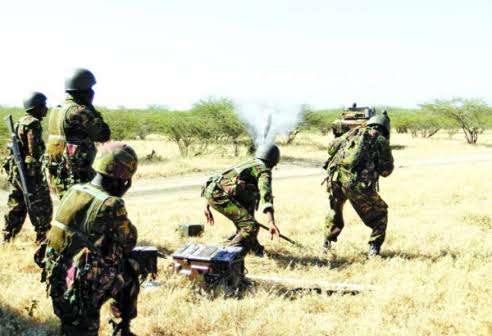
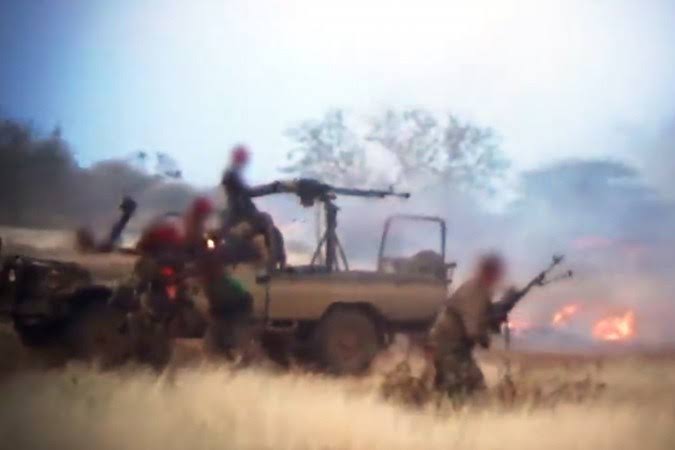
It had hit terrorist targets with stunning accuracy while, about five kilometres away, our anonymous soldier and his peers prepared for the final march into town by raining mortar bombs into suspected Al-Shabaab positions.
“We cannot take chances,” Warrant Officer II Salah Ibrahim, who was in charge of the mortar unit, said under the din of exploding munitions. “We have to announce our presence in style.”
Thanks to three months of hard work by military intelligence officers, the KDF knew more about the town than Al-Shabaab expected.
The intelligence officers had entered the town disguised as smugglers to lay the groundwork for the operation, and by the time the forces moved in, they had a clear understanding of enemy positions and had been briefed on the political, economic and social climate of the town.
A few days before the fiery onslaught, a team of KDF Special Forces and Rangers infiltrated the nearby Xayo town. From there, they neutralised — or switched off, as they said — communication infrastructure, ensuring that Al-Shabbab fighters remained in the dark about the impending assault.
But, despite all the reconnaissance and intelligence gathering, the al Shabaab militia would still prove its mettle.
Their incursion started in October last year when, with the assistance of the Somali Transitional Government Forces (TFG), KDF established a defensive position at Tabda.
They then proceeded to liberate Busaar, Ras Kamboni, Elade, Fafadun, Busaar, Belesc Coqani, Hosingo, Kolbio, Badhadhe, Girma, Bulla Hache, Damasa, Catama, Badade and Burgabo towns from the Shabaab.
At the time they roared into Afmadow, they were controlling about 95,000 square kilometres of Somalia.
The capture of this strategic town, however, had taken too long.
But there was a reason, a very good reason, for this delay.
Intelligence reports had convinced the men who called the shots on the Kenyan side, the KDF generals, that the right time for advancement was during unfavourable weather.
The logic was that Al-Shabaab transport units would be bogged down in mud, making it easy for KDF helicopters to identify them and swoop in for the kill.
Armed with this intelligence, military planners were convinced that the Al-Shabaab would fully prepare its best men ready for the Kenyans, and that the best way to wear down these bad boys was to keep them eagerly waiting for the Kenyan onslaught… for months.
Thus, as an intelligence brief argued, it was better to delay the capture of Afmadow “as long as it would take”.
It was concluded that a delay approach might actually achieve something.
The information came in through a three-tier system. After the arrival of the Kenyan spies, informers were planted in the town, where they started running all kinds of businesses, ensuring a constant flow of human intelligence (referred to in military lingo as ‘humint briefs’).
Informers from the town relayed info to the Kenyan forces on every move the Al-Shabaab made.
This ‘humint info’ was then carefully cross-checked with still and recorded images from drones and clips of movements captured from a light aircraft for surveillance flying about six to seven kilometres above the ground. The drone observations started about two and a half years ago.
Military intelligence officers in Nairobi and Somalia analysed the data and estimated Afmadow’s population with an aim of avoiding civilian deaths, or ‘collateral damage’.
But, like in any war, there were mistakes along the way. An initial attack by the Somali government army ended with their butchering. Al-Shabaab fighters tied their bodies to vehicles and dragged them along the streets of the town.
It has been said that only the dead see the end of a war, but Lieutenant Colonel Jeff Nyaga, a charismatic military tactician, had a different message for his fighters just before they crossed the rough terrain into Afmadow last week.
“Gentleman,” he began, “this is war… and people die in war. But this one will be different.” His combat team, which, he said, packed a “killer punch”, listened pensively, seeming too eager to end the months-long wait.
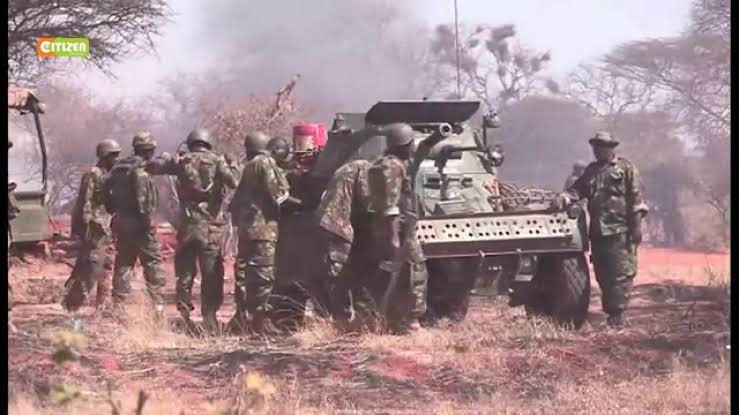
Their convoy had all the hallmarks of a modern show of might, with over 100 vehicles stretching about a kilometre into the thickets that dot the forlorn terrain that is Afmadow suburbs.
The soldiers included assault troops, tank men, artillery units, infantry, engineers and a dozen other trades of war.
Operation Free Afmadow had two stages: Capture Xayo town, located along the way, before proceeding to the much bigger Afmadow.
The attacking force was under three commanders: Lt Col Nyaga (the Commanding Officer (CO)), Brigadier General Ismail Sahardid of the Somali National Army (SNA) and Sheikh Ahmed Madobe, leader of Ras Kamboni Brigades (RKB), a warlord who has joined KDF in the war against Al-Shabaab.
At 8.30am on Wednesday last week, two days after a terror attack in Nairobi that killed one person and injured tens of others, Lt Col Nyaga delivered his last words to his troops, urging them to fight for liberation and national pride.
Platoon Commanders Lieutenant Ogeto and Lieutenant Ng’ang’a then hurried their men into the embarkation area. Others followed suit.
The plan was that 500 SNA and RKB fighters would lead the way with the Kenyans reinforcing them. At the embarkation area, SNA and RKB men stared at each other in surprise.
Six warplanes hovered above them.
By early afternoon, after about an hour of fighting and several stops along the way to either take a break, wait for intelligence reports, repair vehicles or push stalled trucks, the forces made their way into Xayo town.
About eight Al-Shabaab fighters were mowed down with deadly force as they tried to defend their positions. After capturing Xayo, Lt Col Nyaga ordered his men to prepare for a hasty defence some few kilometres after the town.
By the time, the team had located a camping site. Here, the forces took hurriedly prepared tea and biscuits for the night. Since all the men were donkey-tired, Lt Col Nyaga ordered the sentries to keep guard in turns.
BATTLE OF HOSINGOW: HOW OUTNUMBERED KDF COMPANY FOUGHT OFF Al SHABAAB ATTACKERS
January 14th 2018
The Standard
April 4, 2012. A day that will forever be etched in Al Shabaab history as their day of reckoning.
What was supposed to be Al Shabaab’s best planned attack on a Kenya Defence Force (KDF) position in Somalia miserably failed and led to the massacre of a large number of the militants.
On this day, Al Shabaab lost more than 400 of their fighters in Hosingow, the largest number of casualties suffered in the hands of KDF troops.
What Al Shabaab had expected to be an easy overrunning of the KDF camp in Hosingow turned out to be their Waterloo. A nightmare.
By the end of that day, hundreds of bodies lay strewn around the KDF camp. Each of the slain attackers had a blue plastic cup, presumably for a hefty breakfast they hoped to have after overrunning the camp.
Elite Al Shabaab fighters, who had all along been depicted as relentless and unbeatable, had bragged that the attack would go down as the best planned and organised.
It involved a battalion of more than 1,000 attackers.
They attacked the camp in groups of 100 soldiers each, sending them to their deaths every 45 minutes. Eleven hours later, the terror group had lost almost half of its fighters in what they thought was a small camp could easily be overrun.
Al Shabaab had been planning the attack by amassing equipment and fighters in Hinday, to the East of Hosingow and about 40 kilometers from the camp, for over a month. Some of the fighters had been arriving on foot.
Intelligence gathered by KDF and the Somalia National Army (SNA) indicated that the militants had assembled several troop transporting vehicles, Dushka guns and more than 1,000 fighters in preparation for the attack.
“We were reliably informed that this was an elite unit planning an attack on our camp. There were between 800 and 1,000 Al Shabaab fighters. We knew we were going to be under attack within 24 hours,” Major Hillary Busienei, who was second in command of the unit that had liberated Hosingow two months earlier recalled.
The attack was expected late in the night or early in the morning when sentries are least alert. But KDF soldiers who had conducted a reconnaissance mission earlier were prepared for it.
That evening, Sergeant Major Robert Nyagah, the warrant officer in charge of ammunition distribution, saw it fit to give out all ammunition, mortar bombs and grenades to soldiers in their positions prior to the attack.
The standard practice would be for him to regularly run around positions, ducking mortars and bullets as he replenished ammunition to soldiers who had run out of them. Not this day. His instincts urged him to hand over all ammunition to all soldiers prior to the attack.
This move saved the situation on that fateful day. There had been no time to replenish. Soldiers took their positions that evening and lay in wait for the attackers.
At about 4:30am, a KDF soldier tripped on one of the flares, and as if by cue triggered sporadic shooting around the camp.
“I did not close my eyes, I guess it was due to the adrenaline. We took turns to rest in shifts and took positions earlier than normal. As early as 10pm, the trip flares began going off and we knew that the enemy was conducting their reconnaissance. This went on until morning when one of the soldiers set off the signal flare,” Major Busienei, who was second in command at the camp recalls.
All hell broke loose as the rat-a-tat of gunfire, booms of mortar and other weapons rent the air as the attackers attempted to run into the camp.
KDF soldiers who had been all along waiting for the attackers responded to the attack with their own fire power. Lance Corporal Kemboi and Senior Sergeant Ekal hit the attackers with their initial first response. They hit selected targets of the frontal attack with mortar bombs supported by their colleagues in the trenches.
This destroyed Al Shabaab’s initial attack. The attackers would come in a group of about 100 and sustain an attack until they ran out of ammunition or were killed before the second group arrived. Each attack took about 45 minutes.
“Their intention was to get us to exhaust our ammunition, but we held them as we waited for reinforcements from Tabda and Liboi. I then realised that we had a problem with communication between our commander and the commander of the Panhead. I decided to risk it and make a 30 metre dash to my commander’s position to confirm that our grid had been correctly given. The attackers were pinning us down with Dushkas,” Major Busienei recalls.
For hours, the KDF soldiers kept the attackers at bay.
An F5 jet fighter then flew right above the camp, but the pilot could not fire at the attackers as they were too close to the KDF positions. On his second attempt, he struck an Al Shabaab position.
Meanwhile, five Al Shabaab fighters had crawled to within 20 metres of the trench in which five Kenyan soldiers had taken position.
The five KDF soldiers patiently waited for the attackers to move closer to within range before they could use their only remaining weapons — hand grenades — at the advancing enemy. Their G3 rifles had jammed after hours of continuous firing.
A KDF driver in an Armored Personnel Carrier (APC) stationed at another location noticed the attackers crawling towards the trench and decided to run them over before they could reach the five soldiers.
But as he did so, his vehicle’s fuel tank was shot at and pierced. The APC was again hit by an armor piercing as he drove back to his position. The bullet hit and injured the driver.
Another KDF vehicle was also shot at by the same weapon just as the attackers were giving up hope of overrunning the camp.
Shortly thereafter, precisely at 10:30am, two Kenya Air Force 50 ACB helicopters flew low over the camp to assess the situation before taking another loop during which they destroyed several of the attackers’ technicals.
Despite coming under attack, a daring KDF pilot (only identified as Chemirmir) landed his attack helicopter at the camp to touch base with his colleagues who had been under fire for hours. The pilot bore good news for the tired KDF soldiers. Despite their superior numbers, the enemy was retreating.
He advised the fighting soldiers to pursue the enemy, but the KDF command decided against it because it would expose them.
The helicopter yet again came under attack when it took off, but was not hit. The pilot landed at the camp again to check for any damage of the aircraft before taking off to reload in Liboi.
By this time, the enemy fire had retreated and the KDF soldiers in the camp could now move around. After hours of fighting, the soldiers just wanted to hear their commanders’ voice for reassurance.
At 11:00am some SNA soldiers who had been fighting alongside their KDF colleagues decided to check on casualties but came under attack. Three of them were killed and six others injured.
Shortly thereafter, reports came in that a KDF corporal had fallen and injured his hip. Five KDF soldiers were injured during the fighting. By then, nobody knew if any KDF soldier had been killed.
The soldiers then moved out to conduct patrols around the camp and were shocked at the extent of the damage. Human flesh and body parts were strewn all over. The enemy’s first aid location had been hit by KDF’s mortars and and its re-supply location destroyed by bombs.
Fifty enemy bodies were collected in the immediate vicinity of the camp. Many more bodies had been dragged away by the retreating Al Shabaab fighters, who rarely abandon their dead. All the dead attackers had blue plastic cups on them.
“At 2.30pm, a helicopter arrived to evacuate the casualties. At 3pm, we went back to our positions. It is only then that we realised we had not eaten the whole day, but no one had the appetite. We organised for a light meal,” he recalled.
Busienei reckons that their training before deployment to Somalia and comradeship saved the day.
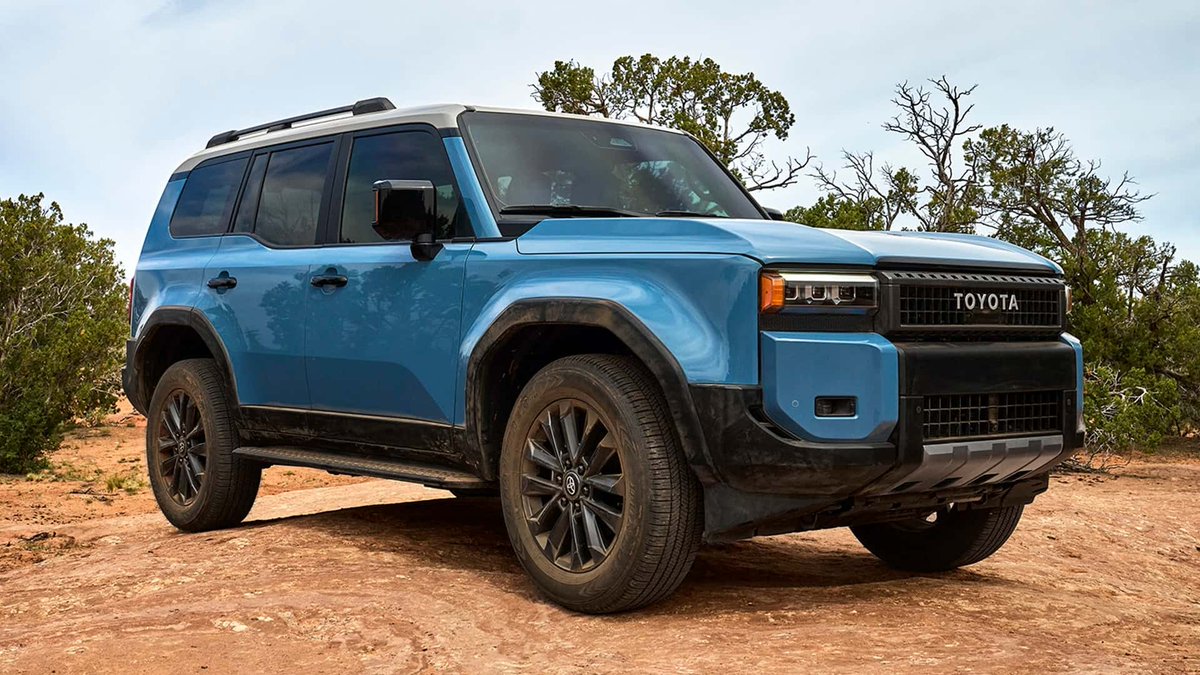
Talk of hardcore offroaders; this one is way up there! More hardcore than me!
When we got a MT tire completely slashed by a rock in a place so remote & so tough, & realised we didn't have a jack, alinishow "si tuweke rocks & lift the car" & that's how we got out of that mess.
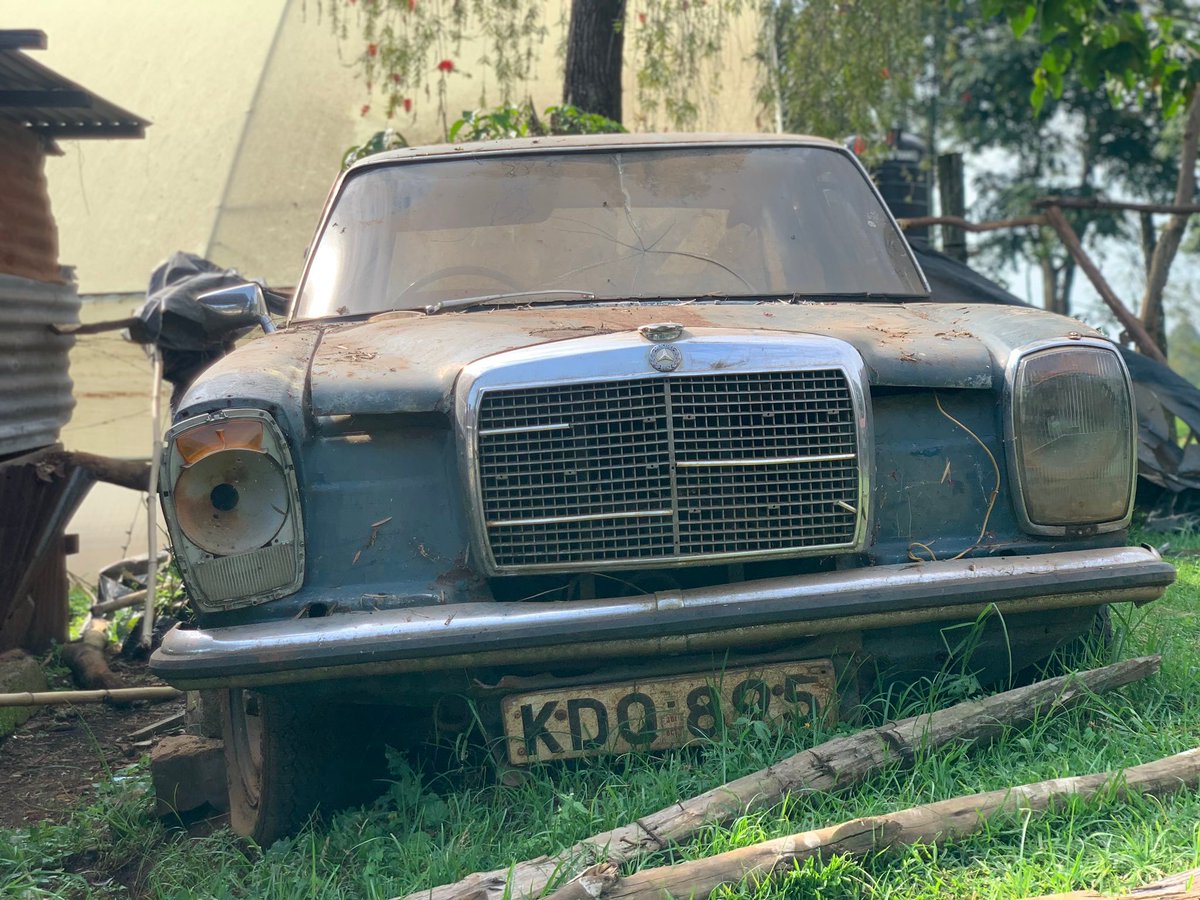
This 1968 Mercedes-Benz W115 220 stands as a remarkable testament to the enduring legacy of German engineering. From its early years on the road to its renaissance in Nairobi, this classic Mercedes has a history worth celebrating.
Concours d’Elegance
This car is owned by my highschool classmate, he has won awards for the last 7 years consecutive.
The car belonged to his grandfather Biwott(Total man).
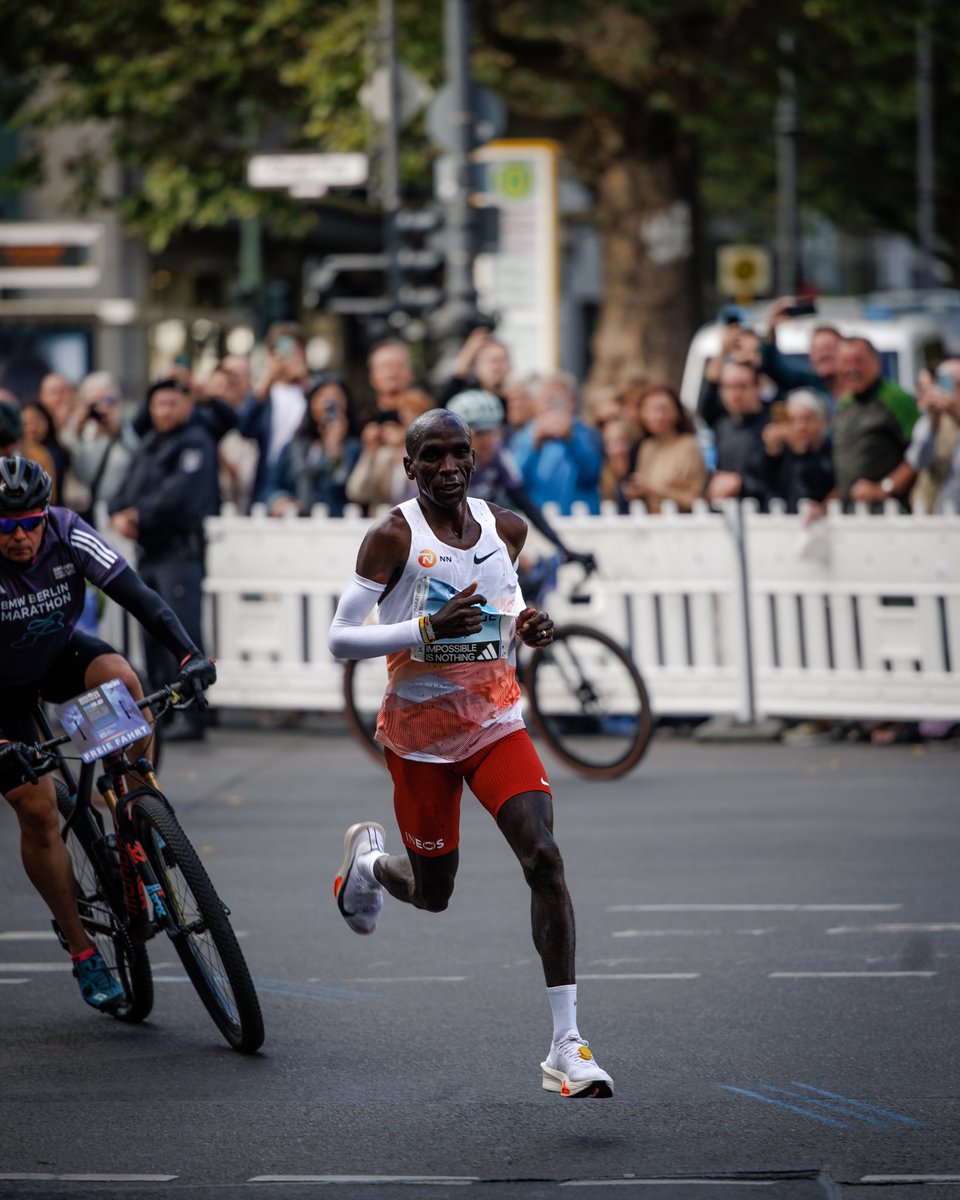
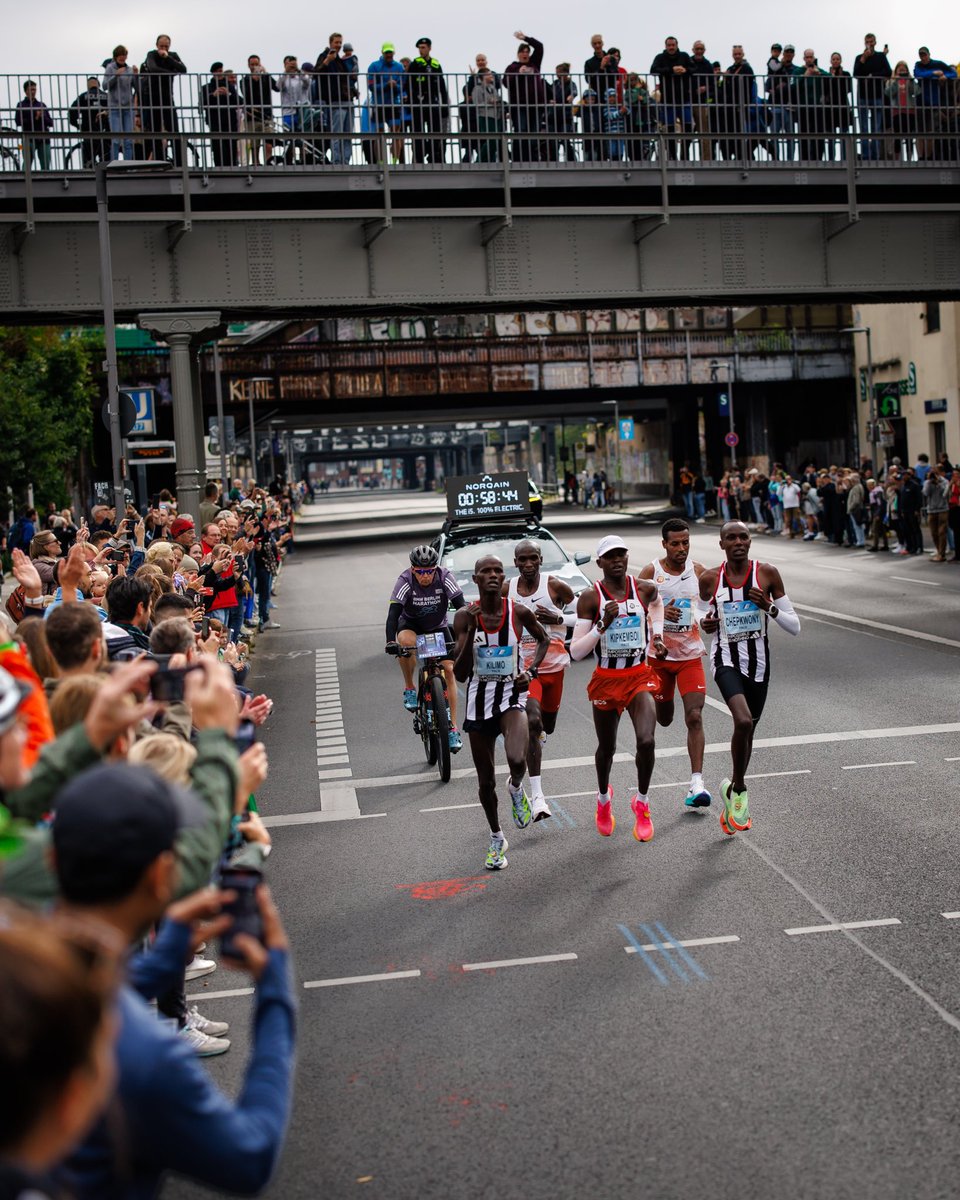
To be the first one winning the Berlin Marathon five times is something that I could only dream of. We have so much history together whereby I cannot put into words the feeling I get when running these streets. Thank you to all the fans out on the course today.
We made it to the mountain on time...
25 cars turned up...
Thread coming your way tomorrow at 2pm✅✅✅
700km today ✅✅✅
Ni God manzee ✅✅✅
Ololokwe drive ✅✅✅
Earlier this year; I bought this car for Ksh.30,000 from a scrapyard in Kariobangi; today Sunday 27th August 2023, we are happy to be taking this car for a 700km round trip to Mt. Ololokwe. Process on the thread.
There is this channel on YouTube called Mara Nomads - arguably the best car content in Kenya 🇰🇪
Kudos to those guys and a HUGE mention to that SJ Subaru Forester that is always doing big boy trips effortlessly



![OneLifeRallly's tweet photo. These powerful engines and more have been placed already & available for our event NAIROBI>MALINDI [Safari Kenya], Slot are up and available start booking now for your Minutes/Hours Ride&Snap With these engines.
Limited Slots Available• https://t.co/4YX4QOwMCD](https://pbs.twimg.com/media/F8zd-5RXAAE0D5p.jpg)
![OneLifeRallly's tweet photo. These powerful engines and more have been placed already & available for our event NAIROBI>MALINDI [Safari Kenya], Slot are up and available start booking now for your Minutes/Hours Ride&Snap With these engines.
Limited Slots Available• https://t.co/4YX4QOwMCD](https://pbs.twimg.com/media/F8zd-5QWkAAPnap.jpg)
![OneLifeRallly's tweet photo. These powerful engines and more have been placed already & available for our event NAIROBI>MALINDI [Safari Kenya], Slot are up and available start booking now for your Minutes/Hours Ride&Snap With these engines.
Limited Slots Available• https://t.co/4YX4QOwMCD](https://pbs.twimg.com/media/F8zd-5PXgAEuPR2.jpg)










![OneLifeRallly's tweet photo. These powerful engines and more have been placed already & available for our event NAIROBI>MALINDI [Safari Kenya], Slot are up and available start booking now for your Minutes/Hours Ride&Snap With these engines.
Limited Slots Available• https://t.co/4YX4QOwMCD](https://pbs.twimg.com/media/F8zd-5SWEAAWns3.jpg)