@Kenneth_Marino What if a LLM can predict what the majority of a scientific community thinks of a paper after it's been trained on many review processes coming from the community?
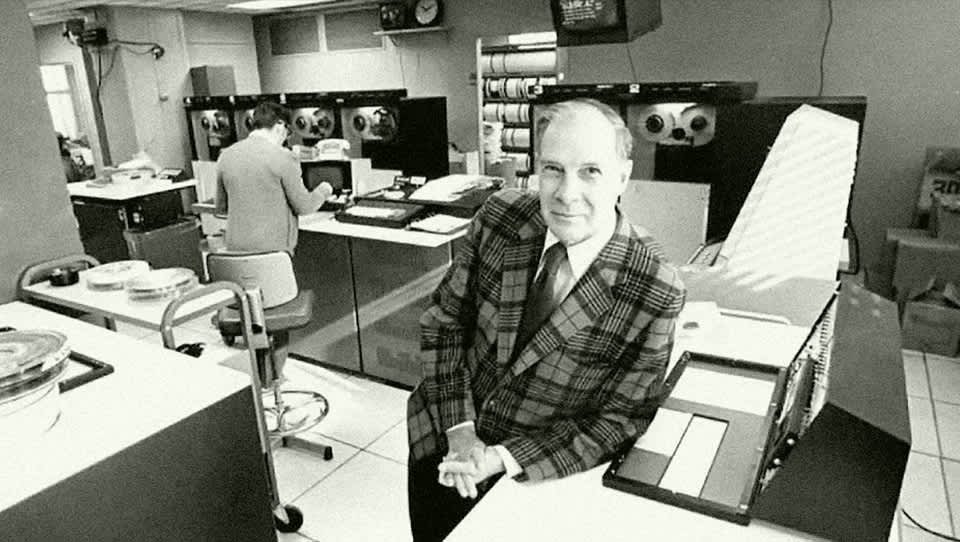
A mathematician who shared an office with Claude Shannon at Bell Labs gave one lecture in 1986 that explains why some people win Nobel Prizes and other equally smart people spend their whole lives doing forgettable work.
His name was Richard Hamming. He won the Turing Award. He invented error-correcting codes that made modern computing possible. And he spent 30 years at Bell Labs sitting in a cafeteria at lunch watching which scientists became legendary and which ones faded into nothing.
In March 1986, he walked into a Bellcore auditorium in front of 200 researchers and told them exactly what he had seen.
Here's the framework that has been quoted by every serious scientist for the last 40 years.
His opening line landed like a punch. He said most scientists he worked with at Bell Labs were just as smart as the Nobel Prize winners. Just as hardworking. Just as credentialed. And yet at the end of a 40-year career, one group had changed entire fields and the other group was forgotten by the time they retired.
He wanted to know what the difference actually was. And he said it wasn't luck. It wasn't IQ. It was a specific set of habits that almost nobody is willing to follow.
The first habit was the one that hurts the most to hear. He said most scientists deliberately avoid the most important problem in their field because the odds of failure are too high. They pick a safe adjacent problem, solve it cleanly, publish it, and move on. And because they never swing at the hard problem, they never hit it. He said if you do not work on an important problem, it is unlikely you will do important work. That is not a motivational line. That is a logical one.
The second habit was about doors. Literal doors. He noticed that the scientists at Bell Labs who kept their office doors closed got more done in the short term because they had no interruptions. But the scientists who kept their doors open got more done over a career. The open-door scientists were interrupted constantly. They also absorbed every new idea passing through the hallway. Ten years in, they were working on problems the closed-door scientists did not even know existed.
The third habit was inversion. When Bell Labs refused to give him the team of programmers he wanted, Hamming sat with the rejection for weeks. Then he flipped the question. Instead of asking for programmers to write the programs, he asked why machines could not write the programs themselves. That single inversion pushed him into the frontier of computer science. He said the pattern repeats everywhere. What looks like a defect, if you flip it correctly, becomes the exact thing that pushes you ahead of everyone else.
The fourth habit was the one that hit me the hardest. He said knowledge and productivity compound like interest. Someone who works 10 percent harder than you does not produce 10 percent more over a career. They produce twice as much. The gap doesn't add. It multiplies. And it compounds silently for years before anyone notices.
He finished the lecture with a line I have never been able to shake.
He said Pasteur's famous quote is right. Luck favors the prepared mind. But he meant it literally. You don't hope for luck. You engineer the conditions where luck can land on you. Open doors. Important problems. Inverted questions. Compounded hours. Those are not traits. Those are choices you make every single day.
The transcript has been sitting on the University of Virginia's computer science website for almost 30 years. The video is free on YouTube. Stripe Press reprinted the full lectures as a book in 2020 and Bret Victor wrote the foreword.
Hamming died in 1998. He gave his final lecture a few weeks before. He was 82.
The lecture that explains why some careers become legendary and others disappear is still free. Most people who could benefit from it will never open it.
We propose a differentiable method to search over causal graphs that match the low-degree d-separation statements of the true causal graph.
Come talk to us tomorrow in front of our poster #2407 from 11am-2pm.
Scale unlocked remarkable pattern recognition, but humans are causal machines. In his latest interview, @ilyasut notes that today’s models still do not generalize like humans and that something essential is missing.
We already know what that missing structure looks like: causal models that support generalization, explanation, and robust decision-making.
The principles are known; the remaining challenge is building them at scale. We should not spend another decade (or another trillion dollars) circling the same limits.
Causality is what comes next. Why not get there faster?
Interested in pursuing a PhD in AI/ML and making fundamental contributions to the field in a highly interdisciplinary research environment? Apply to @JHUCompSci by December 15th and send me an email.
Some context and suggestions here:
https://t.co/PV7uJKXRRG
RTs appreciated.
Hi all, if you're attending ICML (Vancouver) or UAI (Rio de Janeiro), I'm happy to share some news from the lab! Please check it out -- and feel free to drop by or shoot me a line if any of it sounds intriguing.
1/5 "Counterfactual Graphical Models: Constraints and Inference" (w/ Juan Correa)
Thu, 4:30 PM (East, 1802)
Link: https://t.co/6s4n0490ff
Counterfactuals sit at the top of the causal hierarchy and are central to explanation, credit/blame, and retrospective analysis. Yet, reasoning about them systematically has remained a longstanding challenge.
This work introduces the counterfactual calculus, a generalization of Pearl’s do-calculus to the counterfactual settings -- enabling identification from both observational and experimental data. It closes a question left open nearly 25 years ago, when Pearl introduced the interventional calculus and formalized counterfactual semantics in his seminal Biometrika paper.
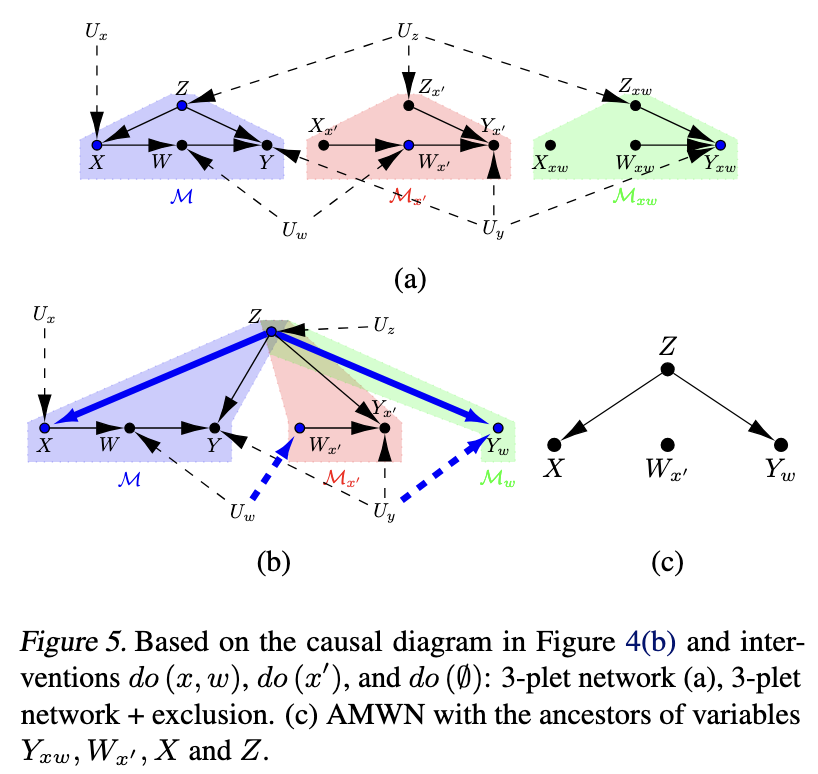
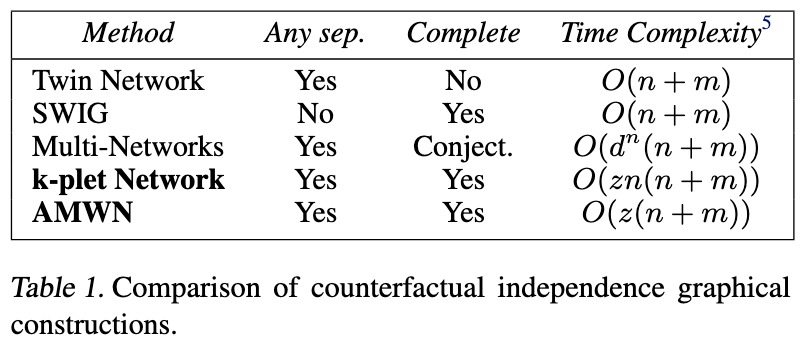
We also develop a new graphical structure—the Ancestral Multi-World Network (AMWN)—along with the first algorithm that is efficient, sound, and complete for reading counterfactual independencies from a causal model. AMWNs subsume several existing approaches, including the twin-network construction, and extend them to multiple worlds.
This is the first unified framework that connects counterfactual constraints, structure, and inference.
There is a book on Amazon called "Modern AI Revolution" by Geoffrey Hinton. This is a scam. It has nothing to do with me and I wish Amazon would remove it.
Perhaps the most important thing you can read about AI this year : “Welcome to the Era of Experience”
This excellent paper from two senior DeepMind researchers argues that AI is entering a new phase—the "Era of Experience"—which follows the prior phases of simulation-based learning and human data-driven AI (like LLMs).
The authors’ posit that future AI breakthroughs will stem from learning through direct interaction with the world, not from imitating human-generated data.
This is not a theory or distant future prediction. It’s a description of a paradigm shift already in motion.
Let me know what you think !
https://t.co/QYHIfg2wNx
Early bird registration deadline is next Monday 2nd of June 🏃♂️
you can register to attend in person or as virtual participants!
⚡ https://t.co/EOLVivH430 ⚡
@im_roy_lee@InterviewCoder How do you learn how to build this kind of software? Any pointers will be appreciated! I want to build my own product one day.