@AmeerHaio I made the first version in around 24-48 hours, but then had to make my own tooling to improve the modeling fidelity. Took me around 4-5 days to feel happy with the output.
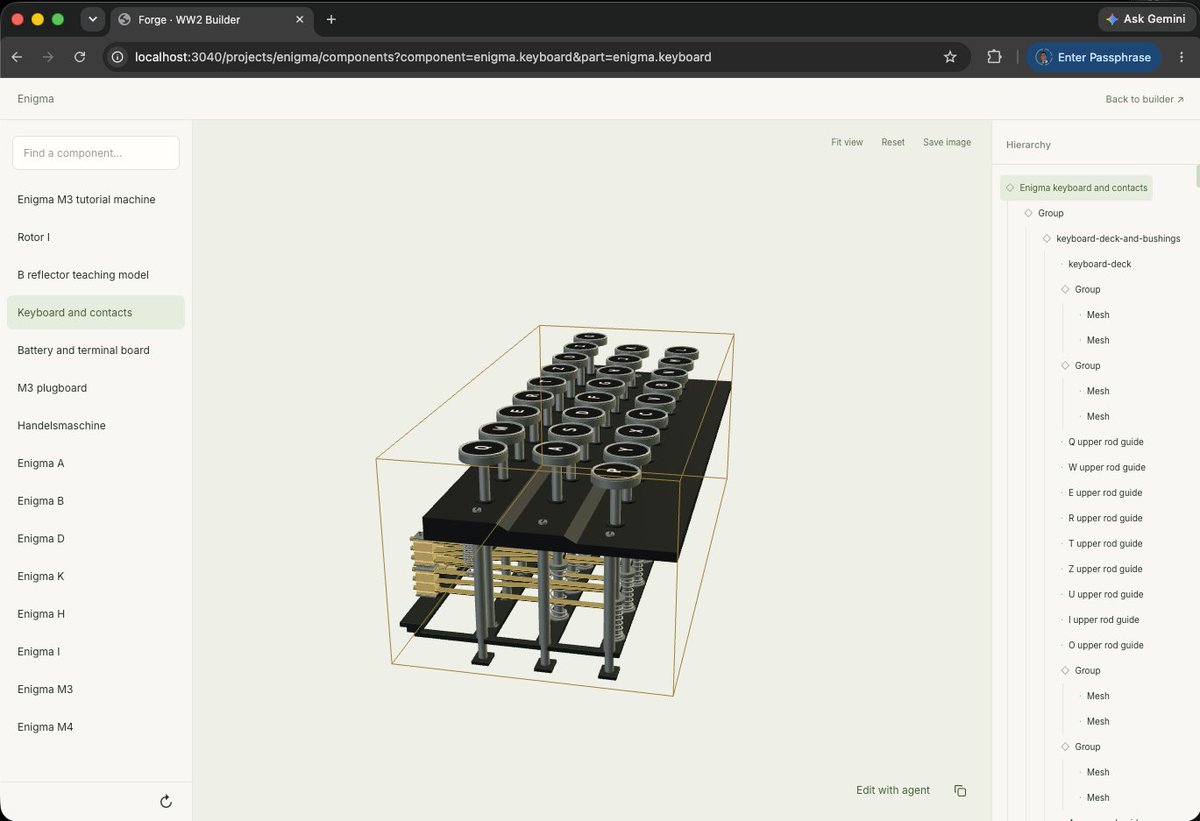
Here's a glimpse into the internal tool I built to refine the individual components of the model.
@abeauvois Dude do you just take credit for other people's projects with zero attribution, basically just outright lying to your audience? This is honestly the most frustrating part about creating anything and open-sourcing it, that shameless people like you exist.
I used Astra to create an accurate 3D replica of an Enigma machine, with an interactive tutorial on the inner mechanics.
https://t.co/BxqE8LkFF8
I watched the excellent @veritasium video on Enigma, but was still curious about the details of how it works.
I combined game theory, reinforcement learning, and GPT Astra to make a pretty great AI player for Settlers of Catan. Going to open-source it soon, and would love any feedback from my fellow settlers out there.
https://t.co/m0Ur5Mp0MA
- Trained the Expert mode on my AMD Ryzen Halo with millions of self-play games
- The game runs in webworkers, and I built the game server in Rust so it compiles to WASM in the browser
- The AI players have a sophisticated playing and trading policy, and can explain their reasoning
Who remembers Drop7? It was a wildly popular game 20 years ago, then Zynga bought it and eventually killed it. I'm working on this research project to find the optimal move, and hopefully as a way to connect with the other Drop7 fanatics out there.
https://t.co/GL1xQPyiAh
@ycombinator@StageReviewApp This is a fantastic idea, one of those things you didn’t know you needed until you see it. The Claude code integration is so seamless!
@AoDespair The situation is as much of a Greek tragedy as The Wire - firmly entrenched systems and ways of thinking that are seemingly impossible to change. I sincerely hope you consider writing the televised portrayal someday.
Updated https://t.co/du6W8Zdsf6 with the latest data from the Small Business Administration. 84% of the program's $800 billion in loans have been forgiven, and now we are on to investigating the fraud. https://t.co/rBceJ4RQd8
"How It Began" by @bradcoleharris is the best podcast you haven't heard yet. It's not streaming anymore, so I bought all 20 episodes without ads for $20 at https://t.co/N7YZuHFT6V. This isn't some sponsored thing, I just genuinely love this masterpiece of spoken word.
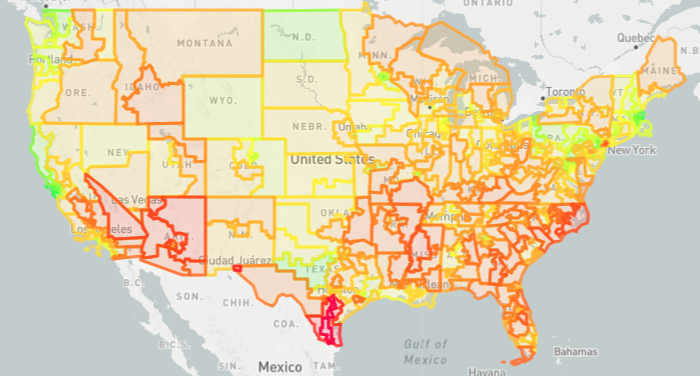
I'm currently working on visualizing the distribution of PPP loans across America's states, cities, and geographic regions. Check out my work in progress: https://t.co/du6W8Zdsf6
@creek_twit@ParlerVideos I love both your requests and added them to my roadmap. Thank you for the suggestions! The search index is currently refilling, I'll check the status after I'm off work and get back to you.
@MysteRayOfSun@ParlerVideos Hey there, sorry about the downtime. It's back up and all the items are being restored along with images/videos this time :)
@jocejocejoe Hey there! If you DM it to me I can take a look. I can also point you to a full list of video IDs and see if I can track down the corresponding post.
It is clear that this pandemic relief fund is being used by industries that were barely affected by the pandemic and/or have fully recovered. Also, over $8.4 billion in taxpayer funds went toward preserving the payroll of churches and religious organizations who don't pay taxes.
The SBA released data on the Payroll Protection Program (#PPP) yesterday: https://t.co/y1wt3JBYoS. Here are the facts:
- $739.5 billion guaranteed in forgivable loans
- $500B in large loans (over $150k)
- $54.3B (7%) still unused
- $146.7B (20%) repaid or forgiven
The industry that received the most in PPP loans per worker was software publishers ($16.2k/job) who were able to WFH during the pandemic. The lowest per worker went to grocery stores and bars ($4.7k/job) whose workers were either furloughed or forced to keep working.