What we must do immediately:
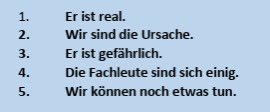
1) End the use of fossil fuels
2) Build massive amounts of solar & wind
3) Electrify everything
4) Localize
5) Conserve
5) Find solutions for the last hard stuff (planes, cement)
6) Stop cutting down forests
#ActOnClimate https://t.co/2w5uwXTxMH
In plain English we are f##ked
You do not have the luxury of an ever warming ocean and survive in the long term
Its marine life which are obliterated first
7 rules you need to know about lithium-ion batteries 🪫🔋
As an electric car owner, laptop and smartphone user, you have choices how to prolong battery life.
1/7
Depth of discharge (DoD) determines the cycle count of the battery. The smaller the discharge, the longer the battery will last. Avoid full discharges and charge the battery more often between uses. Partial discharge on Li-ion is fine.
2/7
A partial discharge and partial charge reduces stress and prolongs battery life. High temperature and high currents also affect cycle life.
3/7
Estimated number of discharge/charge cycles Li-ion can deliver at various DoD levels before the battery capacity drops to 70%:
100% DoD: ~ 600
80% DoD: ~ 900
60% DoD: ~ 1,500
40% DoD: ~ 3,000
20% DoD: ~ 9,000
10% DoD: ~ 15,000
4/7
Lithium-ion battery suffers from stress when exposed to heat.
Estimated recoverable capacity (40% charge) when storing Lithium-ion for 1 year at various temperatures:
0°C (32°F): 98%
25°C (77°F): 96%
40°C (104°F): 85%
60°C (140°F): 75%
5/7
For most Li-ion a voltage above 4.10V/cell is deemed as high voltage. Every reduction in peak charge voltage of 0.10V/cell is said to double the cycle life. On the negative side, a lower peak charge voltage reduces the capacity the battery stores.
6/7
In terms of longevity, the optimal charge voltage for most batteries is 3.92V/cell. Every 0.10V drop below 4.20V/cell doubles the cycle but holds less capacity. Raising the voltage above 4.20V/cell would shorten the life.
7/7
What can you do to prolong battery life?
• Minimize the amount of time the battery spends at either 100% or 0% charge. Consider using a partial charge that restores the battery to 80% SoC.
• Limit the battery temperature.
• Avoid high charge and discharge currents.
Daar hebben we hem weer, het ijsverlies op Konkordiaplatz. Links vorig jaar, toen het record verpletterd werd; rechts dit jaar - opnieuw een drama.
Ongelooflijk dat mensen zo mekkeren over die blokkades van de A12. We zitten in een noodtoestand, mensen. Word eens wakker!!
Rather than slowly braking towards zero, we need to be aiming for a net negative 📉
We need to slam on the brakes as quickly as possible and then use all our carbon sinks, like forests, oceans and wetlands, to bring those concentrations back down to safe levels 🌲
Rather than slowly braking towards zero, we need to be aiming for a net negative 📉
We need to slam on the brakes as quickly as possible and then use all our carbon sinks, like forests, oceans and wetlands, to bring those concentrations back down to safe levels 🌲
A tax on flying is essential if we are to get to net zero.
Sunak has said we will never have one.
Holidays in the sun are apparently worth more than a future for our children.
I despair.
Rather than slowly braking towards net zero, we need to be aiming for a net negative📉
We need to slam on the brakes as quickly as possible and then use all our carbon sinks, like forests, oceans and wetlands, to bring those concentrations back down to safe levels 🌲
Wij gaan voor een radicale klimaataanpak zonder taboes: alles op alles, én én. 💜💚
👉 We schrappen korte afstandsvluchten en investeren in een Europees netwerk voor hogesnelheidstreinen. We voegen kernenergie toe aan de energiemix. 1/2
It would be "an absolute disaster for the world," Prof Martin Siegert
Incredibly dangerous climate tipping point not expected for decades happening now
This will turbo charge ocean warming and more ice melt
Antarctica
- 1.5 million sq km of sea-ice less than September average
Odds-on we just experienced the warmest three months on the planet in over 100k years... until next year.
"Temperatures in June, July and August combined were 0.41F (0.23C) warmer than all previous summers, according to the latest report."
https://t.co/ENPAqqStX6
Code UFB!!!
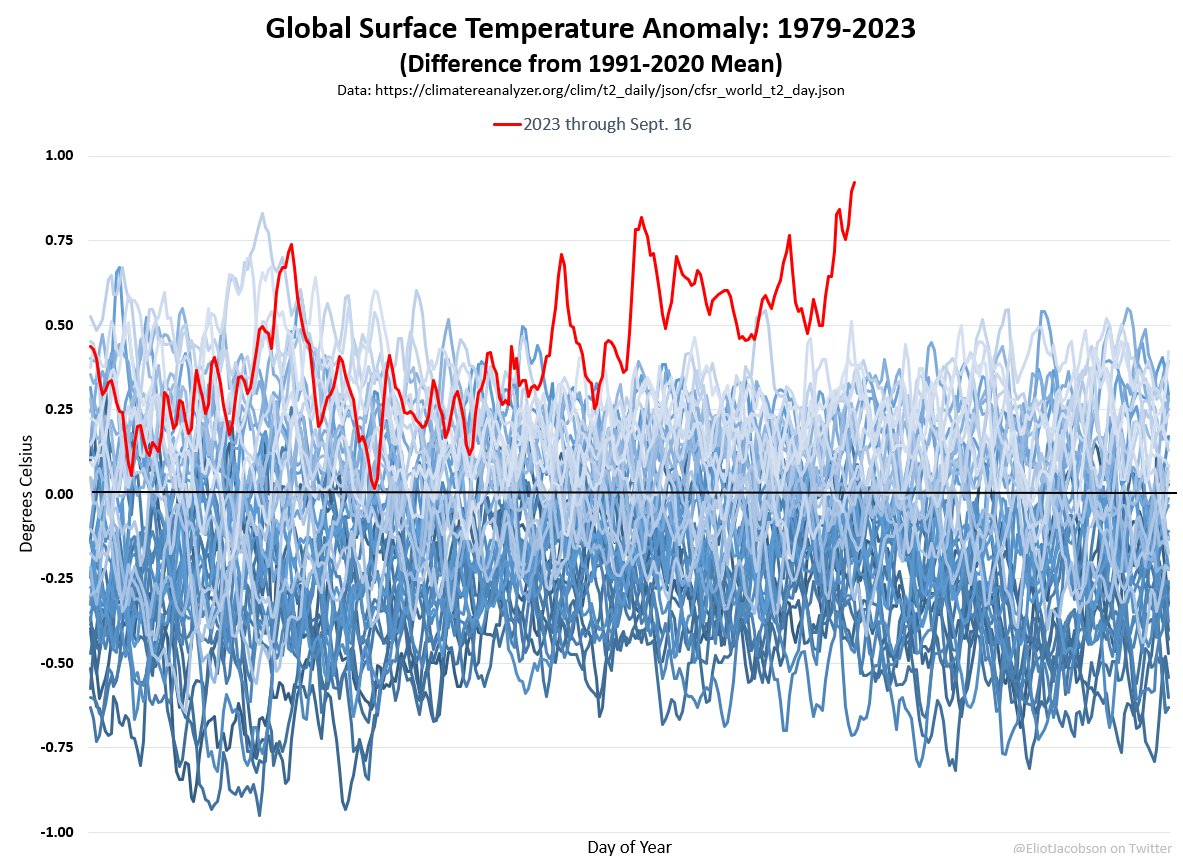
In a year of weather records, yesterday was 0.92°C above the 1991-2020 mean and fully 1.75°C above the 1850-1900 IPCC baseline.
Year-to-date the planet is now 1.37°C above the 1850-1900 baseline, with about a 50% chance to break the Paris limit for the year.