Excited to share our latest work, now out in European Urology!
We followed >166k prostate cancer survivors (1999–2019) using SEER-Medicare. RP+EBRT had the highest risk of urinary adverse events. EBRT surpassed RP at 10 yrs (with BT) & 14 yrs (alone).
https://t.co/GyqW2GmAWl
@ShaneNeibart@ben_breyer@dr_coops@hirenpMD Thanks! We followed Jarosek et al. (PMID: 25217421), requiring matching diagnosis and procedure codes on the same claim.
Re: your second question- ongoing work. Early signals more severe events with radiation, but defining severity objectively is hard. More soon!
Years of work and support went into this study. Grateful to my mentors @ben_breyer@dr_coops@pcarroll_ and incredible co-authors. Special thanks to Marvin Carlisle and Stephanie Jarosek - couldn’t have done this without you!!
Nice SEER-Medicare study from Kevin Li and @ben_breyer lab @UCSFUrology. Bottom line is the RT footprint does expand over the very long term, and we need to track QOL and toxicity for YEARS after #prostatecancer treatment #wsaua24
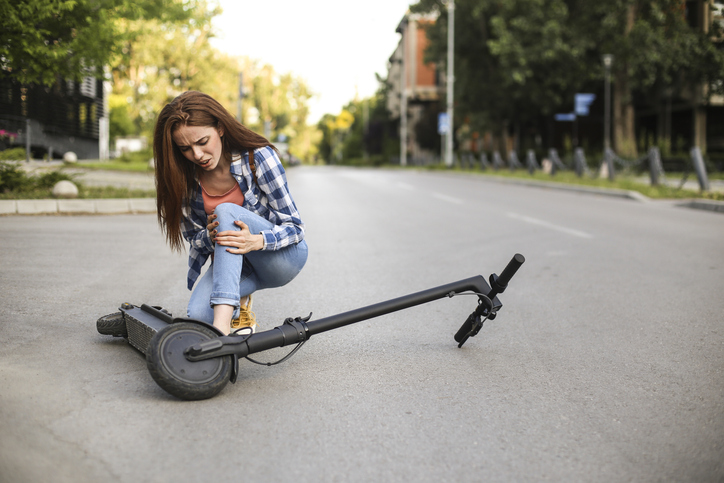
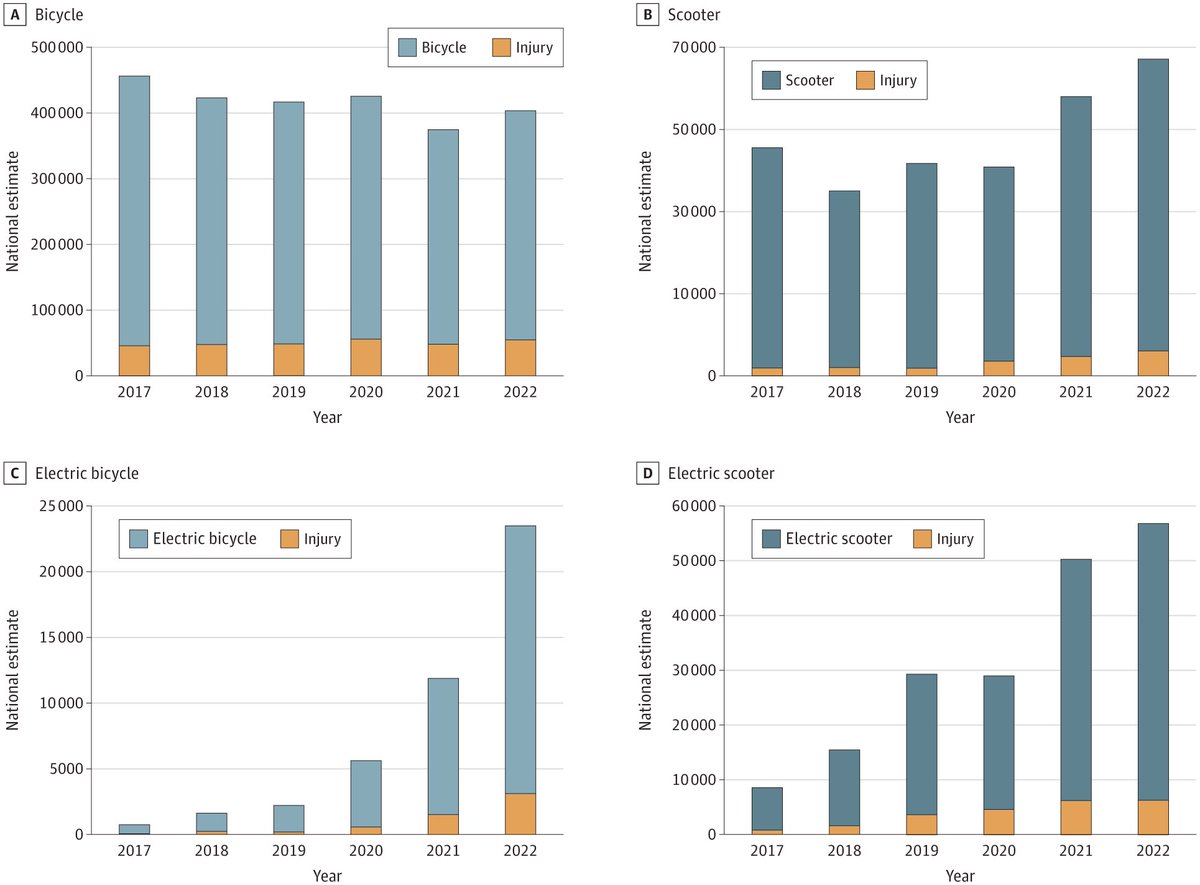
E-bike injuries doubled every year from 2017-2022, a UCSF study finds. “There’s probably a lot more public education & enforcement of regulations that can happen, particularly w/ helmets and speed limits," UCSF’s Kevin Li (@kevndli) tells @abc7newsbayarea. https://t.co/1n0lhD7KCE
Unique and fun experience working on this paper—now out in @jmirpub! We used ChatGPT to perform qualitative analysis and compared results with humans. Man vs. Machine - is AI the future of qual analysis?@ben_breyer@hirenpMD@RSchwartzPhD@gregamend_md
https://t.co/Yyl39CA4k1
Our latest work out in @JUrology - we (@hirenpMD@ben_breyer et al. from @researchTURNS) show that social deprivation index at the zip code level is independently associated with stricture recurrence post-urethroplasty. Link: https://t.co/dV3xIrvEcw #SDOH#urology@UCSFUrology
Since 2017, injuries from e-bikes & scooters have soared, a study in @JAMANetworkOpen finds. “Helmet usage is noticeably lower among electric vehicle users, and risky behaviors, such as riding under the influence, are more prevalent,” UCSF’s Kevin Li says. https://t.co/AMvamYTZIT
Our latest research on ebikes/escooters from @ben_breyer lab: https://t.co/ULLxTBESuG
- E-vehicle injuries growing ~exponentially.
- Riskier behavior (less helmets/more alcohol use) in electric vs. conventional vehicle injuries.
- Lower odds of hospital admission in Black riders.
Charlie Jones, MD, joined @UCSFUrology and @UCSF_Epibiostat researchers to evaluate patient perceptions of Medicare reimbursement for artificial urinary sphincter (AUS) placement for @JUrology's Urology Practice: https://t.co/9eYjg8WImn
@ec0anarch0 Great observation - e-bikes can also impact pedestrians and other cyclists. We didn’t cover this aspect, but the data are publicly available and include brief narrative descriptions. You can explore here: https://t.co/23TYDmrUVx
Happy to share our research on e-bike injuries and hospitalizations published in @JAMASurgery. Thanks to @ben_breyer @DataCooker @hirenpMD for your mentorship and Adrian for partnering!
https://t.co/yFEoPm1eXj
Proud to present our latest work about the fragility index in clinical trials relevant to overactive bladder drugs. An interesting index that quantifies the vulnerability of clinical trials. Kudos @kevndli for leading this effort and ofcourse @ben_breyer for mentorship! @UCSFUrology
@DrJohnVanSavage@UCSFUrology Not in our case report, but some of the papers we reviewed reported robotic approaches (PMID: 36808427, 34987764, 30093358)!
Proud to share our findings on use of @Cxbladder Monitor during the #COVID19 pandemic to allow bladder cancer patients to skip in-person surveillance cystoscopy w/ negative test. Huge thanks to mentors @SimaPorten@CChuMD et al. for the support and guidance!