If I'm honest this has been a hard season for me lately. I've been struggling with trusting God's timing. I was reminded when reading Psalm 37 today that I am to be still before Yahweh and wait patiently. That Yahweh is good to those who wait for him and seek him, and it is good to wait quietly for God’s salvation (Lam. 3:25–26). This quiet waiting involves hoping in God’s word while the soul waits more intensely than watchmen awaiting morning (Psalm 130:5–6).
I was reminded that prior to preaching to thousands, for a season Peter went back to fishing after thinking he failed Jesus. That Paul sat in prison cells, Lazarus lay in a tomb, Jonah prayed in the belly of a fish, Hannah wept on the steps of the tabernacle, Joseph was locked in the captivity, and Moses stood in the fields of Median herding sheep. All before God made moves in his timing.
Times of waiting, while hard, remind us of the confidence we should have in God’s timing and character. When direction seems slow in coming, we're called to wait for it, assured it will come when the time is ready (Hab. 2:3). Yahweh himself waits to be gracious and show mercy, and those who wait for him are blessed, for he is a God of justice (Isa. 30:18). Rather than taking matters into their own hands, like I often am tempted to do, we are instructed not to repay evil but to wait for the Lord, who will deliver us (Prov 20:22).
Hoping for what is unseen involves waiting with patience (Romans 8:25), and through the Spirit and faith, believers eagerly wait for the hope of righteousness (Galatians 5:5). Waiting involves expectancy and hope regarding events and contingencies still in the future, it's the outworking of a spiritual posture directed at trusting God’s promises and timing rather than our own understanding.
Knowing all of this, writing here on X doesn't make my season of needing to wait any easier, but the consistent, inspired, inerrant testimony of scripture nonetheless gives me something solid to trust in. I am fickle, impatient, and finite. God is trustworthy, forbearing, and infinite. And his timing is right even if I don't know how or when things will happen.
Today, on my final day as Director of National Intelligence, I’m releasing never-before-seen communications and documents exposing how Dr. Fauci provided millions in US taxpayer dollars to fund dangerous gain-of-function research at the Wuhan lab, worked with politicized elements within the Intelligence Community to suppress the truth about his actions and hide the virus’ lab-leak origins, and lied to Congress while under oath in 2024. It’s time you know the truth.
https://t.co/3YJSstB7d4
People often apply Paul’s “tentmaking” (Acts 18:3) to missionary work, which is a fine thing to do. But something far bigger is happening here.
Yes, Paul was literally a tentmaker. Yet his occupation carries rich theological overtones. For just as Jesus deliberately chose fishermen (Matt. 4:18) to become fishers of men (Matt. 4:19), the Lord does something similar with the apostle Paul:
Ad fontes: The Greek word for “tentmaker,” skēnopoios (σκηνοποιός), is a compound: it joins the verb poieō (ποιέω, “to make”) with the noun skēnē (σκηνή).
In the NT that second word is sometimes rendered “tent” (Heb. 11:9) or “dwelling” (Luke 16:9), but it is far more commonly translated “tabernacle” (Acts 7:43–44; 15:16; Heb. 8:2, 5; Rev. 21:3). Similarly, in the Septuagint (LXX)—the Greek translation of the OT—the same term repeatedly refers to the tabernacle itself (Ex. 25:9; 26:1, 6–7, 9, 12–18, 22–27; 27:9, etc.) and/or the “tent of meeting” (Ex. 27:21; 28:43; 29:4, 10–11, etc.).
Even the permanent temple that later replaced the tabernacle is poetically called a “tent” in the Psalms (Ps. 27:4–5; Ps. 41:5 LXX [cf. Ps. 42:4 MT]). And in Amos 9:11—which James applies to Paul’s Gentile missionary activity in Acts 15:16—the word skēnē (σκηνή) refers to the restored lineage or dynasty of David, pointing to the fulfillment of God’s promise in 2 Samuel 7:12–13: “I will raise up your offspring after you… and he shall build a house for my name, and I will establish the throne of his kingdom forever.”
Still with me? Now recall Jesus’ earthly trade. He was, quite famously, a tektōn (τέκτων)—a “carpenter” (Matt. 13:55; Mark 6:3). It’s not a bad translation, but it doesn’t capture the fullness of that term’s use in the OT. Again, in the LXX, the same Greek word is used of the craftsmen who built, and later repaired, the temple (2 Sam. 5:11; 1 Kgs. 7:14; 2 Kgs. 12:11–12; 22:5–6; 1 Chron. 22:15; Ezra 3:6–7). That’s quite a different image than a cabinetmaker.
In other words, Jesus Christ, the Son of David (Luke 1:39; Rom. 1:5), is the one who took on flesh and “tabernacled” among us (John 1:14). As the master tektōn, he came to build the true house of God—which is his body (John 2:19–21), and, by extension, the people who are joined to him by faith (1 Cor. 3:16–17; Eph. 2:21). With that great work complete, the apostle Paul is commissioned to start living, tabernacle-like outposts of the Lord’s temple (i.e., the church) in every corner of the world.
So, yes, Paul literally sewed canvas and stretched leather. But in the providence of God, his earthly occupation was a symbol of his heavenly mission: to raise portable sanctuaries where the presence of God would dwell among the nations.
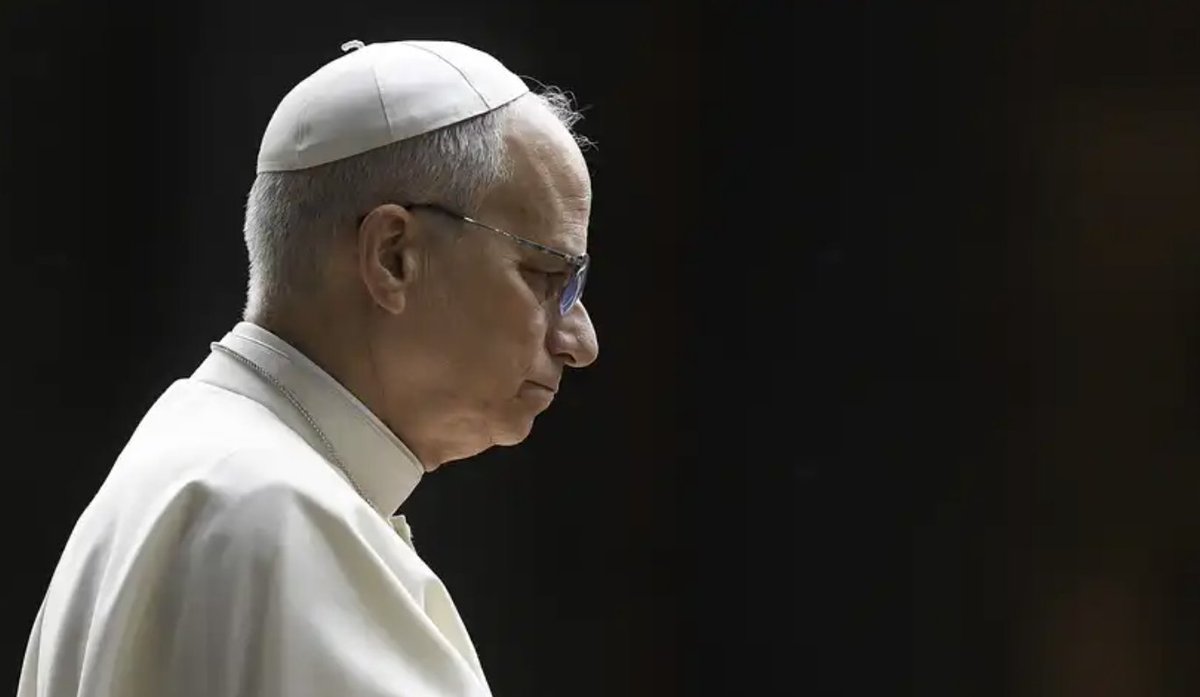
So the Pope met with David Axelrod last week. David Axelrod. Obama's campaign architect. A man who is not Catholic, has never met a pope before, and whose entire career has been engineering political narratives for the American left.
And then, by pure coincidence, the Pope immediately started lobbing shots at the Trump administration, and three US Cardinals popped up on 60 Minutes doing the same thing.
All organically, I'm sure.
I'm a practicing Catholic. I need you to understand that part. But in my opinion, Trump has all the right to lash out at him. Maybe you'll disagree, but in the end, Trump talks like Trump. Water is wet. I'm talking about MY Church being run like a DNC satellite office but with a golden throne.
This is the same Vatican that watched governments padlock churches during COVID and said nothing. That let Biden take communion while funding abortion and said nothing. That fired Bishop Strickland for defending actual Church doctrine. That removed Bishop Fernández in Puerto Rico for defending religious exemptions THE CATECHISM ITSELF supports.
But somehow Trump is the threat to human dignity.
Pope Francis was bad. Leo has turned out to be worse. Francis at least was vague about his politics. Leo went and hired the consulting firm.
The man has ignored the slaughter of Christians across Nigeria, the Sahel, India, Syria, Bangladesh, Pakistan. Hundreds of believers murdered, churches burned, pastors kidnapped. His response? Platitudes about dialogue.
OF COURSE he won't even name who's doing the killing.
But he'll fly across continents to make interfaith gestures the week after his people coordinated a media hit on a sitting US president.
The weaponization of belief is obvious. You get the Pope to pick a fight with Trump, and suddenly millions of conservative Catholics have to choose between their faith and their vote.
This Easter, I invite you to look at Jesus, consider what he said and did, and ask for yourself what I believe is the most important question you will ever answer: Did he really leave behind an empty tomb? And if he did, what does that mean for you?
This video was made possible and in collaboration with my friends at @ChildlikeMedia.
Lee Strobel summarizes the evidence for Jesus’s resurrection with the “Four E’s”:
1) Executed — Jesus’s death by crucifixion is widely affirmed by historians.
2) Early — The creed in 1 Corinthians 15 preserves very early testimony.
3) Empty Tomb — Alternative explanations fail to adequately account for it.
4) Eyewitnesses — The Gospels, along with James and Saul, attest to resurrection appearances.
Some things Jesus says will never happen to believers in John's gospel:
• Never die (11:26)
• Never perish (3:16)
• Never hunger (6:35)
• Never thirst (4:14; 6:35)
• Never be cast out (6:37)
• Never come under judgment (5:24)
• Never be snatched out of His hand (10:28)
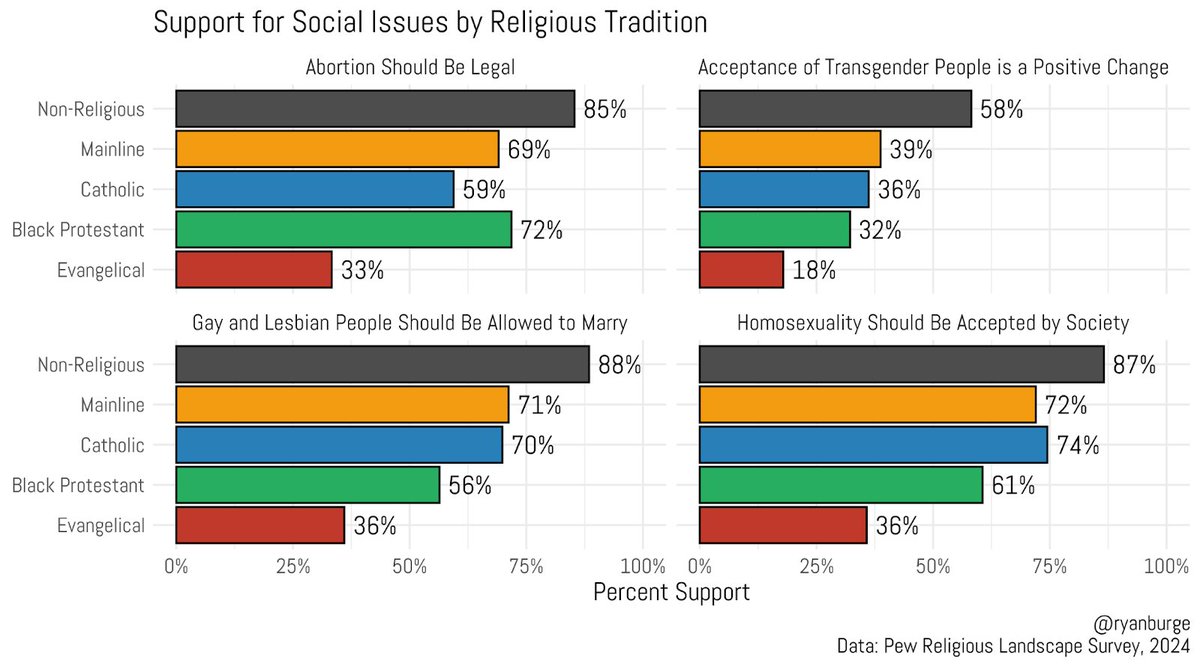
Evangelicals are the only religious group where a majority do not agree with these 3 statements:
Abortion should be legal
Gay and lesbian people should be allowed to marry
Homosexuality should be accepted by society
Every element of the High Priest's garments was prescribed by God in Exodus 28. The breastplate carried the names of the twelve tribes over his heart. The turban bore the words "Holy to the Lord." He did not dress to impress. He dressed to represent. Hebrews 4 tells us who our High Priest is now.
🚨 Here is the full 40 minutes of my crew and I exposing California fraud, Minnesota was big but California is even bigger... We uncovered over $170,000,000 in fraud as these fraudsters live in luxury with no consequences. Like it and share it, the fraud must STOP.
We ALL work way too hard and pay too much in taxes for this to be happening. These fraudsters have been able to defraud American taxpayers for years without any pushback from the public and politicians.
It is time to EXPOSE IT ALL and end America's fraud crisis.
Genesis - God is creator and friend
Exodus - God saves his people
Leviticus - God has likes and dislikes
Numbers - God is wrathful against sin
Deuteronomy- God desires obedience
Joshua - God delivers on his promises
Judges - Israel rejects God, chooses wickedness
Ruth - David’s Grandmother is important
1 Samuel - Monarchy is established in Israel
2 Samuel - Kind David’s Triumphs and failures
1 Kings - Solomon’s reign and Israel’s downfall
2 Kings - Bad kings lead to wickedness
1 Chronicles - reminiscing on Israel’s history
2 Chronicles - Israel’s history part two
Ezra - Rebuilding God’s temple
Nehemiah - Rebuilding God’s city
Esther - God protects his people
Job - God is found in suffering
Psalms - Prayers and worship songs
Proverbs - Wisdom in life
Ecclesiastes - Life is a vapor
Songs of Solomon - love explained literally, mystically, prophetically
Isaiah - The messiah will suffer
Jeremiah - Israel’s backsliding addressed
Lamentations - mourning over Israel’s backsliding
Ezekiel - Prophetic visions of hope
Daniel - The Messiah will reign forever
Hosea - God’s unchanging love
Joel - God wants you to repent
Amos - God wants social justice
Obadiah - God doesn’t forget
Jonah - God is patient and merciful
Micah - God hates injustice
Nahum - God unleashes judgement against wickedness
Habakkuk - Trusting God in the waiting
Zephaniah - God will judge the world
Haggai - God cares about his house
Zechariah - The Messiah will be humble
Malachi - God wants true worship
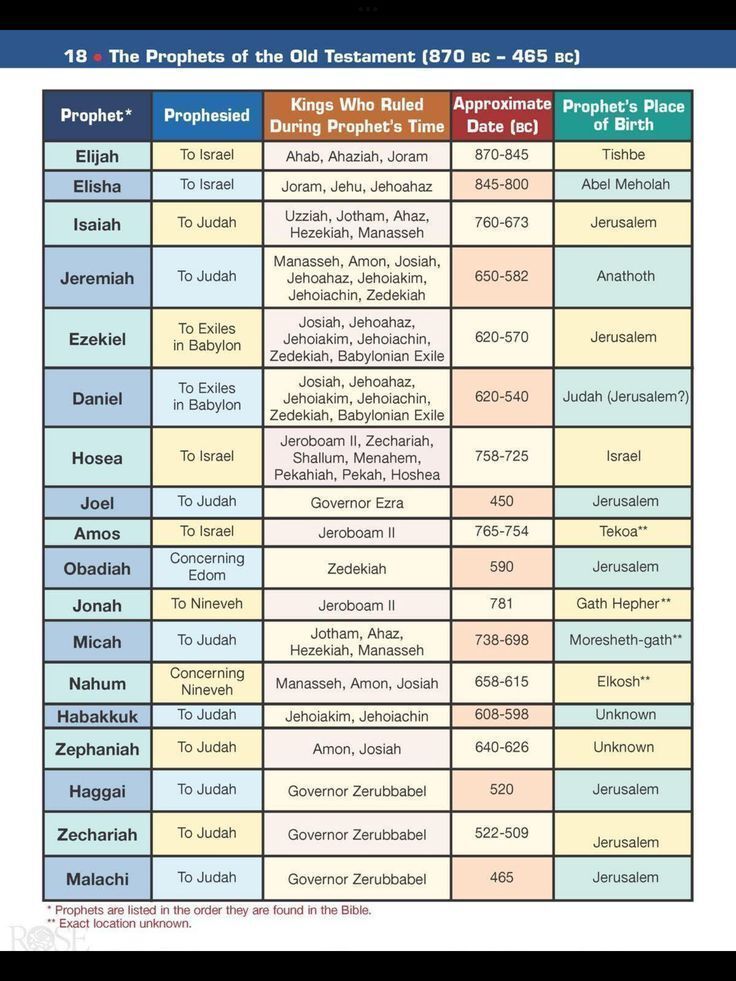
The Old Testament prophets did not speak into a vacuum. Each one had a specific audience, a specific king, and a specific crisis. Elijah confronted Ahab. Jeremiah watched Jerusalem fall. Ezekiel and Daniel ministered to exiles in Babylon. Knowing when a prophet spoke and to whom transforms how you read their words.
This honestly might be the most beautiful description of marriage I've ever heard.
THIS is what it means to love your spouse as Christ loves us. CHILLS.








![dougponder's tweet photo. People often apply Paul’s “tentmaking” (Acts 18:3) to missionary work, which is a fine thing to do. But something far bigger is happening here.
Yes, Paul was literally a tentmaker. Yet his occupation carries rich theological overtones. For just as Jesus deliberately chose fishermen (Matt. 4:18) to become fishers of men (Matt. 4:19), the Lord does something similar with the apostle Paul:
Ad fontes: The Greek word for “tentmaker,” skēnopoios (σκηνοποιός), is a compound: it joins the verb poieō (ποιέω, “to make”) with the noun skēnē (σκηνή).
In the NT that second word is sometimes rendered “tent” (Heb. 11:9) or “dwelling” (Luke 16:9), but it is far more commonly translated “tabernacle” (Acts 7:43–44; 15:16; Heb. 8:2, 5; Rev. 21:3). Similarly, in the Septuagint (LXX)—the Greek translation of the OT—the same term repeatedly refers to the tabernacle itself (Ex. 25:9; 26:1, 6–7, 9, 12–18, 22–27; 27:9, etc.) and/or the “tent of meeting” (Ex. 27:21; 28:43; 29:4, 10–11, etc.).
Even the permanent temple that later replaced the tabernacle is poetically called a “tent” in the Psalms (Ps. 27:4–5; Ps. 41:5 LXX [cf. Ps. 42:4 MT]). And in Amos 9:11—which James applies to Paul’s Gentile missionary activity in Acts 15:16—the word skēnē (σκηνή) refers to the restored lineage or dynasty of David, pointing to the fulfillment of God’s promise in 2 Samuel 7:12–13: “I will raise up your offspring after you… and he shall build a house for my name, and I will establish the throne of his kingdom forever.”
Still with me? Now recall Jesus’ earthly trade. He was, quite famously, a tektōn (τέκτων)—a “carpenter” (Matt. 13:55; Mark 6:3). It’s not a bad translation, but it doesn’t capture the fullness of that term’s use in the OT. Again, in the LXX, the same Greek word is used of the craftsmen who built, and later repaired, the temple (2 Sam. 5:11; 1 Kgs. 7:14; 2 Kgs. 12:11–12; 22:5–6; 1 Chron. 22:15; Ezra 3:6–7). That’s quite a different image than a cabinetmaker.
In other words, Jesus Christ, the Son of David (Luke 1:39; Rom. 1:5), is the one who took on flesh and “tabernacled” among us (John 1:14). As the master tektōn, he came to build the true house of God—which is his body (John 2:19–21), and, by extension, the people who are joined to him by faith (1 Cor. 3:16–17; Eph. 2:21). With that great work complete, the apostle Paul is commissioned to start living, tabernacle-like outposts of the Lord’s temple (i.e., the church) in every corner of the world.
So, yes, Paul literally sewed canvas and stretched leather. But in the providence of God, his earthly occupation was a symbol of his heavenly mission: to raise portable sanctuaries where the presence of God would dwell among the nations.](https://pbs.twimg.com/media/HGMaCI-XsAAGP5A.png)