Hola, soy palestino. 🇵🇸
Y como la honestidad es poco común en mi política, permítanme confesar algunas cosas.
1947. La ONU me ofreció un estado. Junto a Israel. Fronteras, independencia, reconocimiento. Dije que no. Mis líderes prometieron que la guerra "arrojaría a los judíos al mar". En cambio, lo perdí todo y lo llamaron catástrofe. No porque no me ofrecieran un estado, sino porque lo rechacé.
1948–2025. Los estados árabes podrían haberme integrado, dado derechos, pasaportes, dignidad. En cambio, me encerraron en campos de refugiados durante generaciones, para que siguiera siendo un arma contra Israel. Construyeron palacios para ellos y cárceles para mí. Me usaron como propaganda, no como personas.
1967. Tras otra guerra perdida, podría haber construido un estado en Cisjordania y Gaza. En cambio, insistí en "ni paz, ni reconocimiento, ni negociaciones". Tres noes. Cincuenta años después, sigo sin Estado. Resulta que el rechazo no paga el alquiler.
Oslo, década de 1990. Israel dijo: «Intentémoslo». Me dio autonomía. Armas para la policía. Miles de millones en ayuda. ¿Qué hicieron mis líderes? Robaron el dinero, armaron milicias y lanzaron una intifada. Atentados suicidas en lugar de escuelas. Cohetes en lugar de fábricas.
Gaza, 2005. Israel se fue por completo. Sin colonos, sin soldados. Tuve la oportunidad de convertir Gaza en un Singapur mediterráneo. Voté por Hamás. La convirtieron en Mogadiscio junto al mar. ¿Miles de millones en ayuda? Túneles, cohetes y palacios para sus líderes, mientras mi gente come comida enlatada en la oscuridad.
¿Democracia? No he tenido elecciones en casi 20 años. Hamás mata a los disidentes en Gaza. Fatah los encarcela en Cisjordania. Mis líderes cancelan elecciones porque están demasiado ocupados luchando por el poder.
Religión. En lugar de construir un futuro, pongo a clérigos en televisión enseñando a los niños a odiar a los judíos. Glorifico a los "mártires" que hacen estallar autobuses. Crío a mis hijos con canciones de sangre y fuego en lugar de libros y ciencia. Cambio la esperanza por la guerra santa.
Mundo árabe. Los regímenes árabes me llaman "hermano". Pero pregúntenles cuántos palestinos pueden vivir libremente en Líbano, Siria, Egipto o Kuwait. Me excluyen, pero celebran mi muerte, porque mi muerte es su excusa.
Absurdo. Sigo diciendo que quiero "construir un estado". E irónicamente, justo al lado está Israel: el vecino que construyó una democracia próspera, una potencia tecnológica, granjas en el desierto, ciudades de polvo. Sin petróleo, sin riqueza infinita, solo coraje. Podría haber aprendido, copiado, colaborado. En cambio, elegí la envidia y la rabia.
Obsesión antijudía. Podría haber aceptado a los judíos como vecinos. Podría haber dicho: "Dos naciones, dos estados". En cambio, repito: "Del río al mar". En lugar de exhibir el honor, la hospitalidad y la rica cultura árabe, mostré solo la cultura de la espada: la ira, el extremismo y la sangre. En lugar de gritar salaam (paz) a los israelíes, grité muerte a los judíos. Y luego finjo sorprenderme cuando los israelíes no confían en mí, cuando están enojados, decepcionados y convencidos de que no quiero coexistencia en absoluto.
Responsabilidad. Culpo a Israel de todo. Siempre. ¿Mis líderes roban miles de millones? Culpa de Israel. ¿Hamás dispara cohetes desde hospitales? Culpa de Israel. ¿Glorifico la muerte más que la vida? Culpa de Israel. La responsabilidad no es mi fuerte.
Soy palestino.
Podría haber construido una nación, muchas veces. Elegí el rechazo, la corrupción y la guerra sin fin. Podría haber vivido en paz con Israel, pero elegí vivir a la sombra de su destrucción.
Así que sí, soy una víctima. Pero con demasiada frecuencia, soy víctima de mis propios líderes, de mis propias decisiones y de mi propia negativa a abandonar el odio.
Y esa, querido lector, es la tragedia que nadie quiere admitir.
This is precisely the kind of historical excavation South Africans need more of, Thokozane. Thank you for pointing us in this direction.
I have started looking into these reports, and the Tomlinson Commission in particular opens an extraordinary intellectual window into the political economy of the South African state.
What fascinates me about documents of this nature is that they force us to move beyond understanding apartheid merely as a collection of racist laws and begin examining it as an extraordinarily elaborate project of statecraft, spatial engineering, labour control, demographic management and economic planning.
The Tomlinson Report is particularly revealing because of the contradiction sitting at its centre. The apartheid state wanted territorial separation, yet the South African economy had already developed profound interdependencies between African labour, white-owned capital, agriculture, mining, industry and the cities.
So the question became: how do you geographically separate populations whose economic lives have already become structurally intertwined?
That is where the report becomes so historically important.
The Commission investigated whether the African reserves could be transformed into economically viable territories capable of sustaining substantially larger populations. Its conclusions effectively exposed the enormous material requirements of making “separate development” economically sustainable: land, capital, agricultural restructuring, industrialisation, employment creation and massive state investment.
And therein lies an extraordinary contradiction.
Apartheid was not simply an ideology of racial separation. It required an entire political economy capable of financing the geography that ideology demanded.
This is why these old commissions matter.
Reports, commissions, census tables, maps, land legislation, railway plans, agricultural policies and labour regulations are not merely bureaucratic debris from history. They are often the architectural drawings of power.
If we want to understand contemporary South Africa properly—our settlement patterns, former homeland economies, labour migration, spatial inequality, land distribution, infrastructure geography and the extraordinary distances millions of workers still travel between places of residence and economic opportunity—we have to study the administrative machinery through which yesterday's political decisions became today's socioeconomic geography.
I am particularly interested in going backwards from Tomlinson into the nineteenth-century commissions you mention, including the Barry Commission. I would appreciate the exact archival title/reference for the 1883 report because I want to distinguish carefully between the report itself, subsequent interpretations of it and the larger historical processes eventually culminating in Union in 1910 and, much later, the Republic in 1961.
There may be a much bigger intellectual project hidden here:
What if we reconstructed South African political economy through the commissions that designed, rationalised and periodically reorganised the state?
Not merely reading what politicians said, but reading what the state studied, measured, mapped, recommended and institutionalised.
Because sometimes history is not hiding in speeches.
Sometimes history is sitting quietly in 3,000 pages of government reports, waiting for somebody to ask the right question.
And perhaps one of those questions should be:
How much of the South Africa we are desperately trying to transform today was administratively designed long before any of us were born?
I have a question for Hollywood.
You wore the keffiyeh on the red carpet, signed boycott pledges, gave speeches at award shows and used your platforms to tell the rest of us what justice looks like.
Macklemore. Susan Sarandon. Mark Ruffalo. Javier Bardem. Emma Stone. Joaquin Phoenix. Olivia Colman. Tilda Swinton. Riz Ahmed. Andrew Garfield. Ayo Edebiri. Bella Hadid. Hannah Einbinder. Melissa Barrera. Cynthia Nixon.
Now the UN itself has documented what is happening in the camps in Gaza. Girls handed over for food. Rape victims pushed into marrying the man who attacked them. A father gave away his 14-year-old daughter for two bags of flour. Forced marriages more than doubled in a single quarter.
No Israeli soldier arranged those weddings. Fathers did. Uncles, brothers-in-law, clan elders and camp leaders did. And a Hamas regime lets it happen.
The same regime shot one of its own commanders, Mahmoud Ishtiwi, after holding him for a year. Hamas announced he had been executed for "moral turpitude," its term for homosexuality. Hamas documents later found in a tunnel in Gaza describe what happened and show that Hamas kept torturing members it believed were gay.
Every summer the same regime gathers tens of thousands of children and teenagers in camps. There they learn to take weapons apart and put them back together, and they practice kidnapping Israeli soldiers.
In earlier years they were trained to stab and stone police officers, while instructors celebrated the dead as martyrs. Much of the training takes place in schoolyards and classrooms, where children should be learning to read.
On Hamas's own TV channel, little kids in military uniforms are interviewed about the fight. A child in Gaza learns early that the greatest thing it can achieve is to die.
You march for women's rights and for gay people's right to live freely. You talk about every child's right to a childhood. In Gaza you stand shoulder to shoulder with the people crushing all of it.
As long as they fight Israel, you look the other way.
Can you really not see the double standard? Or are you just playing dumb to get attention at any cost?
You call Israel genocidal. No court has ruled that it is, and the death tolls behind the accusation come from Hamas's own health ministry. You cheer for "the resistance." But in Gaza the resistance has a name, and the name is Hamas. You just won't say it out loud.
Look at the leaders the Palestinians have been given. The Grand Mufti who sat down with Hitler. Arafat, who hijacked planes and funneled hundreds of millions into accounts he controlled. Abbas, elected for four years and still in power more than twenty years later.
And then Hamas, whose leaders lived in luxury in Qatar while sending their own people to die.
You defend a people and close your eyes to the tyrants who have kept it down for a hundred years.
Where are your posts now? Where is the speech from the stage?
Macklemore, you wrote an entire song for Gaza. Where is the verse about a 14-year-old girl sold for flour?
The girls of Gaza only mattered as long as they fit your story. The moment reality stopped fitting, you went quiet.
You were never fighting for them, only for yourselves and your own reputation. A reputation that will soon be put to shame. Because the truth always wins, and it takes down those who stayed silent when it mattered.
Now sit down and shut up.
Addressing @RonaldLamola, Norway's Foreign Minister @EspenBarthEide recalls his work in the struggle against apartheid and reminds us that there are not two sides to every issue.
@NkweMashamaite@NhlamuloNeay If I’m not mistaken they said during his first appearance that Chalkalson will lead the probing after the statement has been read.
THE PROFESSOR: THE OPINION
Yesterday I happened to sit down to catch up with the evidence of Professor Somadoda Fikeni before the Madlanga Commission. What I encountered was not merely another public servant appearing before another commission. It was something far more intellectually unsettling: an interrogation of the machinery through which the South African state has learned to produce the appearance of governance without necessarily producing the outcomes of governance. Fikeni, appearing in his capacity as Chairperson of the Public Service Commission, was unapologetic, intellectually forthright and devastatingly candid. His central proposition—that South Africa is a “cemetery of best policies” because policies are too often not implemented—should disturb anyone who still believes that our principal problem is simply the absence of another strategy, framework, task team or commission.
But it was the phrase “political economy of inefficiency” that deserves to escape the confines of the Commission's transcript and enter our national vocabulary. Fikeni was not merely describing incompetence. He was inviting us to ask a much more uncomfortable question: what happens when inefficiency ceases to be an accident and becomes an ecosystem? If policies exist, implementation mechanisms exist and oversight institutions exist, yet implementation repeatedly stalls, the analysis must move beyond incompetence towards incentives, interests, political protection, institutional fragmentation and the beneficiaries of non-performance. That is where political economy begins.
His observation about political leadership turnover is equally revealing. Fikeni indicated that during his more than five years at the PSC he had seen four ministers, noting how a minister may arrive with enthusiasm for reform only to leave before that reform takes root. State capacity requires institutional memory and continuity. Ministers may come and go; the machinery of the state cannot afford to continuously reset itself. Otherwise, government becomes an endless procession of beginnings—launches without completion, strategies without institutional memory, recommendations without implementation and reforms without sufficient time to mature.
Fikeni also connected institutional vulnerability to inequality. Officials operating at the lower levels of the state can become more susceptible to inducement, while fear of losing employment can make public servants vulnerable to political pressure. This is not an argument that poverty excuses corruption. It is an argument about structural vulnerability. Professionalising the public service, protecting officials from improper interference, strengthening ethical safeguards and ensuring credible vetting are therefore not peripheral human-resources questions. They are instruments of institutional integrity.
And here lies the great paradox of South African governance: we have accumulated an extraordinary architecture of policies, legislation, strategies, oversight mechanisms and recommendations, yet repeatedly struggle to convert architecture into performance. Two days before Fikeni appeared before the Commission, President Cyril Ramaphosa signed the new Public Service Commission Act into law, strengthening the Commission's mandate and extending its reach to local government and public entities. The law also creates stronger mechanisms for requiring executive authorities to report on implementation of PSC decisions. The timing is almost poetic: the state has strengthened an institution responsible for monitoring implementation at precisely the moment its chairperson was telling the country how profoundly implementation has failed.
That should be one of the central lessons of the Madlanga Commission. We do not need another beautiful report that gathers dust in a government archive. We need to break the cycle in which diagnosis becomes documentation, documentation becomes recommendation,
@LunathiKilani all government employees get overly generous perks, on top of inflated salaries, not just ministers. E.g., staff on voyages on SA Agulhas II get Subsistence and Travel, despite free food and accommodation 24-7 while on board, in addition to overtime and danger pay, for months/yr
Here is PROOF that the 21st-Century warming was 100% caused by the observed increase of Earth's absorption of solar radiation due to a decreasing planetary albedo:
The attached graph shows two official measured data series: changes in absorbed solar radiation (ASR) according to NASA CERES Project, and changes in global temperature according to 3 surface data sets.
Diving the observed temperature trend (0.261 K/decade) by the observed ASR trend (0.876 (W m-2)/decade) produces an EMPIRICAL estimate of the climate sensitivity to ASR, i.e. 0.261/0.876 = 0.298 K/(W m-2).
Compare this data-based climate sensitivity to a theoretical estimate produced by the independent and objectively derived model by Nikolov & Zeller (2024: https://t.co/MyGQzXlsJe), their Eq. 15b (see second attachment). The modeled sensitivity is 0.297 K/(W m-2), which virtually identical to the empirical one!
Since the Nikolov-Zeller model only quantifies the response of Global Temperature to ASR without including any GHG "radiative forcing" or "positive feedbacks", the perfect agreement between empirical and theoretical climate sensitivities strongly suggest that the 21st-Century warming was solely caused by the observed decrease of Earth's cloud albedo without any measurable effect of "greenhouse gases".
This implies that the GHG "radiative forcing" generated by IPCC's climate models is NOT real and there are no amplifying feedbacks operating in the climate system!
Afriforum didn't wait for a compromised, broke Department of Higher Education to allocate a national budget to build an institution.
They didn't rely on cadre deployment, state tenders, or Chinese loans to lay the bricks.
They built a massive technical college, and Akademia, a private university system, funded entirely by a decentralized, self-organizing community pool of monthly membership contributions.
Over 450,000 ordinary citizens paying small fees to bypass a dysfunctional state apparatus. That is institutional delivery.
The hotheads on social media want to play semantic games about whether a private, accredited higher education institution qualifies as "building a university" under state approved terminology.
They do this because their entire worldview is trapped in the extractive state model.
To them, if an institution isn't a state owned enterprise where you can appoint your cousins, inflate procurement contracts, and run the infrastructure into the ground, it doesn't count.
The terrifying reality that these critics cannot face is that the Solidarity model proves the state is completely obsolete.
When a community successfully builds its own world class technical colleges, its own primary schools, and its own higher education campuses without a single cent of taxpayer money from Pretoria, the entire justification for a predatory government collapses.
It proves that you do not need an arrogant, corrupt political elite to manage a society.
You just need property rights, financial discipline, and a productive tax base that refuses to let its capital be siphoned away into luxury motorcades.
Argue about the definitions all you want. While you are busy typing characters on X to protect your fragile political ego, the ground is moving.
Communities that understand structural autonomy are building modern, functional education hubs, while the state managed universities are struggling with broken infrastructure, NSFAS funding scandals, and academic decline.
The facts aren't in your definitions; they are in the bricks and mortar.
I don’t want technology to “evolve” another bloody inch. I hate that everything demands an app or QR code. I hate supermarket self-checkouts that scold you for “unexpected items” as if you have committed a hate crime with a packet of biscuits. I hate ringing a company and suddenly you’re trapped in a doom loop of an endless conversation with a robot before being left on hold long enough to waste an entire afternoon. I hate how local bank branches are closing and customer service is no longer communication with a bank manager but with an AI bot. I hate websites that force you to prove you’re human by enforcing a dystopian farce quiz to spot 3 sets of traffic lights in a fog of pixelated misery. I hate digital app passwords, verification codes and subscriptions. I hate how town centre car parks often no longer accept cash payments and the only way to park is by registering to another bloody app. I hate receiving unsolicited phone calls from an AI automated robot. And I really hate how the whole digital circus excludes half of the country’s pensioners simply because they never signed up to live inside a smartphone.
Rant over.
The Anthony Fauci spectacle before the US Senate is a reminder that as yet in SA there has been no attempt at Covid accountability. Who did why and what? On what evidence? At what cost? WSM’s column on @Politicsweb.
https://t.co/xB95R6EzRD
Tadej Pogacar es claramente superior a Jonas Vingegaard. Llevamos seis años viéndolo.
Hoy en el Tourmalet se ha vuelto a demostrar con claridad.
Pero lo que más mérito tiene no es Pogacar. Es Vingegaard.
El danés compite sabiendo que probablemente no va a ganar el Tour. Sabe que hay otro que es mejor. Y aun así se sacrifica al máximo cada día.
Esa actitud es mucho más difícil que ser el favorito.
Jonas Vingegaard lleva años siendo el segundo.
No es un segundo cualquiera. Es el que más cerca está de Pogacar. El que más le aprieta. El que más sufrimiento le genera al esloveno.
Y lo hace sabiendo que, en condiciones normales, no va a ganar.
Ese es el mérito real. No ganar cuando eres el mejor, sino seguir peleando al máximo cuando sabes que otro es superior.
Pogacar debutó en el Tour en 2020. Desde entonces, cada vez que se han enfrentado en condiciones similares, el esloveno ha sido superior.
Vingegaard ha ganado dos Tours (2022 y 2023), pero en el resto de grandes batallas ha sido claramente segundo.
Aun así, sigue ahí. Cada año. Cada etapa dura. Cada montaña.
Eso no es mediocridad. Eso es carácter.
Vingegaard tiene dos hijos pequeños.
Mientras Pogacar puede centrarse casi exclusivamente en ganar, Vingegaard tiene que gestionar familia, presión, entrenamientos brutales y la certeza de que probablemente no va a levantar el maillot amarillo en París.
Y aun así sigue.
Ese sacrificio familiar añadido hace que su esfuerzo sea aún más admirable.
Ser el mejor y ganar es relativamente fácil cuando tienes el talento y el equipo.
Lo realmente difícil es levantarte cada mañana, entrenar como un animal y competir al límite **sabiendo que otro es mejor que tú**.
Esa es la posición de Vingegaard en los últimos años. Y esa es la posición que más respeto merece.
Elon Musk contó una vez que, cuando SpaceX y Tesla estaban al borde de la quiebra, se levantaba por las mañanas y vomitaba del estrés.
Lo hacía porque tenía una visión más grande: que la humanidad llegara a Marte.
Vingegaard no va a “llegar a Marte”. Pero está haciendo algo parecido en su escala: sacrificarse al máximo por un objetivo que sabe que es muy difícil de alcanzar.
Esa mentalidad es la que realmente mueve las cosas.
Hay dos tipos de competidores:
Los que ganan porque son claramente superiores y lo tienen todo a favor.
Los que, aun sabiendo que lo tienen todo en contra, se niegan a rendirse y siguen peleando.
Los primeros son espectaculares.
Los segundos son los que realmente inspiran.
Vingegaard pertenece al segundo grupo.
En el deporte, en la empresa y en la vida hay mucha gente que solo quiere estar en el bando ganador.
Pero el progreso real lo empujan los que están dispuestos a darlo todo incluso cuando las probabilidades están en contra.
Vingegaard es el ejemplo perfecto en el ciclismo actual.
No gana siempre. Pero su actitud hace que el nivel general suba. Y eso beneficia a todos.
Pogacar es un fenómeno. Probablemente el mejor ciclista de su generación.
Pero sin Vingegaard (y sin otros que le aprieten), su dominio sería menos interesante y probablemente menos exigente.
El segundo que se niega a rendirse es el que obliga al primero a seguir mejorando.
Y esa dinámica es la que hace avanzar cualquier disciplina.
Al final del Tour sabremos quién se pone el maillot amarillo.
Pero el mérito de Jonas Vingegaard ya está escrito:
Ha decidido que, aunque probablemente no gane, va a competir como si pudiera. Va a sufrir como el que más. Y va a seguir intentándolo año tras año.
Esa mentalidad —luchar con todo sabiendo que puedes perder— es mucho más difícil y mucho más valiosa que ganar cuando eres el favorito.
Y es exactamente la que hace que la humanidad avance.
The South African Constitution does not grant us rights it acknowledges them. There is a profound distinction. The Constitution itself declares that the Bill of Rights "enshrines the rights of all people in our country". The power flows from the people upward, not from the government downward. When the state acts, it does so at our permission. When we protest, we do so at our discretion. But our government and the forces that benefit from illegal immigration have chosen to forget this.
The Constitution Belongs to the People
Section 17 of the Constitution guarantees every person the right "peacefully and unarmed, to assemble, to demonstrate, to picket and to present petitions". This right is not a favour granted by the state. It is a cornerstone of our democracy. As the Constitutional Court has affirmed, the right to protest "exists primarily to give a voice to the powerless". It "provides an outlet for their frustrations," and in many cases, "will be the only mechanism available to them to express their legitimate concerns".
Yet the state and its enablers have worked to erode this right. Municipal officials routinely conflate notification with permission, treating the requirement to notify as an application that can be denied. This is a deliberate misinterpretation. The law only requires notification not consent. But officials substitute an obligation to facilitate protest with a right to veto. They do this because they fear our power. Because they know that when we gather, they cannot hide. Because when we speak, they must answer.
The Right to Citizens' Arrest
Section 38 of the Constitution gives any person the right to approach a court when a right has been infringed or threatened. This includes the right to act in the public interest. While citizens' arrest is rooted in the Criminal Procedure Act, the Constitution empowers us to be active participants in enforcing our laws not passive victims of a system that has abandoned us.
When the state refuses to enforce its own immigration laws, we are not powerless. When the government fails to secure our borders, we are not voiceless. When our clinics overflow, our schools overcrowd, and our children suffer because of illegal immigration, we are not helpless. We have the Constitution on our side.
The State Does Not Own Our Rights
The government does not have rights. It has responsibilities. Our Constitution was written to protect us from them from the abuse of power, from the violation of dignity, from the tyranny of the majority. When the state tells us we cannot protest, it is acting unconstitutionally. When the state refuses to enforce the Immigration Act, it is violating its duty to us. When the state protects illegal immigrants over South Africans, it is betraying its mandate.
We are not asking for permission. We are exercising our rights. And we will continue to do so peacefully, lawfully, unapologetically until our government remembers who it serves. The people. Not the foreigners. Not the corrupt. Not the powerful. Us.
South Africa, we are not asking for violence. We are not asking for chaos. We are asking for justice. We are demanding accountability. We are exercising the rights that were hard-won by the blood of our heroes. The right to protest. The right to assembly. The right to petition. The right to citizens' arrest. The right to demand that our government enforce our laws.
The Constitution is on our side. The people are on our side. History is on our side. Now we must act not in anger, but in power. Not in fear, but in resolve. Not as victims, but as citizens.
Enough is enough. Our rights are not up for negotiation. Our country is not for sale. Our future is not for the taking. We will protest. We will demand. We will hold them accountable. Because we are South Africans. And we will not be silenced. 🇿🇦✊🏾
@RoryDuncan1966 Lamola mentioned an interesting stat today, 10 to 20% (wide range?) of jailed people are illegal migrants. So...unless a similar proportion of the population is illegal migrants, they disproportionately commit crime, everything else being equal.
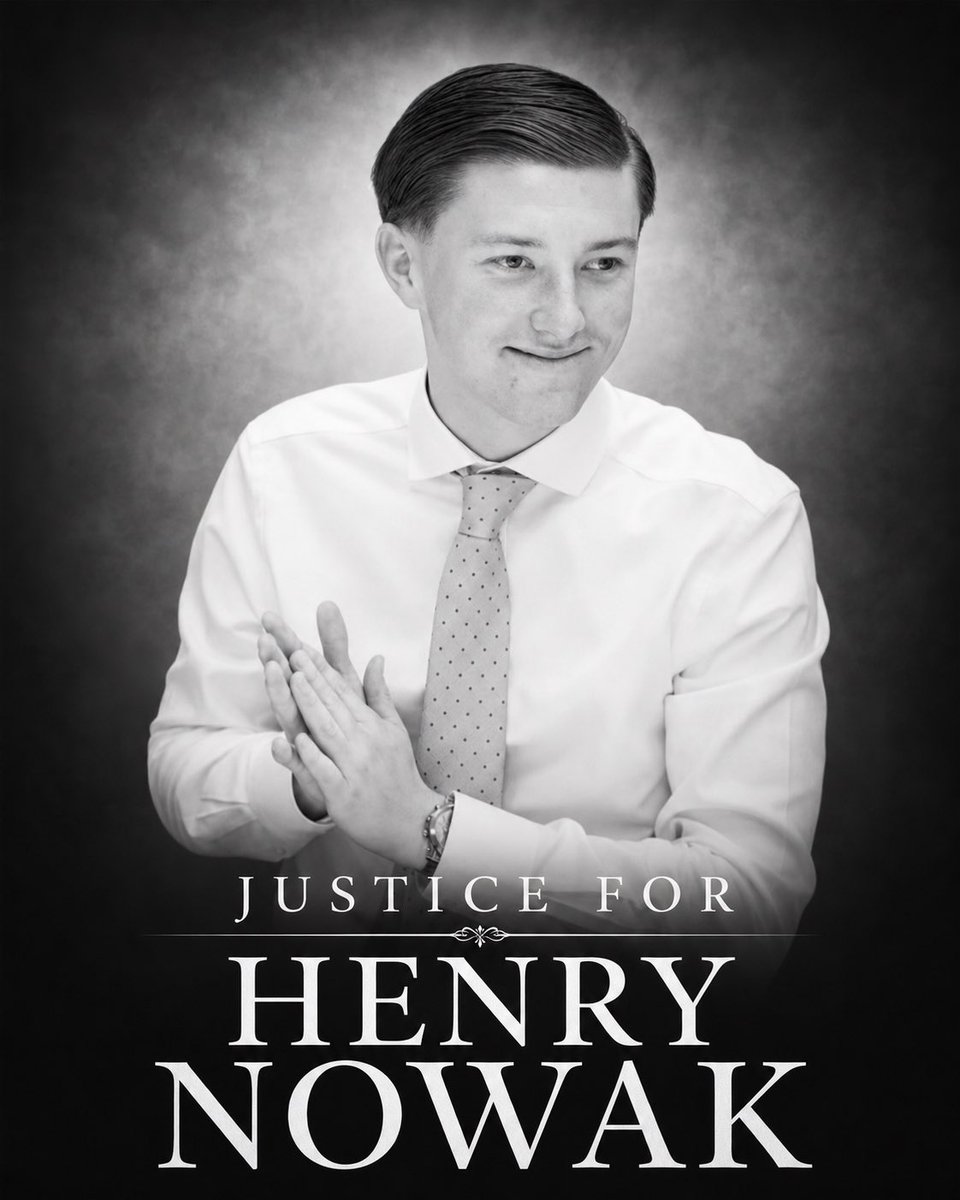
An 18-year-old kid gets stabbed in the street. He’s running for his life, begging for help, and instead of saving him, the police handcuff him while he bleeds out because the attacker claimed “racism.”
They let him choke on his own blood. No urgency. No humanity. Just cold, ideological policing.
Months later? Still no names. Still no suspensions. Still no accountability.
Meanwhile, the same UK police have arrested over 12,000 people for social media posts.
They move at lightning speed to jail citizens for tweets and online comments, yet they can’t even name or discipline the officers who allegedly let a stabbing victim die in handcuffs on the street.
This is the definition of two-tier policing: aggressive against ordinary people speaking online, but protective when it comes to their own failures and protecting the narrative.
The British people deserve real justice, not another cover-up.
Justice for Henry Nowak.
@HarambePnut@Rainmaker1973 these kids are colored, not black, they originate from either Khoi-san (pre-dates arrival of black Africans in S Africa) or eg Malaysia during colonial times, the latter people were mostly Muslim and their offspring in CT still are. Very much part of CT cultural landscape.
@Handre I live only a 2 hrs drive from Cape Town in a relatively prosperous town, I am lucky if I get a 2Mb download speed, cause there is a small mountain between that and my neighborhood. No fibre options. Not good enough in 2026.