For the first time in over 20 years, someone has tried to hijack a plane bound for Israel. Miraculously, the attacker, an Omani pilot, was overpowered before he could complete his mission.
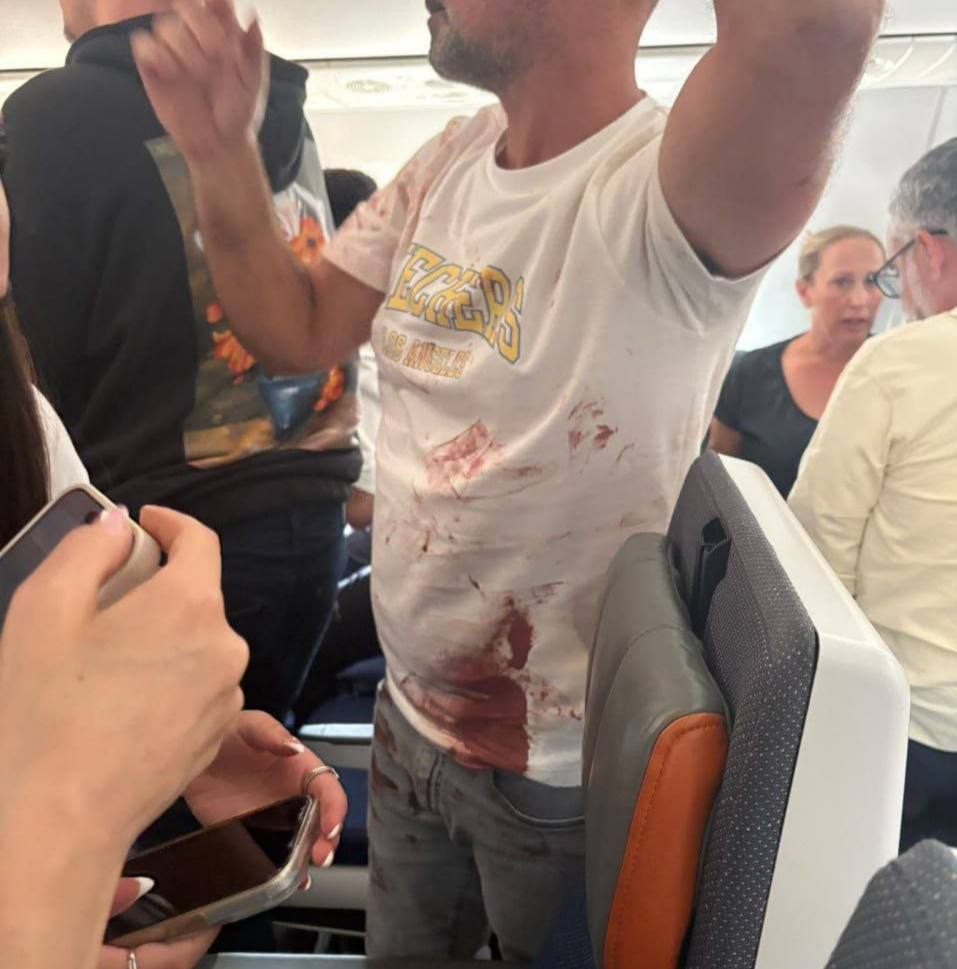
The entire region held its breath as the morning Flydubai flight from Dubai to Tel Aviv sent an emergency signal, flashed the hijack code and appeared to veer off course over Saudi airspace. The region then exhaled, almost with a chuckle, when early reports blamed a scuffle between the two pilots. That laughter quickly died as security assessments and passenger testimony revealed that the co-pilot had repeatedly stabbed the captain. The terrorist then seized the controls and pointed the plane toward the ground, dropping almost 20,000 feet in just over a minute, until several crew members and passengers forced their way through the cockpit door and subdued him. Many were injured in the process. The plane made an emergency landing in Tabuk, in northwestern Saudi Arabia, where the passengers are now waiting for Israel to bring them home.
The assailant’s specific motive and affiliation are still unconfirmed, but Israel is treating the incident as terrorism.
Unlike many of the hijackings in Israel's long history, today's had a happy ending. It also came just weeks after the 25th anniversary of the deadliest hijacking in history.
Many questions remain. How was this man cleared to fly the plane? What precisely drove him? And what does this mean for the future of air travel in Israel’s busiest flight corridor?
El Al suspended its scheduled flights to the United Arab Emirates in March 2026 due to security threats and has not resumed them since. It is possible that the assailant intended to drive a wedge into this crucial alliance. Just yesterday, Benjamin Netanyahu warned in a speech at the IDF’s main air base that “our enemies will try to attack us.” “Don’t mess with us,” he warned. “Our long arm will reach you anywhere, and at any time.”
But it was not the avenging fist of the Israeli Air Force nor a heroic rescue by special forces that foiled today’s threat. It was the courage of everyday Israelis. There was a very real and tragic possibility that I would be writing an entirely different article today. With the captain barely hanging on to life, a broken steering system and a damaged wing, it was only by the bravery of a handful of passengers and crew that almost 180 lives were saved. Today, on the fifth day of Sukkot, we will recite the words of Hallel with extra fervor: “This is the day the Lord has made; let us rejoice and be glad in it.”
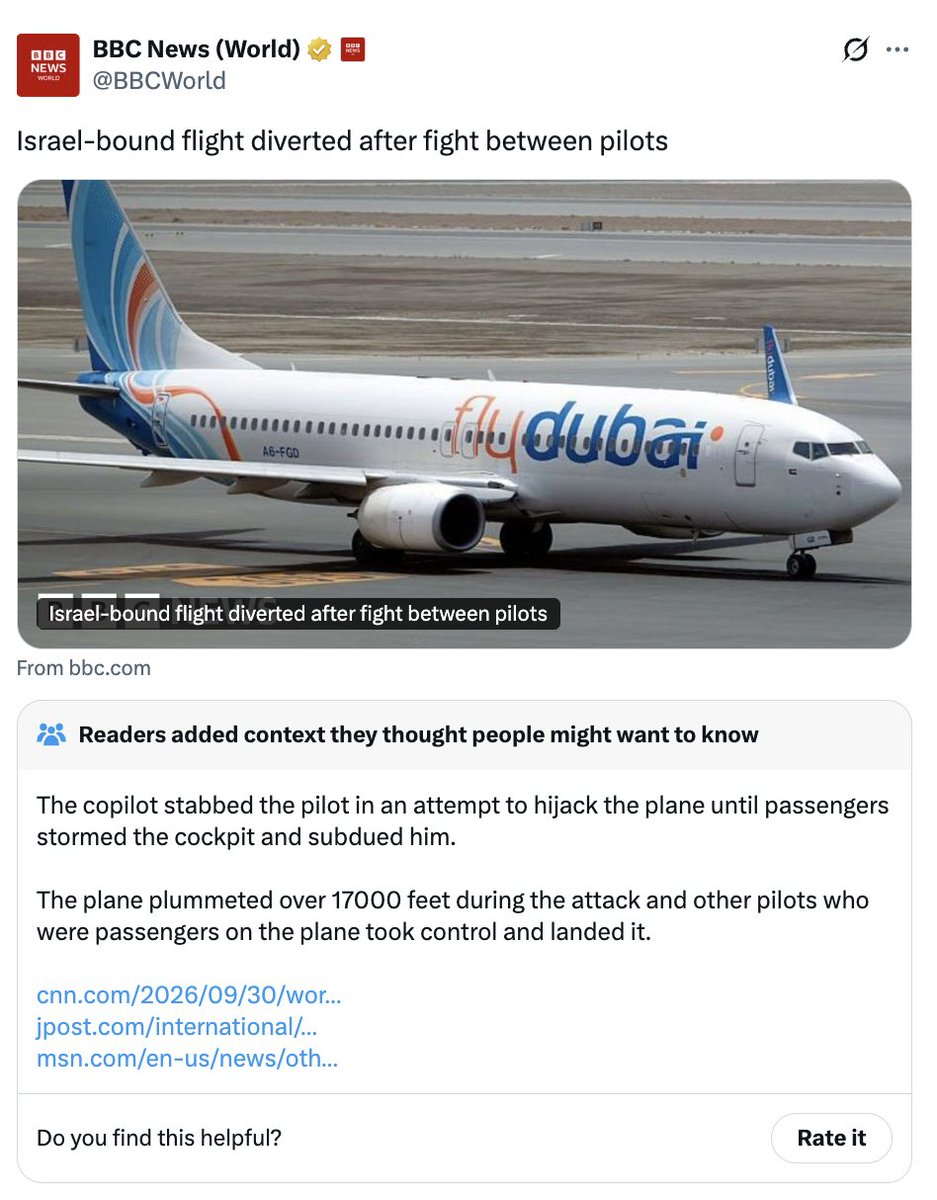
A “fight between pilots” is an interesting way to describe an attempted hijacking that is being treated as a Jihadist terrorist attack.
But then, the BBC can’t acknowledge that Hamas are terrorists, so it’s doubtful they know what terrorism actually looks like – at least when it targets Jews.
It’s no wonder that our polling shows 92% of British Jews consider the BBC’s reporting of matters of Jewish interest to be unfavourable.
Perhaps if the BBC didn’t seem to try to downplay every incident in which Jews are targets, that figure wouldn’t be so high.
I spent over two decades in counterterrorism and I’m still involved in many ways, so here are my views on what I see has happened over the past 24-36 hours in the UK:
Five British men in their twenties were arrested on Sunday near RAF Fairford on suspicion of explosives offences and the preparation of a terrorist act. On Monday they were released on police bail.
That’s not what the terrorism clock looks like when the investigators are still in charge of it.
Under ordinary UK criminal law a suspect can be held for 24 hours, stretched to 36 by a superintendent, and to 96 hours by a magistrate.
But under section 41 of the Terrorism Act the first hold is 48 hours, not 24 hours. A judge can then extend it, in stages, up to 14 days without a charge. If the case merits it, it can even be pushed to 28 days. That 14-day cap exists for exactly this kind of file of vans, an airbase the United States uses, a possible foreign hand, explosives (if there were any) and interviews that are not finished on the first night.
Counter-terrorism police said the inquiry isn’t over. They said conditions apply. They said a state link has not been ruled out. Those sentences he said only make sense if the evidence trail was still live. A live trail is why Parliament built the two-week window.
But watching the guy read out the statement showed me in his body language, tone and eye movements that releasing those five men was NOT his or his department’s decision.
Walking five men after roughly a day is what you do with a pub fight, not with a suspected terrorist attack on a bomber base.
I’ve sat in enough interrogation rooms to know the difference between a custody clock and a political ceiling. Nobody had to shout an order down a phone. Someone in the political building above the investigators decided that charging British nationals on Monday, with Iran already denying it, Washington watching the runway, and a Labour conference where the main topics of discussion were prioritizing Palestinian and other refugees settling in the UK, was uglier than bail and a holding statement.
The law allowed them to keep the door shut. Yet the door opened anyway in half of the most minimum time.
That’s the story. That for me is the only story here. Not “they were innocent.” Not “the case collapsed.” The statute was not exhausted, but the appetite was.
The real question is who, and most importantly, why?
Faut vraiment être atteint pour laisser Lewis pourrir dans cette écurie éclatée 😭 Vasseur je te maudit de nous avoir pris Lewis pour détruire sa carrière