Trust is not a feature in medicine. It’s the foundation.
That’s the core of a new op-ed from AMA CEO @DrJohnWhyte in @sltrib on Utah’s first-in-the-nation pilot allowing AI to autonomously renew prescriptions.
AI is already helping physicians cut administrative burden and support clinical decisions, real progress. But some tools are now performing functions that look a lot like the practice of medicine itself, and the guardrails haven’t kept pace.
A prescription renewal looks routine, but it rarely is. A refill can surface a new symptom, a drug interaction, or a lab change, the kind of context that requires clinical judgment, not pattern-matching against protocols.
AI should remain an assistive tool, not an autonomous decision-maker. Physicians and state medical boards need a seat at the table whenever a technology starts performing functions that resemble the practice of medicine.
Dr. Whyte’s bottom line: “Healthcare AI should move forward, but not simply at the speed of investment. It should move at the speed of safety, and trust.”
Read the full op-ed: https://t.co/vuRuaz5WAw
#HealthcareAI #PatientSafety #PhysicianLed
Parents/grandparents: this post could save your family hundreds of dollars.
Did you know it’s possible for young children to have TOO MANY toys? 🧸 🎁
As Christmas approaches, grown ups often feel pressured to make the big day extra special - which can lead not only to over spending, but to more gifts than your little one can meaningfully engage.
In a 2018 study, researchers observed two different toddler play settings - one with 16 toys and the other with only 4.
What they found was that the children presented with fewer options actually engaged more deeply in play.
They stayed focused longer and used the toys available to them in more imaginative ways.
Which is just what we want, developmentally.
Parents participating in the study were asked, meanwhile, to estimate the number of toys available in their homes. Some self reported 90 or more.
90 different choices!
This holiday season I want to help both your baby and your credit rating… and assure you that this is a case where LESS can actually be more.
When purchasing toys, focus on quality, not quantity.
Here’s how:
As you consider an item, take a moment to brainstorm a list of its potential uses.
Is it something that your child might, with a little imagination, use in multiple types of play?
Does it lend itself to sustained engagement?
Will it help them to think, build, imagine, create, or problem solve?
If the answer is yes, you have a winner.
If the answer is no, leave it on the shelf.
Your little one doesn’t require dozens of gift wrapped boxes.
And buyer beware: they’re likely to be just as thrilled with the box as the item inside.
This little guy and his favorite plaything were shared by mariavmcauley on TT.
A mark of emotional intelligence is prioritizing your values over your moods.
Immature people are victims of their feelings. Their choices are governed by fleeting sensations.
Mature people take responsibility for their reactions. Their choices are guided by lasting principles.
@drvije Today when I showed up to a legitimate polling place near 151 and was told we were not allowed to vote for anything San Antonio city yet the city council including the Mayor has the right to vote regarding all the roads around our area which are totally messed up. #Myvote counts
The ability to maintain focus is key to your child’s social and emotional development.
This month I’m partnering with @earlychildhood (the UK’s Royal Foundation Centre on Early Childhood) to explore children’s social emotional development in celebration of the Centre’s newest publication, The Shaping Us Framework – and today we’re looking at the third of the framework’s six key pillars: Focus Our Thoughts.
One of the places that focus assists us most is in the area of problem solving, which has been linked to a host of positive outcomes in school and life.
Check out this little problem solver, shared to IG by theoriginal_captain. The board book he’s reading has a feature he’s eager to take advantage of – a mirror hidden under a fabric flap. But in order to raise the mirror to his face, he must first overcome an obstacle: keeping the mirror exposed.
Watch as he makes several attempts, maintaining focus on the problem at hand, eventually finding success after folding and creasing the flap in its downward position at its base.
That’s focus in action.
You can support focus and problem solving at home by providing (or simply not intervening immediately in) challenges that are “just right” for your child’s stage of development… giving them the opportunity to focus their attention on a task’s completion and the time to experiment and learn through trial and error.
To learn more about how young children learn to focus their thoughts, check out the full Shaping Us Framework document, a link to which I’ve included in the first reply below.
Telehealth isn’t a luxury—it’s a necessity. For many of my patients with #mentalhealth challenges, in-person visits are exhausting, inaccessible, or not feasible. Removing telehealth coverage means denying care to those who need it most. We must protect access to virtual care.
Exactly what is baby-led weaning? What are the benefits and risks of choosing this way of nourishing your child? Read on for helpful insights. https://t.co/O53pNf7m7D
3 MORE DAYS BABY🫨! Can you imagine what he will accomplish when he’s actually President as apposed to President Elect😳! GET READY BECAUSE AMERICA IS ABOUT TO PROSPER GREATER THAN IT EVER HAS😲! Oh and FJB FJB FJB🖕
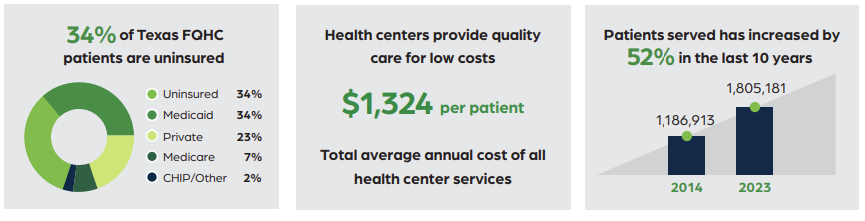
Texas community health centers provide vital health care services to underserved populations. With session coming up, now more than ever, their mission needs to be supported. #TACHC#TXLeg#CommunityHealthCenters