Very important survey!!
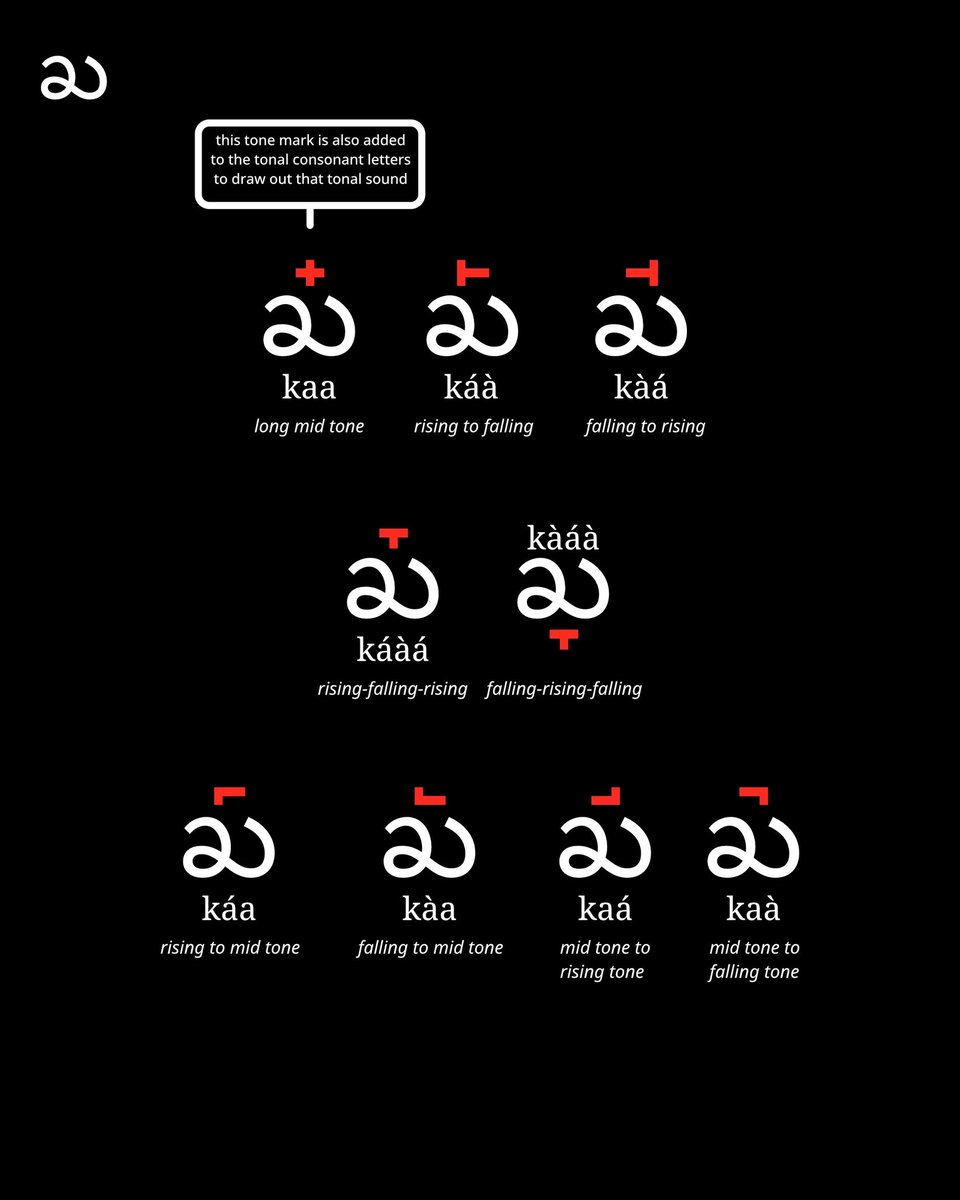
Based on a few comments I receive, it seems most learners are struggling with the concept of an inherent vowel [a] for every consonant. I have decided to incorporate a vowel marker for that sound, please vote by selecting either the left or right option.
@Wazeerr@kokokolarotiadi It's one thing I have been trying to find answers for, but can't find primary sources on it. Questions related to who have been the custodians of this time keeping practice, what was the period that marked it's start as you mentioned perhaps @kolaayanwuyi can offer a answers
Yesterday marked the Yorùbá New Year (Kọ́jọ́dá), welcoming the year 10,068, inscribed in Ìfá and aligned with the lunar cycle.
We aren't alone in holding our own time:
🇪🇹 Ethiopia: Lives 7 years behind the West, utilizing a 13-month calendar rooted in the
Will you learn an indigenous writing system for our language? "The Kíkọ Script"
We’ve written Yorùbá using Latin letters for two centuries, but the Kíkọ script (by @kikoscript) is built specifically for our language, integrating tones right into the characters.
Personally, the Kikọ numerals is not a "redesign". I refer to it as a shorthand device for learning and writing Yorùbá numerals without the complications of using the Indic numerals. I haven't shared a post on this topic yet, but I will do so soon. Thank you @kokokolarotiadi
@kikoscript It reads left-to-right and operates as a pure alphabet, but uses flowing, cursive strokes that look like elegant calligraphy. It also completely redesigns the traditional numeral system (Òǹkà) to make reading large figures incredibly straightforward.
@kokokolarotiadi Thank you very much for the highlight, especially your short take on the numeral system. I do not call the numeral system a redesign but rather a dressing up with its own written form. I prefer to refer to it as a shorthand device for learning and writing Yorùbá numerals.
This week's short story is a translation of a Chinese tale with a Yorùbá spin. Here we present a logogram for an adverb of time as well as the logogram for son and man (a complete triangle creates the logogram for woman). Like, retweet, and comment below.
This week's short story is a translation of a Chinese tale with a Yorùbá spin. Here we present a logogram for an adverb of time as well as the logogram for son and man (a complete triangle creates the logogram for woman). Like, retweet, and comment below.
@kikoscript We have many unfinished postcolonial businesses to deal with. Nigeria is built on weak foundations. My opinion is any ethnic group that wants to secede should be allowed to go. We can create a good exit plan. For Yoruba land, it is our duty to safeguard our immediate communities.
@Wazeerr That system is weakening day by day due to the factor you highlighted. I once foolishly thought pan-Africanism had penetrated into the soul of every African, but we see it clearly hasn't in the face of Sudan, Congo e.t.c. Privileged education removes us from street reality
@Wazeerr As in most places, and just as in most places, it often takes a turn. We will be wise to be vigilant, our tolerance and harmony is nothing unique in history. I would even say some places do it better since they were able to fully adapt it i.e buddhism/hindusim in Asia
@Wazeerr We have managed it well because we still had many people tied one way or another to the traditional culture and world view. Many of our people are not being raised in that reality, some through purposeful orchestration due to the political demand of their faith.
@Wazeerr Most Yorùbá Christians and Muslims are very recent converts going back a maximum of two generations (same as me). We are still running on old mental software as informed by traditional beliefs and culture, that well is reducing. Christian Europe is a lesson of what might come.
We are all operating under some form of beliefs and values which are shaped by the society we live in, which is further shaped by the religious beliefs of that society in one shape or another.
FOR IMMEDIATE RELEASE
06-06-2026
Dundun Centre Congratulates the Yoruba World on the New Year
Dùndún extends warm congratulations and heartfelt greetings to the Yorùbá people across the world on the occasion of the Yorùbá New Year and the ongoing Ọdún Ifá Àgbáyé (World Ifa Festival).
The Yorùbá are a people without borders. They constitute more than 52 million people in Africa alone, with further millions across the diaspora. They are present in Nigeria, Benin Republic, Togo, Ghana, Sierra Leone, and Côte d'Ivoire on the African continent. Across the Atlantic, Yorùbá communities and descendants live in Brazil, Cuba, Puerto Rico, the Dominican Republic, Venezuela, Saint Lucia, Jamaica, Grenada, Trinidad and Tobago, and the United States. This tell so much of a culture that survived the violence of the transatlantic slave trade and planted its roots wherever it was carried. To every Yorùbá person in every one of these lands, in every tongue through which they honour their ancestors, a kú ọdún o.
World Ifa Festival 2026
This year, the Ifá festival season opened on May 2, 2026, with the Ọdún Àgbọn Ọ̀sàrà. The central week of the festival, began on May 31 to June 6. During this week, pilgrims and Ifá adherents journey to the holy hills of Òkè Ìtasẹ̀ and Òkè Ìgẹ̀tí in Ilé-Ifẹ̀, and other consecrated sites. These pilgrimages are acts of continuity for a people returning to the source to renew their covenant with the knowledge that has sustained them for millennia.
The festival will culminate with Dídá Ifá Ọdún Àgbáyé (Ifa Divination for the New Year). Through this act, Ifá will speak to the trajectory of the Yorùbá people for the year ahead. For the challenges that await, the blessings that are promised, and the wisdom required to navigate both.
We send profound greetings to Àràbà Àgbáyé, Chief Owolabi Awodotun Aworeni, and to all Babaláwo/Ìyánífá, and Òrìṣà adherents in Nigeria, across Africa, and throughout the diaspora who are observing this festival. Your custodianship of this knowledge is one of the great acts of cultural service in the contemporary world.
Our Calendar is Our Identity
We take this moment also to remind our people of something that colonialism worked hard to make us forget. The Yorùbá Pre-Colonial Calendar is Kọ́jọ́dá. It is our complete and sophisticated system of timekeeping. It operates on a cycle of 13 months in a year, 7 weeks in a month, and 4 days in a week. The four days of the Yorùbá week are Ọjọ́ Ọ̀sẹ̀ Òòṣà (Ọbàtálá), Ọjọ́ Ọ̀sẹ̀ Awo (Ifá), Ọjọ́ Ọ̀sẹ̀ Ògún, and Jàkúta (Ọjọ́ Ọ̀sẹ̀ Ṣàngó).
It was colonialism and the arrival of foreign religion that introduced the seven-day week into Yorùbá life, and in time, the seven-day week overshadowed the four-day week in public consciousness. Today, most people do not know that the Yorùbá mark new year in the first week of June — with many observing June 2 as a common reference point for the new year.
To know your calendar is to know how your ancestors understood time, seasons, and the rhythm of existence. Let us continue to be proud of this heritage. Let us preserve it.
A Call to Government
We call on the governments of Oyo, Osun, Ogun, Ekiti, Kwara, Kogi, Ondo, Edo and Lagos states — and the Federal Government of Nigeria — to recognise the Yorùbá New Year as occasion of national and cultural significance. We look forward to a time where the full week of this new year is declared a public holiday across Yorùbáland. This will be a week in which our people, at home and in the diaspora, can observe, celebrate, and transmit the traditions that have made the Yorùbá one of the most consequential civilisations in human history.
A government that operates on the cultural calendar of its people is a government that understands what it is governing.
To every Yorùbá person, by blood or by devotion, near or far, we say happy new year.
Signed
Iyioluwa OLAITAN
Secretary, Dundun Centre
If we were truly in our own space, the first week of June would be a public holiday for the beginning of a Yoruba new year. Happy 10068 Yoruba New Year.
LG autonomy is the way to go! Not only is it better for executing local projects and listening to members of the local communities, it will also help in dealing with insecurity. @seyimakinde may not be fit for any executive federal role. He was against LG autonomy.
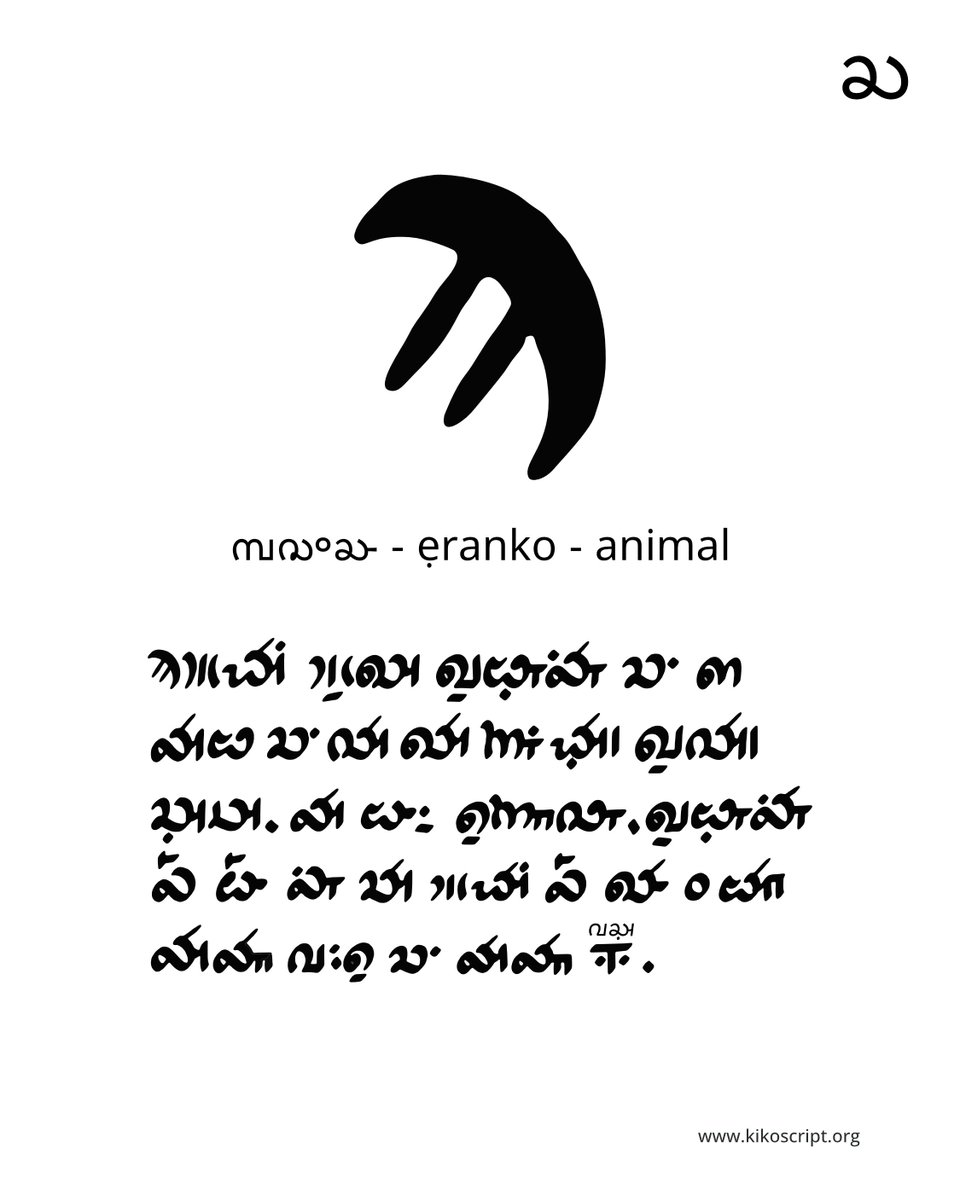
Today’s additional logogram is for the word “ẹranko” (animal). This manuscript-style calligraphy showcases how the Kikọ script can be written with a kàlàmù. In Kikọ, this style is known as ìkọ̀wé ìbílẹ̀ (“foundational script”), the equivalent of a "serif" in typedesign.