The 1977 CBS NFL Today intro is fucking spectacular. The plays get progressively more illegal and fucked up to the point I was half expecting some guy to get eaten by a lion on the field. It’s like a Naked Gun bit. Do yourself a favor and watch this.
A guy was ready to drop $1,500 on a new OLED TV because his 3-year-old Smart TV was freezing up and took 5 seconds just to respond to the remote.
He unplugged it. Deleted old apps. Cleared the cache. The lag kept coming back.
He went to Best Buy to get a replacement.
The home theater installer in the blue shirt stopped him: "Before you spend a grand, let me show you something."
He grabbed a remote and shook his head.
"There are 8 hidden tracking settings throttling your TV's processor right now. Manufacturers turn them all on by default. Nobody tells you they exist. Let's fix this."
Here's what he showed him in the next 8 minutes. 🧵
RESPONSIVE TEACHING! A mini-collaboration with the prolific @C_Hendrick —translating his new @UNESCO guide into a clear, practical summary for busy teachers. If it’s useful, help share these principles—repost 🔁 and download it FREE here: https://t.co/QKGJjjeiKT
What can APs do to prepare for a principal role?
What can first-year Ps do to make the most of the new position?
Principal Ahmed Adelekan shares his thoughts. https://t.co/qYUJSEiD6Y
Tier 3 intervention is the most intensive support in MTSS.
It works best when students around those kids are engaged enough that the teacher can actually focus on who needs them most.
Research backs this up: inclusive classrooms produce stronger academic outcomes, deeper social connections, & better long-term preparation for life after school: https://t.co/wFV1Mo4xyV
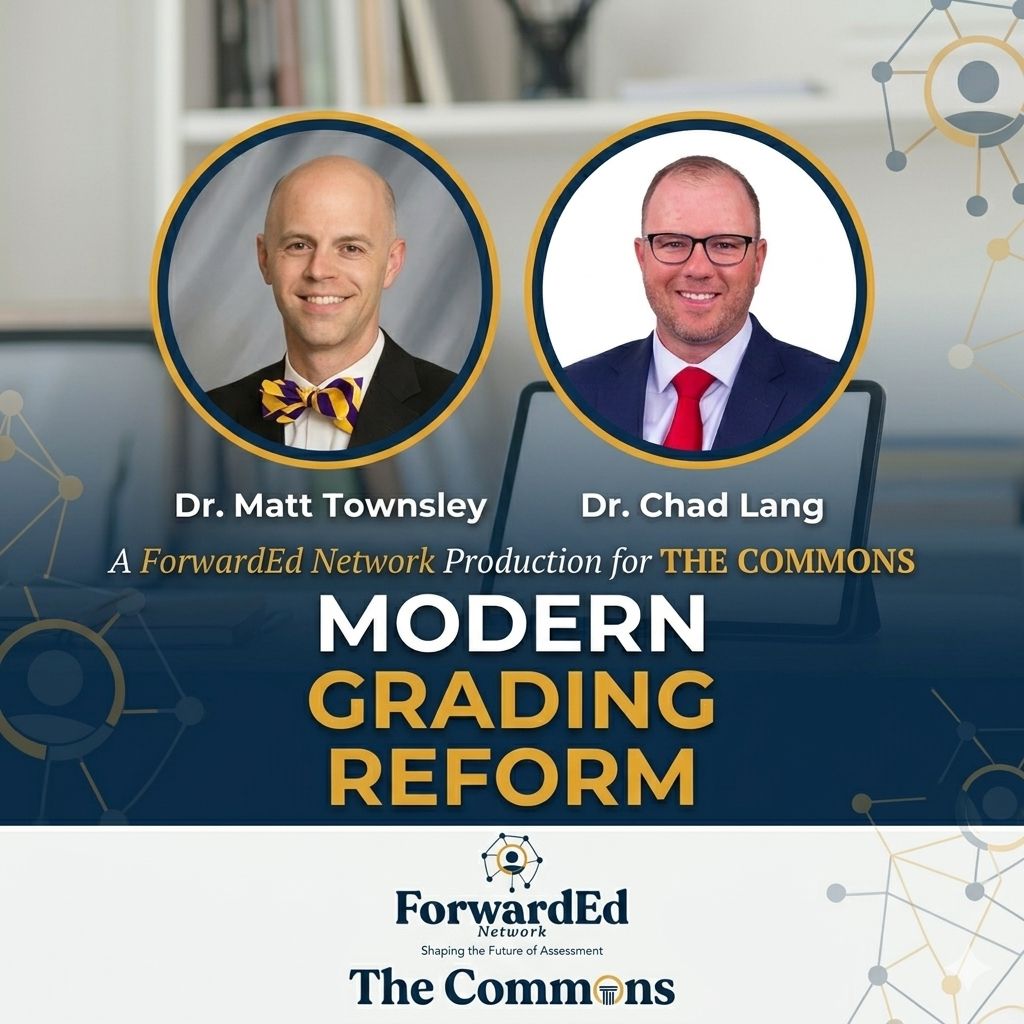
Our4⃣episode mini-series is now online:
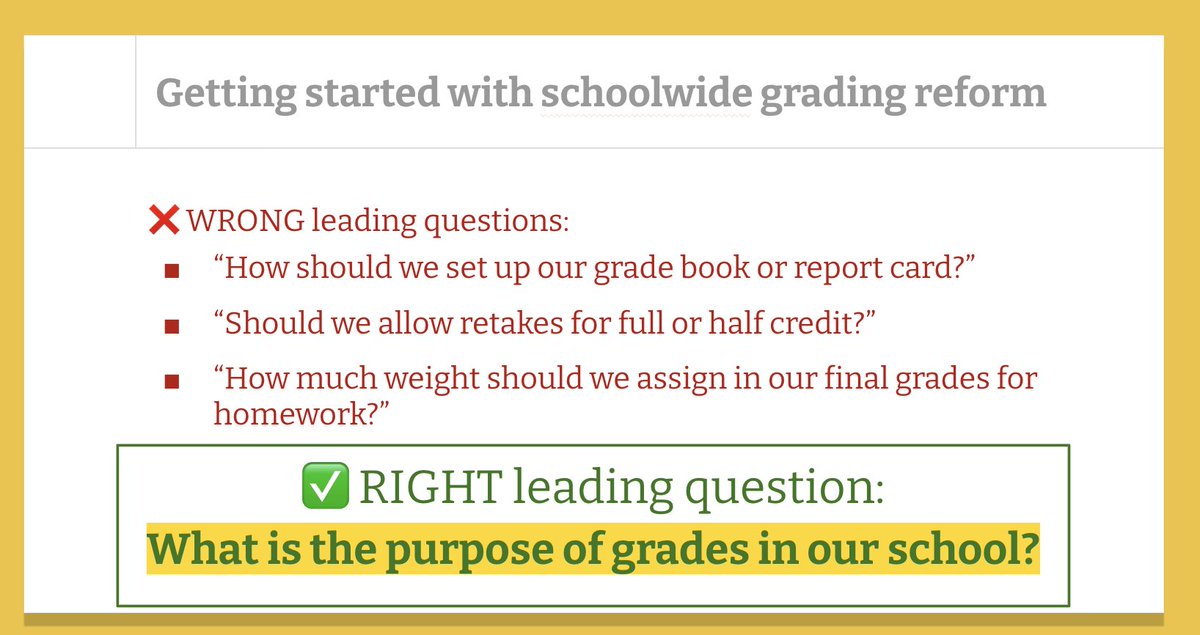
1) Grading Reform Isn't Optional Anymore—Here's Why
2) Creating a Grading Purpose Statement That Sticks
3) Communicating Grading Reform to the Public
4) MTSS for Teachers: Supporting Staff Through Grading Reform
🔗https://t.co/kgBPXMmuZQ
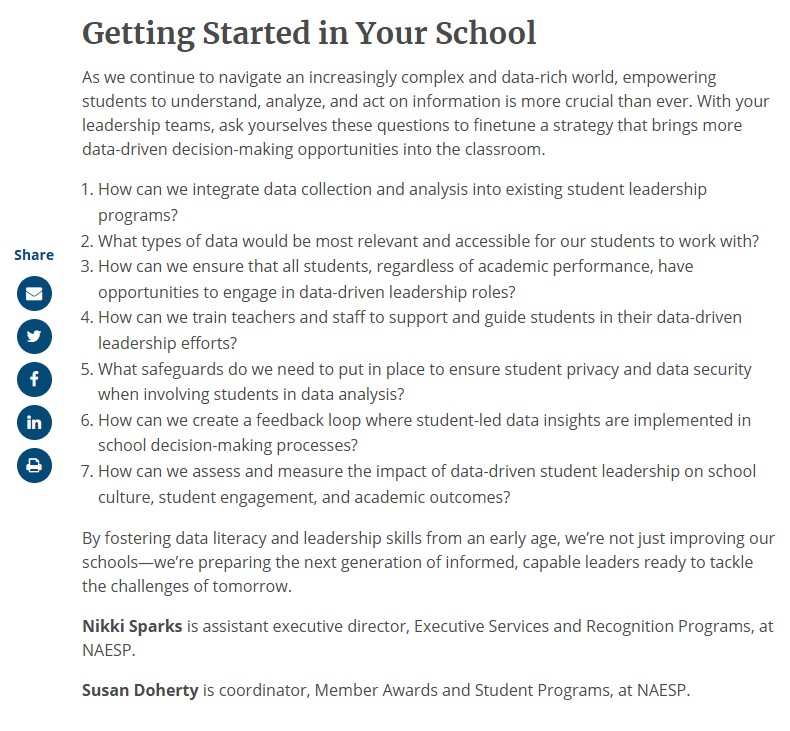
"When students use data to inform school decisions, they’re essentially participating in a microcosm of democratic society."
Read "How Students Use Data to Lead," via @NAESP:
https://t.co/mmkxvjTBaX
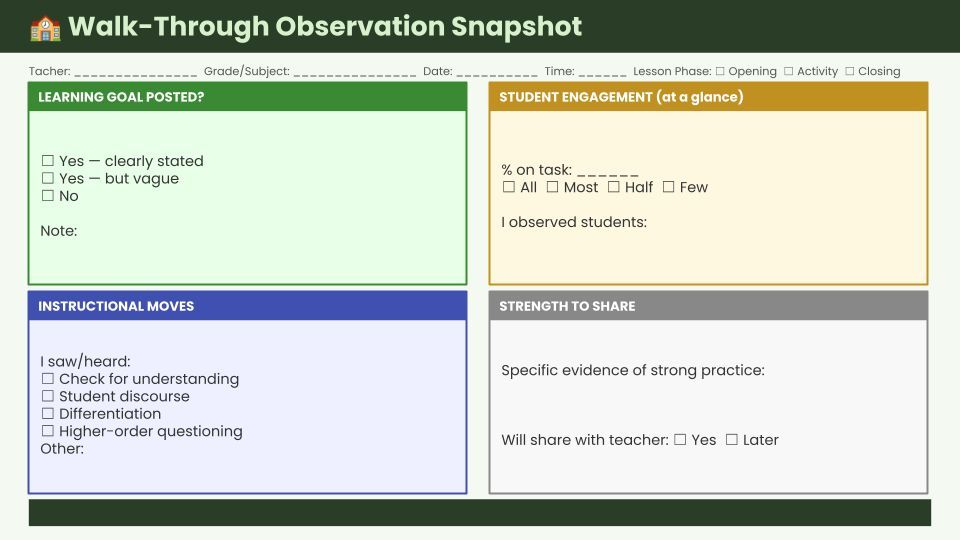
A good walk-through doesn't need pages of notes. This one-page snapshot covers learning goals, engagement, and a strength to share with the teacher. Simple. Fast. Useful. 🏫 #InstructionalCoach
https://t.co/AgHGcHCBQ8
Looking for a practical way to help your team identify “need-to-know” priority standards?
Here’s a tool from Making Grades Matter designed to guide that conversation and bring clarity to what matters most.
📙 https://t.co/2f7WGp44DM
One year as a principal, I asked our staff to write their hopes for students on the wall outside our main office. Teachers, paraprofessionals, custodians, our maintenance technician—everyone contributed.
What struck me most wasn’t just the number of responses. It was the nature of them.
There were no hopes for higher test scores or fewer tardies. No mentions of completed homework or straight A’s.
Instead, these were the kinds of hopes that call people into this profession in the first place—the quiet, powerful convictions that remind us why we do this work.
Here are just a few:
That students believe in themselves and have the courage to follow their hearts.
That every child feels valued, supported, and safe.
That students recognize their potential—and use their unique gifts to help others.
That they learn to embrace challenges and understand that failure is not a destination, but a powerful place to grow.
That they treat one another with respect, empathy, and kindness.
That they develop confidence, curiosity, and a love for learning.
That they leave our school not just smarter, but stronger—better readers, writers, thinkers, and human beings.
That they know, without a doubt, how deeply they are cared for.
These were our hopes.
They were not easily measured. They didn't fit neatly into a data report or a spreadsheet. There was no rubric that could fully capture what a teacher means in the life of a child.
And yet, this is the work.
While some may try to define school success by numbers alone, the true impact of education lives in these moments—in confidence built, in belonging felt, in courage discovered.
I was incredibly proud of our staff, but I also know this: these hopes are not unique to our school. They live in classrooms everywhere. In schools across the country, educators are showing up each day, pouring into students, and working to build brighter futures.
There are many important professions in this world.
But I can’t think of a more meaningful one than this.
Rock on,
Danny