$31 MILLION HOTEL. EVERY PIPE AND WIRE MAPPED IN ADVANCE. BUILT BY TYPING SENTENCES INSTEAD OF PLACING THEM BY HAND.
A 190-room hotel needed its ductwork, plumbing, electrical, and fire suppression modeled and coordinated before construction could start.
The design team connected Kimi K3 to their modeling software through MCP, then had it read photos of the blueprints alongside plain English descriptions of each system and build the model directly instead of placing every component by hand.
Old process: 3 engineers, 6 weeks, around $47,000.
New process: 1 engineer confirming the AI's output, 9 days, roughly $10,500 combined, engineer's time plus AI compute.
Coordinated models finished this way cut change orders by 60 to 80 percent once construction begins.
See the article below for a smaller example of the Kimi K3 + Blender MCP workflow.
Built for the toughest terrain 🤖🏁
At the off-road track, Lynx M20 demonstrates what true all-terrain mobility looks like — confidently navigating rugged paths, uneven ground, and unpredictable surfaces under real racing conditions.
A Chinese robotics team showed how they brutalize humanoid robots.
Kicks, pushes, repeated knockdowns, and recovery training—all to build more robust locomotion policies.
https://t.co/5yYdXgEyP6
How did Walt Disney Imagineering’s robotic Olaf learn to walk? Moritz Bächer poses a great question in this video. 🤖
He may not know impact rewards, but reinforcement learning and Newton’s snow solver helped Olaf find his footing.
Released this week at #SIGGRAPH2026, Newton 1.4 is the latest version of the open-source physics engine co-developed by Disney Research, @GoogleDeepMind, and NVIDIA. 🙌
Chinese company Unitree reveal their "all terrain" wheeled robot.
The military potential for this technology is obvious.
Europe is so far behind China, its scary.
Robotics essentials: FORM FACTOR
Two legs is the least efficient way to move a robot, and almost every humanoid company picked it anyway.
The design space runs from a bolted-down arm, to an arm on a wheeled base, to a quadruped, to a human torso on wheels, to a full biped.
Efficiency falls off a cliff as you go right.
The cleanest measurement is a robot that can do both: ETH's ANYmal, given wheels, drives at a cost of transport of 0.1, which is 83% cheaper than the same machine trotting on the same floor. It also more than doubles its top speed.
Wheels don't fall over, need fewer motors, and cost less to build.
And the floor the humanoids are aiming at is the one the world went out of its way to make flat.
Warehouse slabs are poured to a flatness spec; the robots already in them treat a 5 mm lip as a hazard.
Amazon runs over a million robots, not one of them has legs.
Boston Dynamics built a wheels-on-legs machine, Handle, then killed it and shipped Stretch, an arm on a wheeled box -> imagine doing warehouse work wearing rollerblades.
Legs earn their cost somewhere else.
Only 3.5% of American homes have a zero-step entrance, single-floor living and doorways wide enough to roll through.
The warehouse is a wheeled world. The house is not, and never will be retrofitted.
So the honest scoreboard for 2025: about 13,000 humanoids shipped worldwide, most of them to research labs, against a million wheeled machines inside Amazon alone.
Even Agility's Digit, the one biped doing paid work, has bird legs, not human ones.
The bipeds are winning the funding round while the wheels are winning the factory floor.
LimX just released the TRON 2 Autonomous Mobile Manipulation Kit, and demonstrated the possibilities of modular design.
One use case demo I really like shows dexterous hand picking up takeout, the wheeled-legged robot smoothly climbing a flight of stairs, and then handing it off to another TRON2
It combines the speed of wheels with the high mobility of legs,3D perception, autonomous navigation, whole-body motion control+manipulation…
---
Not every building has an elevator. A wheeled-legged TRON 2 could become a truly reliable life assistant, especially for elderly people living alone.
Elder care semi-humanoids are going to be a great born. They're becoming safe enough, reliable enough, and low cost enough that this is much more reasonable. Main barrier remains the "system integration" necessary to make them actually deployable at scale.
Dude, if we get actually good mechanized picked tea, it's gonna be a gamechanger. The American south will absolutely wreck global tea production. The labor cost bottleneck has been prohibitive for American tea, and using a cutter to harvest is a big quality loss. An actual leaf-plucker robot would allow capital-deep American farmers to get in the game on a crop which is extremely well-suited to the climate of the southeast-- so much so that its close genetic relative, the camellia flowers, grows wild without assistance!
🚨ANTHROPIC ACABA DE PUBLICAR EL MANUAL PARA MONTAR UNA EMPRESA SIN EMPLEADOS
>CEO: 1 persona.
>empleados: agentes de claude
dura 30 minutos y es gratis
Guarda esto en favoritos para que no lo pierdas.
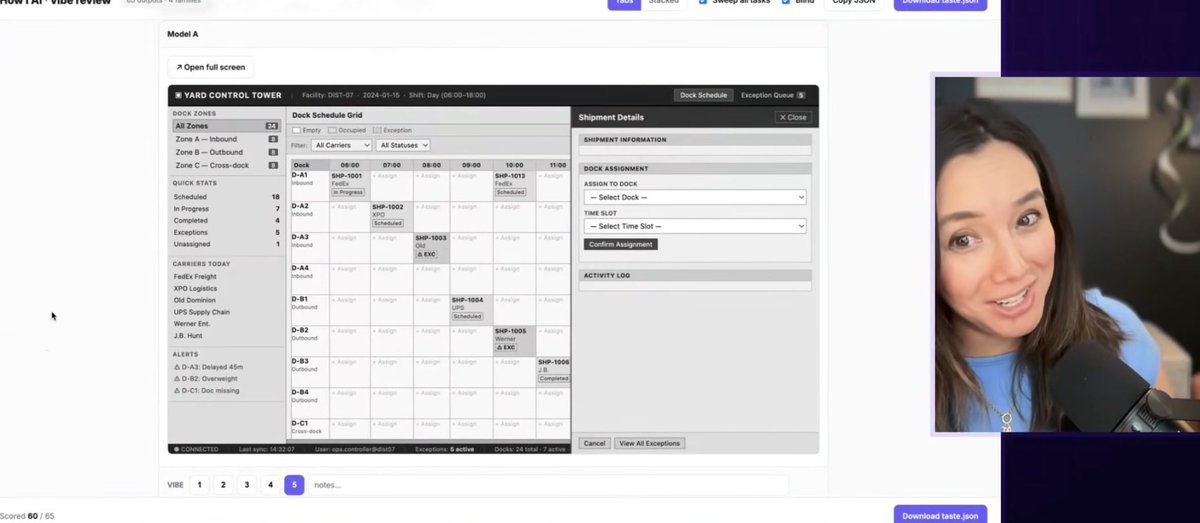
This one was very fun. I tested Sonnet 5 and four other models against 62 one shot prototypes across saas, mobile, etc.
Then I hand scored them and compared my judgement to the LLM’s
(I have better taste)
all on YT: https://t.co/UZx3n2AbKT
Claude Fable 5 and GPT-5.6 are cooked already…
Sonnet 5 vs Opus 4.8 on another agentic video pipeline.
Both generated a storyboard with GPT Images 2.0, then fed it into Seedance 2.0, all through Higgsfield MCP on Claude.
Same quality, but each directed Seedance 2.0 completely differently.
i can't get enough of these DIY robotics projects
this Estonian inventor built a robot that spray-paints images onto the sides of buildings
he wanted to put murals on buildings without the scaffolding, crews, and the weeks of manual painting...
so he spent years building a wall-climbing robot that prints them instead.
here's how it works:
1. you start with any image
2. AI breaks that image down into thousands of tiny colored dots
3. those dots turn into instructions telling the robot exactly where to move and when to fire paint
4. the robot climbs the wall on Kevlar cables, with little propellers pushing it flat against the building
5. it fires paint dot by dot across the surface of the wall
6. up close it's just scattered dots, but from the street it snaps into a full mural
the robot muralist is nicknamed Albert (after the Einstein mural it first painted)
Albert can cover a whole 240-square-meter wall in a single day, up to 100x faster than a crew painting by hand
he's already used it on real buildings across Estonia and even the walls of Tesla's factory in Berlin
my favorite part is knowing a prompt someone typed on a laptop is now four stories tall on a real wall lol
Dario Amodei: "If AI really will soon be ‘a country of geniuses in a datacenter’, or anything remotely close to it, then AI is likely to be the dominant source of military and economic power for any nation."
This is obvious, this will be the case...and that's why every country should invest in AI as much as possible. Including loans, it will be worth it.