PART ONE: THE MAKING OF AN ENIGMA
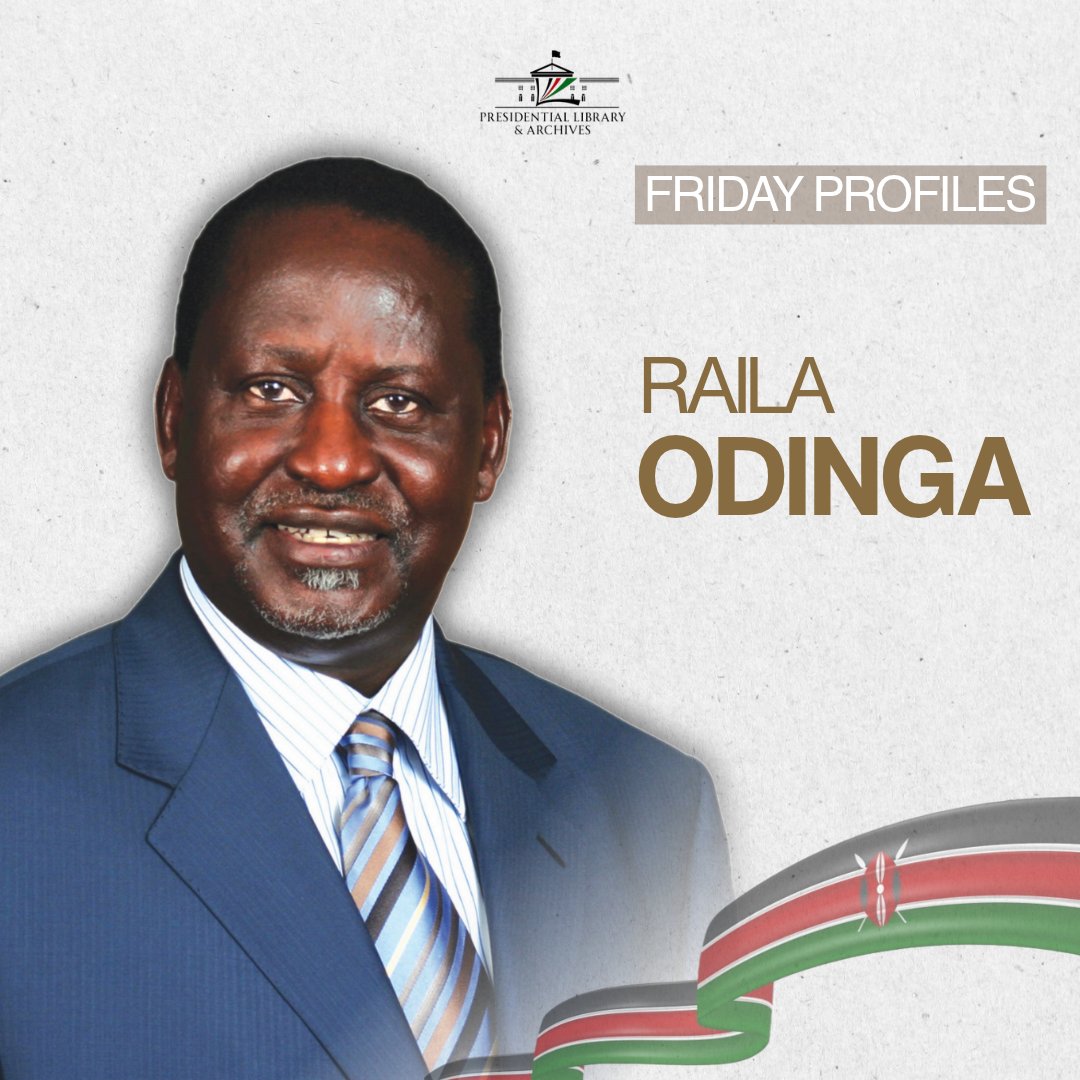
There are politicians whose careers follow a straight line. Raila Amolo Odinga's did not.
His journey through Kenya's political history was a sequence of unexpected turns, improbable alliances and sudden reversals, which kept even his opponents guessing his next move. Perhaps that is why one of his names was Agwambo, the mysterious one.
But before he became Baba, the opposition chief, presidential candidate and Prime Minister, a man whose name could turn an ordinary rally into an event, there was a boy born into politics who first became an engineer.
Raila was born on 7 January 1945 to Mary Juma and Jaramogi Oginga Odinga, a towering figure of the independence struggle and Kenya's first Vice President. He went to Kisumu Union Primary, then Maranda Primary and Maranda High School in Bondo, Siaya County.
Around 1962 he left for East Germany, studying German at the Herder Institute in Leipzig before moving to Magdeburg for technical studies. In 1970 he graduated with a Master's-equivalent diploma in Mechanical Engineering and returned to Kenya. Raila taught at the University of Nairobi and worked at the Kenya Bureau of Standards (KEBS)s before politics took over his life.
His political path would break away from his father's, slipping out of that long shadow, like a river that knows its source but chooses its own course.
By the 1970s and early 1980s, Raila was deeply involved in political activism, at a time when Kenya's political space was narrowing.
Then came 1 August 1982.
A section of the Kenya Air Force attempted to overthrow President Daniel arap Moi's government. The coup failed. In its aftermath, Raila was accused of involvement, charged with treason and detained. The accusation would remain one of the most contested chapters of his early political life; what is beyond dispute is that the failed coup changed the course of his life.
For the next several years, the engineer disappeared into detention.
He would not emerge the same man.
Raila spent years behind bars, much of it in solitary confinement. Released in 1988, he was soon detained again, caught up in the turbulent struggle to bring back multiparty politics. In July 1990, during the Saba Saba pro-democracy agitation, he was detained once more. Freed the following year, he slipped into exile in Norway, fearing for his safety.
But exile did not end the journey.
In February 1992, Raila came home to a Kenya preparing for its first multiparty elections in decades. He joined FORD-Kenya, the party his father lead, and later that year won the Lang'ata parliamentary seat, a position that would make him one of the most recognisable faces in Kenyan politics.
Then, in 1994, Jaramogi died. Raila lost the battle for FORD-Kenya's leadership to Michael Wamalwa Kijana, and as the rift in the party deepened, he walked away. He took the reins of the National Development Party and carried it into the 1997 election, where he ran for president and finished third, behind Daniel arap Moi and Mwai Kibaki, while holding on to the Lang'ata seat.
For many politicians, that might have been the end of the road. For Raila, it was merely another turn.
From Moi's jail to Moi's Cabinet
Then came one of the great paradoxes of Raila Odinga's political life.
In 2001, Raila’s National Development Party joined forces with Moi's KANU, and Moi named him Minister for Energy. It was an extraordinary reversal. The man who had spent years fighting the Moi establishment now sat inside it.
But the arrangement was never simply about a Cabinet seat. As the 2002 succession battle gathered pace, Raila and other senior KANU figures expected Moi to choose one of them. Instead, he chose Uhuru Kenyatta, son of Kenya's first President, Jomo Kenyatta.
“Kibaki Tosha”
On 22 September 2002, Raila and the other disgruntled KANU ministers, now calling themselves the Rainbow Alliance, gathered at the Serena Hotel before heading to a huge opposition rally at Uhuru Park. It was open rebellion, yet they were still inside the government.
There, Raila asked a deceptively simple question:
"Si ata Mzee Kibaki anatosha?"
Wasn't Mzee Kibaki enough?
The question birthed the ‘Kibaki Tosha’ declaration.
It was one of those moments in politics when a few words can alter the direction of a campaign.
The opposition had a problem. It had many hopefuls, many parties and plenty of ambition, but no single candidate around whom the factions could unite. Raila threw his weight behind Mwai Kibaki, and the forces that came together would form the National Rainbow Coalition.
On 13 October 2002, Raila resigned from the Cabinet and walked out of KANU, with Kalonzo Musyoka, Joseph Kamotho and George Saitoti beside him. The political landscape was rearranging itself fast.
And Raila stood right in the middle of it.
The man who had wanted to succeed Moi had instead decided to help another man defeat Moi's chosen successor.
And then, just weeks before the election, the campaign nearly collapsed.
On 3 December, Kibaki was returning to Nairobi from a rally in Machakos when his vehicle crashed. He was seriously injured and flown to London for specialised treatment.
The Opposition was suddenly without its candidate on the campaign trail.
Raila stepped into the gap.
A football enthusiast, he reached instinctively for a football metaphor.
“Our captain is injured but the game will go on.”
The campaign continued.
Kibaki returned, but the final stretch of the election was carried largely by the NARC team, with Raila among its most prominent campaigners.
On 27 December 2002, Kenyans went to the polls.
NARC won.
After 39 years of KANU rule, Kenya was about to witness a new political era.
Mwai Kibaki was headed for State House.
And Raila Odinga had played a decisive role in getting him there.
For Raila, however, the victory contained another unanswered question.
What exactly was his place in the new Kenya he had helped create?
The answer would produce another twist.
And perhaps another Raila altogether.
But one Friday is hardly enough for a life this consequential. Join us next Friday for Part II.
Sixty years ago, Kenya was building more than a new country; it was building the institutions that would make independence work. One of them was the Central Bank of Kenya, established in 1966 and now marking six decades of service.
As the Bank celebrates its Diamond Jubilee this week, with President William Ruto joining the celebrations as Chief Guest, Friday Profiles looks back at the man who became its first Kenyan Governor.
On the 11th of March, 1925, in a village called Chorong’i that today sits on the outskirts of Nyeri town, Duncan Nderitu Ndegwa was born into a humble household.
He came of age in a world caught between two forces: the pull of traditional life and the growing presence of formal education, which many communities regarded with suspicion. Ndegwa chose the classroom. He sat the Common Entrance Examination at Ngangarithi Primary School and passed, earning his place at Kagumo High School in 1941. He proved early that he was no ordinary student. By 1944 he had been admitted to the prestigious Alliance High School, and by 1947 he was leading it as the school captain.
From Alliance, Ndegwa carried his ambitions to Makerere University in Uganda, the great incubator of East Africa's future leaders, where he earned a diploma in education in 1951.
A mind at ease with numbers, patterns, and order Ndegwa returned first to where he began, teaching mathematics at Kagumo High School. But history had other plans for him. A government scholarship lifted him out of the classroom and carried him across continents to the University of St Andrews in Scotland, where he earned a master's degree in Economics.
By the time Kenya declared its independence in 1963, Ndegwa was no longer on the outside of government looking in, he was already inside it, rising steadily through the Treasury. He would go on to serve as Permanent Secretary in the Ministry of Finance, then Permanent Secretary, Secretary to the Cabinet, and Head of the Public Service.
When the Central Bank of Kenya opened its doors in September 1966, the country was barely three years into independence. The Bank had been created by an Act of Parliament that March, and its first Governor, Dr. Leon Baranski, arrived on secondment from the International Monetary Fund.
That foreign hand steadying a newborn institution would not remain foreign for long. In December 1966, Duncan Ndegwa was named Governor-designate, and in May 1967 he stepped into the role fully becoming the first Kenyan, and the first African, to lead the Central Bank of Kenya.
He inherited an institution still finding its feet, operating out of a modest building on Lt Tumbo Avenue, staffed by just sixty people, thirty-eight Kenyans and twenty-two expatriates. Under Ndegwa's stewardship, the Bank grew alongside the responsibilities placed on it, eventually outgrowing its rented walls altogether and moving into its own headquarters in Nairobi in 1972.
The Banking Act of 1968 strengthened the Central Bank's regulatory authority just as Kenya's financial sector was expanding into new territory, diversifying and deepening its reach across the country. Under Ndegwa’s watch, Kenya also received its first allocation of Special Drawing Rights from the IMF, based on the country's quota.
It was a period of construction and, at times, crisis. Not long after Ndegwa took office, Tanzania's nationalisation of its commercial banks sent shockwaves across the border, disrupting financial transactions between the two countries. The Central Bank had to improvise emergency arrangements just to keep transactions flowing between Kenyan banks and the Bank of Tanzania. The very next year brought another blow. The devaluation of the British pound, which rippled directly into the Kenya shilling, still pegged to sterling at the time. Each crisis demanded the same thing of Ndegwa and his young institution: steady hands, and the will to adapt in real time.
He would remain Governor until December 1982, more than fifteen years at the helm, a tenure no successor has yet matched.
Like a few great men of his generation, Duncan Ndegwa did not inherit an institution, he built it, learning what it meant to run a critical institution of the country at a time when the country itself was still learning to run itself.
Watch the story of Ndegwa here: https://t.co/G8aOXbjDcb
@CBKKenya
FRIDAY PROFILES
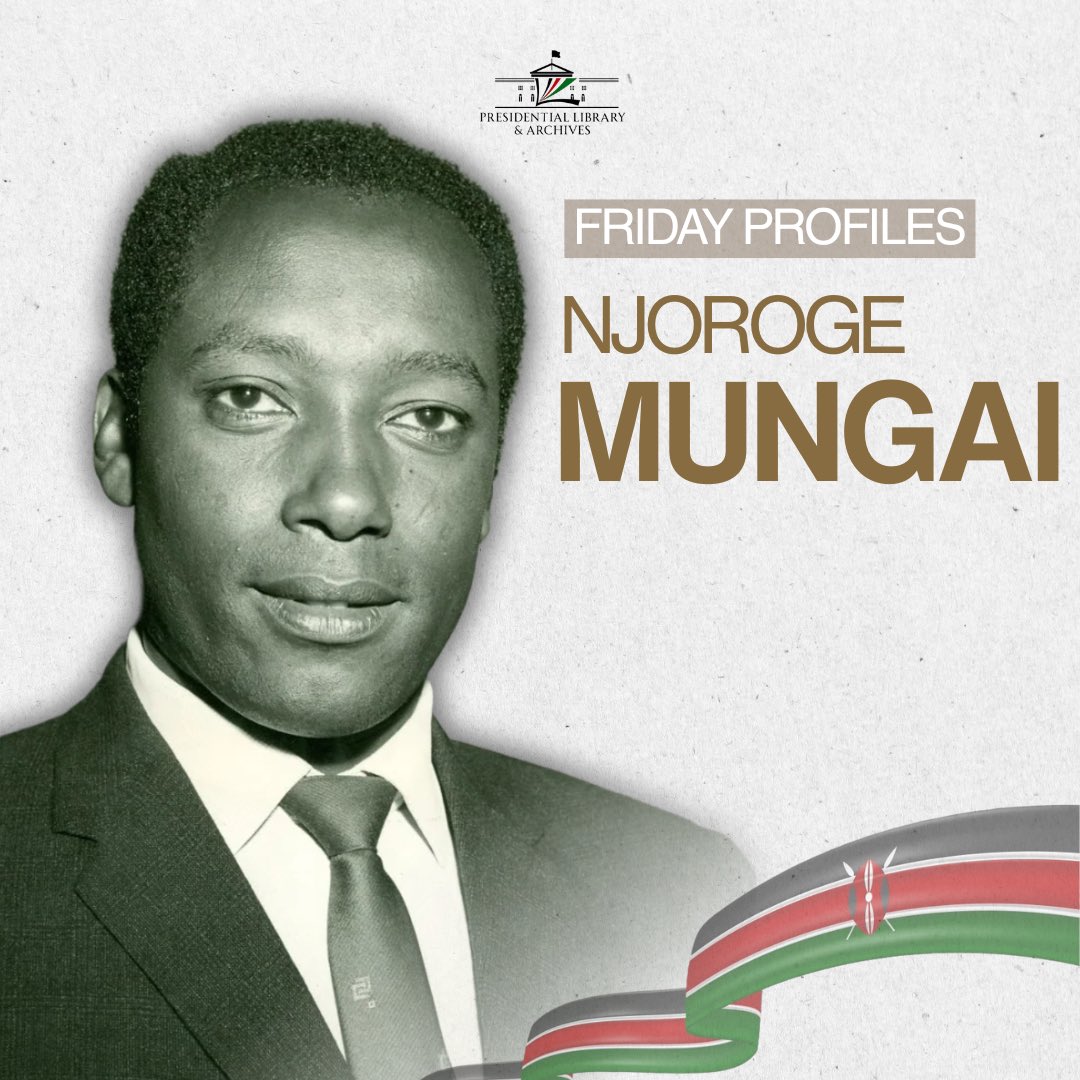
Dr Njoroge Mungai : The Physician of the Republic
On the night of 12 December 1963, rain poured relentlessly over Uhuru Gardens as Kenya celebrated her first moments of independence. As the Union Jack came down and the Kenyan flag was hoisted, Dr. John Njoroge Mungai stood among the country's founding leaders, filled with hope for the new nation.
When the celebrations ended, the heavy downpour left many official cars hopelessly stuck in the mud. Rather than wait to be rescued, the newly appointed Minister for Health and Housing simply stepped out and walked to State House through the rain.
Years later, he recalled the moment with a smile: "Who wanted to bother pushing cars when we could celebrate by walking in the rain?"
It was a fitting image for a man whose life would combine medicine, politics, diplomacy and public service.
Born on 7 January 1926 in Gichungo village on the Nairobi-Kiambu border, Mungai grew up at the crossroads of colonial and traditional Kenya. His mother, Leah Gathoni, was among the first generation of literate African women, and unlike most African children of the time, he was born in a hospital, a remarkable beginning for someone who would later become one of Kenya's most distinguished physicians.
From Bus Driver to Doctor
Before becoming a doctor, Mungai earned a living behind the wheel of a 60-seater Chevrolet bus, ferrying passengers between Limuru & Nairobi after graduating from Alliance High School in 1946.
His ambition, however, stretched far beyond the highways of Central Kenya. Inspired by missionary doctors, he pursued medicine, at South Africa's Fort Hare University before continuing to Stanford Medical School and Columbia University in the United States.
Returning home in 1959, he found a country still scarred by the Emergency. Determined to improve healthcare for ordinary Africans, he used funds raised by friends in America to establish affordable and free clinics in Thika, Embu and Riruta, while also operating a mobile clinic that treated malnourished children.
Doctor to a Nation
As Kenya's independence movement gathered momentum, Mungai became one of its key strategists. He served as secretary to the committee that established KANU and, as the party's National Organising Secretary, was a member of the African nationalist delegation to the 1960 Lancaster House Conference in London.
There, alongside Oginga Odinga, Tom Mboya and other nationalist leaders, he pressed for immediate, unconditional independence and firmly rejected any compromise on the principle of "one man, one vote."
Using his medical credentials, he successfully secured permission to examine the detained Jomo Kenyatta, disproving colonial claims that Kenyatta was too ill to lead. The examination strengthened calls for Kenyatta's release and marked the beginning of Mungai's role as his trusted personal physician.
In anticipation of Kenyatta's freedom, Mungai also helped raise funds to purchase a Mercedes-Benz 220SE for the future President. He personally drove the vehicle to Gatundu, ensuring it was waiting for Kenyatta on his return.
Statesman on the Global Stage
Mungai later served in several senior Cabinet positions, including Internal Security and Defence, where he oversaw the strengthening of Kenya's armed forces during the Shifta conflict and helped negotiate the 1967 Arusha Accord.
As Minister for Foreign Affairs, he became one of Africa's leading diplomatic voices, speaking out against apartheid and colonialism while championing the interests of newly independent African states.
Perhaps his greatest diplomatic triumph came in securing Nairobi as the headquarters of the United Nations Environment Programme (UNEP), the first major UN agency headquartered in the developing world. When attempts were later made to relocate UNEP to Geneva, Mungai successfully led Kenya's campaign to keep it in Nairobi, cementing the city's place as a global environmental hub. Dr Mungai died in 2014 at the age of 88.
FRIDAY PROFILES
THE BRILLIANT TECHNOCRAT WHO DIDN'T LAST
Some men rise through the system. Others are the system—until politics reminds them otherwise.
Francis Yekoyada Omoto Masakhalia was one such man.
Long before he briefly held Kenya’s most sensitive docket, he was the archetype of a top-tier civil servant—sharp, methodical, and deeply embedded in the machinery of government. In 1972, Jomo Kenyatta tapped him as the country’s first Chief Economist. By 1980, under Daniel arap Moi, he had climbed to Permanent Secretary in Economic Planning.
This was a man built for policy—not politics.
THE SCHOLAR AMONG GIANTS
At Maseno School, he shared classrooms with Barack Obama Sr., under the watch of none other than Jaramogi Oginga Odinga.
When Tom Mboya launched the famous airlifts to America, both Masakhalia and Obama Sr. were beneficiaries. Masakhalia would head to Denver, sharpening an already formidable intellect.
By every measure, he was destined for greatness.
THE FALL BEFORE THE RISE
Then came 1984.
Accused of nepotism while serving in Water Development, Masakhalia was fired. For many, that would have been the end.
Instead, it became his political beginning.
He resurfaced at the United Nations in Addis Ababa, then Lesotho—quietly rebuilding. And when he returned home in 1988, the same controversy that ended his civil service career won him public sympathy.
He was elected the first MP for Butula.
SIX MONTHS AT THE TREASURY
On 27 February 1999, Masakhalia reached the pinnacle: Minister for Finance.
Six months later, he was gone.
His tenure was anything but quiet. He enforced austerity—famously capping engine sizes for government vehicles and sidelining luxury cars. But the economy also faltered:
The shilling slid sharply
Interest rates doubled
Kenya defaulted on external debt
The explanation? ‘Administrative delays.’
In a ministry where precision is everything, that was fatal.
THE TECHNOCRAT’S BLIND SPOT
Masakhalia’s strength became his weakness.
He knew too much—or thought he did.
Accustomed to being the expert, he resisted briefings. But ministers don’t just know—they coordinate, communicate, persuade. In high-stakes donor meetings, that gap showed.
And in politics, perception moves faster than intellect.
THE EXIT—OVER THE AIRWAVES
His dismissal came in the most Kenyan way possible: the 1 PM news bulletin.
No warning. No ceremony.
Just like that, he was moved to Energy.
Later, he would reflect with quiet frustration: six months wasn’t enough to turn the economy around.
He wasn’t wrong.
THE LEGACY
Despite the short stint, Masakhalia left one lasting mark: the Medium-Term Expenditure Framework—a budgeting system still shaping Kenya’s fiscal planning today.
He remains a paradox:
A brilliant mind
A seasoned insider
A minister undone, not by lack of knowledge—but by the politics of leadership
History buffs—
Was Masakhalia simply unlucky… or does his story prove that in government, how you lead matters just as much as what you know?
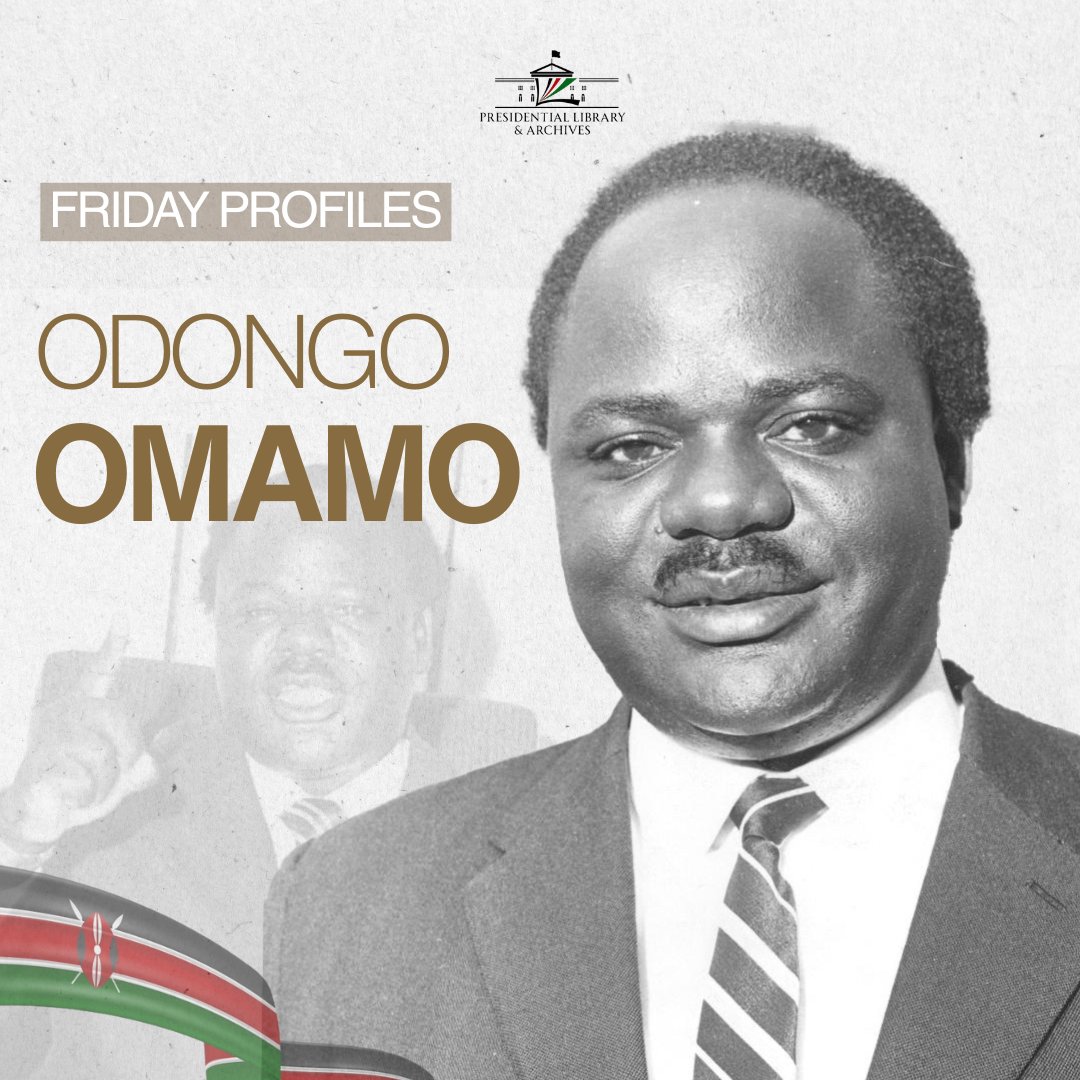
FRIDAY PROFILES: Dr. William Odongo Omamo
The tale of Dr. William Odongo Omamo is one of a "gigantic" life, lived with the grace of an orator and the strength of the elephant that gave him his name. Born on February 27, 1928, in the hills of Bondo, he emerged from a vast family of eight children—a small part of a much larger lineage established by his father’s nine wives.
His journey began in 1936 at Maranda Sector School, where he arrived on his first day "half naked," clad only in a strip of goat skin. Yet, even then, he stood out "like a cockerel among chickens". His teachers saw a leader in the young boy who possessed a rare "gift of the gab" and a mind that grasped lessons with lightning speed. While others faltered, Omamo’s academic path was a "bed of roses," leading him from the classrooms of Maseno School—where his lifelong love for agriculture took root—to the far-off lands of India, Pakistan, and the United States.
It was in 1962, while overseeing agricultural surveys in Homa Bay, that the legend of "Kaliech" was born. He would tell the local farmers, "If you go out hunting, do not limit yourself to a rabbit when you can get an elephant!". This philosophy, paired with his massive frame and elephantine sense of humour, made the nickname inseparable from the man.
Omamo was a pioneer, making history as the first African principal of Egerton College before the siren call of leadership pulled him into the turbulent waters of Kenyan politics in 1969. He stepped into the vacuum left by the detention of Jaramogi Odinga, winning the Bondo parliamentary seat and eventually serving as a Minister under both Presidents Kenyatta and Moi. He was a man of the soil who introduced rural afforestation to protect the land he loved, and a man of the people who could leave an audience in stitches even when they pressed him for accountability.
Though the political tides often ebbed and flowed—leading him through defeats, nominations, and eventual defection to the National Development Party—his impact remained outsized. He managed great sugar companies, chaired university councils, and led commissions that shaped the very cities of Kenya.
In 2002, likening himself to a balloon that must eventually be deflated, the "master storyteller" retired from the stage. When he passed away on April 27, 2010, at the age of 82, he left behind a legacy as expansive as the Kenyan plains and a family of sixteen children, including prominent figures like Raychelle Omamo, to carry his name forward into history.
The tale of James Gichuru —the warrior Mwalimu
The story of James Samuel Gichuru is one of a quiet storm—a man of books yet, who carried the heart of a warrior.
Born in 1914 to pioneer Christians, Gichuru was raised to value the classroom over the cattle boma, starting his schooling at just five years old. He was a brilliant mind, finishing Alliance High School at sixteen and later returning there as one of the very first African teachers.
Except there was a problem.
The colonial administration demanded that African teachers wear schoolboy shorts while white teachers wore long trousers. But Mwalimu Gichuru was not one for quiet submission. He refused the indignity and was swiftly transferred aka demoted to Kikuyu Secondary School.
Yet this only stoked his fire; soon, he was traversing the country on a bicycle, weaving together the threads of a revolution.
Then in the early 1950s, the British appointed him a chief in a bid to tame him. It was a gamble that backfired spectacularly. Instead of enforcing colonial law, Gichuru used his office to shield the independence struggle, even allowing Mau Mau oath ceremonies to take place under his watch. His boldness peaked at a baraza in Dagoretti Market, where he famously declared:
“Women have given birth to many men, but the one who gave birth to me gave birth to a warrior”.
The empire’s retaliation was swift.
Two days later, colonial officers arrived at his home and he was arrested, removed from his public position, and hauled away with nothing but a small wooden box of clothes. He spent years in restriction, moved from Githunguri to the isolated edge of the Gatamaiyu forest where they tried to starve him into silence.
But the people secretly kept him fed with charcoal traders smuggling letters and food from his wife, Rahab, hidden deep inside sacks of soot and coal.
When the sun of independence finally rose, Gichuru showed a rare kind of greatness: the grace to step aside a second time from the nation’s leading party, for Jomo Kenyatta. The first time in 1947 he vacated the presidency of KAU after Kenyatta returned from Europe. Then in 1961 he relinquished leadership of KANU when Kenyatta left prison. Gichuru went on to become Kenya’s first Finance Minister, bringing the young nation into the global fold of the World Bank and IMF.
Yet, even in the halls of power, he remained a man of the people, often found sharing a drink and a story with ordinary citizens in Kikuyu town. Gichuru died in 1982.
Memories Monday
February 24, 1972: Two of Africa’s most formidable architects of independence stand side-by-side at Embakasi Airport (JKIA). To the left, Mzee Jomo Kenyatta, Kenya’s founding father, raises his iconic fly-whisk and beside him stands Emperor Haile Selassie I of Ethiopia, in his military honours. This wasn't just a diplomatic formality; it was a reunion of old friends.
If you could sit with these two for 20 minutes, what is the ONE question you’d ask them?
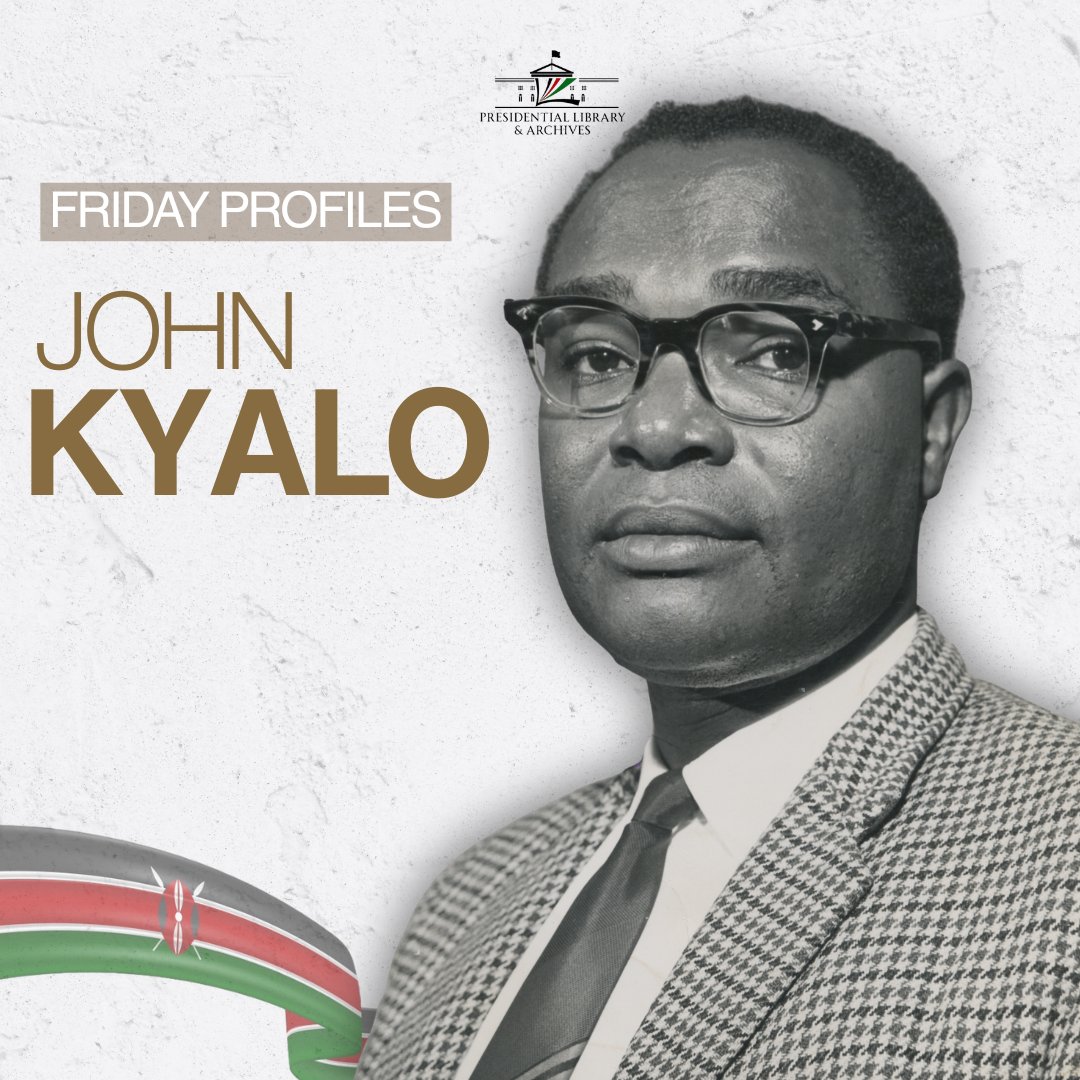
John Musembi Kyalo — The Minister Who “Misplaced” a Hospital
In Kenya’s political folklore, few stories are told with as much amusement—and quiet admiration—as that of John Musembi Kyalo, the man who, depending on who you ask, either made a bureaucratic blunder… or pulled off a masterstroke.
But long before he stepped into the charged arena of elections, he had already climbed to the very top of government administration—serving as a District Officer, rising through the ranks to become Director of Immigration, and eventually Permanent Secretary under both Jomo Kenyatta and Daniel arap Moi. He was, by all accounts, a technocrat—methodical, efficient, and deeply embedded in the machinery of the State.
But the true measure of the man—nicknamed "Kyalo wa Makindi" or "the forceful one"—was revealed only after he traded his suit for the unpredictable arena of politics.
Except, politics proved less forgiving.
He tried once. Lost.
Tried again. Lost.
And even after the 1982 attempted coup reshaped Kenya’s political landscape, Kyalo still couldn’t quite break through.
Then in 1988, on his third attempt—and through the controversial mlolongo (queue voting) system—he finally entered Parliament.
By then, he had learned something important: he was not a rally man. Not a crowd-stirring orator. So, he built a different kind of campaign—quiet, deliberate, almost surgical. He knocked on doors at night, speaking one-on-one, building trust in whispers rather than speeches.
It worked.
By 1992, he was no longer just an MP—he was in Cabinet, appointed Minister for Health by President Moi, a sign of both trust and proximity to power, aided in no small measure by his alliance with the legendary Ukambani kingmaker, Mulu Mutisya.
And then came the hospital.
It was during his tenure as Minister for Health that Kyalo executed his most audacious "clerical error"—a story that remains a hilarious and legendary footnote in Kenyan governance.
At the time, the people of Makueni were suffering, traveling 60 kilometres to Machakos just for basic medical care. Kyalo saw the need, but the bureaucratic wheels moved slowly, and the funds were often earmarked elsewhere. Suddenly, a multi-million-shilling modern hospital began rising in Makueni with unprecedented speed, overseen by the Minister himself.
When the ribbon was cut and the doors opened, a confused cry rose from Nyeri District. The political leaders there were wondering what had happened to their own planned facility in Mukurweini.
With the straightest of faces, Kyalo launched a "thorough investigation" into the matter. His conclusion? A tragic, unfortunate clerical mix-up. He apologised profusely to the people of Nyeri, blaming the ministry’s confusion for sending Mukurweini’s hospital to Makueni. He promised to "correct" the error in the next budget—which he eventually did—but the deed was done.
Years later, over drinks with close friends, the "forceful" Kyalo finally dropped the mask, admitting with a wink that the mix-up had been a calculated means to an end. He had simply decided that his people had waited long enough.
A Final Farewell
Kyalo’s voice, once used for quiet night-time persuasion and clever ministerial defences, began to fail him midway through his term. Diagnosed with throat cancer, he passed away in 1995 while still in office. He was buried with the full honours of the state, mourned by the President and the entire Ukambani leadership—leaving behind a legacy of a man who knew exactly how to work the system, even if it meant "losing" a whole hospital along the way.
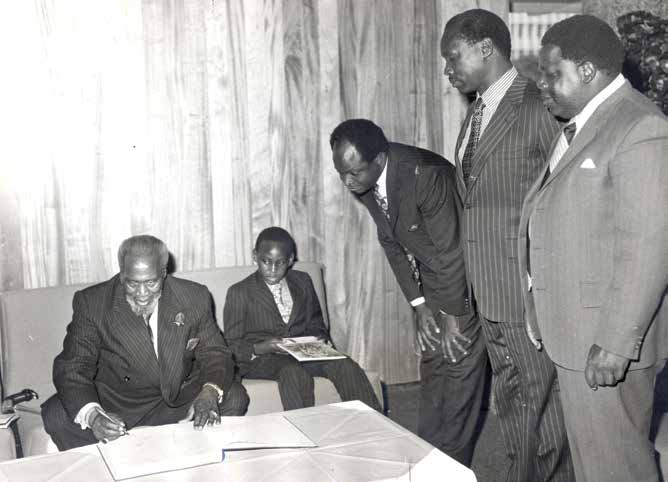
Power, proximity, and legacy in one frame. Jomo Kenyatta attends to official business as Daniel arap Moi and Mwai Kibaki look on—figures who would later steer the nation in their own right. Seated quietly beside them is Muhoho Kenyatta, a reminder that beyond the weight of statecraft, this was also a moment of family, continuity, and the subtle intersections between public duty and private life.
Flashback to September 1, 1999, at Mombasa’s Tononoka Grounds. President Daniel arap Moi had the crowd in the palm of his hand, leading the famous KANU salute with calls to tingisha , and the response was deafening. What is the one thing you remember most about the rallies of the 90s?
May 24, 1968, Mombasa: President Jomo Kenyatta and Vice President Daniel arap Moi sing to the “KANU yajenga nchi” tune—a song that had become the unmistakable anthem of the ruling Kenya African National Union and the soundtrack of a young nation in motion.
For many, its rhythm carried the optimism of the era. What memories does this song stir for you?
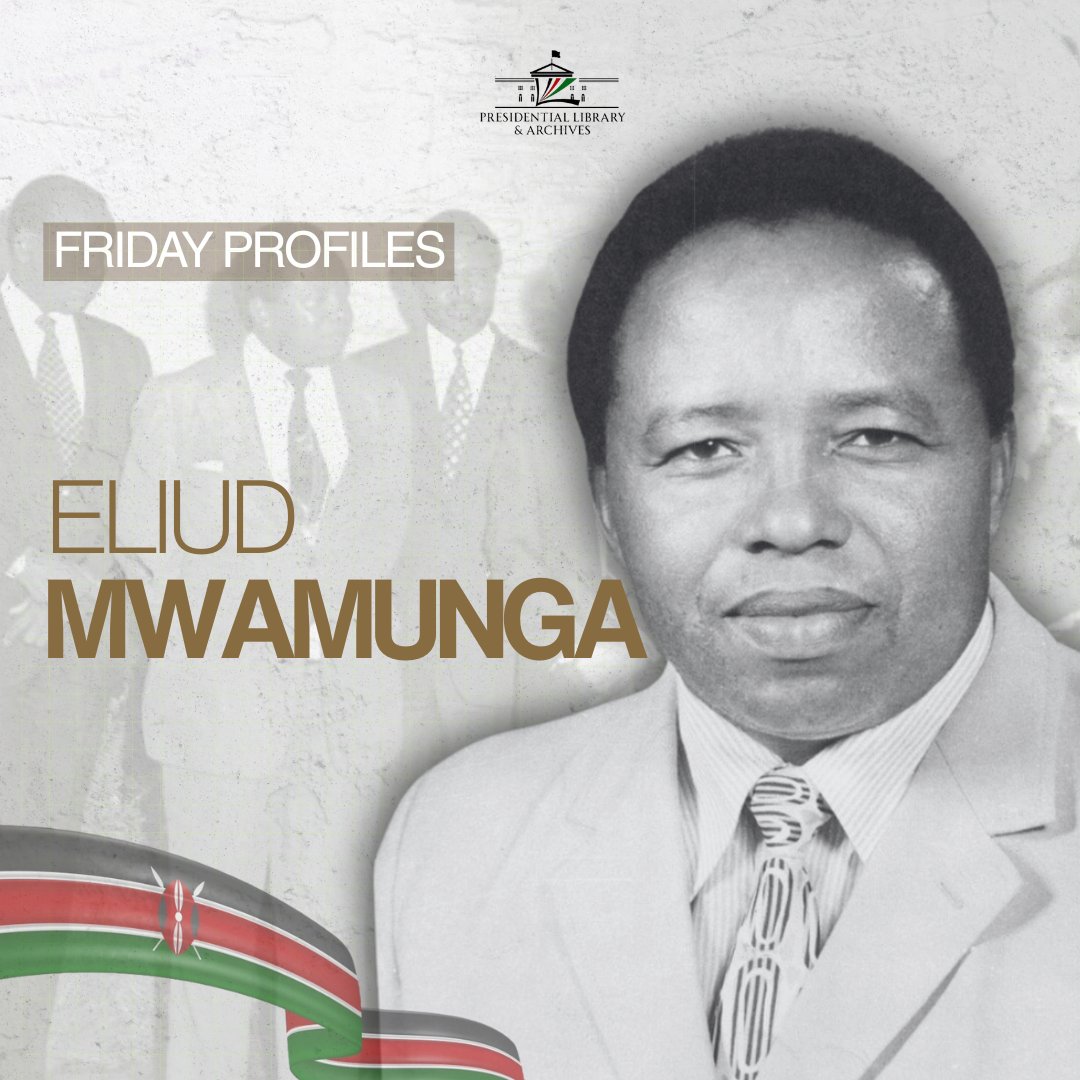
For this week’s Friday Profiles, we look back at the life of a man who navigated the "choppy waters" of Kenyan politics for two decades, serving two presidents before becoming a foundational pillar of the opposition. It's the story of Eliud Mwamunga: Master of the Taita Hills.
Born in 1935 in Ishamba, at the foot of the Taita Hills, Eliud Timothy Mwamunga was a man of the land and the law. A graduate of the "educational Mecca" Makerere University and the University of Dar-es-Salaam, he entered adulthood as a teacher during the height of the Mau Mau uprising and the struggle for independence.
Inspired by the coastal activism of Ronald Ngala, Mwamunga eventually transitioned into local government as a Clerk to the Taita Taveta County Council.
It was during these early years, traveling across his native land, that he witnessed the dire need for basic necessities, leading him to wage a relentless campaign against land grabbing and for the protection of local ranchers.
In 1969, at the age of 34, Mwamunga traded his clerk’s robes for a seat in Parliament, beginning a remarkable 20-year uninterrupted tenure as the MP for Voi. He proved to be an astute navigator of the "choppy waters" of government, serving under both President Jomo Kenyatta and his successor, Daniel arap Moi.
Under Kenyatta, he spearheaded the nation’s first dam projects as Minister for Water Development and later accelerated the "Africanisation" of trade as the Minister for Commerce and Industry. Even on the global stage, he held his own, hosting the 4th Session of the UN Conference on Trade and Development in 1976 alongside international giants like Henry Kissinger.
However, the political tides began to turn in the 1980s. Despite his strategy of playing "low-profile politics" to avoid the sudden dismissals common at the time, Mwamunga found himself caught in the crosshairs of the "traitor" affair involving Charles Njonjo. His standing with the Moi administration further deteriorated due to a long-standing rivalry with coastal powerhouse Shariff Nassir and his perceived closeness to Mwai Kibaki.
By January 1988, the man who had been a fixture of the Cabinet for years was sacked from his post as Minister for Information and Broadcasting, subsequently losing his seat in the controversial "queue-voting" elections of that year.
Rather than retreating into silence, Mwamunga chose a final, bold act of political defiance. In 1992, he joined Mwai Kibaki to co-found the Democratic Party (DP), serving as its Coast representative and helping to usher in the era of multiparty democracy.
Though he eventually lost his seat to a new crop of leaders and retired to a quiet life of farming and business in Ishamba, his legacy was already secure. When he passed away in 2018 at the age of 83, he was remembered not just as a savvy politician, but as a leader who had successfully protected over one million acres of community land for the people he loved.
Which Cabinet Minister from previous regimes would you like to read about on Friday Profiles?
He was Nairobi’s first African mayor — at a time when that title carried the weight of a Cabinet rank.
Born in 1923 in Mariaini, Murang’a, Charles Wanyoike Rubia came of age alongside some of Kenya’s most consequential figures. At Alliance High School, his classmates included future Cabinet ministers, MPs and national thinkers. Leadership was in the air — and Rubia inhaled deeply.
From the Nairobi Municipal Council in the 1950s to the Legislative Council before independence, Rubia rose steadily. In 1962, he became the first African Mayor of Nairobi — second only to the President in city protocol — steering the capital at the dawn of independence.
Elected Starehe MP in 1969, he served as Assistant Minister and later Cabinet Minister. But Rubia was no silent loyalist. In a one-party state, he insisted that MPs must speak “freely and fearlessly.” He criticised policy, defended constitutionalism, and stood his ground — even when it cost him.
He survived political rivalries, Cabinet reshuffles, and the turbulence following the 1982 coup attempt. He opposed the controversial mlolongo queue voting system. He was the lone MP to vote against a key Constitutional Amendment in 1986. He defended the clergy, the Law Society, and the principle of free speech when it was unpopular to do so.
In 1990, alongside Kenneth Matiba and others, Rubia openly called for the return of multiparty democracy. The price was detention without trial. Held in solitary confinement in Kamiti Maximum Security Prison, he endured isolation — but not silence.
The Kamukunji rally of July 1990, though violently dispersed, marked the beginning of the end for Section 2A and the one-party state. Rubia had helped push open the democratic space.
He later joined FORD and briefly formed his own party, the Kenya National Congress, before retiring from active politics after the 1992 elections.
In 2018, Murang’a University of Technology honoured him with an honorary doctorate. A year later, in December 2019, Charles Wanyoike Rubia passed away aged 96.
From City Hall to solitary confinement, from Cabinet to the trenches of democratic reform — Rubia’s life traced Kenya’s journey from colonial rule to multiparty democracy.
April 29, 2005, launch of the National Tree Planting Day at Ngong Forest, Nairobi. President Mwai Kibaki reminds the nation that growth — like trees — demands patience, purpose and effort.
A young Mwai Kibaki, then Assistant Minister for Economic Planning and Development, speaks in Othaya at the opening of Kiambiriria Bar and Restaurant. Opened by Commerce Minister Eliud Ngala Mwendwa and attended by MP Henry Wariithi, the gathering carries quiet symbolism: Kiambiriria—meaning “a beginning” in Kikuyu—mirroring a formative period in Kenya’s post-independence enterprise and community life.
July 31, 1965 | Kisumu
President Jomo Kenyatta lays the foundation stone of the New Nyanza General Hospital alongside the Soviet Ambassador to Kenya Sergeyevich Lavrov, as Vice President Jaramogi Oginga Odinga looks on.
It's a snapshot of early post-independence Kenya —a young republic navigating Cold War diplomacy while investing in critical social infrastructure.
By the time the facility was officially opened in October 1969, however, President Kenyatta and Odinga had parted ways politically, contributing to a tense national atmosphere, including deadly violence in Kisumu on the day of the hospital's inauguration.
Day Two | Kapsabet High Primary & Jnr School
Today, our school tour lands at Kapsabet — a place deeply woven into Kenya’s leadership story.
It’s here that former President Daniel arap Moi once studied, and decades later, President William Ruto completed his A-Level studies (1985–1986).
As we screen films and spark conversations with learners, the message is simple: history isn’t distant — it lives in the very spaces we walk through every day.
Standing here today, it’s hard not to wonder what future stories are being written in these classrooms.
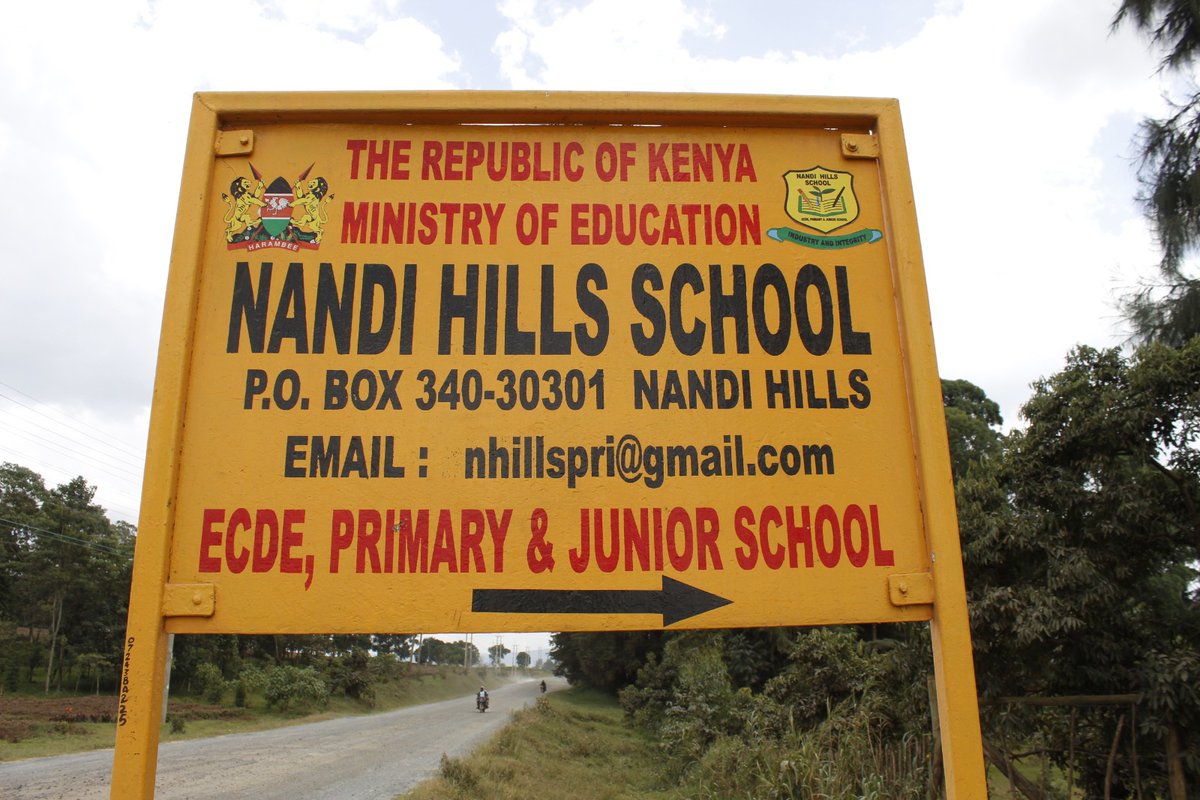
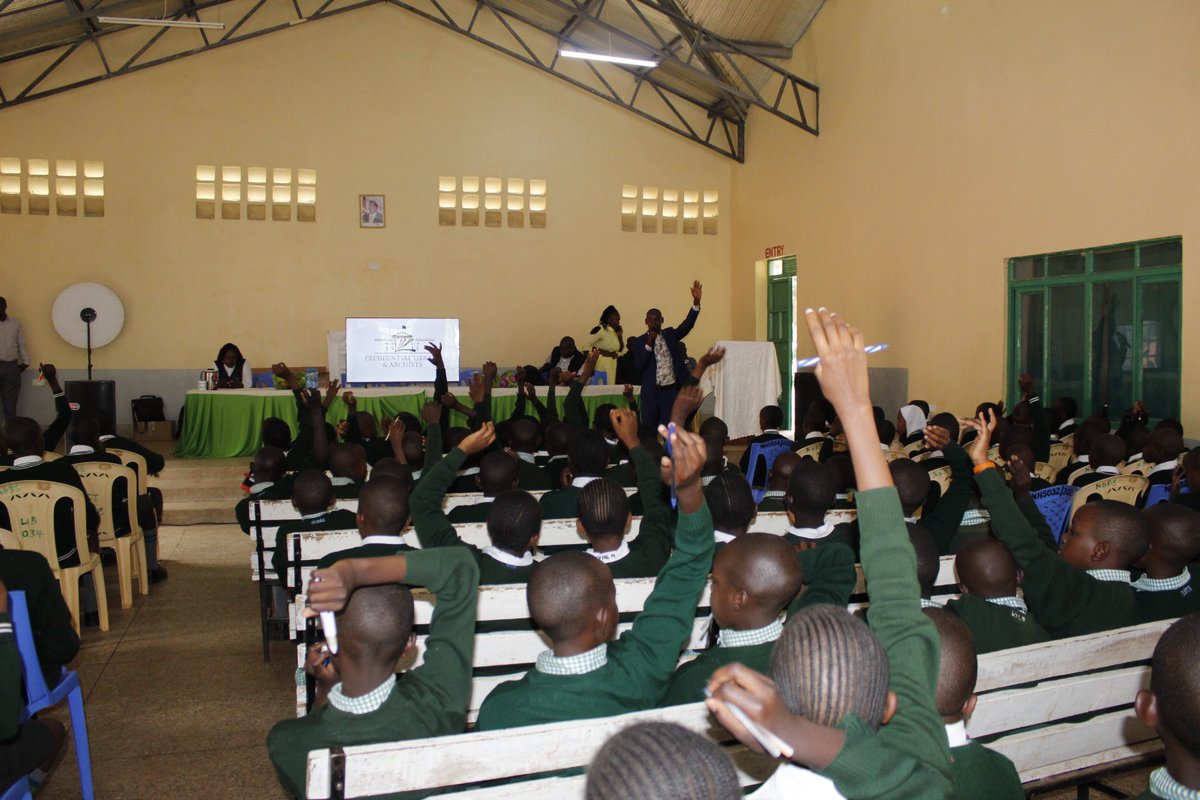
Day One in Nandi County
We kicked off our Nandi school tours at Nandi Hills Primary School, engaging pupils through film, history, and conversation—bringing Kenya’s story closer to young learners, right where it happened. We also planted some trees in the end, a living reminder that history, like growth, is nurtured over time. What’s the first history lesson you remember from primary school?
Friday Profiles: Arthur Kinyanjui Magugu
Minister who cleaned hospitals, postponed a Budget — and vanished from Parliament (twice)
The son of a senior chief and educated in the US and Sweden, Magugu entered politics in 1969 and stunned Githunguri by defeating veteran freedom fighter Waira wa Kamau. He rose quickly through the ranks of power joining Cabinet as Assistant Minister for Health in President Jomo Kenyatta's administration in 1974.
By the mid 1970s and the explosive Change the Constitution debate, Magugu had firmly aligned himself with Daniel arap Moi and that loyalty paid off. After defeating academic and diplomat Josephat Karanja in 1979, Magugu was appointed Minister for Health, except this came at a moment of deep crisis.
Doctors were resigning en masse following Moi’s ban on private practice and public hospitals were strained, demoralised, and exposed. Magugu responded with relentless surprise inspections — from Kenyatta National Hospital to Mathare — publicly calling out expired drugs, poor sanitation, and administrative rot. His reforms left a lasting imprint: mandatory health warnings on cigarette packs and the ban on smoking in public places trace back to his tenure.
Then after surviving the Njonjo purge, Magugu rose to the Finance Ministry — just as the country slid into a deep economic recession. But the minister rarely attended Parliament and in 1983, MPs openly questioned whether his seat should be declared vacant. His assistant defended him that he was working behind the scenes to steady the economy. The absence lingered.
The same year Magugu pulled off a first in independent Kenya’s history, when he postponed reading of the national Budget, citing political uncertainty as ministers fought for survival.
Then in 2002 Magugu was re-elected MP for Githunguri, but was unable to attend any other session of Parliament after the swearing-in ceremony due to poor health.
He became the only MP in Kenya’s history to serve an entire parliamentary term on sick leave — sworn in, then never seen again in the House.
He died in 2012.