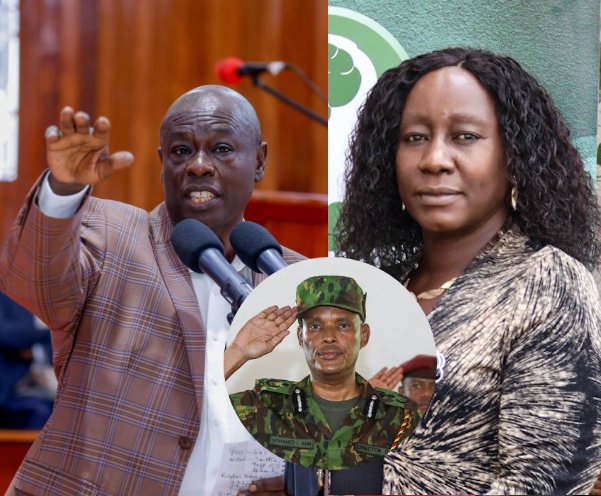
A KTN exposé has uncovered how Kenyan voter registration equipment and materials, including national ID cards and voter cards, are being smuggled across the Suam border into Uganda and used to register foreign nationals, including members of the Saboti, Sabaot, Bukusu and Pokot communities.
Heartbreaking news. Jackline Wangui Njoroge, reported missing since Friday night after last being seen along Kanu Street, has been found murdered in cold blood.
A bright life stolen. A family left shattered. Why her? What kind of monster does this?
Post-mortem results are still pending, but the cruelty is already clear.
Jackline deserved to come home. No one should end like this.
#JusticeForJackline #MissingPerson #Kenya
GOOD MORNING KENYANS, I AM ON A MISSION TO EXPOSE @gladyswanga BECAUSE SHE IS A DISGRACE TO WOMEN AND MOTHERS AFTER THE VIOLENCE SHE ORCHESTRATED IN HOMABAY COUNTY YESTERDAY TO DISRUPT THE @LindaMwananchi_ RALLY.
RETWEET SO THAT THIS GETS TO ALL KENYANS
I WILL DRAG HER RAGGEDY ASS!
There is a deeper story behind Raila Odinga’s final political chapter that Kenyans must confront.
Raila chose to work with William Ruto. To many Kenyans, that decision came at a terrible political cost.
He was standing with Ruto by day while remaining connected to opposition by night.
Raila remained in contact with Martha Karua and Kalonzo Musyoka and continued discussing the road to 2027.
But one thing became painfully obvious: Raila’s association with Ruto after June 25th 2024 damaged the image he had spent decades building.
The young generation did not forget.
They felt betrayed.
They stopped seeing the old Raila the fighter, the dissenter, the man who had spent his life challenging power.
That is why Ruth Odinga at his graveside cried painfully: that Raila had sacrificed so much for Kenya, yet younger Kenyans were willing to sideline him because of one political mistake.
Raila told Kalonzo Musyoka to remain patient because his final move would surprise everyone.
Ruto got the intel and it dawned to him the conman was planning to con him.
The political chessboard was far more complicated than the public could see.
Because Ruto trusted Raila.
And if the man Ruto trusted most was preparing to make a completely different move at the decisive moment, that would explain why the political establishment was so unsettled.
But remember who we are dealing with.
William Ruto does not play politics like a gentleman's game.
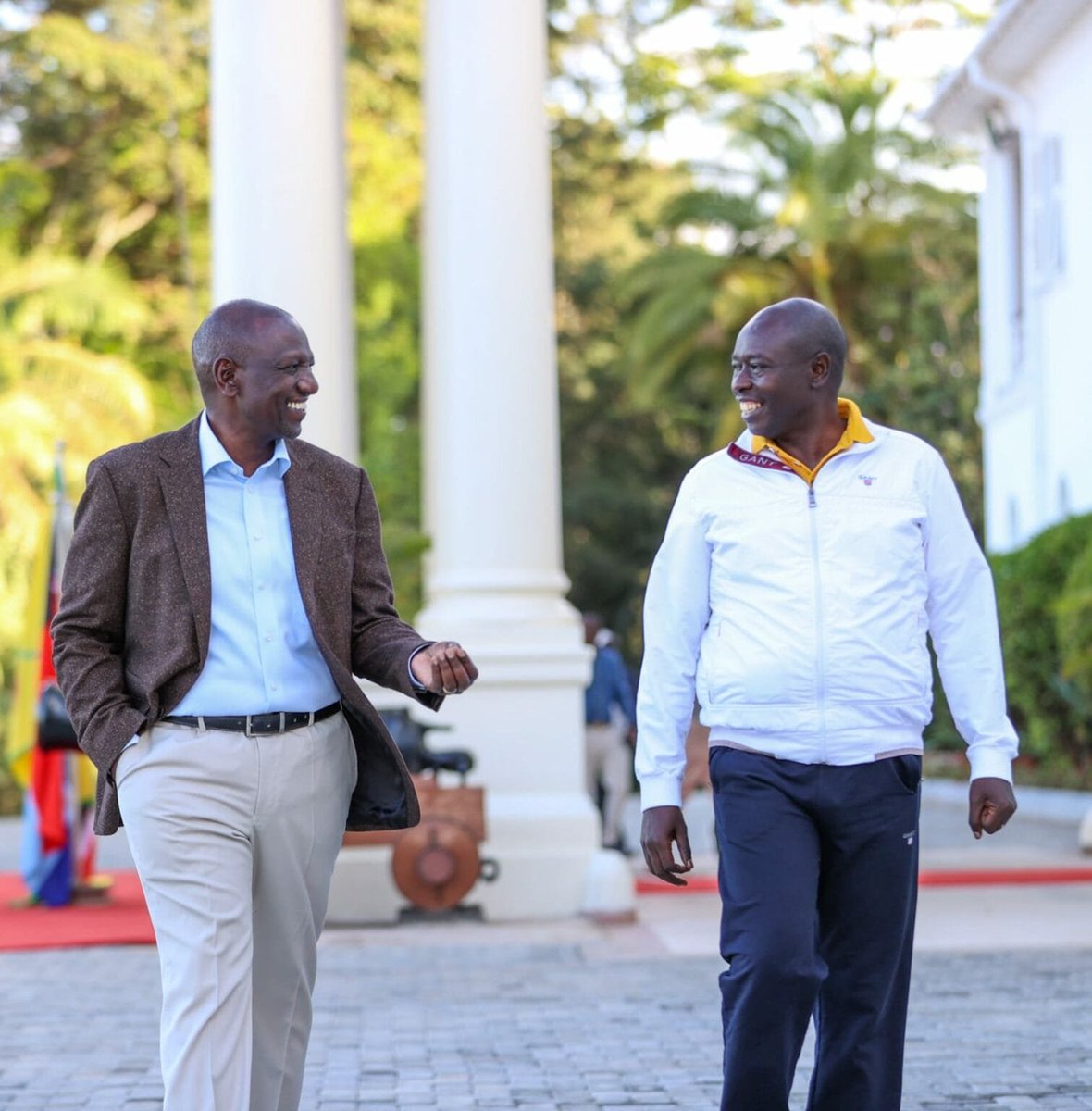
So when Rigathi Gachagua says he knows what happened behind those doors, listen carefully.
In Kenyan politics, the person smiling beside you today may already be planning tomorrow’s checkmate.
Raila Odinga did not die a natural death, he was assassinated because of his greed
Listening to Riggy G today, to Ruto at the UDA/ODM retreat yesterday, to Kalonzo on Fixing the Nation and having accompanied Sifuna on his Trans Nzoia/Bungoma/Busia/Kakamega rallies, clearly the die is cast.
Vote..
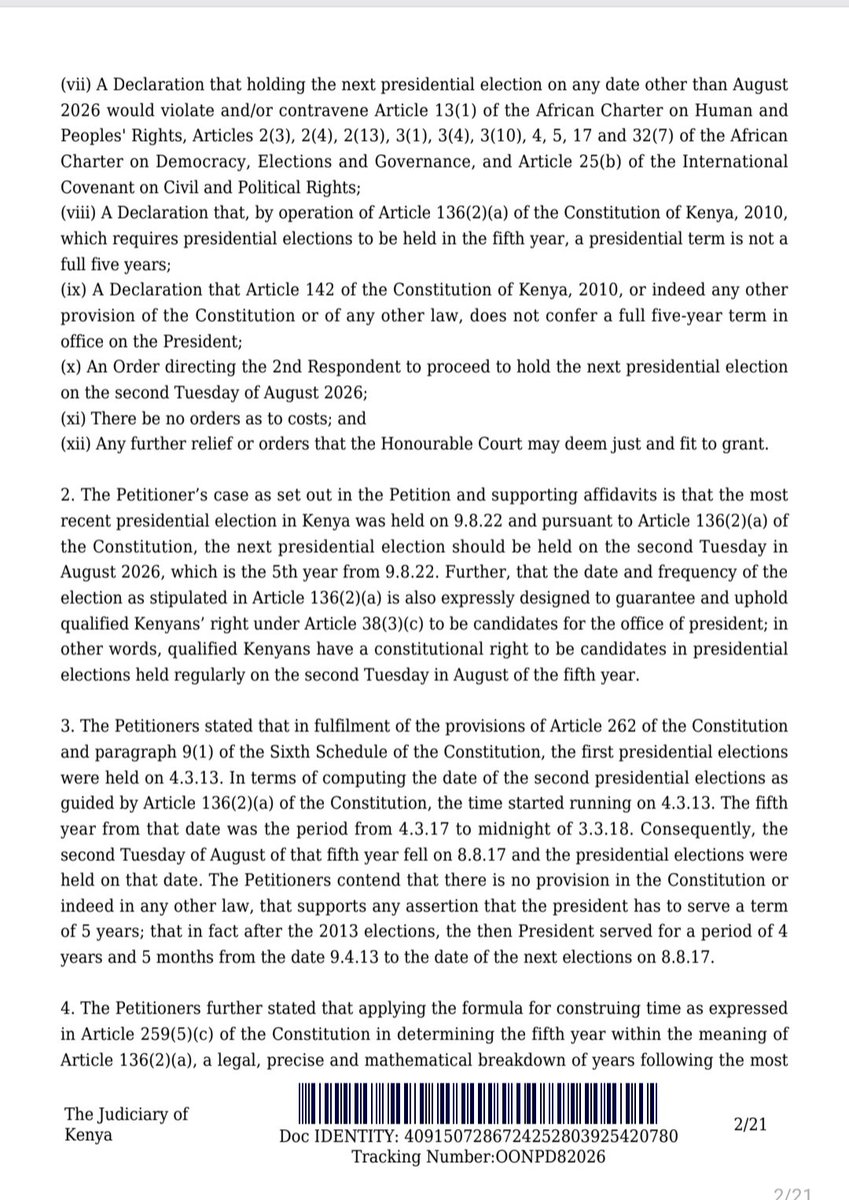
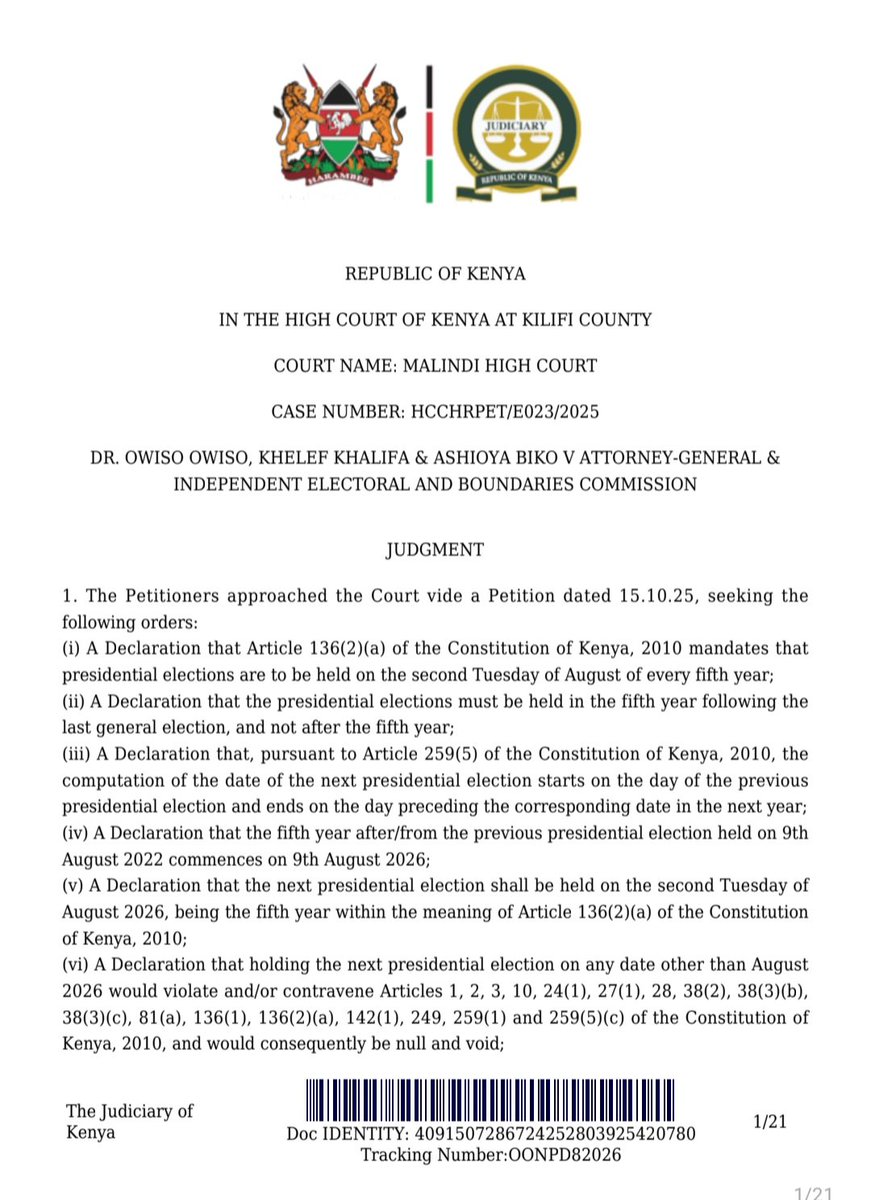
The Malindi High Court judgment is not a call for constitutional panic. It is a serious declaration on electoral timelines and it must be read in its entirety, including the remedy the Court deliberately refused to grant. The Court held that Article 136(2)(a), an election on the second Tuesday of August “in every fifth year” means in the fifth year, not after it. On its computation under Article 259(5)(c), that date was 11 August 2026.
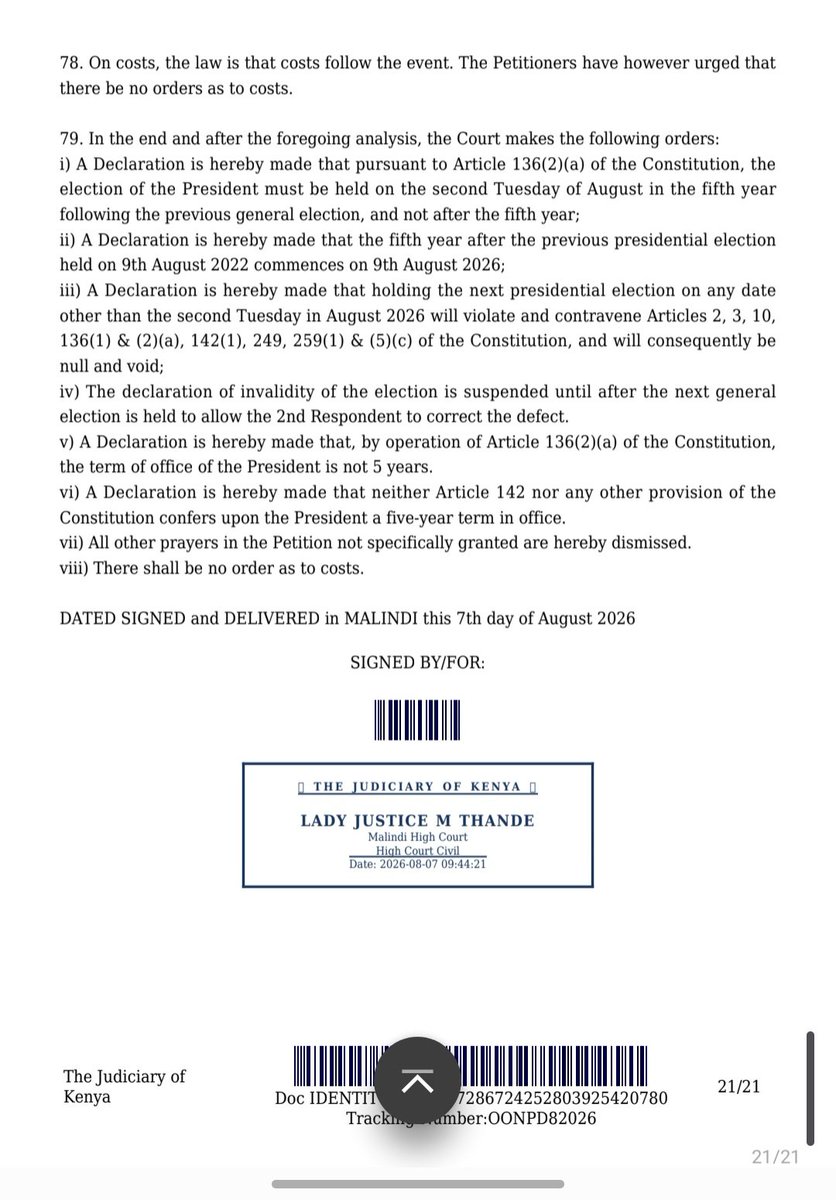
The Court also rejected the view that Article 142 creates an express, guaranteed five-year presidential term. It held that the President’s term begins on swearing-in and ends when the next President, elected under Article 136(2)(a), is sworn in. But that is not the end of the matter. The Court did not order IEBC to conduct an election next week. It declined the mandatory order because it found an immediate poll logistically impossible and likely to produce national instability.
More importantly, the Court suspended the declaration of invalidity until after the next general election, expressly so that IEBC may correct the defect. A suspended remedy is not an invitation to manufacture a vacuum in government. No part of the judgment removes the President from office, converts the presidency into a caretaker arrangement, or restricts any enumerated presidential power. Constitutional authority cannot be diminished by inference where the Court made no such order.
Article 142 itself supplies continuity. The President remains in office until the next President is sworn in. The constitutional order does not collapse merely because a court identifies a contested interpretation of an election timeline. The Court was equally clear that declaratory relief clarifies the law. It does not, without more, compel a specific act or make disobedience contempt. That distinction matters. A declaration is not a mandatory order in disguise.
The judgment raises profound questions on the relationship between fixed election dates, computation of constitutional time, the terms of Parliament and county governments, and the need for simultaneous elections. Those questions deserve calm, principled appellate resolution and not partisan improvisation.
The rule of law requires fidelity to both the Court’s reasoning and its actual orders. We must reject two temptations. Treating the judgment as irrelevant, or overstating it as having already displaced the constitutional government. The enduring constitutional principle is simple. Elections cannot be left to political convenience neither can constitutional remedies be administered in a manner that creates avoidable disorder. The Constitution is not self-destructive but designed to secure both accountability and continuity.
This judgment should prompt an urgent, sober and institutionally responsible legal response. But until varied, stayed or overturned, it remains a High Court interpretation subject to the remedies it granted, the limits it imposed and the appellate process provided by law.
"The Police Service has been ethnicised. Umeona Nairobi, OCS na OCPD wote ni wa jamii ya Ruto, na ndio wanatumika kufanya kazi na goons. Police officers are very demoralised; wanasema, 'Si mumtoe huyu mtu." Gachagua
Riggy G reveals Mavoko business man Jimmy Mutava was abducted after interfering with DIG Lagat's land and his abduction was overseen by Mavoko OCS on orders from DIG Lagat
Rigathi Gachagua has accused DCI boss Muhammed Amin of protecting two police officers who killed Victoria Mutiso in the Upper Hill area.
Gachagua has also claimed that the two police officers are from Kikuyu Police Station, come from Ruto's community, and were sent by Ruto.
There are many things that are not adding up in the murder of Victoria Mutiso. There is a piece of land worth KSh 1.5 billion and other properties that made Victoria get killed.
Kaguchia referred to Kasongo, in the Kikuyu writeup the word Kasongo appears twice, but in the translation by the ODPP, the word Kasongo appears once, where did the other Kasongo go? and who is Kasongo that Kaguchia referred to? Can he be available in court, so that we know who Kasongo is? ~ Wakili Ndegwa Njiru in Milimani Law court