For the first time, five nations – Angola, Botswana, Namibia, Zambia and Zimbabwe are marketing their shared conservation estate as a single tourism destination. The Great Kavango Zambezi Birding Route, launched in February is the first tangible product of that ambition.
Steve Jobs literally gave a 10-minute masterclass on building a company (better than $100K MBA):
1. Someone has to be the keeper of the vision. There is a staggering amount of work in building anything, and when you have to walk a thousand miles, the first step looks impossibly far. Jobs saw his job as the person who constantly reminds everyone that the goal is real, not a mirage, and that each step gets you closer. In a thousand small and occasionally large ways, the vision has to be repeated, or people lose faith it exists.
2. The honeymoon ends fast, and then the world only cares what you produce. After six months, Jobs told his team that all the goodwill they got just for existing was old news. You can point to the lawsuit, the setbacks, the this and that, but the bottom line is the world does not care. It cares about what you ship and how timely you bring it to market. From here on out you get judged like every other startup, by your product, not your story.
3. The most important job of a leader is recruiting. Jobs says it plainly: hiring is the thing he considers most important about a role like his. He didn't want seasoned professionals so much as people who were insanely great at what they did, who had the latest understanding of the technology at their fingertips and the passion to bring it to millions.
4. A great team becomes self-policing about who it lets in. Once you assemble a core group of ten genuinely great people, something powerful happens: they start guarding the bar themselves. They will not tolerate letting mediocre people into the group. The quality defends itself, which is why getting those first ten right matters more than almost anything.
5. Start with the customer experience and work backwards to the technology. This is the mistake Jobs says he made more than anyone in the room, and he has the scar tissue to prove it. You cannot start with a piece of awesome technology and then hunt for where to sell it. You start with what incredible benefit you can give the customer and where you can take them, and only then figure out the technology to get there.
6. You have to find what you love, and not settle. Your work fills a huge part of your life, and the only way to be truly satisfied is to do what you believe is great work. The only way to do great work is to love what you do. If you haven't found it, keep looking, and don't settle. Like any matter of the heart, you'll know when you find it, and it only gets better over the years.
7. They didn't set out to start a company. They just wanted the thing to exist. There was no personal computer in 1975, so Jobs and Wozniak built one because they wanted one and none existed. They made it for themselves, showed it to friends, and the friends all wanted one. They started building by hand until it consumed all their spare time, so they decided to manufacture a hundred just to stop. That is how Apple began. Not a plan to start a company, a circle that kept getting bigger.
8. "I want to make lots of money" is not a good enough reason. When people tell Jobs they want to start a company, he asks why. If the answer is to make lots of money, he tells them to forget it. He has barely seen anyone succeed that way. The ones who succeed often didn't even want to start a company. They just had an idea they needed to get out into the world, and had to build a company because no one else would listen.
9. You lead by example, because everyone is watching. You can say anything you want, but people watch extremely carefully what senior management actually does. When something isn't quite good enough, do you stop and make it great, or do you just ship it? Everyone sees which choice you make in the hard moments, what decisions you make and what values you hold, and that, not your speeches, is what permeates a company of thousands.
10. Focus doesn't mean saying yes. It means saying no. Jobs kept the organization simple and did very few things well. And focusing is hard precisely because it means deciding not to do a huge number of things so you can pour everything into a handful. Most people think focus is about what you take on. He understood it's about what you refuse.
11. Let people do the best work of their lives. Everyone wants to do something great, to be excited about what they're building, and to be recognized when they nail it. So Jobs tried to build a place where people could do their best work and then get it in front of 25 million customers. Knowing millions of people will use the thing you're making, and that the whole industry will copy it if it works, is enormously motivating.
12. Don't lose the war because you won a few battles. Late in the clip Jobs gets blunt about a danger he sees creeping in: losing the startup hustle. If you zoom out, it would be a shame to lose the war because you were busy winning small battles. He felt people were concentrating too hard on minor fights and losing perspective on the real one. And the war, he says, is survival, not running out of money before you get your product to market.
Botswana is weakening the pula on purpose.
Diamond money built the reserves. It is drying up. Import cover fell from over 10 months to about 5 by early 2025, and the crawl rate nearly doubled to about 2.8% a year.
#Botswana#Pula#Diamonds#AfricanMarkets#GlobalArbitrage
The two fastest-growing economies in the 21st century have been China and Vietnam.
Both follow a model that's shockingly easy to summarise: a socialist market economy focused on export-oriented industrialization.
We know diamond revenues have been under pressure for years; the Ukraine war disrupted grain markets; the conflict in Iran/GCC has pushed up energy costs.
Yet rona Batswana seem to think we're insulated. No tax hikes. No spending cuts. No hard choices.
Are we being realistic?
Listening to John Legend share his personal journey during the World Intellectual Property Organization session was a powerful reminder that intellectual property is more than a legal framework it is about protecting creativity, empowering innovators, and ensuring beneficiation
We are entering a world in which we can rely less and less upon the state, the corporation, or family or friends to help and protect us.
It is a globalized, harshly competitive environment.
We must learn to develop ourselves.
“The answers to the African questions are within us. We have the people, the leaders, the young people, the creativity, the energy, and the belief to build a new Africa.” - Vice-President of #Botswana, Minister of Finance and Governor of the @AfDB_Group, Ndaba Gaolathe, at #AfDBAM2026 in Brazzaville.
Hear more from @AfDB_Group governors here: https://t.co/5FfOiqGEnL
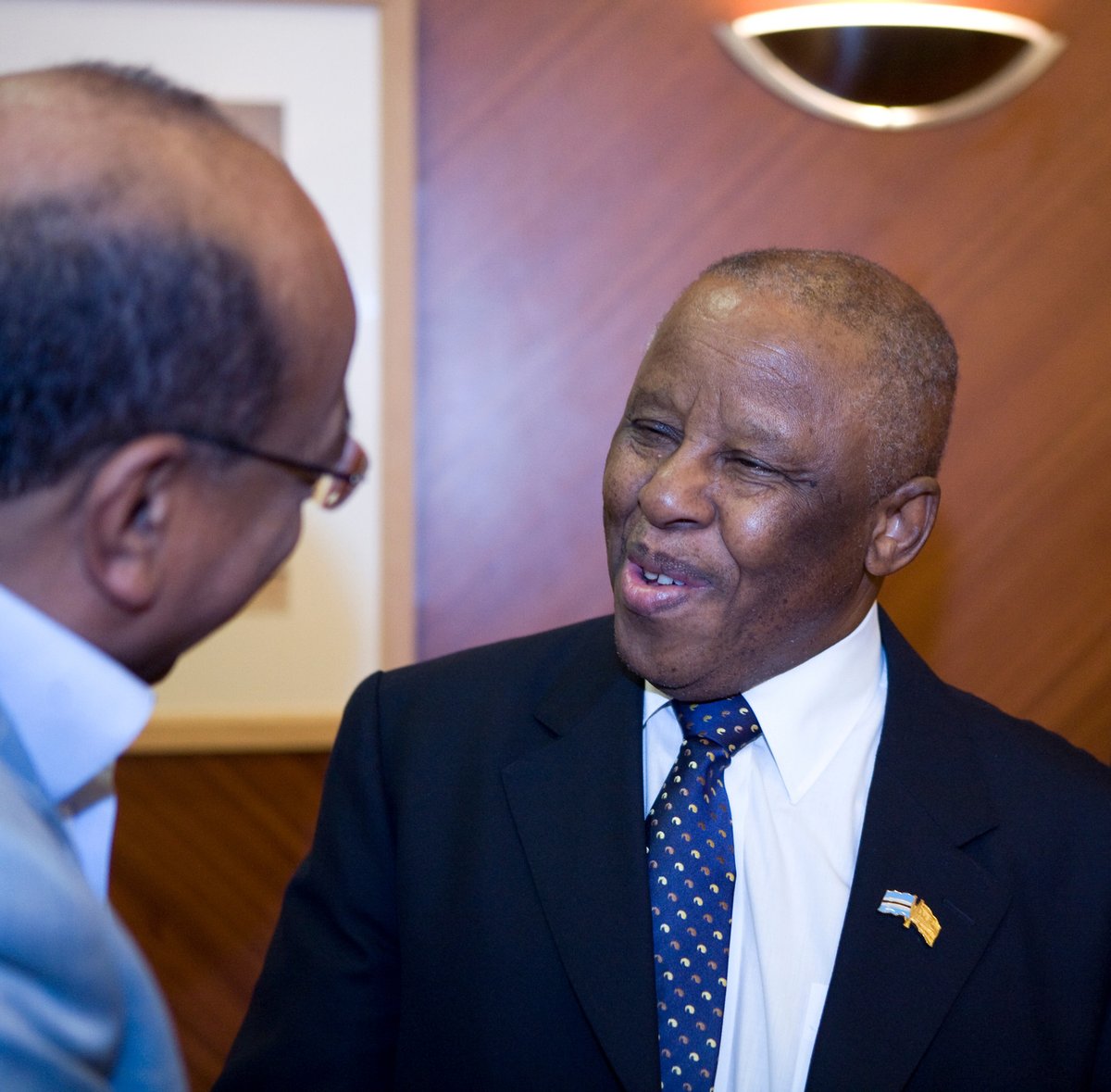
We are deeply saddened by the passing of H.E. Festus Gontebanye Mogae, former President of Botswana, Ibrahim Laureate, and former Chair of the Ibrahim Prize Committee.
We extend our deepest condolences to President Mogae’s family, loved ones, and to the people of Botswana.
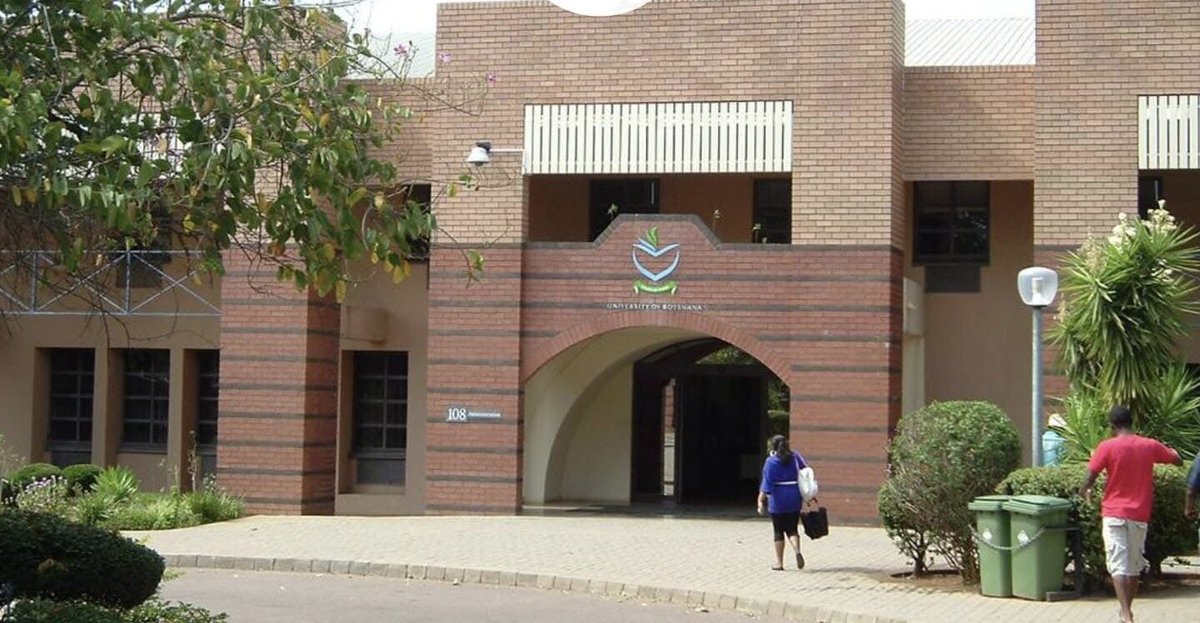
STUDENTS RECEIVE ADJUSTED ALLOWANCES.
Even as the UDC Administration battles fiscal deficits and a shrinking economy, the Government has managed to dig deep and bring some relief to Tertiary Students.
Off-campus allowances have gone from P1,919.70 to P2,200.00.
WATCH: Angola Energy Minister Diamantino Pedro Azevedo confirming the southern African nation’s offer to Botswana to partner in Lobito oil refinery.
In the same video, Aze’s counterpart @BogoloKenewendo also confirmed the signing of NDAs between the 2 nations.
The video was captured not too long ago when Aze was in the capital Gaborone.
CC: @ReutersAfrica@MmegiOnline