Two economists just published a mathematical proof that AI will destroy the economy.
Not might. Not could. Will — if nothing changes.
The paper is called "The AI Layoff Trap." Published March 2, 2026. Wharton School, University of Pennsylvania. Boston University. Peer reviewed. Mathematically modeled.
The conclusion is one sentence.
"At the limit, firms automate their way to boundless productivity and zero demand."
An economy that produces everything. And sells it to nobody.
Here is how you get there.
A company fires 500 workers and replaces them with AI. A competitor fires 700 to keep up. Another fires 1,000. Every company is behaving rationally. Every company is following the incentives correctly. And every company is building a trap for itself.
Because the workers who were fired were also customers.
When they lose their jobs faster than the economy can absorb them, they stop spending. Consumer demand falls. Companies respond by cutting costs — which means automating more workers — which means less spending — which means more falling demand — which means more automation.
The loop has no natural exit.
The researchers tested every proposed solution. Universal basic income. Capital income taxes. Worker equity participation. Upskilling programs. Corporate coordination agreements.
Every single one failed in the model.
The only intervention that worked: a Pigouvian automation tax — a per-task levy charged every time a company replaces a human with AI, forcing them to price in the demand they are destroying before they pull the trigger.
No government has implemented this. No major economy is seriously discussing it.
Meanwhile the numbers are already tracking the curve. 100,000 tech workers laid off in 2025. 92,000 more in the first months of 2026. Jack Dorsey fired half of Block's workforce and said publicly: "Within the next year, the majority of companies will reach the same conclusion."
Nobody is doing anything wrong. Companies are following their incentives perfectly. That is exactly the problem.
Rational behavior. At scale. Simultaneously. With no mechanism to stop it.
Two economists built the math. The math leads to one place.
Source: Falk & Tsoukalas · Wharton School + Boston University ·
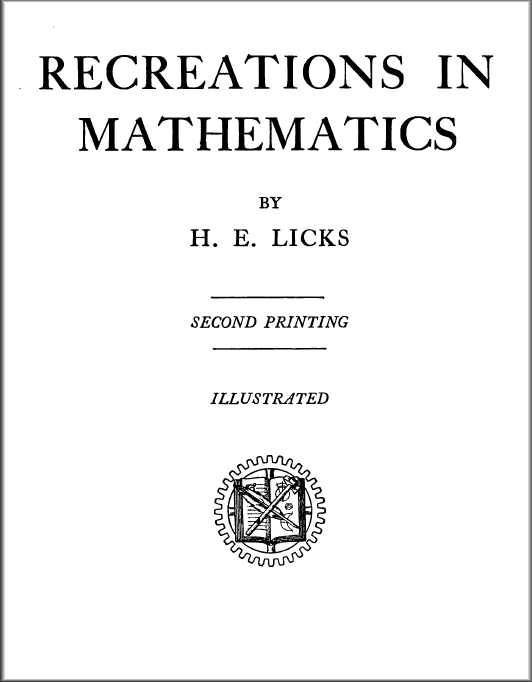
Free math book in PDF format:
"Recreations in Mathematics," by H. E. Licks. Includes a variety of mathematical puzzles (related to number theory, geometric illusions, algebraic tricks, ancient civilizations, practical examples, etc.)
Link: https://t.co/Y3aGeIdZKP
From those patterns we identify key topics that need work and then draw from our ELEV8 and REVISE9 worksheet library to fill in the gaps.
1⃣ ELEV8 worksheets ➡️ practice for common misconceptions
2⃣ REVISE9 grids ➡️ structured revision of key topics
This data evolves every year because the QLA tells us what students actually struggle with.
Example of ELEV8 worksheets here: https://t.co/5aGk8rcfZv
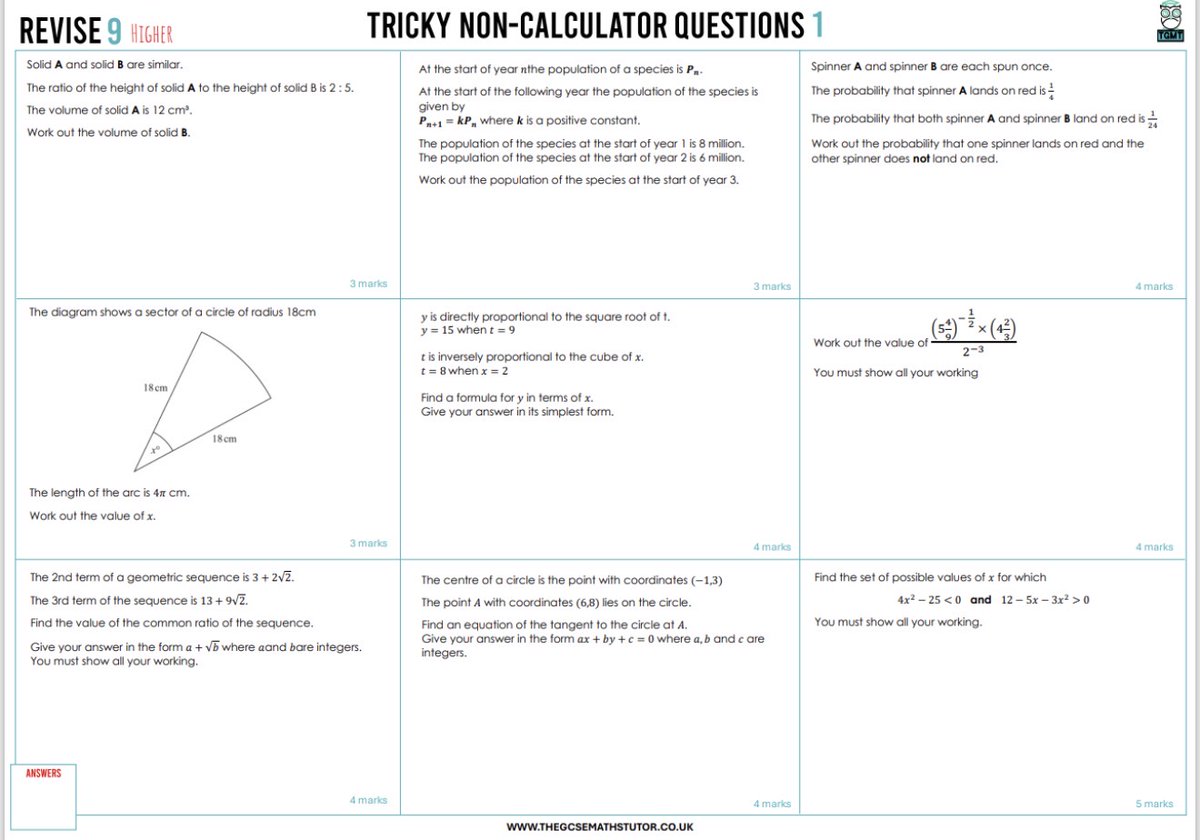
Example of a REVISE9 grid ⬇️
8/12
Life moves forward — never backward. Living systems consume energy, breaking time’s symmetry and staying far from equilibrium. That’s the hidden physics behind every heartbeat, every cell in motion, every act of becoming. @TEDxNewEngland
https://t.co/aQrkJWJ1yM
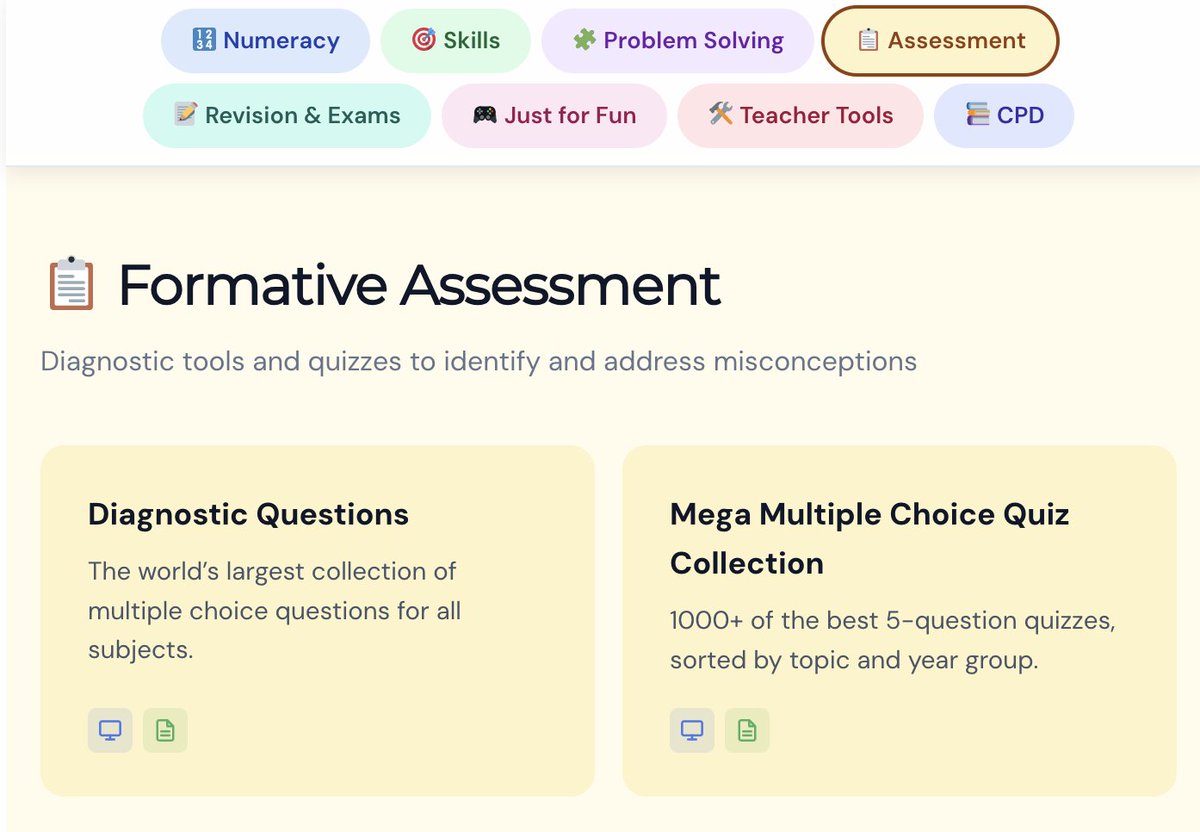
I have just pushed live a MASSIVE update of my Mr Barton Maths website - all 100% free. If you find it useful, please help spread the word by sharing this post 🙏
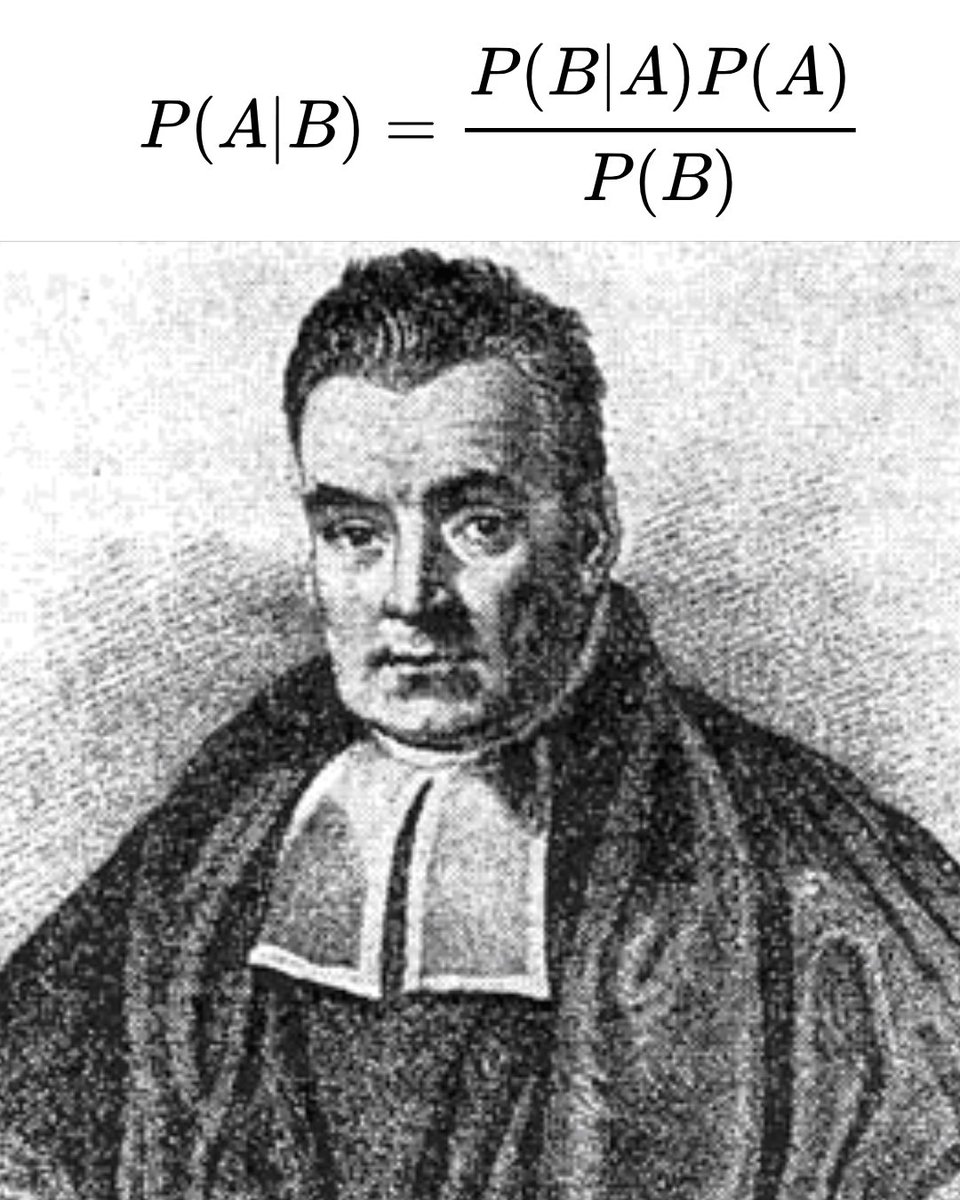
Bayes’ theorem is probably the single most important thing any rational person can learn.
So many of our debates and disagreements that we shout about are because we don’t understand Bayes’ theorem or how human rationality often works.
Bayes’ theorem is named after the 18th-century Thomas Bayes, and essentially it’s a formula that asks: when you are presented with all of the evidence for something, how much should you believe it?
Bayes’ theorem teaches us that our beliefs are not fixed; they are probabilities. Our beliefs change as we weigh new evidence against our assumptions, or our priors. In other words, we all carry certain ideas about how the world works, and new evidence can challenge them.
For example, somebody might believe that smoking is safe, that stress causes mouth ulcers, or that human activity is unrelated to climate change. These are their priors, their starting points. They can be formed by our culture, our biases, or even incomplete information.
Now imagine a new study comes along that challenges one of your priors. A single study might not carry enough weight to overturn your existing beliefs. But as studies accumulate, eventually the scales may tip. At some point, your prior will become less and less plausible.
Bayes’ theorem argues that being rational is not about black and white. It’s not even about true or false. It’s about what is most reasonable based on the best available evidence. But for this to work, we need to be presented with as much high-quality data as possible. Without evidence—without belief-forming data—we are left only with our priors and biases. And those aren’t all that rational.
Hi @British_Airways, my ticket was on medical hold and the new fare is cheaper, but your team says I can’t get the difference refunded. Please review—this contradicts what I was told.
@RAahiagbah You are only seeking attention. How is this relevant to the president? Is this truly a national issue that demands his valuable time? Your communication is one of the reasons the NPP lost the election.
@Nkrumah_AGadafi @stigue2001 Until then, the potential of Ghana’s professors and PhD holders to effect change will remain largely untapped, not because they are “dummies,” but because their expertise is not being given the platform or respect it deserves.
@Nkrumah_AGadafi @stigue2001 For meaningful change to occur, there must be a societal shift towards valuing intellectual contributions and holding leaders accountable for their actions.
@Nkrumah_AGadafi @stigue2001 Others might refrain from speaking out publicly for fear of backlash, marginalization, or even threats to their personal safety.
The broader issue lies in a system where greed and corruption overshadow reason, logic, and evidence-based policymaking.
@Nkrumah_AGadafi @stigue2001 In such an environment, where the leadership consistently sidelines sound advice in favor of personal or political gain, what realistic options do these intellectuals have? Many may feel disillusioned or powerless, knowing that their insights fall on deaf ears.
@Nkrumah_AGadafi @stigue2001 However, when corrupt politicians, driven by greed and self-interest, choose to ignore their voices and disregard their intellectual advice, the impact of their contributions becomes limited.
@Nkrumah_AGadafi @stigue2001 It would be unfair and inaccurate to conclude that professors and PhD holders in Ghana are entirely ineffective or lack intellectual capacity. These individuals possess a wealth of knowledge, expertise, and critical thinking skills that are invaluable to national development.
@MattWallace888
💥Listen closely to what Kanye West reveals in this 1 minute clip:💥
"The Devil took all the producers, the musicians, the designers. They got contracts out there, that say you can't say Jesus."
What else to you notice?
An invaluable collection of questions and prompts which are designed to tease out structures and concepts at the heart of mathematics. Written by Anne Watson & John Mason. KS3 & KS4 https://t.co/Cs9bMKo2RD
🚨 Paper 3 Checklists Available Now 🚨
✅ Edexcel
✅ AQA
✅ Higher
✅ Foundation
✅ Completely FREE
Plenty of revision resources on the way, save the link!
Download here: https://t.co/UEovOjS9kv