Yeah, and I’m all broken up about the fact that the climate lobby has not gotten back to its prior level of power.
But make no mistake, partly as a result of the Democrats returning to full control of both houses of Congress, and if they take the presidency in 2029, then they will sign the US up to any and every international agreement or any treaty they can about the farce of anthropomorphic climate change.
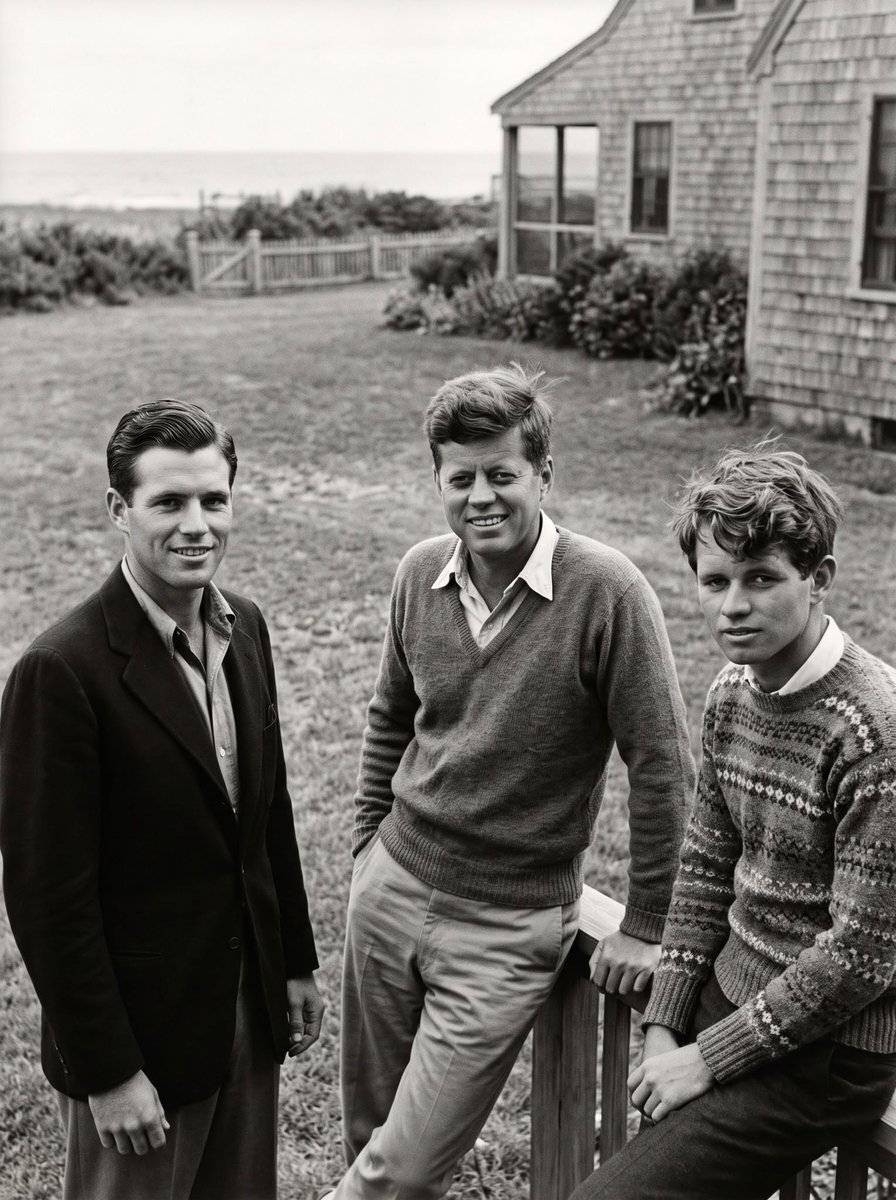
"""Three brothers.
One died in a plane packed with explosives over England.
One was shot in a Dallas motorcade.
One was shot in a hotel kitchen the night he won the vote that could have made him president.
None of them lived past forty-six.
And all three had deliberately chosen to stand somewhere dangerous when history arrived.
Most people know the Kennedy story through tragedy.
But tragedy alone is too simple.
Because what made the Kennedy brothers matter was not merely how they died.
It was how consciously they chose to live.
The first was Joseph Kennedy Jr.
The eldest son.
The one their father expected to become president.
Handsome.
Harvard-educated.
Confident.
The golden child of one of America’s most ambitious political families.
But when World War II began, Joseph did not stay home protecting the future everyone had planned for him.
He became a naval aviator.
He flew dangerous combat missions over Europe.
And after completing enough missions to justify going home safely — the military standard most pilots understandably accepted — Joseph volunteered for something even more dangerous instead.
Operation Aphrodite.
An experimental mission involving B-24 bombers packed with explosives and flown remotely toward Nazi targets.
The technology barely worked.
The risks were enormous.
Pilots had to guide the aircraft manually before parachuting out seconds before detonation.
Joseph Kennedy Jr. understood exactly how dangerous it was.
He volunteered anyway.
On August 12, 1944, before reaching the jump point, the explosives detonated prematurely over Suffolk, England.
The aircraft vaporized in the sky.
Joseph Kennedy Jr. was twenty-nine years old.
His younger brothers watched what happened to him very carefully.
Especially John.
Years earlier, John F. Kennedy had nearly died himself in the Pacific when PT-109 was cut in half by a Japanese destroyer. Despite severe injuries, he dragged wounded crewmen through open water to safety using his teeth to grip one sailor’s life jacket strap.
War changed him.
By the time he became president in 1961, Kennedy carried something many politicians never fully develop:
An understanding of how fragile life actually is.
That awareness shaped his presidency.
The Peace Corps.
The moon mission.
The willingness during the Cuban Missile Crisis to resist immediate military escalation while the world stood on the edge of nuclear war.
For thirteen terrifying days in October 1962, military advisors urged aggressive action against Soviet missiles in Cuba.
Kennedy chose restraint instead.
Quiet diplomacy.
Careful backchannel negotiations.
Humanity survived the crisis without a nuclear exchange.
And slowly, Kennedy himself was evolving too.
His civil rights record began cautiously, shaped by political realities and compromises historians still debate honestly today. But by 1963, after watching violence against Black protesters broadcast across American television screens, Kennedy publicly reframed civil rights as a moral issue, not merely a political one.
He was still growing into the presidency.
Still becoming fully himself.
Then came Dallas.
November 22, 1963.
A motorcade.
Crowds cheering.
A rifle shot echoing through history.
John F. Kennedy died at forty-six years old with much of his presidency unfinished.
And then there was Robert.
Robert Kennedy may have changed the most of all.
Before his brother’s assassination, he was known as ruthless, disciplined, intensely combative — an Attorney General willing to confront organized crime, segregationist governors, and corruption with relentless focus.
After November 1963, something inside him broke open.
People around Robert later described a transformation.
Grief deepened him.
He became more emotionally accessible.
More compassionate.
More willing to sit directly beside suffering rather than manage it from a political distance.
He visited migrant labor camps.
Poor Appalachian towns.
Black communities abandoned by political power.
He listened.
Not for photographs.
Not for headlines.
Because he genuinely wanted to understand how people lived beyond the world of privilege he came from.
Then came April 4, 1968.
Martin Luther King Jr. was assassinated.
That night, Robert Kennedy traveled to Indianapolis despite warnings from police and advisors who feared riots and violence.
Standing on a flatbed truck before a grieving crowd, Kennedy told them King was dead.
Many in the audience had not heard yet.
The sound of their reaction — gasps, crying, disbelief — still exists in archival recordings today.
And then Robert did something extraordinary.
He did not speak like a politician.
He spoke like a grieving human being.
He told them he understood what it meant to lose someone to assassination because his own brother had been murdered too.
He quoted Aeschylus from memory:
“In our sleep, pain which cannot forget falls drop by drop upon the heart…”
And he pleaded for compassion over hatred.
That night, riots erupted in cities across America.
Indianapolis remained calm.
Two months later, Robert Kennedy won the California Democratic primary.
He walked through the kitchen of the Ambassador Hotel in Los Angeles believing the presidency might finally be within reach.
Then gunfire erupted.
Robert Kennedy died the next day.
He was forty-two years old.
Three brothers.
Joseph.
John.
Robert.
One dead at twenty-nine.
One at forty-six.
One at forty-two.
And perhaps what still lingers about them decades later is not simply the tragedy surrounding their deaths.
It is the repeated pattern inside their lives.
Joseph volunteered for a mission he did not have to fly.
John chose restraint when war would have been politically easier.
Robert walked directly into grief-stricken communities instead of hiding safely behind politics.
None of those decisions were inevitable.
All of them required conscious choice.
And maybe that is the deeper truth behind the Kennedy story.
Not mythology.
Not glamour.
Not even tragedy.
But the reality that service always costs something.
Sometimes reputation.
Sometimes safety.
Sometimes the future you imagined for yourself.
The Kennedy brothers never finished the work they began.
Nobody ever does.
That is the nature of history.
But what they left behind still matters:
The Peace Corps.
Civil rights momentum.
Nuclear diplomacy.
The example of powerful people choosing not to look away from suffering when it would have been easier to ignore it.
Three brothers who believed the work was worth doing even when doing it was dangerous.
And history still remembers them because they acted like they believed it."""""""
We’re excited to announce that there will be a part 2 of “Who Killed JFK?” With co-authors @DickRussell1 and @david_c_hoffman . That episode will be available on Christmas Day. @BowTiedPinto
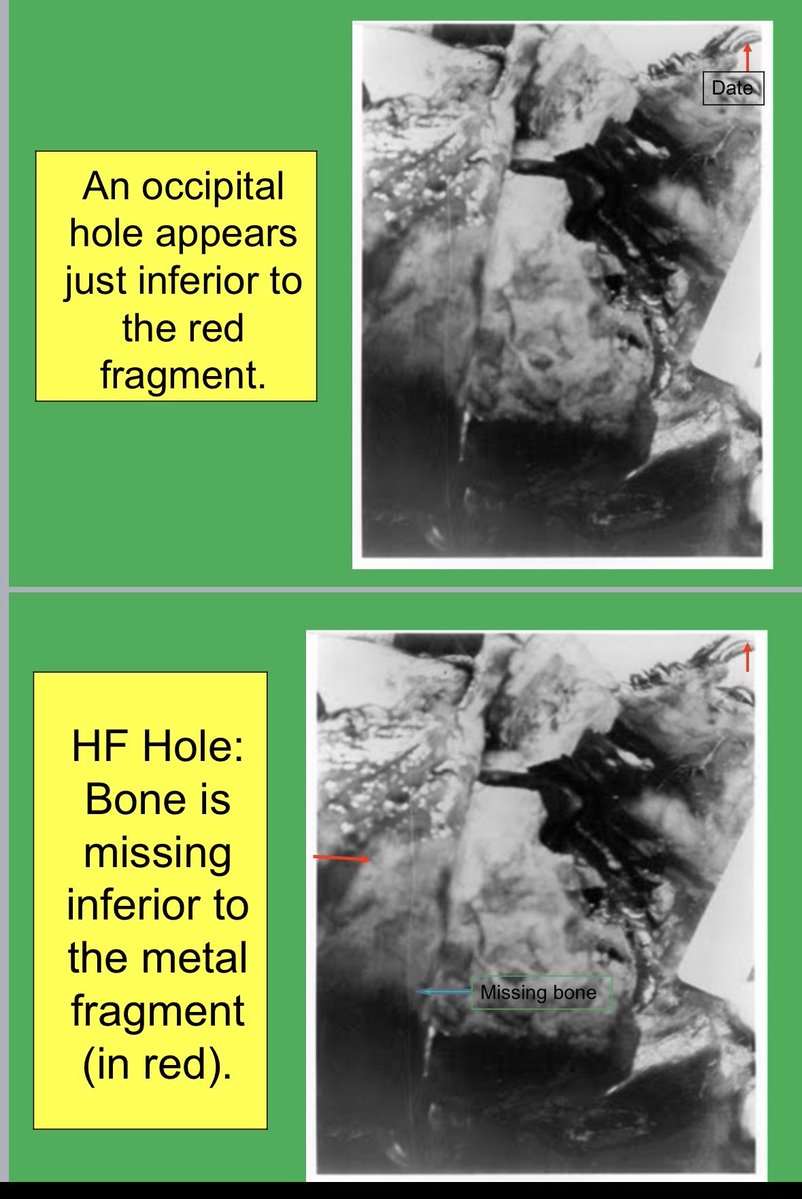
In sum, the observations by the Parkland doctors were contemporaneously reduced to written reports. Unlike the original notes taken by the autopsy pathologists, which were burned in the fireplace that weekend, the Parkland doctors’ reports became part of the hospital’s permanent records. Those reports exist today and support what they saw.
It’s more than simply 44 eyewitnesses. As anyone who watched Season 2 of “The Pitt” knows, an essential part of an ER doctor’s job is to make a written record of what they observed, what tests they performed, what medical procedures they employed, and what the patient’s responses were. That hasn’t changed. The ER doctors at Parkland recorded what they observed concerning JFK’s wounds in some detail. When Dr Kemp Clark, chief neurosurgeon at Parkland, made the call that the patient had died, his observation of the extent of the head wound, from which cerebral and cerebellar tissue was extruding from a gaping hole in the back of the skull, was a major factor in his conclusion that the wound was fatal and not survivable.
44 witnesses reported seeing a hole in the back of JFK's head the size of a human fist. The HSCA Medical Panel said there was no hole. I asked Google what the odds were that all 44 witnesses could be mistaken about what they saw. The answer: 17.6 trillion to 1 #JFKassassination
What’s especially revealing is that they called Michael Caputo’s documentary the “Telizhenko documentary,” when it was actually a documentary about Ukraine in which Andrii gave only a short interview.
That rather gives the game away. What they were really doing was creating a circular fraud, using Andrii’s short appearance to come after Michael and Michael’s movie to come after Andrii.
A round river is a river that flows back into itself, forming a continuous circuit or loop, so Round River was a remarkably apt name for what they were doing.
44 witnesses reported seeing a hole in the back of JFK's head the size of a human fist. The HSCA Medical Panel said there was no hole. I asked Google what the odds were that all 44 witnesses could be mistaken about what they saw. The answer: 17.6 trillion to 1 #JFKassassination
Currently scrambling to get a video version of Season 1 conclusions out on YT tomorrow. I never put videos out for season one. In the off-season, I learned how to make better videos. So now I’m applying that to the ones I never made for season one starting with the conclusion episode. I’m hoping this will be a good entrance point for people who have casual interest in the case and explores both sides of 15 of the most important issues in Jfk assassination 101.
Now that I tweeted about it, I feel like I have to do it!
@HarryMacD I’d still pay money to see that, @HarryMacD Faeries, indeed!
First, rehearse your song by rote
To each word a warbling note:
Hand in hand, with fairy grace,
Will we sing, and bless this place.
~William Shakespeare, A Midsummer Night's Dream, c.1595 [V, 1, Titania]
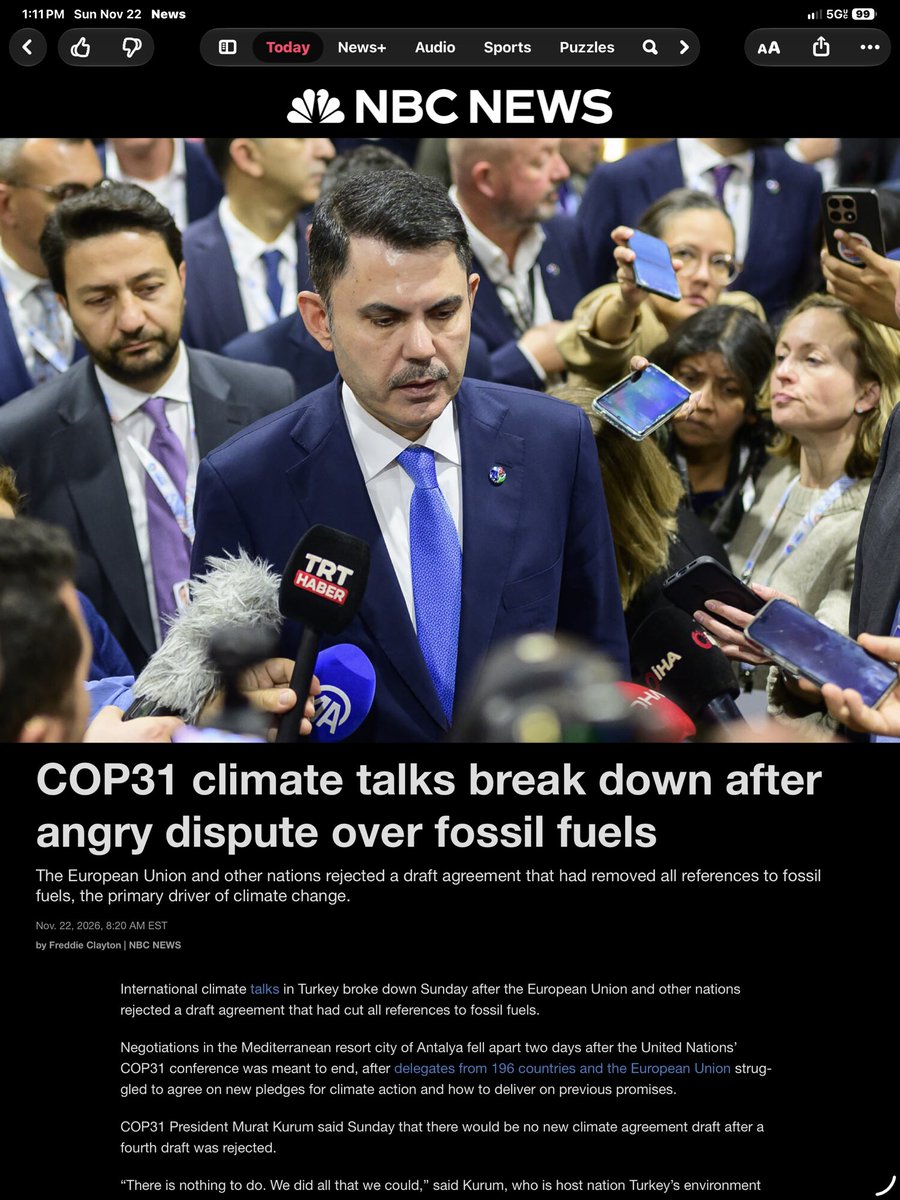
COP31 falling apart. BBC nowhere to be seen
Out goes mention of transiting away from fossil fuels.
Out goes mention of 'climate adaption' $120 billion a year for third world grifters
In comes an 'ambition' to increase electricity production to 35% by 2035.
Hope in every heart
Justice Sotomayor said something interesting on the topic of Article III judicial tenure at a Philadelphia event on Friday. Asked about term limits, she replied, "I wouldn't be unhappy with term limits," and added, "We're the only country in the democratic world with lifetime appointments."
With all due respect, that's an argument about comparative politics, not about what the Constitution actually says.
Article III says judges "shall hold their Offices during good Behaviour." In other words, life tenure.
And we've been here before. When the term-limits movement targeted Congress, the Supreme Court ruled in U.S. Term Limits v. Thornton (which I worked on a tiny, tiny bit when I was a law firm associate) that the only way to impose caps is through a constitutional amendment.
The same logic applies to the Justices themselves. Any statute that would rotate sitting Justices off after 18 years, or shuffle them into some "Senior Justice" role with a stripped-down caseload, is just converting life tenure into fixed terms and hoping nobody notices. Sorry, Ms. Justice, we’ve already noticed Senator Whitehouse’s unconstitutional talk here brewing for years.
It's also worth paying attention to the timing here. This push is gaining steam at precisely the moment Democrats are poised to control both chambers of Congress, with Court expansion being discussed quite openly.
Justice Alito called this out directly in his Irving Kristol Award address, describing "a mounting campaign to change the direction of the Court's decisions by intimidating justices or, if that fails, by seriously damaging the Court's standing in the eyes of the public and then altering the Court's composition."
At the end of the day, a sitting Justice saying she'd welcome term limits doesn't make them constitutional. If anything, it's a reminder of why the difficult Article V amendment process’s indispensability matters so much and deserves to be defended to the hilt.
Finally, Justice Sotomayor knows that if some of the Senator Whitehouse-style reforms are adopted by a Dem-controlled Congress and not launched until there is a Dem President again, those who support her jurisprudential views will fill any new slots.
So she is also arguing for something to benefit herself without regard to the Constitution’s text or the doctrine of separation of powers and federalism both — since the Article V amendment process — in both of its forms — must involve the States and not Congress + the President alone.
NEW - A devastating verdict on German climate and energy policy: An expert panel concludes that Germany's society and economy will "not survive" the self-proclaimed "energy transition."
https://t.co/snEyP4sfHN
Shut down working nuclear plants, knocked the cooling towers down so nobody could change their mind, then started buying electricity off the French. Now their own experts reckon the economy won't survive it.
And the UK looked at this horrendous car crash and decided to copy their homework.