@nu_maroon@xghana_ Biodegradable so it should be poured for rains to carry them because they will de degradable in the gutters. Common sense is missing.
This SA woman needs help. Life happens, I hope the xenophobes acting barbaric and think their people are all ok elsewhere should take a cue. I hope the SA gov comes to her aid.
@ndizwezwo95@KMutisi Many of you need common sense. Your brain 🧠 need to be removed and washed. She walked there. You are so backward that you do not understand that life happens. You don’t understand that one can have opportunity today and lose that opportunity 2moro. She needs hlp nt stupid quests
@cwazibe@khumo_k7 Moron, do those people sleep in your house. Do you feed them with your money. Barbarian, you can’t even listen and reason. Hating won’t solve your poverty neither take you out of your mukukus.
@VutomiGiftRJ@Am_Blujay The Whiteman who came to SA and Zimbabwe most were settlers, they built a country to live in. Your assumption that some countries chased white people is not only false but ignorance. Name one country apart from Zim that chased white people? Name one .
@MaxTebogo10@AdvoBarryRoux The law and the state security are not there for unfair. Let them do their job. Instead you should focus on how you can improve your life. No fight against an illegal immigrant will put food on your table or improve your life. Stop the hate and let the law work.
@LeratoM1v@AdvoBarryRoux Mandela was educated, Steve Biko was educated, Chris Hani was educated, Walter Sissulu was educated. Western sanctions and education that negotiated ended apartheid.
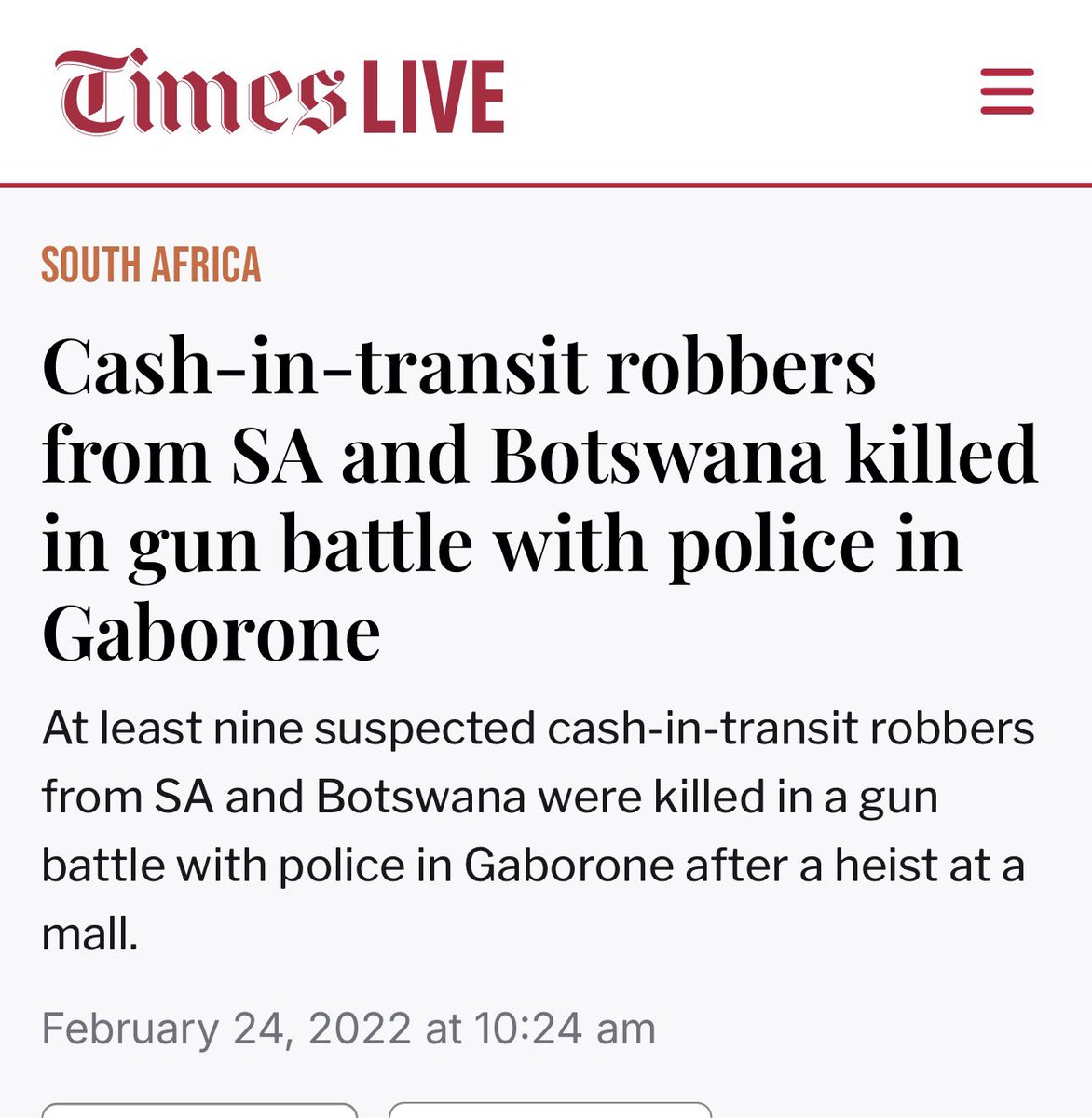
@MoyaProf@Leon_Schreib@SthembiD Remove the title Prof from your name because you sound like one. Years back some SANs were caught as armed robbers in a Botswana. The law worked, you heard no noise. Kill your ego and hate, let the law take its cause. It’s a democracy not barbarian republic.
@Malatjie_@MrJamesKe Taking a road trip to South Africa. It seems you are not exposed enough or you do not have the means. What stops you from flying which is cheaper. Here is a profile of a Ghanaian man who travelled from Ghana to SA in a G-Wagon. Show some respect!
@MusaaRonalds@leydamann 1/2 This is no education is backward thinking. Elon Musk going to the United States in search of the opportunity and leverage to becoming the richest man on earth doesn’t make him poor. But a smart guy changing the world instead of thinking of fixing a corrupt system.
@my_azania@jacksonhinkle Illiteracy is a disease. The first blacks to run a gold mine in Ghana and Africa were Ghanaian businessmen in the 1800s. AngloGold Ashanti is run by Ghanaians. Even Goldfields is run by Ghanaians. No one is doing anything to spite you. We are capable.
@odongo_daniel@claudlord1@jackson_rem Did she start by fixing her village? Most blacks in Cape Town are from EC. If that’s how humans operate everyone should go and fix their villages first. If you have issues with illegals face it as is and stop the scapegoating. There are laws just follow it without lectures.
The Unfiltered Truth About South Africa’s Immigration Crisis — And How It Can Be Realistically Resolved
South Africa has the sovereign right to regulate its borders. Every country does. But real solutions require honest diagnosis first.
South Africa’s immigration crisis is one of the most emotionally charged and politically contested issues in the country right now. It is discussed everywhere, in taxis, on social media, in Parliament, and in townships; yet very few people are willing to speak honestly about the full picture.
Instead, the debate is usually trapped between two extremes:
On one side are those who pretend there is no immigration problem at all.
On the other are those who blame immigrants for virtually every social and economic failure in the country.
Neither position is honest. And neither position solves anything.
The truth is far more uncomfortable: South Africa does have a serious immigration crisis. But the core problem is not simply “foreigners.” The real crisis is a broken state system, regional instability, economic desperation, corruption, and decades of poor governance colliding at the same time.
If South Africa wants real solutions instead of endless cycles of anger, frustration and violence, then the country must start confronting reality instead of slogans like “Abahambe!”.
South Africa Became the Economic Anchor of a Struggling Region
Whether people like it or not, South Africa is the economic center of Southern Africa.
For decades, millions across the region have viewed South Africa as the place where survival is still possible. Zimbabweans escaping economic collapse, Mozambicans fleeing instability, Malawians seeking work opportunities, Congolese refugees escaping conflict. Many end up in South Africa because there are very few alternatives nearby.
But migration into South Africa is not simply about people “chasing opportunities.” In many cases, it is the direct consequence of political failure across the continent.
People do not casually abandon their homes, languages, families, professions, and support systems unless conditions become unbearable.
Across parts of Africa, citizens have endured:
* election rigging,
* political intimidation,
* state violence,
* corruption,
* economic collapse,
* suppression of opposition movements,
*security forces responding violently to protests,
* youth unemployment,
* currency instability,
* and collapsing public services.
In countries like Zimbabwe, many citizens have repeatedly watched disputed elections produce governments that are not of their own choosing. Political violence, intimidation of opposition supporters, arrests of activists, and shrinking democratic space have contributed to a long-term environment of instability.
Migration then becomes less about ambition and more about survival.
👉🏽This is where South Africa’s role becomes politically uncomfortable.
South Africa’s government has often continued legitimizing disputed governments across the region through diplomatic recognition, public congratulations, and attendance at inauguration ceremonies despite widespread allegations of electoral irregularities or democratic abuse.
Regional powers cannot continuously endorse questionable political outcomes while simultaneously acting surprised when populations flee the consequences of those same governments.
When democratic accountability weakens in neighboring countries, the effects do not remain confined within borders. Economic collapse, displacement, instability, and migration eventually spill into the region.
That does not mean South Africans are wrong to feel overwhelmed.
Communities dealing with unemployment, overloaded public services, housing shortages, crime, and economic stagnation naturally become frustrated when they feel the state has lost control of immigration systems, and they are not being prioritised as citizens.
The frustration itself is real.
But frustration becomes dangerous when political opportunists redirect it entirely toward vulnerable migrants while ignoring the structural failures that created the conditions in the first place.
The Immigration System Is Deeply Dysfunctional
One of the least discussed truths is this:
Many immigrants in South Africa actually want to be documented legally.
They want legal recognition.
They want work permits.
They want residency papers.
They want functioning asylum systems.
But the current immigration system makes lawful documentation extraordinarily difficult.
At present, many immigrants who want to comply with the law are effectively pushed outside of it by administrative collapse. Long backlogs, corruption, inconsistent decision-making, sudden policy shifts and unreachable government departments; mean that legal status often becomes a privilege of patience, connections, or luck rather than a functioning rights-based process.
Some migrants spend years trying to regularise their status only to remain trapped in administrative limbo.
This creates the exact conditions that fuel public anger:
* undocumented populations,
* labor exploitation,
* informal economic participation,
* vulnerability to crime syndicates,
* and distrust between citizens and migrants.
A dysfunctional state system produces disorder. Then society blames the disorder on the people trapped inside that dysfunction.
The Corruption Problem Nobody Wants to Fully Confront
Another uncomfortable reality is that corruption is one of the biggest enablers of illegal immigration in South Africa.
And until the country is willing to confront corruption inside its own systems with the same intensity used to condemn migrants, the crisis will continue reproducing itself endlessly.
Much of the political rhetoric around immigration creates the impression that mass deportations alone will solve the problem.
But what many politicians avoid saying publicly is this: Undocumented migrants who are deported often return within days. Some do not even leave the country after being apprehended. Those who can afford to pay a bribe to the police officer on duty at the detention centre are free to go.
Why? Because the system operates like a revolving door.
On many land borders, corruption has hollowed out immigration enforcement to the point where border management becomes transactional rather than lawful. Bribes facilitate illegal crossings, documentation fraud, and repeated re-entry.
And until politicians admit this openly, many proposed “solutions” will remain more about political theater than sustainable governance.
They can organize media-heavy operations and mass deportations, but if corrupt networks inside border management & immigration control continue operating, the cycle simply repeats itself.
Illegal Immigration and Xenophobia Are Not the Same Thing
South Africa has the sovereign right to regulate its borders. Every country does.
It is legitimate for citizens to demand:
* secure borders,
* efficient immigration systems,
* proper documentation,
* deportation of violent criminals,
*and protection of national resources.
Those concerns are normal in any functioning democracy.
But there is a major difference between immigration enforcement and xenophobia.
When immigrants become collective scapegoats for unemployment, corruption, crime, collapsing infrastructure, or failed governance, the conversation stops being about policy and starts becoming emotional displacement.
A corrupt municipality did not collapse because a Zimbabwean street vendor exists.
State capture was not caused by Somali shopkeepers.
Load shedding was not created by Ethiopian immigrants.
The housing crisis was not created by Congolese refugees.
South Africa’s deepest problems are overwhelmingly governance problems.
Immigration pressures may intensify strain on systems, but they did not create the original dysfunction.
Politicians Exploit Public Anger Instead of Solving Problems
One reason immigration tensions continue escalating is because immigration has become politically useful.
It is easier for politicians to blame foreigners than explain:
* why unemployment remains catastrophic,
* why municipalities collapse,
* why corruption continues,
* why policing fails,
* or why economic inequality remains extreme.
Immigrants become visible symbols onto which broader frustrations are projected.
This creates a dangerous cycle:
*Public suffering increases.
* Political leaders avoid accountability.
* Migrants become scapegoats.
* Social tensions explode.
* Structural problems remain unresolved.
Eventually communities begin fighting each other while elites remain untouched.
South Africa Cannot Solve This Alone
Another uncomfortable truth is that South Africa cannot sustainably manage migration pressures without regional political reform.
As long as neighboring countries remain politically unstable or economically broken, migration into South Africa will continue.
That means regional diplomacy matters enormously.
Southern African governments cannot continue protecting authoritarianism, corruption, economic collapse, and electoral dysfunction while expecting South Africa to absorb the consequences indefinitely.
Regional instability always spills across borders eventually.
If countries like Zimbabwe were economically functional, politically accountable, and capable of retaining their skilled populations, millions would not feel compelled to leave in the first place.
Migration is often a symptom of state failure elsewhere.
So What Would a Realistic Solution Look Like?
There is no magical solution. But there are realistic steps that could significantly stabilize the situation over time.
1. Fix the Documentation System
South Africa needs:
* faster permit processing,
* digitized immigration systems,
* anti-corruption reforms inside Home Affairs,
* proper asylum management,
* and clear legal pathways for workers and long-term residents.
A properly functioning system would integrate people who are already present in the country into a regulated, traceable, and productive framework.
When immigrants are documented and able to open bank accounts, they become part of the formal economy. This immediately changes their relationship with the state: they can be taxed transparently, their economic activity becomes measurable, and they are no longer forced into informal survival systems.
2. Strengthen Border Management
A realistic border management strategy must be twofold:
First, South Africa needs properly resourced and professionalised border enforcement that uses intelligence-led operations, modern surveillance systems, and coordinated inter-agency cooperation rather than inconsistent physical patrols alone.
Second, and more importantly, there must be a serious anti-corruption intervention within border management structures themselves. This includes internal accountability mechanisms, independent oversight, lifestyle audits for officials in sensitive positions, and real consequences for bribery and facilitation of illegal entry.
A border that is professionally managed but internally corrupt is not a border at all. It is a negotiated system of access, where law is secondary to influence and bribery.
3. Crack Down on Exploitative Employers
It is not sustainable to focus enforcement only at the point of entry while ignoring the employers who continuously absorb and normalise undocumented labour inside the country.
A significant portion of undocumented labour exists because there is economic demand for it.
Certain employers prefer vulnerable, undocumented workers precisely because their status makes them easier to underpay, easier to threaten with dismissal, and less likely to report abuse. This creates a parallel labour system where legality is bypassed for profit.
A meaningful crackdown would require consistent workplace inspections, stronger enforcement of labour laws, and real penalties for businesses that repeatedly hire undocumented workers. This includes fines that are severe enough to outweigh the financial incentive of cheap labour, as well as potential criminal liability for persistent violations.
4. Address South Africa’s Internal Governance Crisis
No immigration policy will solve:
* corruption,
* unemployment,
* failing municipalities,
* energy instability,
* or economic exclusion.
Those are governance failures that require serious political reform.
5. Push for Regional Accountability
One of the biggest reasons governments survive — even deeply unpopular or disputed ones — is because neighboring states continue to provide them with economic access, diplomatic cover, and institutional normalisation — even when their legitimacy is contested.
When South Africa continues “business as usual” relations with disputed governments, they effectively help stabilize those governments in several ways.
This is where South Africa holds enormous influence.
When South Africa begins withdrawing recognition or openly questioning the legitimacy of disputed governments, the political terrain can change very quickly.
This does not mean South Africa must pursue reckless destabilization or punish ordinary Africans through broad economic isolation. In fact, collective punishment would likely hurt citizens more than political elites.
Instead, South Africa can play a constructive democratic role in several ways.
First, it can stop normalizing electoral irregularities by insisting on stronger regional election standards and more credible observer missions. Regional endorsement should not be automatic.
Second, South Africa can increase pressure on corruption and illicit financial networks that use South African systems to protect wealth and move money across borders. Much of Zimbabwe’s political elite, for example, depends on regional financial access to evade sanctions placed on them.
Third, South Africa can use its influence within Southern African Development Community to push for regional accountability. Too often, SADC prioritizes short-term political stability over democratic legitimacy. But protecting flawed systems in the name of “stability” usually only postpones deeper crises.
6. Reject Both Denialism and Hate
South Africans should not be forced to pretend immigration pressures do not exist.
But migrants should also not be treated as less human.
A mature society must be capable of balancing:
* national sovereignty,
* public order,
* economic realities,
* human dignity,
* and regional responsibility simultaneously.
The Real Danger Is Social Fragmentation
The greatest threat is not simply immigration itself.
The real danger is a society collapsing into permanent resentment, distrust, and division while political elites continue avoiding accountability.
When poor citizens and poor migrants begin viewing each other as enemies, attention shifts away from the systems producing inequality in the first place.
And once societies normalize dehumanization, violence becomes easier to justify.
South Africa stands at a crossroads. It can continue down a path of rage, scapegoating, and political theater.
Or it can confront the issue honestly.
South Africa’s immigration crisis will not be solved by denial, mass deportation campaigns, or xenophobic mobilisation. It will only be resolved when the state, the region, and the political class confront the structural failures that produce migration pressures in the first place — and stop treating symptoms as causes.
You can read the full article on my blog: https://t.co/XyP5wU32Ft
@LeboMabuse@michelle_mystiq Which American citizens did you see matching and chasing people out of their homes, shops, workplace?
Which American did you see taking over someone’s property illegally and celebrating over such? 99.99% of March and March and Dudula members are the poor with poverty mindset.
@GeneralDonjulio@weloveghana042 Illiteracy is a disease. Learn! When Ghanaians started a gold mining company themselves you were still looking for an identity: https://t.co/9HB2aWYrZy
Show some respect. AngloGold Ashanti was built by Ghanaians. Show some respect, illiterate!