In April 1967, a 20-year-old farm boy from South Dakota did something that would change the Vietnam War—he fell off his ship.
Seaman Douglas Hegdahl was standing on the deck of the USS Canberra when the recoil from a five-inch gun knocked him overboard into the Gulf of Tonkin. He treaded water for five hours, then swam for seven more. When fishermen finally pulled him from the sea, they handed him to North Vietnamese forces.
The interrogators didn't believe his story. They thought he was a spy, a commando, someone important. They beat him and threw him into the Hanoi Hilton—the most notorious prison of the war.
But Hegdahl made a choice that would save hundreds of lives. He became "The Incredibly Stupid One."
He played up his country accent. He stared wide-eyed at things he'd never seen before. When they ordered him to write a confession, he claimed he couldn't read or write. The guards, used to illiterate peasants in their own country, believed him completely. They even assigned someone to teach him—who eventually gave up, convinced Hegdahl was hopeless.
What they didn't know was that Hegdahl had a photographic memory and the discipline of a soldier.
Because they thought he was harmless, the guards let him sweep the prison yards. He walked between cellblocks. He memorized the layout of the camp and the route into Hanoi. He even sabotaged enemy trucks by adding dirt to their fuel tanks.
But his real mission was gathering intelligence.
With the help of fellow prisoner Joe Crecca, Hegdahl set out to memorize something impossible: the names, ranks, Social Security numbers, and personal details of over 250 fellow American prisoners. How do you remember 250 names under torture, starvation, and the constant threat of death?
He used "Old MacDonald Had a Farm."
Every day, Hegdahl repeated the names to the tune of the children's song. Over and over. Names became melodies. Data became memory. While the guards laughed at the "stupid" American humming in the prison yard, he was conducting one of the most important intelligence operations of the war.
When North Vietnam offered early release as a propaganda tool, Hegdahl initially refused—prisoners had sworn an oath to leave together or not at all. But his commanding officer, Captain Dick Stratton, ordered him to go. "You're carrying the names," Stratton told him. "Their families need to know they're alive."
On August 5, 1969, Hegdahl walked out of the Hanoi Hilton.
When he returned to the United States, he recited every single name. Every rank. Every identifying detail. His memory transformed 250+ missing men into confirmed prisoners of war. At the Paris Peace Talks in 1970, he confronted North Vietnamese negotiators with firsthand accounts of torture—and the pressure he brought helped secure the eventual release of all American POWs.
That farm boy who "fell off a ship" had just freed an entire army.
Decades later, in 1998, Hegdahl stood before an audience of veterans and families at the Richard Nixon Library. Thirty years after his release, he stood and sang—to the tune of "Old MacDonald Had a Farm"—the names of 256 men he'd memorized in captivity.
Not one name forgotten.
Sometimes the most dangerous people are the ones your enemy thinks are harmless. Sometimes genius wears the mask of stupidity. And sometimes, a child's lullaby becomes the most powerful weapon of all.
Ever know anyone that smart that could play that dumb for that long?
Amazing!
Americans were once members of a proudly literate society, but today, reading has declined across age groups, gender, and education levels. For The Atlantic’s August issue, @rosehorowitch explores the reading collapse—and its effects on civilization: https://t.co/AWuYlYRts1
LIGHTNING, A RAINBOW, AND THE STATUE OF LIBERTY… ALL IN ONE MOMENT
It doesn’t get much more incredible than this.
One perfectly timed moment over New York City brought together a lightning strike, a rainbow, and one of the world’s most recognizable landmarks.
📍 New York, New York
📸 Photo by Misty Kepler
#MrMBB333 #newyork
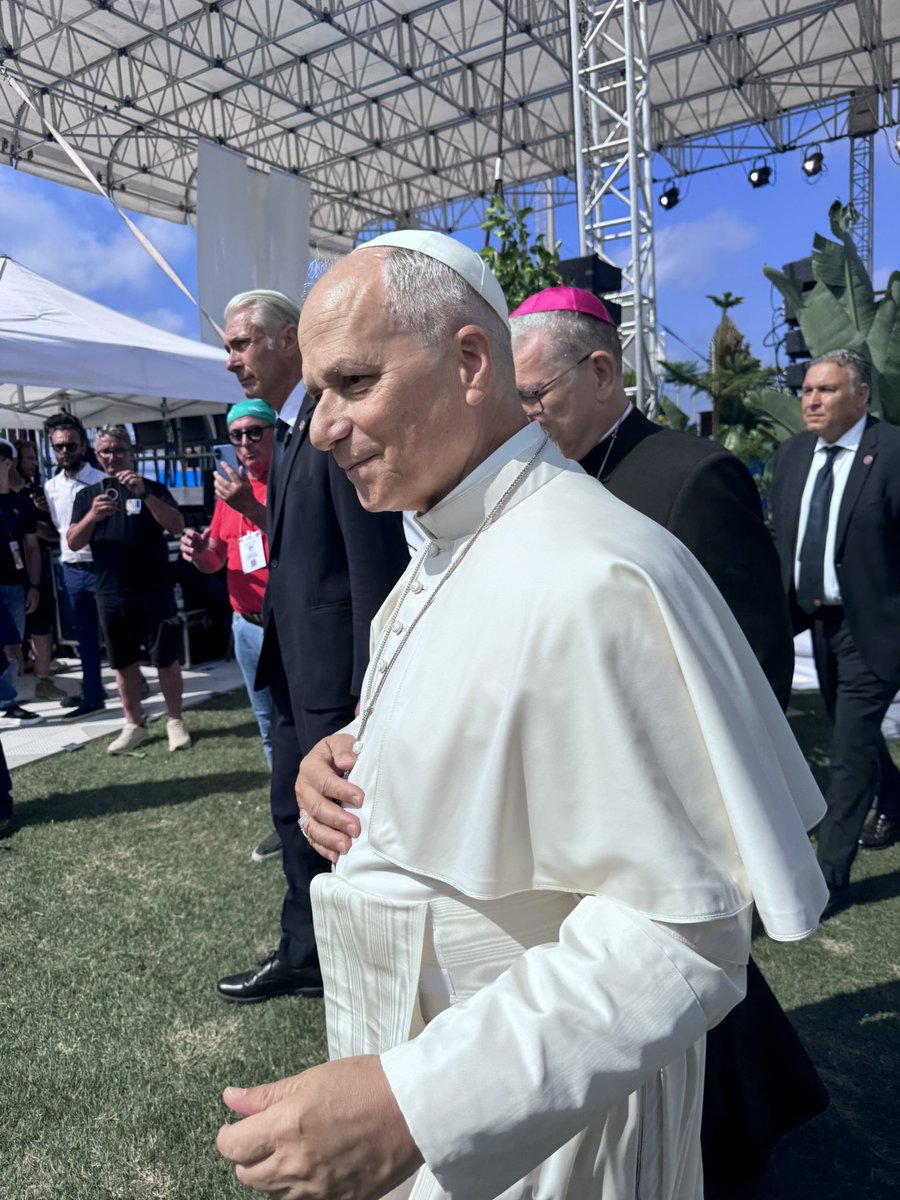
Pope Leo urged Americans to uphold the ideals of the Declaration of Independence, praising the country's long tradition of welcoming immigrants in his first major address to the United States https://t.co/zLPDluiCf1
I extend my heartfelt congratulations to all Americans on the occasion of the 250th anniversary of the signing of the Declaration of Independence. This anniversary stands as an invitation not only to celebrate the nation’s remarkable journey, but also to reflect upon the responsibilities that the sons and daughters of this country bear to one another, and to the generations who will inherit the nation that is being shaped today. https://t.co/jIio4BBg9v
Major Frank Prentice was 18 years old when he dropped over a hundred feet off the stern of the Titanic into a sea full of ice.
He survived. This is what he saw.
Prentice worked in the Purser's office.
He was in his cabin at midships when the collision happened. He describes no chaos, no impact, nothing dramatic:
"It was just like jamming your brakes on my car. There was no great impact you couldn't feel. Just a bit of a shudder and she stopped."
That quiet did not last.
As the ship began to sink, Prentice moved through it.
He helped stewardesses into lifeboats who did not know where to go. He helped a woman named Mrs. Clark with her lifejacket. She did not want to leave her husband. He told her the husband would follow on later.
He would not.
On his way back from the lifeboats, Prentice heard the band. They were playing "Nearer My God to Thee" and singing.
He kept walking.
When the end came, he made his way to the stern. He describes it as quiet up there.
By the time he let go, the ship was nearly vertical. He had been hanging onto a board that read "Keep Clear of Propeller Blades."
At the very last moment, he let go and fell.
"I just missed the propellers on the way down."
The drop was over a hundred feet. The water was packed with ice and chunks of berg.
His watch stopped at 2:20 am.
He was not alone in the water at first. Then he was.
"I gave it a long thought when I was on my own and everybody else seemed to be dead round me."
He had two life jackets and a cushion.
He paddled toward a light he could still see from the rockets the bridge had fired. He reached a lifeboat and climbed in.
Mrs. Clark was already there. She wrapped a blanket around him and tried to keep him warm.
Her husband had drowned.
When asked who was responsible for the disaster, Prentice did not hesitate.
He blamed the bridge. He blamed Bruce Ismay, chairman of the shipping line, for pushing Captain Smith to maintain speed through waters they had been warned were full of ice.
"We had warnings that there was ice. We had it from ships and shore, and we went straight ahead as if there was nothing there in our way."
His verdict was simple:
That ship was thrown away.
Prentice was interviewed decades later.
Asked if the memory still haunted him, he said:
"When I'm alone tonight, I still think a lot about it. Can't help it, can you?"
—
Source: @BBCArchive – The Great Liners (1979)
🇺🇸 Noah Webster’s spelling reform was based on his combined vision of logic and aesthetics. Thankfully, the publick readily accepted many of these changes. 🇺🇸
If you're looking for one clear, concise, balanced understanding of the Holy Father's encyclical Magnifica Humanitas - on Artificial Intelligence, here it is. Charlie is a friend and brilliant moral theologian who is incredibly down to earth and approachable: