It's official.
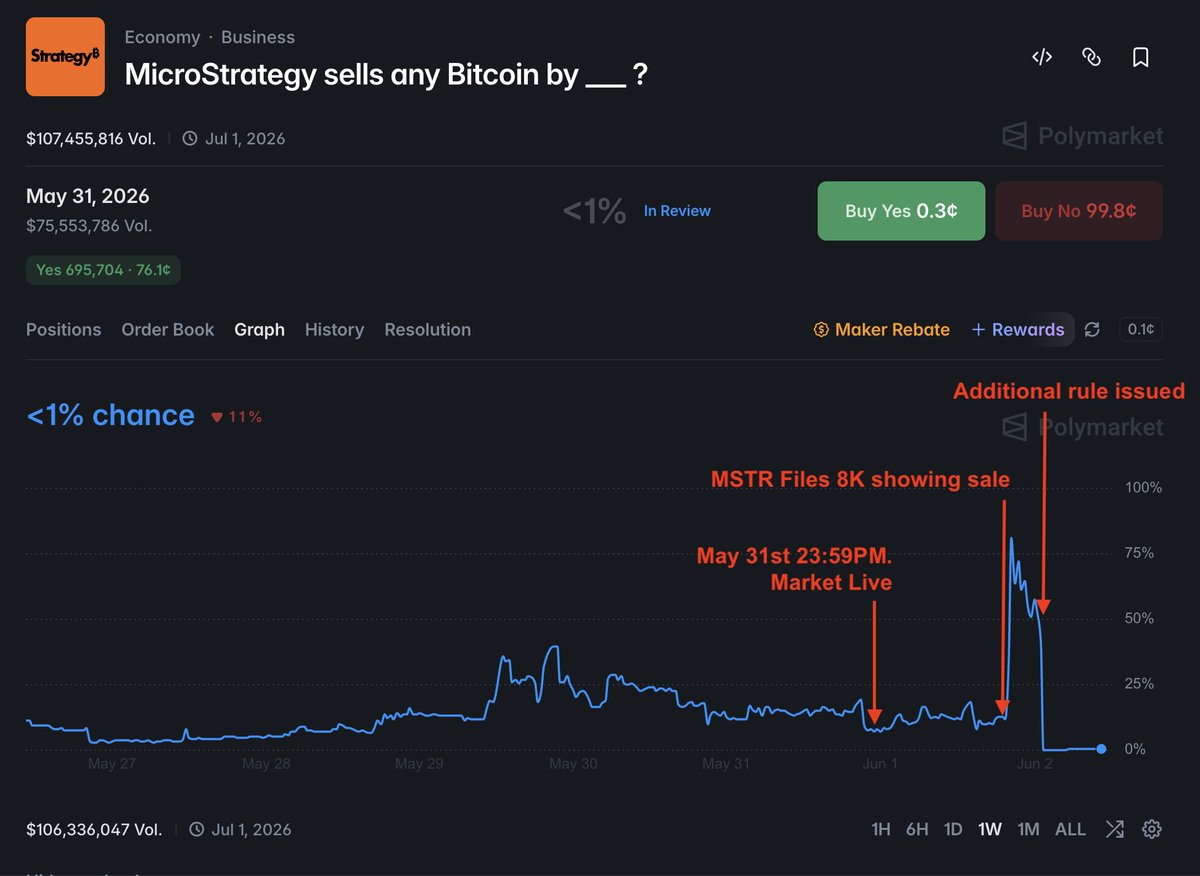
MicroStrategy, $MSTR, is now facing its biggest unrealized loss in history, at -$10.8 billion.
In other words, after 6 years of buying Bitcoin, the company is now down -17% on its position.
By comparison, the S&P 500 is up +116% over this same timeframe.
Since MicroStrategy sold 32 Bitcoin at $77,135 per coin, their positions has lost -$11.8 billion in value.
This puts MicroStrategy's stock, $MSTR, down -77% since its record high.
Bear market is an understatement.
Exposing KOLs with the new X feature
Same guy who said hyperliquid:native was heading to $150 last week
And I’m saying this with a Sei Network hoodie
wtf
1/ An investigation into the opaque private loans/OTC, unilateral vesting changes, market maker coordination, unknown float, and >95% supply control behind $LAB's recent pump to $6B FDV.
Here's why @LABtrade_ represents everything wrong with the current meta of retail extraction on major centralized exchanges.
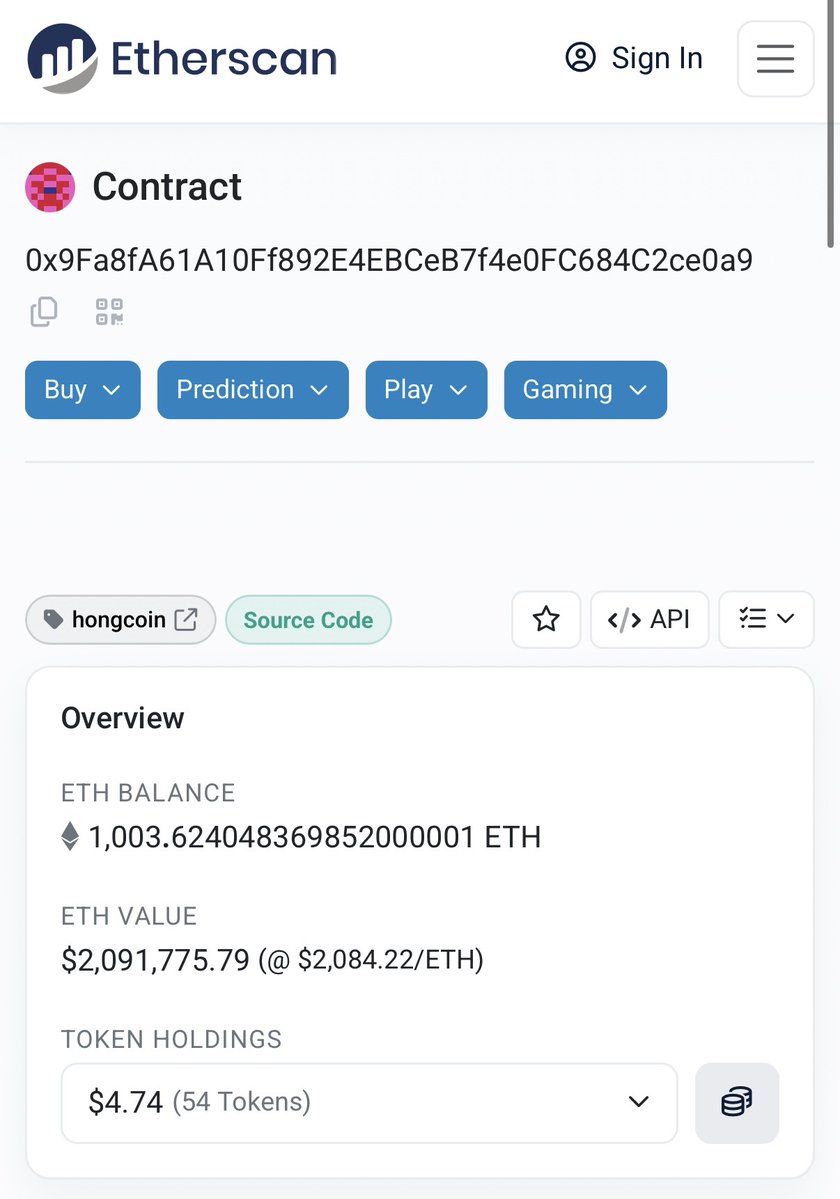
First white-hat exploit on Ethereum: I unlocked 1,003.62
Ξ ($2,000,000) trapped in a 2016 ICO smart contract
for 9 years.
The 48 original investors can now claim their funds.
This incident is unrelated to Squid’s core protocol and contracts. All Squid users and integrators are unaffected and no action is needed.
A third-party Gnosis Safe module was exploited today across Base and Ethereum, resulting in approximately $3.2M in losses. The vulnerable contract is verified on Basescan under the name “SquidRouterModule” but this contract was not built, deployed, or operated by Squid. It is a third-party smart-wallet product that chose to integrate with Squid, among other protocols, but has not been in contact with us.
The exploit worked because the third-party module accepted a caller-supplied constant string as proof that a message was secure. If you pass in this string (which is publicly available in the verified contract’s code), then you can execute an array of arbitrary calldata, stealing funds at will. The victims’ Safes had added this faulty contract as a trusted Safe Module, which gives the contract the ability to spend any tokens in the Safe without signatures. Squid’s own router (0xce16F69375520ab01377ce7B88f5BA8C48F8D666) is architecturally different and was not touched. Squid user funds, approvals, and integrations are fully secure.
Early public reporting may reference “SquidRouter” due to the contract’s verified name on Basescan. The accurate framing is: a third-party SquidRouterModule was exploited, not Squid’s Router contract. The contract shares our name but is not our code. We are monitoring the situation and will share updates if anything changes materially.
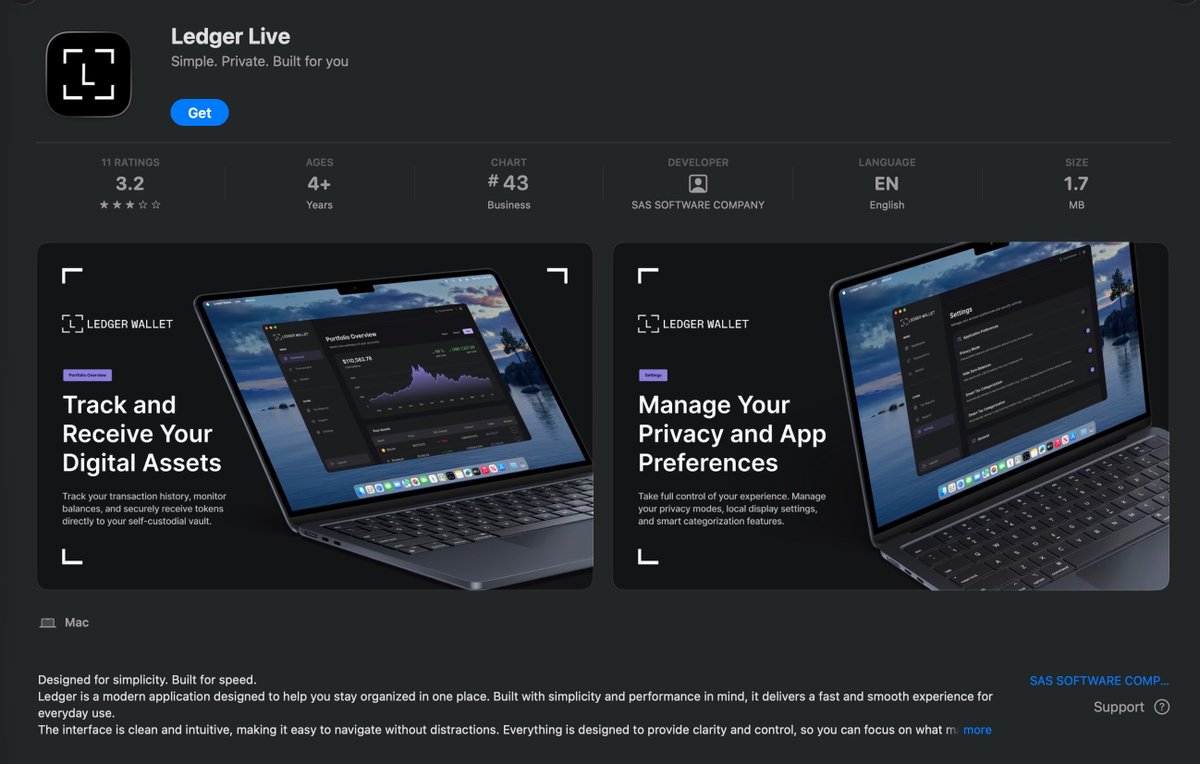
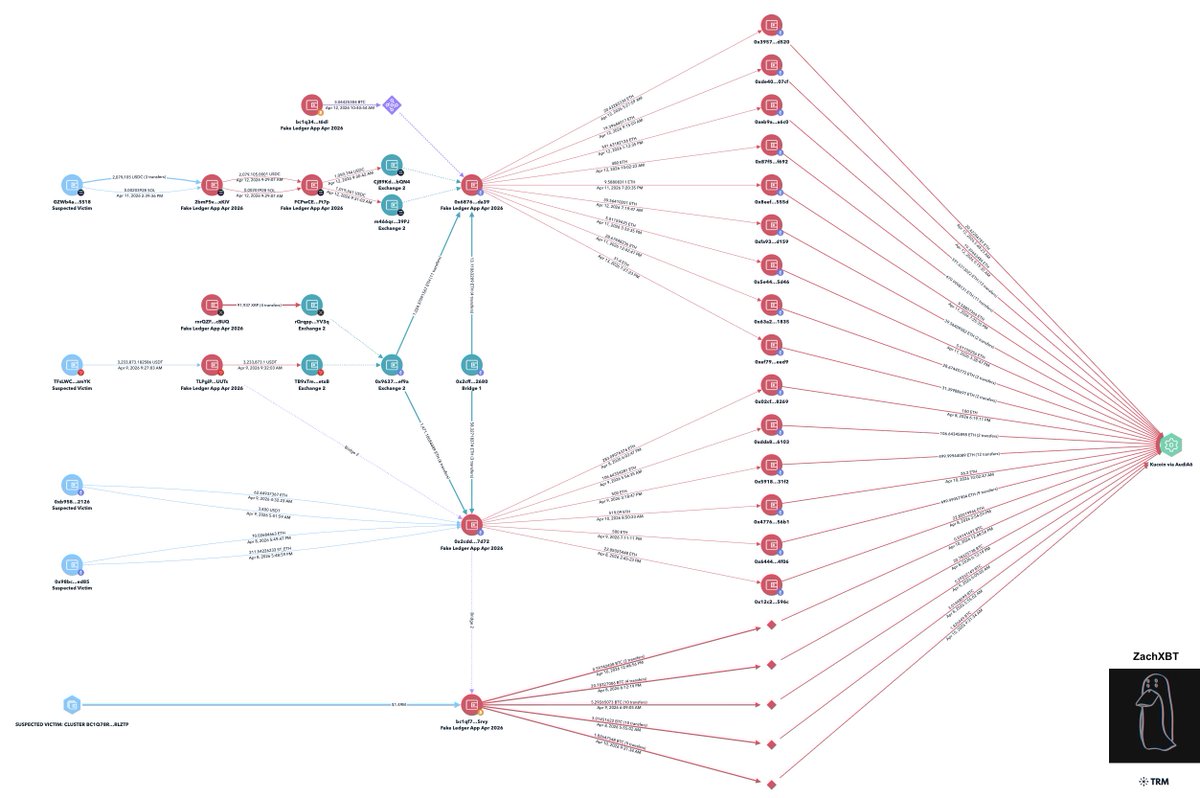
C) Want to explain to the community why Kucoin allowed a threat actor to launder $9.5M+ tied to a fake Ledger app via 150+ Kucoin deposit addresses over the past week?
A few days before that another threat actor laundered $3.5M+ from the Bitcoin Depot incident via 25+ Kucoin deposit addresses.
You’ve enabled instant exchanges abusing KYC and entities like AudiA6, a centralized mixer for illicit actors to operate freely.
Kucoin deserves to have regulators come after its business once again.
"The EF has only ~0.16% of all ETH (less than many other individual ETH holders), whereas among other blockchains it's common for "the central foundation" to have 10-50%."
— vitalik, after selling 11,703,994 eth