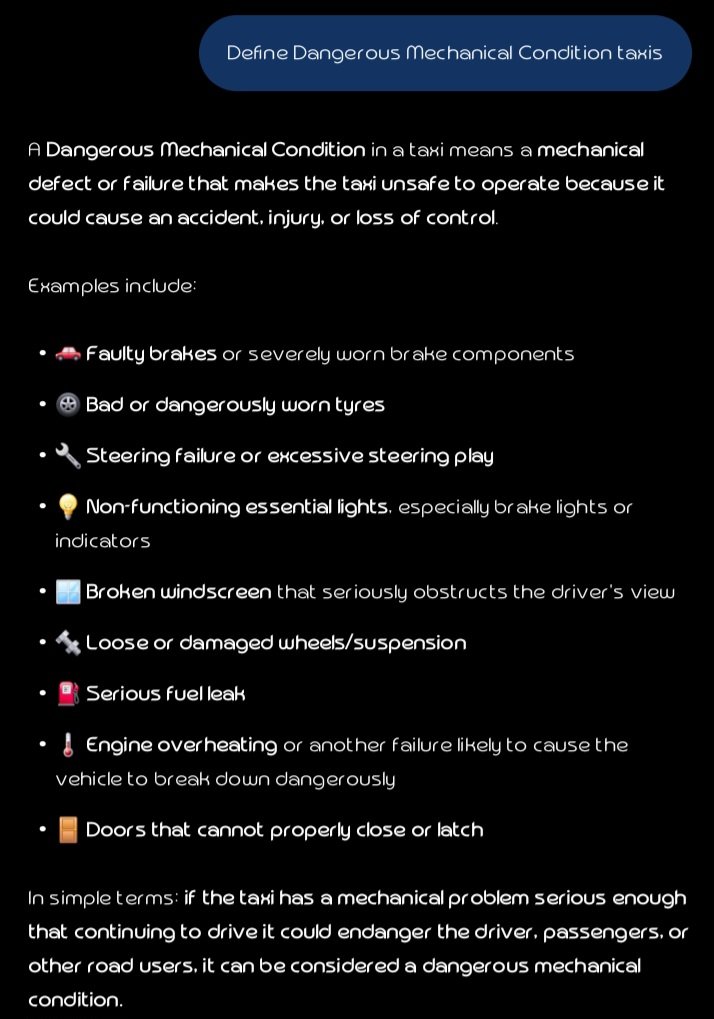
The objective is to be applauded, the execution will be very poor and will fuel bribery. It is not possible to determine the mechanical condition of a vehicle by visual inspection. You can only determine its appearance. Mechanical condition requires measurement, testing, and instrumentation. Visual checks can reveal symptoms, but they cannot diagnose the underlying systems that make a vehicle safe or dangerous.
1. Visual checks are superficial: they show appearance, not engineering.
A visual inspection can reveal:
➡️Dents
➡️Cracked mirrors
➡️Broken lights
➡️Torn seats
➡️Rust
➡️Missing panels
These are cosmetic or structural clues, not mechanical diagnoses. A vehicle can look terrible and still be mechanically sound.
A vehicle can also look perfect and be mechanically dangerous.
2. Critical systems are invisible: the dangerous components cannot be seen.
The most safety‑critical systems are hidden:
➡️Brake pad thickness
➡️Brake fluid pressure
➡️Hydraulic leaks
➡️Shock absorber damping force
➡️Steering free‑play
➡️Tie‑rod wear
➡️Ball‑joint defects
➡️Tyre internal separation
➡️Engine compression
➡️Exhaust emissions
None of these can be determined visually by the road side. They require measurement, tools, and controlled testing.
3. Visual guesswork is unreliable: it leads to wrong conclusions.
If police or inspectors rely on eyesight:
➡️Safe vehicles may be impounded
➡️Dangerous vehicles may be cleared
➡️Enforcement becomes subjective
➡️Corruption becomes easy
Visual judgement is guesswork, not inspection.
4.Mechanical condition is a measured state: it requires instruments and equipment at the motor vehicle inspection stations not by the roadside.
Mechanical condition is determined by:
➡️Brake roller test
➡️Suspension test
➡️Headlamp photometry
➡️Emissions analysis
➡️Tyre tread depth gauge
➡️Noise level meter
➡️Chassis side slip tester
These are quantitative, not visual. A visual inspection cannot produce a measured value, therefore it cannot produce a mechanical diagnosis.
5. Visual inspection can only flag suspicions: it is a screening tool, not a diagnostic tool. Visual inspection can only identify vehicles that need proper inspection.
It cannot confirm dangerous mechanical condition
➡️Certify roadworthiness
➡️Determine compliance with regulations
A vehicle suspected of not being mechanically sound should be directed to the nearest motor vehicle inspection station for thorough inspection.
6. Regulations require measurement: the law does not allow visual determination.
The Traffic and Road Safety (Motor Vehicle Inspection) Regulations, 2016 require:
➡️Measurable standards
➡️Equipment and Instrumented testing
➡️Certified inspectors
➡️Documented results
Visual determination violates the regulatory framework.
Visual inspection is not capable of determining mechanical condition of any vehicle let alone taxis. It can only detect visible defects, which are often irrelevant to safety. For example a taxi with a highly dented and dirty body requiring panel beating can be fit for purpose because the most safety critical components may be functional.
Taxi operators in Kampala have appealed to Works and Transport Minister Fred Byamukama to grant them more time to fix their vehicles, citing difficult family livelihoods and upcoming school fees.
A 100-day joint enforcement operation, "Operation Ganyegenya," targeting taxis in Dangerous Mechanical Condition (DMC) starts Monday, August 24, 2026 across the Greater Kampala Metropolitan Area.
Minister Byamukama has warned that severely damaged PSVs will be permanently removed from the roads. 📸Ibrahim Kavuma #MonitorUpdates
If all implementers in government are not professionals who is a professional in Uganda? Are also aware that almost all car bonds in uganda are breeders and harbor DMC cars?
All used cars sold to Ugandans are DMCS
@AKasingye@kintsmarvin@M_Kananura His statistics are wrong. There's more money to be made by everyone he mentions in the process of fixing DMCs.
Better cars, Professional and qualified drivers = Better safety on roads.
No body is safe if the car approaching you has zig zag tires or brakes that work on swings.
Then Government licenses these commercial DMCs through PSV stickers, Advance income taxes, parker user fees being implemented by UTOF. So the chain is big. These are the people who cater for the government's huge administration costs.
Afande 96% of all cars on Ugandan Roads are DMCs?. This operations is dead on arrival because the people who will be affected most are the passengers, fuel and oil sector, spare parts businesses and mechanics, then lastly your own police officers. It's in those DMCs where they get school fees from.
According to the Minister of @MoWT_Uganda, there will be no #DMCs on our roads from today onwards. Can we all give Hon. Byamukama his flowers? If it fails, then my colleagues @PoliceUg will have failed him. In the meantime, @M_Kananura, let’s know the vehicles that fit the billing of #DMC.
The Executive Director of the @PAU_Uganda Mr Ernest Rubondo has commenced a two-day supervisory field visit to key oil and gas projects in the Albertine Graben to assess progress towards Uganda's First Oil production.
On Day One, Mr Rubondo visited @EACOP_ Pump Station 1 in Hoima, the terminal point where Uganda's crude oil will enter the East African Crude Oil Pipeline (#EACOP) system. During the visit, the @EACOP_ team reported that the project is now 92% complete and remains on track to receive first crude oil before the end of 2026.
The delegation also received updates on the project's socio-economic achievements, which have surpassed several of the initial targets. Notably, the project has created approximately 12,000 jobs, significantly exceeding the planned target of 7,500 jobs. In addition, 520 replacement houses have been constructed and handed over to project-affected households, while more than 500,000 trees have been planted as part of environmental restoration and conservation efforts. The team also highlighted the progress of the EACOP Academy, which currently has 141 students enrolled, helping to build a skilled local workforce for Uganda's oil and gas industry.
Mr. Rubondo also inspected the Kabalega Sub-Power Station, a critical facility being developed to supply power to @EACOP_ operations. Project officials reported that the facility remains on schedule and is expected to be ready to supply electricity to the pipeline project by October 2026.
On Day Two, Mr. Rubondo will visit the Tilenga Project, which spans Buliisa and Nwoya districts, to assess progress on upstream oil development activities and the readiness of key facilities supporting Uganda's petroleum sector.
The field visit reflects the significant progress being made across Uganda's strategic oil and gas infrastructure projects and underscores the country's steady march towards the commencement of crude oil production and transportation.
#PAUVisit #UGOilJourney #CreatingLastingValue
Why transport live cattle from Mbarara to Kampala and subject them to unnecessary stress! Instead, establish a regional abattoir in Mbarara so the animals can be slaughtered locally. Deliver only the processed meat to Kampala, leave the dung behind in the villages (where it can be used productively), and create local jobs in the process.
“I have received from the President of the Security Council, the official outcome of the second straw ballot conducted today by the Security Council. I am grateful to all members of the Security Council. I look forward to continued engagement with members of the Security Council and all Member States of the United Nations.”
Ambassador Olara Otunnu, Candidate for Secretary General of the United Nations.
Today, Maama Janet and I received international evangelist, Bishop Dr. LaDonna C. Osborn at State House Entebbe. She is in Uganda ahead of the consecration of Pastor Patience Rwabwogo as a Bishop.
Dr. Osborn recalled her first visit to Uganda in 1985 with her late mother, who ministered to many Ugandans during a difficult period in our history. Maama Janet also fondly recalled Dr. Osborn’s mother, who prayed with our family and gave our children their first Bibles.
We reflected on Uganda’s transformation over the years and the enduring friendship between the Osborn family and Uganda. I welcome Dr. Osborn back to Uganda and wish Pastor Patience a blessed consecration.
Today, I decided to refund Hon. Nameere’s money because of the video she made yesterday. I believe the video contained many things that were not true, and I don’t want any misunderstanding between us.
I still want to thank her for everything she has done for me and for the help she gave me. I truly appreciate it, and I wish her all the best. 🙏
@UgandaMediaCent
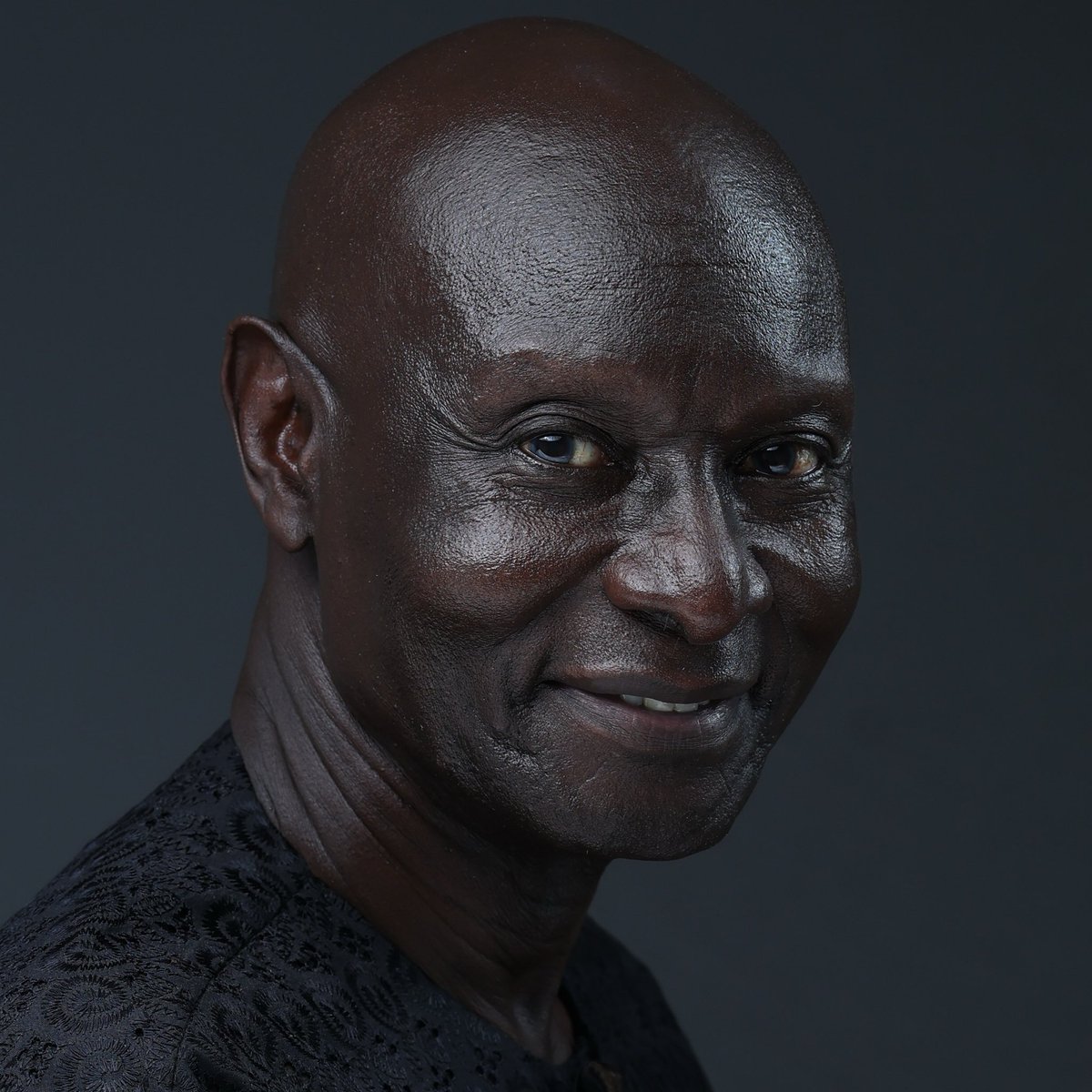
Today, we took pictures of Uganda’s candidate in the UN Secretary General race Ambassador Olara Otunnu.
Here’s a one of them..
And there are better ones.