@ZavalaA Not sure who stole KCRA's calculator, but $352B divided by $208B indicates growth of 69%, not 40%. And to calculate growth during Newsom's time, you should use the year before he took office, 2018-19, as the starting point.
Potentially 17 propositions on California's November ballot:
● Voter ID
● Limit health care executive compensation
● Require community health clinics spend 90% of revenue on program services
● Restrict political spending by health care unions
● CEQA reform
● Make temporary 2012 millionaire tax permanent
● Billionaire wealth tax
● Taxpayer protection act
● Prohibit retroactive tax
● Prohibits new state taxes excluded from state spending limits
● Immunology research bond
● Create middle-income home loan program
● $11.25B affordable housing bond
● Strengthen rainy day fund
● Voting thresholds for tax measures
● Public campaign financing
● Recall election reform
Why does free speech have a “branding problem”?
Part of it is simple. Once an institution becomes ideologically one-sided, it stops needing free speech and starts seeing it as a threat.
That’s what I watched happen on campuses. A slow-motion train wreck.
Norway is reversing its mistaken 2016 decision to give every student an iPad, which damaged education immediately. Many countries are going back to books and handwriting. I hope many American schools will go back to analog next September, and let's see if that works for us too:
Let this sink in. California wealth tax architect Saez admits it here: he would let 80% of billionaires leave CA, liquidating Silicon Valley and its jobs, for an extra $2 billion per year in revenues. This is in a state that spends $325 billion per year, up by 68% since 2019.
California's billionaire tax proposal has not survived "first contact" with billionaires.
- It's a money loser for the state
- It is exporting wealth and jobs, not improving inequality or opportunity
- It worsens CA's structural fiscal problems
My debate with the architects👇
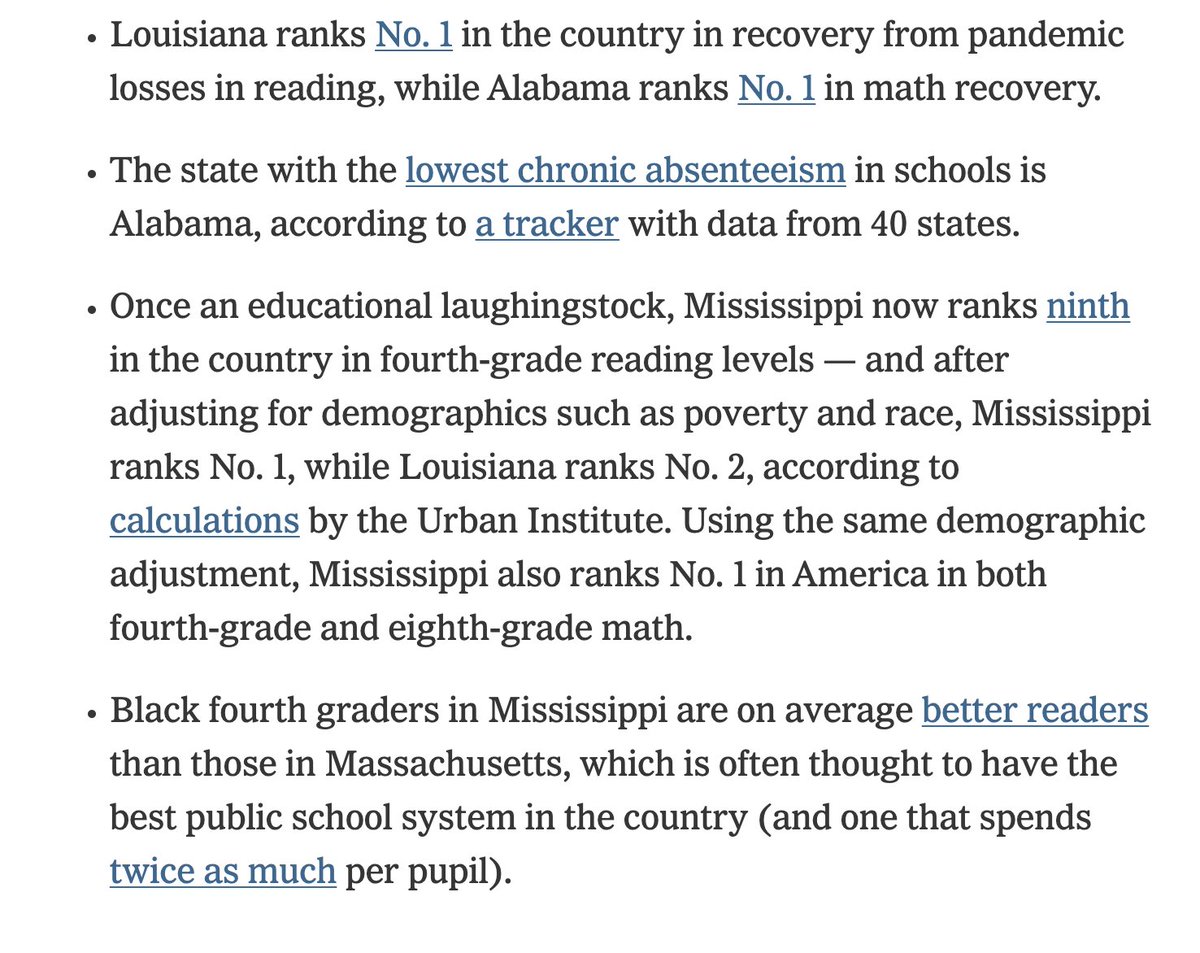
It's astonishing to witness the improvement in public education--reading, math, attendance, grad rates--in Alabama, Louisiana and Mississippi. But we're busy fighting culture wars rather than scaling up what these three states have done. Please do read: https://t.co/h20UCdCP2w
On Dec 3, 2020, I asked President-elect Biden, about reports that Trump was considering preemptive pardons. He said “it concerns me in terms of what kind of precedent it sets, and how the rest of the world looks at us as a nation of laws and justice” https://t.co/5jQ3QR46Sw
Nonfarm payrolls have never recovered to their pre-pandemic trend but for over a year they were at least growing at the same rate as pre-pandemic; now, that's not even true as the labor market adds fewer and fewer jobs, especially after downward revisions are considered:
Updating some charts: Interest is now set to pass defense this year, Medicare in a few years, and Social Security in 18 years to become the biggest federal program - consuming nearly half of tax revenues.
And even that's with interest rates permanently remaining below 4%. 😬
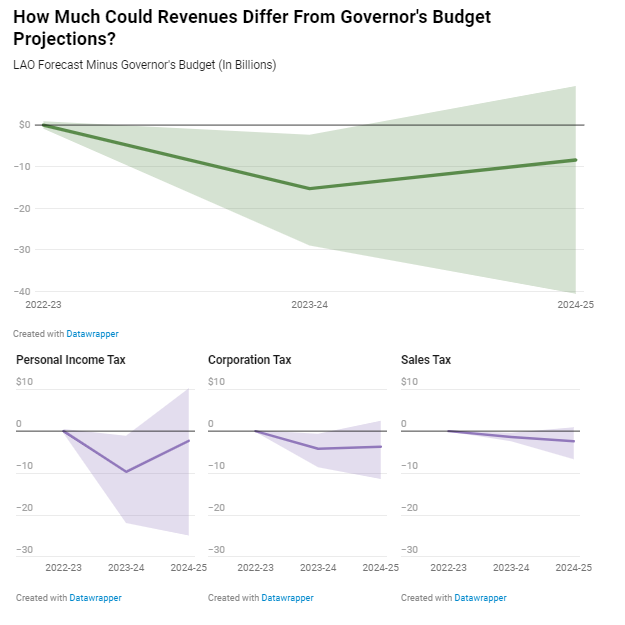
Recent revenue collections data reflect even further weakness relative to those estimates. Our forecast is now about $24 billion below the Governor’s budget across 2022-23 to 2024-25. https://t.co/OOceVH5KMs (3/6)
The nonpartisan LAO now forecasting tax revenues will be $24B less than the Gov's budget assumes through June 2024. Just a few weeks ago LAO forecasted a $15B difference. (Note revenue forecast is not the same as the deficit forecast.) #CALeg
We just posted the latest update to our revenue forecast. Our updated forecast continues to suggest significant downside risk to revenues relative to the Governor’s Budget. Specifically, our forecast is about $24 billion below the Governor’s Budget. https://t.co/sGnZykPLuZ