New York lost a legend today. Stanley Zabar and his brother Saul took his family’s small Upper West Side appetizing store and built a world renowned institution that came to resemble home for many New Yorkers, where we could get the best whitefish and lox on the planet. Stanley was a friend who will be missed by so many, but especially his family. My condolences to the Zabar’s family; may his memory be a blessing.
https://t.co/CzvvSAuSpF
36 seconds after liftoff, lightning hit the U.S. moon rocket Apollo 12 and knocked out the spacecraft's power, with President Nixon at the launch site.
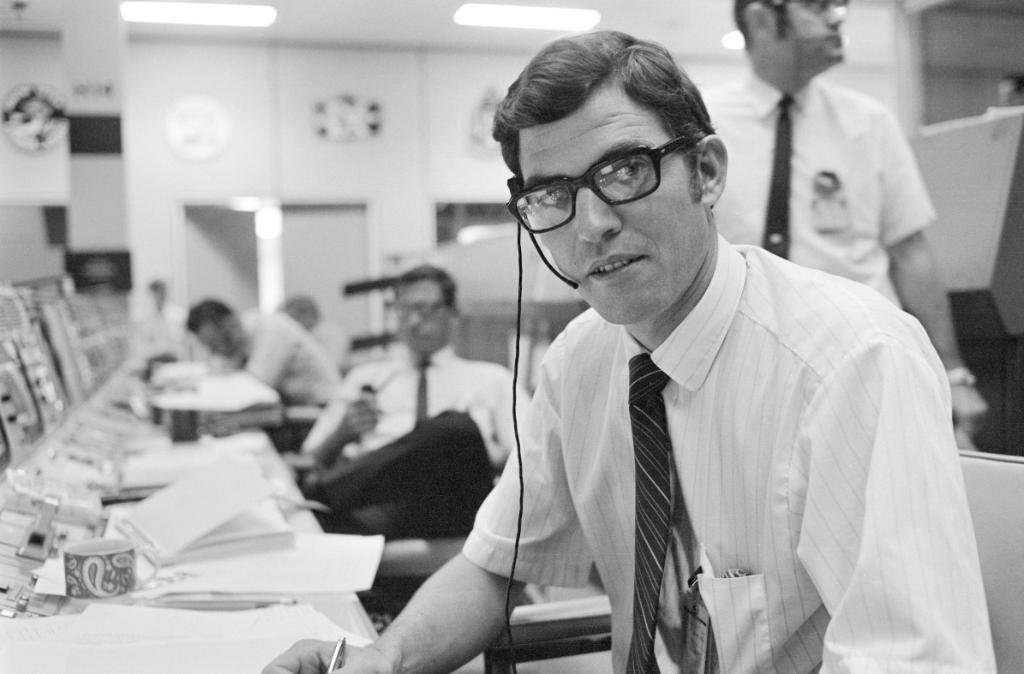
One flight controller in Houston, raised on an Oklahoma farm, had seen that exact failure once before, and he fixed it with a single sentence.
It was 11:22 a.m. on November 14, 1969, at Kennedy Space Center, under solid overcast and rain. Nixon was the first sitting president to attend a crewed launch.
At 36.5 seconds the Saturn V set off a lightning bolt on its own as it climbed. All 3 fuel cells dropped offline, and the spacecraft fell back on batteries that could not carry the load.
At 52 seconds a second bolt struck. The "8-ball" that shows the crew which way the ship is pointing went out.
In Mission Control the numbers on the screens turned to garbage. Nobody on the ground could tell what still worked on a rocket that was still climbing.
John Aaron sat at the EECOM console, in charge of the spacecraft's electrical system. About a year earlier he had watched a test at Kennedy throw up the same strange readings, and he had traced them to a box called the Signal Conditioning Equipment.
He keyed his mike: "Flight, EECOM. Try SCE to Aux."
Flight director Gerry Griffin did not know the switch. Neither did Gerald Carr, the astronaut on the radio, who passed it up anyway.
Commander Pete Conrad heard "FCE" and asked what the hell that was.
Alan Bean, in the right seat, knew. He threw the switch, the data came back clean, and then he brought the fuel cells back online.
One danger remained. Engineers feared the lightning had damaged the explosive bolts that open the parachute compartment.
Mission Control reasoned that if the parachutes were dead, an abort would kill the crew just the same. So it sent them on to the moon and kept the worry to itself.
Aaron said Conrad laughed all the way into orbit.
5 days later Conrad set the lunar module down on the Ocean of Storms, about 535 feet from Surveyor 3, a robot probe that had been sitting there since 1967.
And when Apollo 12 came home, the parachutes opened.
Very excited to find out who controls the rights to Bob Roberts as it has been a mystery for quite a few years. Yesterday we posted a clip from the end of the film, and a restriction was placed on it from the owner. We pulled the clip and the film from the website with apologies and with the hope that the owner will engage with us on how to get the film distributed on a platform. For those who did not see it, the clip follows the film’s documentarian into the Jefferson Memorial as we hear a news report about how opinion polls of Americans that opposed the first Iraq war have shifted from opposition to support. The final frames of the film pan across Jefferson’s words etched in the stone of the memorial. "I have sworn upon the altar of God eternal hostility against every form of tyranny over the mind of man."
For 57 years, Sesame Street has welcomed all children to learn, play, and laugh with their favorite furry friends.
The neighborhood you love, bringing sunny days your way, now and always. Happy #SesameStreetDay!
Patrick Stewart once found himself joking with Paul McCartney and Ringo Starr about being three knights at the same table. No grand speech, no performance. Just a moment of shared laughter.
A long career leaves behind more than great roles. It leaves moments people remember.
Wren Woodson, who worked primarily with veteran '60 Minutes' journalist Lesley Stahl and won an Emmy for her very last story on the show—about a hostage who was taken from Israel to Gaza—says she and Mabel Kabani “were freaking out” over correspondent Scott Pelley’s headline-making stand for his coworkers during a fiery staff meeting in June 2026.
“We didn’t see that as his personality. He, in the most loving way possible, kind of seemed robotic,” Woodson says. “He’s a very kind person, very genuine person, but he could lock in, and he’s such a professional. What you see on TV is who he is off camera. So I didn’t think he’d go up against the leadership, but it’s awesome.” https://t.co/tq6gQWnP8I
A high school girl in Mexico just won a gold medal for putting out fires with a speaker. It plays one deep, low hum and the flames die in about 5 seconds.
DARPA tried the same idea back in 2012 with a rig so big and clunky they never took it any further, and hers runs on a 12-volt battery and a speaker she can carry around.
Sound is just air being pushed back and forth. A low note at 30 hertz means the air around the flame is flipping direction 30 times every second.
Flames only exist in a thin layer where fuel vapor mixes with oxygen. Shake that layer hard enough and it keeps getting stretched thinner, the heat gets pulled away faster than the flame can make more, and eventually the flame rips right off the fuel. Whatever tears off is too cool to keep burning, so it just goes out.
DARPA's report put a number on how little it takes. Once the air at the flame is moving about half a meter per second, which is barely a breeze, the flame goes out, and pretty much any pitch can get there if you crank the power high enough.
Low notes just get you there way cheaper, because a speaker moves a lot more air on each push when the pitch is low. Two engineering students at George Mason figured this out by trial and error in 2015. They started with super high pitches, 20,000 to 30,000 hertz, and all the flames did was shiver. It only worked once they dropped down to 30 to 60 hertz, which is basically the bass on a hip-hop track.
Ángela Karime's build is a 12-volt battery, a frequency generator, an amplifier and a speaker, tuned to 30 hertz. She named it Vortex Tech and talks about it shooting out little rings of air, and that's real physics. When loud, low sound gets pushed through a narrow opening, the air curls up into rings like a smoke ring, and those rings carry a puff of air way farther than the sound would get on its own. In her tests it put out small flames from about 2 meters away.
She went through five prototypes and over 100 tests in about a year, and she says it's put out burning wood, flammable liquids, electronics and cooking oil.
The cooking oil one is a big deal. Throw water on a grease fire and it flashes into steam and flings burning oil all over your kitchen, which is exactly the kind of fire where you'd want something that doesn't put anything into the pan.
Now, sound can't cool anything down, so a big fire sitting on red-hot fuel can come right back the second the speaker shuts off. The George Mason guys worried about the same thing in 2015, and it's why this is still a prototype for small flames and the red extinguisher under your sink isn't going anywhere yet.
Space might end up being where this matters first. Up there water floats off in blobs, while sound works the same with or without gravity, and acoustics researchers have already published experiments on fighting fires with sound on spacecraft.
She's still in high school, and she's already working on a version that spots a fire and puts it out by itself. The gold in Indonesia also came with a special award that gets her into another international competition.
My thoughts of late have returned to this amazing scene by @WilliamShatner, made decades ago.
As a young person, I found it tremendously inspiring. A code to live by.
But it didn’t play out quite like we expected.
The “fantastically advanced” life that we actually ended up encountering is right here, on Earth. All around us now.
The key issue of our time is becoming this:
Not everyone signed up for this mission, or the risk. And what we do about that, ultimately, is where the debate about AI will end up.
The grand finale of last nights Hunter’s moon rising over Los Angeles. 1000 photos turned into a 30 second timelapse video as the moon rose through sunset into twilight.
John Williams, who composed the iconic scores and themes of Star Wars, Jaws, Harry Potter and more, conducted one of the best national anthems in World Series history 🤩
Just wait till the end ...
“We forfeit three-fourths of ourselves in order to be like other people.” — Schopenhauer
Ever laughed at a joke that wasn’t funny? That’s the quarter he meant.
5 minutes a day with the greatest minds on Deepstash. 📲
SAG-AFTRA remembers Eric Bauza, the three-time Children’s and Family Emmy Award-winning voice actor who voiced Bugs Bunny, Daffy Duck, Tweety and countless other beloved characters. Our condolences to his family, friends and colleagues. #SagAftraMember
https://t.co/aXeMfS9jUk