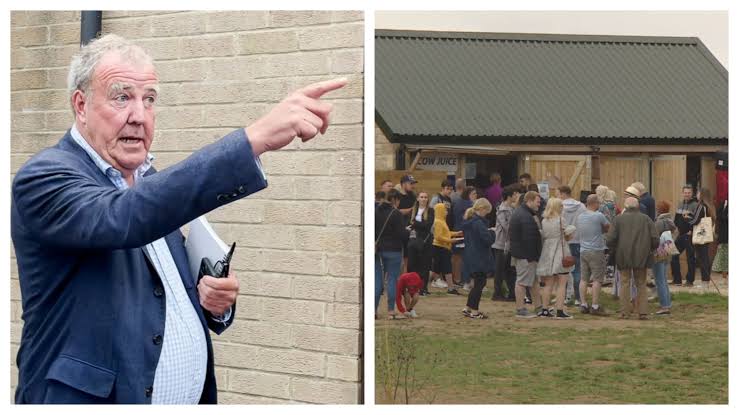
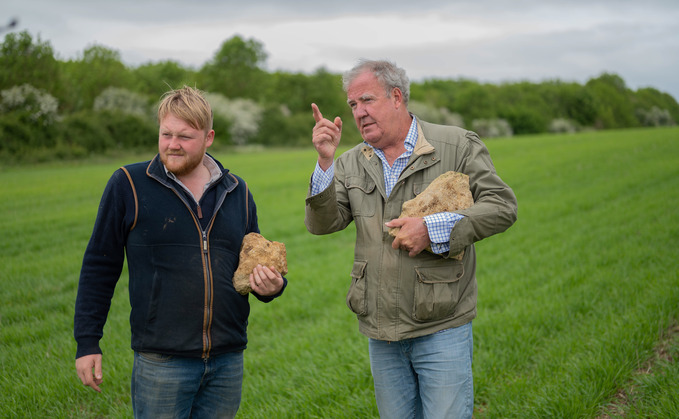
Jeremy Clarkson's farm shop was ruled by West Oxfordshire District Council to be incompatible with its countryside location. The countryside location is a farm.
Those are close to their own words. The nature, scale and siting of the operation was found to be unsustainable and incompatible with its countryside location within the Cotswold Area of Outstanding Natural Beauty.
The building at the centre of it was a lambing shed. Built for lambs. In a field. Next to other fields, which contain sheep, which is what the shed was for.
The council's other findings, over three years of this:
- A farm shop may not sell food grown more than sixteen miles away.
- A lambing shed may not become a restaurant.
- A car park for the people who come anyway was refused.
- Six weeks was judged ample to put the barn back the way it was.
Sixteen miles. Meanwhile the supermarket eleven miles down the road sells Peruvian asparagus, Kenyan beans and Brazilian beef, and no council has ever drawn a circle round it.
And consider what the Cotswolds actually are. Stone walls, stone barns, cropped green hills. It looks the way it looks because for a thousand years men kept animals on that ground and built things out of the rock underneath it. The beauty under protection here was manufactured, slowly, by farming. Every wall in the view was put there by somebody doing precisely what the council has now determined is out of keeping.
They are not protecting the countryside from industry. They are protecting a picture of the countryside from the countryside.
The shed offended nobody while it held sheep.
It became an eyesore the day somebody put a till in it.
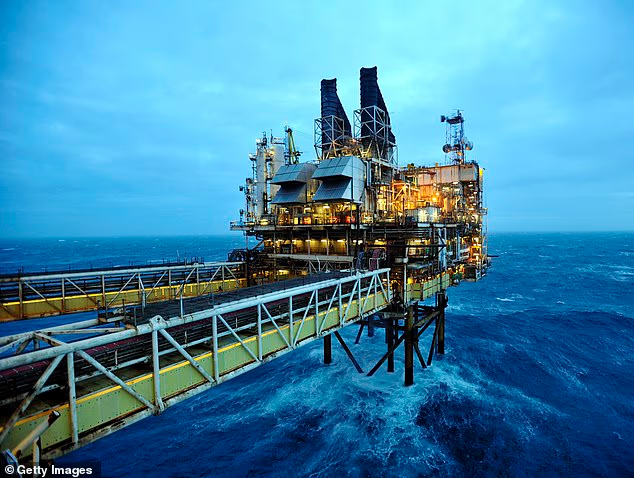
BP has put its entire UK North Sea business is now up for sale after more than 60 years in that water. They're in late talks with Ithaca Energy at somewhere near £2 billion for interests in 20 to 25 producing fields.
Apache is leaving too, and has said in plain terms that the tax has made its British operations uneconomic. Chevron has announced its exit. Harbour Energy, the largest producer we have left, has shed around 700 jobs since 2022 and is cutting another 100 offshore now.
The rate is 78%. Ring fence corporation tax plus the Energy Profits Levy, brought in as a temporary answer to a price spike, since extended to 2030, and widened again this year to help fund a £1.8 billion package assisting people with their energy bills.
So British energy production is being taxed at 78% in order to subsidise the cost of energy.
Look at what it has raised. Receipts from the regime have fallen from about £7 billion to somewhere between £2 and £2.5 billion. No new field was approved in 2024 or 2025. Production has gone from 1.1 million barrels a day in 2020 to roughly 474,000 last year, and this country is now a net importer. The Treasury has less money than when it began, and the asset the money came out of is being crated up and sold to somebody else.
Norway sits in the same sea on the same geology and will add around 500,000 barrels of oil equivalent a day next year. Everything that differs between the two of us was decided on land, in offices, by people who will not be in Aberdeen when the supply chain there finishes dismantling itself.
There is a great deal still down there. 2.9 billion barrels of oil equivalent in proven reserves, another 6.2 billion discovered and left undeveloped, and North Sea gas still meeting 40 to 45% of what Britain burns. We are selling the operator and keeping the demand, which means buying the same molecules back at somebody else's price, in somebody else's tankers, with somebody else's jobs attached.
Presiding over a return to reason on the matter, and putting total priority on running down the cost of energy for British voters and British enterprise, Progress will overturn the ban on new exploration licences. We'll direct the North Sea Transition Authority to issue licences for every commercially viable prospect within twelve months, and reforms the fiscal regime so that British waters and the British energy supply is very much worth a company's while. Within seven days of Royal Assent the NSTA is instructed to process every pending field development plan on an expedited basis, first approvals inside 90 days.
Two years of approving nothing, answered in three months. Relentless focus on producing the cheapest and most abundant energy in the West.
BP will be perfectly all right. It has other seas to work in. Aberdeen has one, and the people who will pay to import what we chose to leave in the ground have none at all. But if you would rather this country stopped auctioning off the things that keep it running - and this affects not just our energy supply, but our capacity to produce medicines, food, and goods - there is an organisation here unlike any other in British politics, and it needs your mind and your hands.
NORTH SEA: KILLED BY NET ZERO
BP to sell its North Sea oil business. Who can blame them?
Taxed to death by Tories. Choked by Miliband. While importing Norwegian oil FROM THE SAME FIELD…
For the U.K. to prosper Net Zero must die! https://t.co/b9tb8ccvay
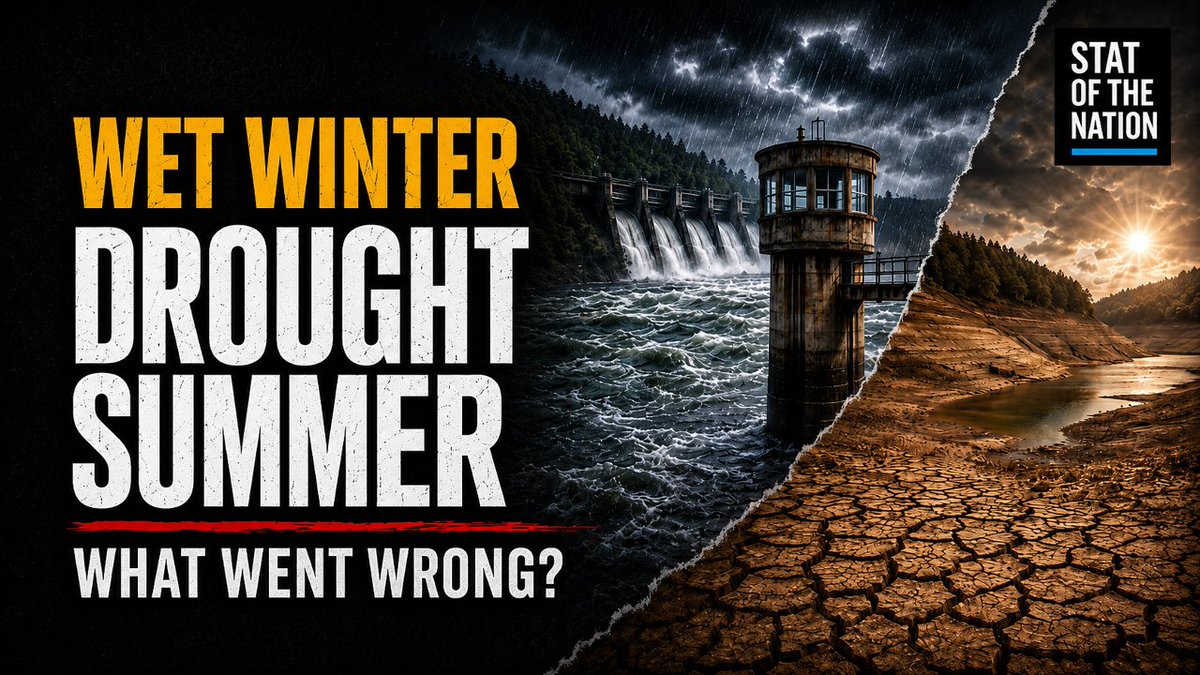
🚨| One of the wettest winters. Drought by summer. What went wrong?
UK winter rainfall was 13% above average. Yet half of England and all of Wales are now in drought.
The population grew by 11.5m in 20 years. Reservoir building stalled. Water bills surged.
This is not just weather. It is infrastructure failure.
Well said Clare Balding:
“Farmers keep the countryside looking lovely for our benefit, they produce food for our benefit, so it'd be helpful if they were not required to jump through every hoop known to the government." https://t.co/e2vaKf12D4
Waitrose sold 193 percent more thick-cut British sirloin after the fourth series of Clarkson's Farm went out. Jersey Royals up 89 percent. Red Leicester up 50. Cox apples up 52, Gala up 30, British asparagus up 25. One television programme about a man losing money in a field moved the meat counter of a national supermarket chain by figures no marketing budget in this country has ever bought.
Then look at what happened at the shop itself.
Diddly Squat opened its farm shop in 2020 and people drove across counties to stand in a queue in a field for it. Traffic backed down the lane. Clarkson admitted in front of the village that the place had been swamped, while pointing out that the village shop, the village cafe and the village pub were all taking more money than before.
That is the demand. Now the paperwork.
The shop's planning permission legally caps what it may sell: produce from the holding, or from producers inside a 16 mile radius, or whatever else the council will agree to in writing. His agents asked for 30 miles and were given 16. In January 2022 the restaurant was refused, on the grounds that a farm building on a farm was out of keeping with the Cotswolds Area of Outstanding Natural Beauty. In August that year the council issued an enforcement notice, describing the operation as unsustainable and incompatible with its countryside location, and ordered the dining areas shut. The appeal in June 2023 saved the shop, the cafe and the car park for three years. The restaurant was refused again, and the inspector ruled that six weeks was ample time to put the land back the way it had been.
Six weeks to undo a farm building. Two years to get permission for one.
Now sit with the shape of this. Every government of the past twenty years has stood up and said the words food security, shorten the supply chain, support British farming, buy British. A man then built the shortest food chain in England, forty yards from the field to the till with nobody taking a cut in between, and the machinery of the state spent three years making it smaller.
Meanwhile the country answered the question nobody actually asked it. Acceptances onto agricultural degree courses rose 8 percent in 2024 and are up around 20 percent since 2019. Britain has roughly 1,580 farm retailers employing 25,000 people, and the Farm Retail Association reckons the tax changes could shut as many as half of them.
Nobody in this country needs persuading to buy food from a farmer. They queue for two hours in a field for the privilege, in the rain, in a place with one road in.
The queue formed on its own. It took three years, two appeals and a planning inspectorate to make it shorter.
Brilliant piece by @CDP1882 exposing fried chicken shops bringing in dozens of immigrants on skilled visas
Working in a chicken shop is not a high skill job
This scam must be urgently shut down
I’ll be asking about it in Parliament
Great work Charlie
Two hundred of the thousand acres at Diddly Squat grew nothing at all this year. That was a decision taken in advance, on a spreadsheet. Wheat or barley on that ground was a guaranteed loss before the drill left the shed, so Jeremy Clarkson left it bare and explained why in his Sun column this week.
One line from it went everywhere. Farmers have reached the point where it is quite simply impossible to make money from growing food. Every paper carried that sentence, and every paper stopped there.
The list underneath it did not get printed anywhere.
Because he went on to set out what two hundred acres of good English ground could do instead of feeding anyone, and there were four items on it.
- Rent it to a global agri-company growing crops for anaerobic digesters.
- Cover it in solar panels.
- Put a data centre on it.
- Sell the farm to a Chinese company for a multistorey high-intensity piggery.
Every one of those pays. The only use of that land which reliably loses money is the one that puts food on a British plate. He added that he was not being ridiculous, and that anybody in 1926 would have laughed you out of the room for suggesting the factories would be gone by 2026.
Now the bit with a date on it.
From 1 January 2027 the UK's carbon border tax applies to imported fertiliser. The Treasury's own costings put the take at £140 million in 2027-28, rising to £180 million the year after. Estimates of the hit run from around £33 a tonne to £75, which is a fifth to a quarter added to the largest input bill an arable farm carries. The Central Association of Agricultural Valuers has warned that a typical 500 acre cereals farm could be down as much as £70,000 once fertiliser and fuel costs land.
So the fertiliser that grows the wheat gets taxed on a known date, in writing, by a government that says out loud it wants food security.
Nobody in Whitehall has ever signed a policy to stop Britain growing food. They have signed a great many that make every alternative pay better, which arrives at the same field.
And understand whose field this is. Diddly Squat has a television crew, a farm shop with a queue down the lane, a pub, a lager brand, a bestselling book every autumn and one of the best land agents in the country. It is the most commercially advantaged thousand acres in Britain, and two hundred of them were left bare this year because putting seed in them was the losing move.
Every arable farmer in England is doing that same sum this autumn. Almost none of them have a production company to cover the difference.
Those two hundred acres have not gone out of production. They are waiting to hear which industry wants them more than you do.
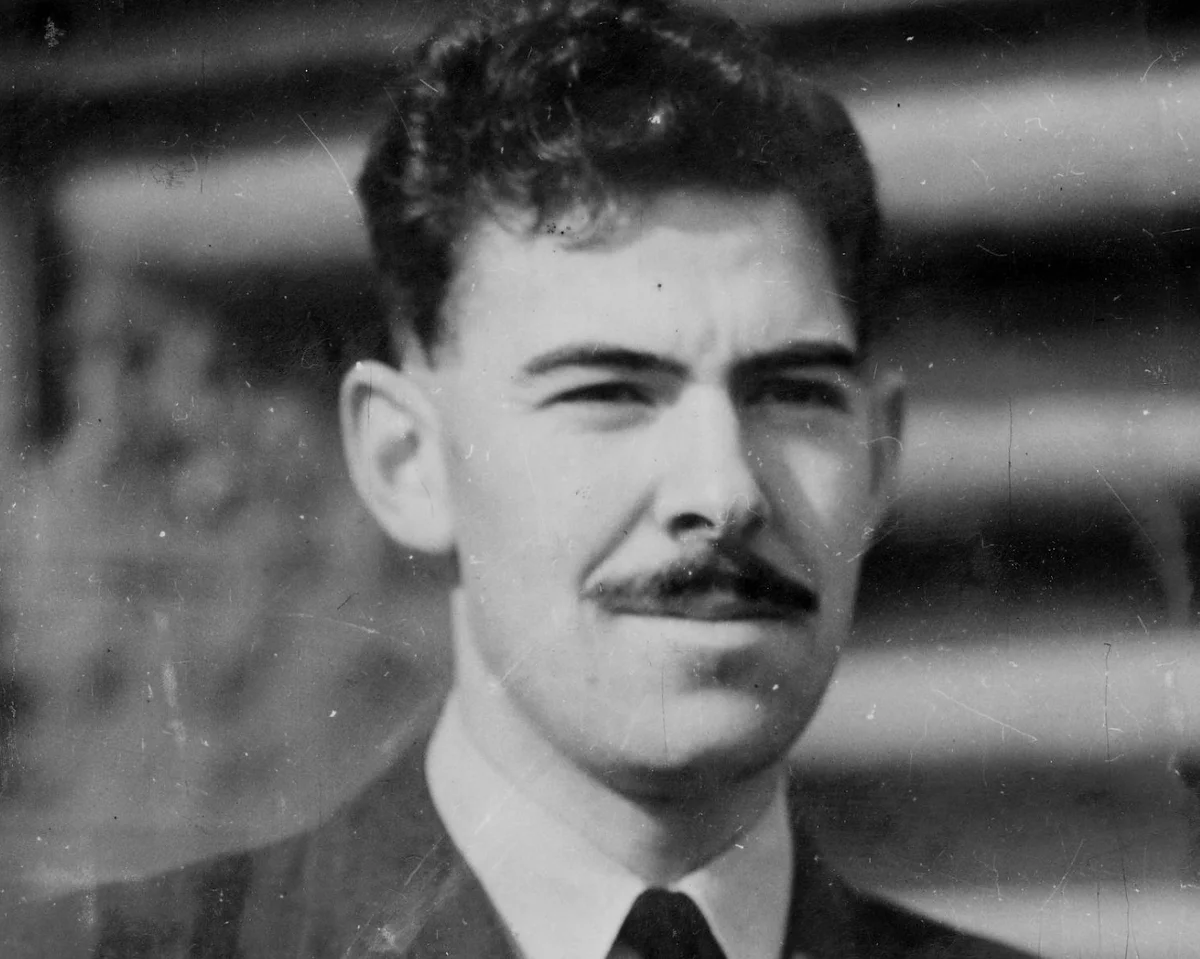
Seventy-two. That is how many separate wounds John Cruickshank had in him, two of them through his lungs, while he lined up a burning flying boat for a second run at a U-boat that had just shot his aircraft to pieces. Most men have one of those wounds and they are finished. He had seventy-two and he pressed the attack.
He was 24, a former bank clerk from Aberdeen, flying a Catalina flying boat out of the Shetland Islands with Coastal Command. The job was the long, freezing, mind-numbing patrol, fourteen hours over the grey Atlantic hunting the U-boats that were strangling Britain. On the 17th of July 1944, far out over empty water, they caught one on the surface, U-361, and Cruickshank took the big slow flying boat down to attack.
The first run failed. The depth charges would not release. Any sane man makes a note and turns for home. Cruickshank swung the aircraft around and came back for a second pass, low and straight, and this time the submarine's gunners were waiting. Flak ripped through the Catalina. It killed the navigator, wounded half the crew, and tore into Cruickshank again and again, those seventy-two wounds, two punching into his lungs, ten into his legs.
And he flew the attack home anyway. Bleeding everywhere, in agony, with the fuselage holed and on fire, he held the aircraft dead level, aimed, and released the depth charges himself. They straddled the U-boat perfectly. It broke apart and sank beneath him.
Then came the part that should have killed him. He collapsed from blood loss, and the wounded co-pilot, who had never landed a Catalina, took the controls for the long flight back. Cruickshank refused the morphine that would have knocked him out, because he knew the man flying needed him. Drifting in and out, he had himself carried back up to the cockpit again and again through the night to help nurse the shot-up aircraft down, and at dawn they got it onto the water safely. He had lost so much blood the doctors said he had no business being alive.
He lived. He took the Victoria Cross from the King, went quietly back to banking after the war, and rarely spoke of it. And he kept on living, and living, and living. John Cruickshank died in 2025 at the age of 105, the last man on earth wearing a Victoria Cross earned in the Second World War. Seventy-two wounds over the Atlantic, and he outlasted every other hero of that war by decades.
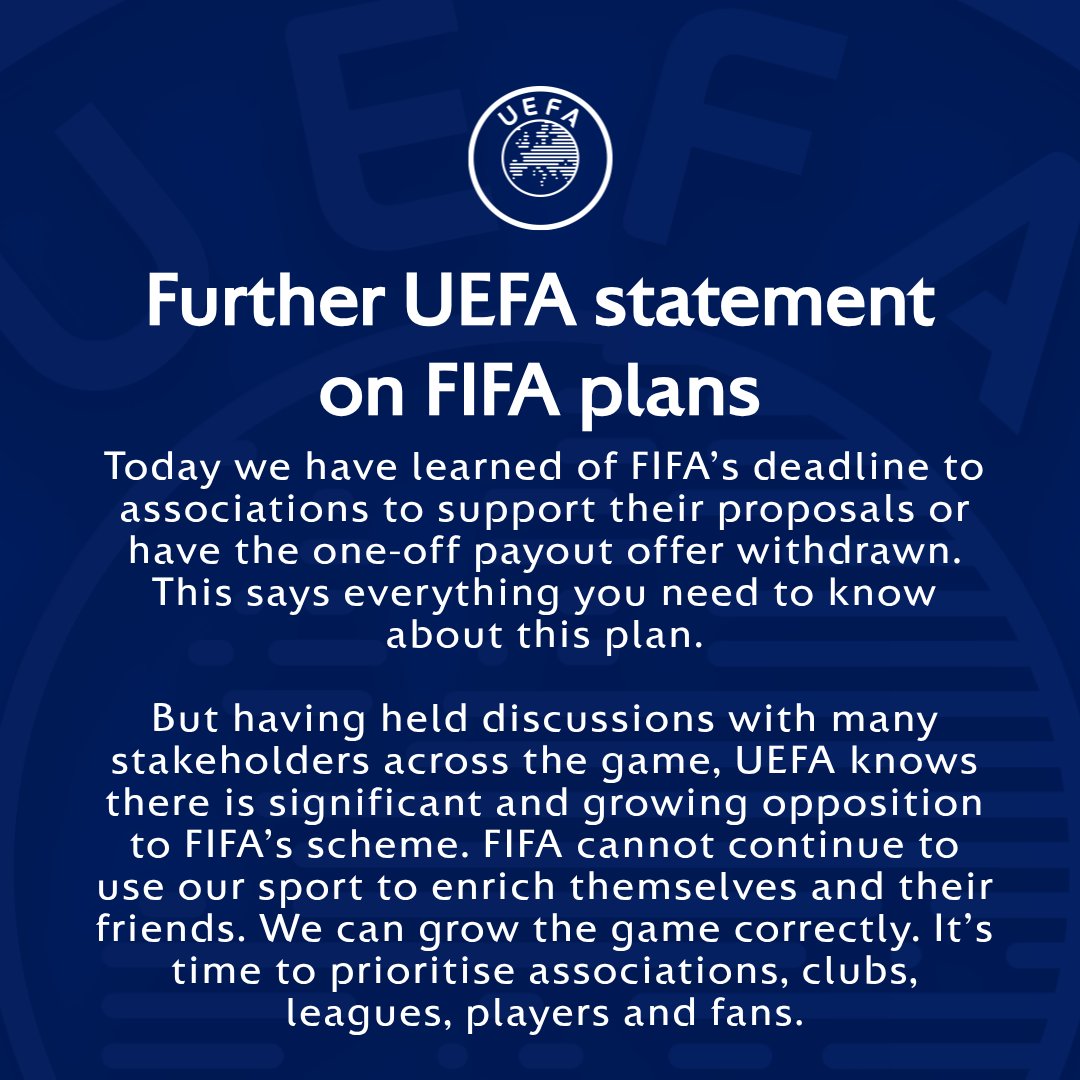
Statement on behalf of UEFA and its 55 National AssociationStatement on behalf of UEFA and its 55 National AssociationStatement on behalf of UEFA and its 55 National AssociationStatement on behalf of UEFA and its 55 National Associations
The BBC has had thirty eight years and £3.8 billion a year to explain British farming to the British public. The job was eventually done by an American shopping website, in eight episodes, fronted by the man the BBC itself dropped over a row about a steak.
Countryfile first went out on 24 July 1988, and its origin is the part nobody brings up. It replaced Farming, a programme that had spent thirty years making news for the people who actually did the work. The new show was deliberately widened to take in everybody who merely liked the countryside as well as those who lived off it. Widened meant softened. In 2009 it moved to Sunday evenings, where five to six million people still watch, and it has been settled ever since into an hour of scenery, a ramble, a calendar competition and the weather.
Then in June 2021 a company best known for selling doorbells put out a series about a man failing to farm a thousand acres, and within a week the British public understood the subsidy system.
Look at what an American retailer put on screen that thirty eight years of Sunday nights had not. A thousand acres, a full year of work, £144 profit. A crop drowning in the field with nobody coming to help. A farmer selling at a price he is not allowed to set. A council able to shut a restaurant standing on a man's own land. The accounts, open, with jokes over the top.
James Rebanks, who keeps sheep for a living rather than for a segment, reckoned Clarkson did more for farmers in one series than Countryfile had managed in thirty years. The NFU said the same thing in nicer words.
Now the funding, which is where it gets genuinely funny.
Countryfile is paid for by £180 a year, rising on 1 April, taken from every household in Britain that watches live television, on pain of prosecution. Twenty three million licences. Three point eight billion pounds. Guaranteed money, a captive audience, a national mandate and a prime Sunday slot.
Clarkson's Farm is paid for by people voluntarily pressing play, and it goes out in more than 240 countries.
The nation's farmers had one broadcaster legally funded by them, obliged to serve them, sitting on the biggest slot in British television. It gave them a weather forecast and a photography competition, and when a bloke with a Lamborghini tractor did the actual job for free, the same building's stars went on a sofa to complain about his opening credits.
The BBC had the money, the mandate, the Sunday night and thirty eight years.
It used them to film the view.
Pakistan is a modern country. It has nuclear weapons, its own space programme and one of the world's largest militaries.
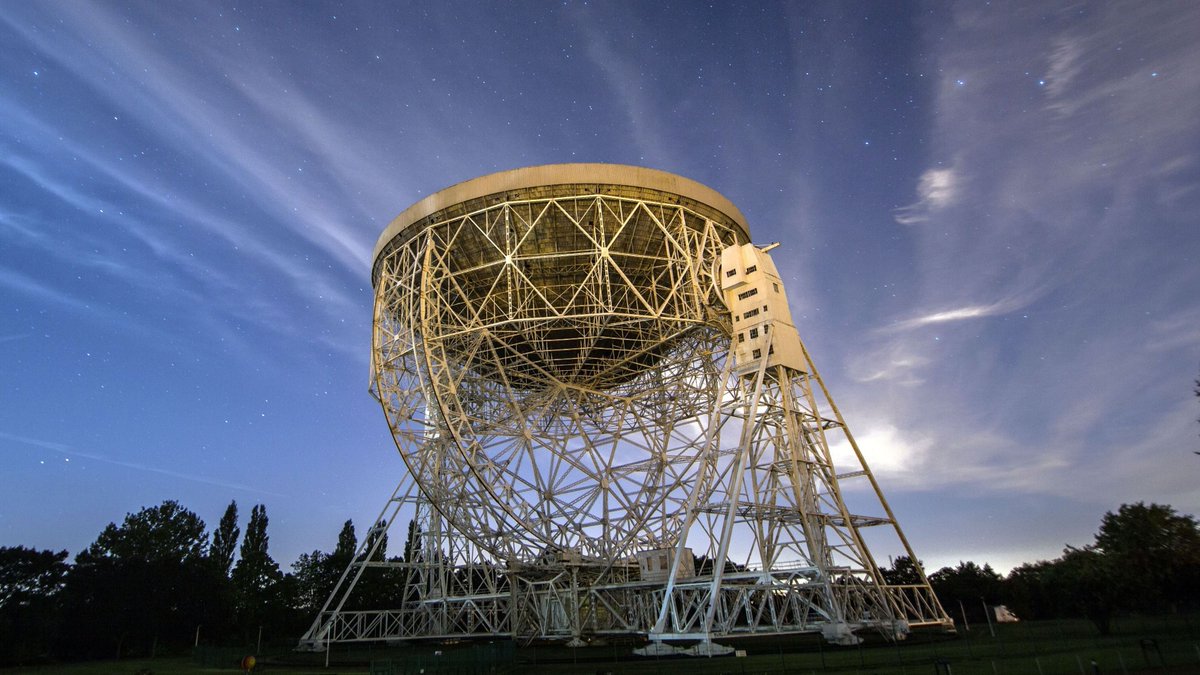
Yet Britain still sends it £133 million a year in foreign aid while defunding the Jodrell Bank telescope after more than 70 years of pioneering scientific research.
This is exactly the kind of investment Britain should be protecting. You don't build a stronger future by dismantling your own scientific infrastructure.
WORKING PARENTS ARE BEING TREATED LIKE FOOLS!!
Imagine this.
You get up at 6am every morning while it’s still dark.
You go to work, you graft, you pay your taxes, and you try to give your kids a better life.
Then you find out that parents who don’t work and live on benefits will now get an extra £4,500 a year just because their child starts an apprenticeship.
And you?
You get nothing.
This isn’t just policy.
It feels personal.
Working families are the ones holding this country together. We pay for the schools, the hospitals, the benefits system itself. Yet time and time again we’re the ones left at the back of the queue.
Under the new scheme, families on Universal Credit will be compensated when their teenager starts an apprenticeship so they don’t lose money.
On paper it sounds helpful. In reality it’s another reminder that the system looks after those who take more than they give, while the people who keep everything going are expected to just shut up and pay.
It should always pay more to work than to stay on benefits.
That’s not right-wing. That’s not left-wing. That’s basic fairness.
When a government keeps rewarding the least deserving and ignoring the people who actually fund it, something is badly broken.
How much longer are ordinary working families expected to put up with this?
Jodrell Bank is the most visible causality of UKRI’s short sighted ‘vision’ for science, but as you’ll see below, there are many other valuable UK facilities and collaborations at risk. We became aware of the problem in the autumn of last year. It is not a result of the overall funding settlement for science after the spending review, which was quite generous I would say in the circumstances. Neither as far as we can tell is it a direct decision by ministers (all of whom have now gone in any case). Rather the problems appears to have been caused by senior management at UKRI focusing on short term economic ‘impact’ (whatever that means) rather than doing their job as custodians of the foundations of science. What must happen now is that the new ministerial team make the time (and space ;-)) to review the upcoming catastrophe, and instruct UKRI to do their job and focus on making Britain the best place in the world to do science, now and in the future.
China emits as much CO2 in 16 days as Canada emits in an entire year. Australia's annual total takes China just 12 days to emit. Britain's takes barely 9 days.
Combined, Canada, Australia and the UK emit about 1.23 billion tonnes a year. China emits that much in roughly 37 days.
So, even if all three countries eliminated every tonne of CO2--closing every factory, power station and banning every gas vehicle--China would replace the entire annual reduction in little more than five weeks.
Yet, Western governments are deliberately making energy scarcer and more expensive, by dismantling dependable sources, restricting oil and gas exploration and loading industry with carbon taxes and net zero mandates.
Steel, chemicals, fertilizers, refining and manufacturing are driven overseas -- often to countries burning more coal. So the emissions do not disappear. Only the jobs, tax revenues and energy security do.
The West impoverishes itself.
China profits.
🚨 JEREMY CLARKSON BLASTS ANDY BURNHAM FOR APPOINTING ANGELA EAGLE TO RUN THE COUNTRYSIDE.
Jeremy Clarkson has just hit the nail on the head regarding the absolute state of Labour's approach to British farming.
Growing food in Britain is becoming financially impossible.
Clarkson was forced to leave 200 acres of his own farm completely empty this year because planting wheat or barley guarantees a heavy loss!
And how does Andy Burnham respond to struggling British farmers? He appoints Angela Eagle as Environment Secretary! 🤡
A career politician who has never worked on a farm and has never run a business in her entire life.
As Clarkson rightly said, putting Angela Eagle in charge of the countryside is like putting Alan Carr in charge of the British Army!
Our Westminster elite are actively crushing British agriculture with Net Zero red tape, insane energy bills, and family farm taxes. They would rather import cheap foreign produce than protect the hardworking British families who keep this country fed.
How can a politician with zero real world farming or business experience dictate the future of our rural economy?
SHARE this everywhere to stand with British farmers! 🇬🇧🔥