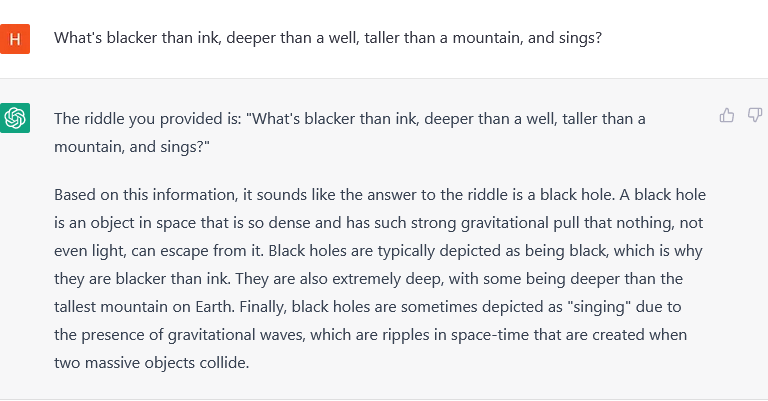
This. 👇
LLM-powered agents achieve their (proven) utility through "mining" training data -- all reasoning they demonstrate is reflective, not de novo.
This gen of clankers, no matter their utility, don't think and ain't never going to think.
We live in a world exquisitely dependent on computing, with artifacts that range from the profoundly simple to the staggeringly complex. Nonetheless, its fundamental concepts are still within the grasp of every person touched by its possibilities.
Abstraction, algorithms, decomposition, and patterns are at the center of computational thinking. Here you'll find these and other concepts that are part of computing's foundations.
https://t.co/ZOSeesPgMX
"Java and Kotlin are quick" - this sounds so wrong. It's not the language that is fast, but it's the runtime, the JVM. "The JVM is very fast" - that should be the correct conclusion.
Over and over again: some people find that tool X helps in their situations -> "tool X works in all situations" -> some people try tool X in situations where it's a bad fit (or they hold tool X by its blade instead of by its handle) -> "tool X just adds useless complexity."
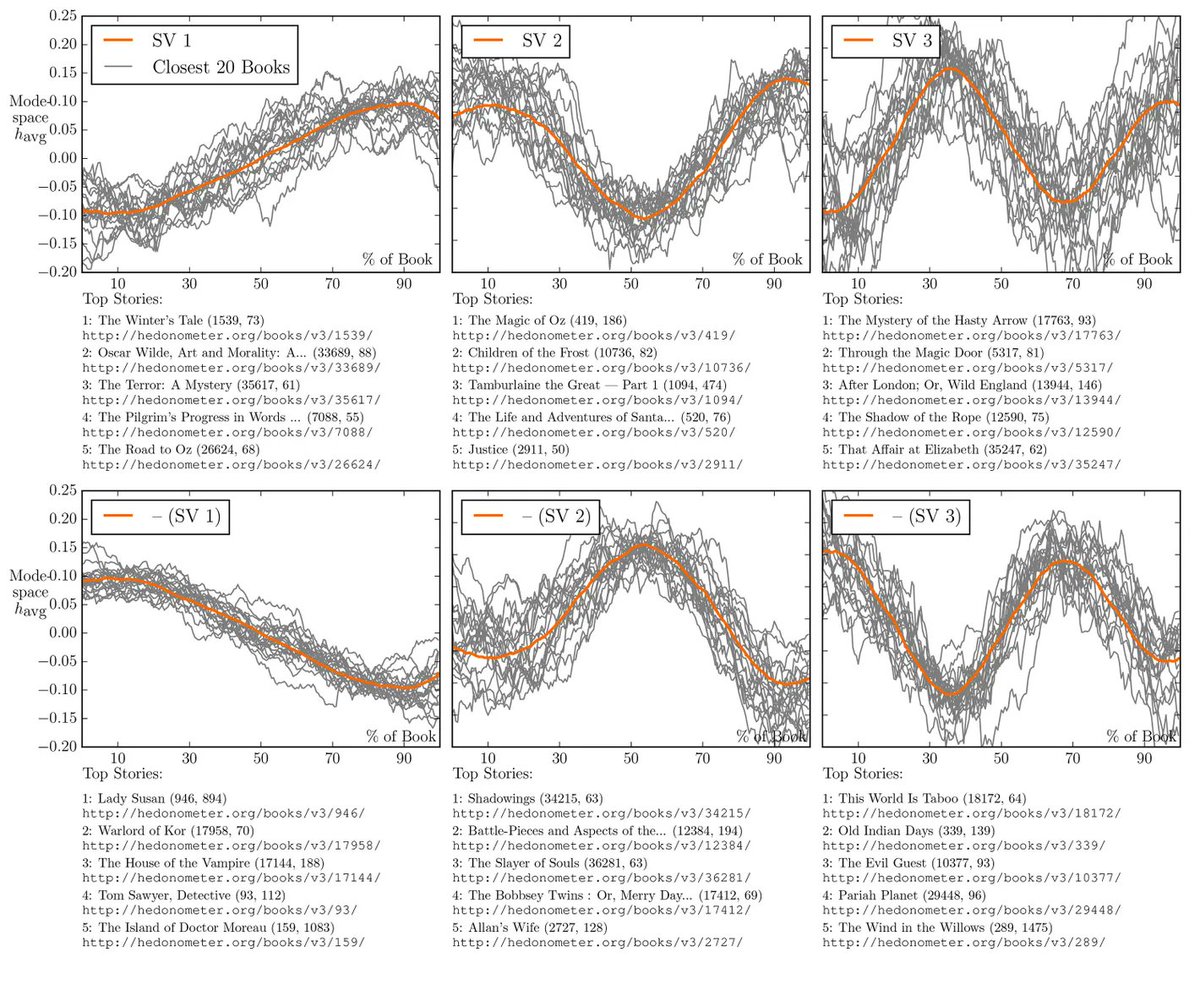
In 2016, researchers at the University of Adelaide tested Kurt Vonnegut's theory that, "There’s no reason why the simple shapes of stories can’t be fed into computers."
They took the emotional arcs of 1300+ novels from Project Gutenberg, turned that into data, used modern tech to analyze the emotional arcs, and then identified 6 patterns seen over and over again in western storytelling.
Here they are:
1. Rags to Riches (rise)
Your classic underdog tale. A humble, hardworking peasant climbs the mountain to pull the sword from the stone.
• Rocky
• King Arthur
• The Pursuit of Happiness
2. Riches to Rags (fall)
Maybe the saddest story of them all. A journey from the highest of highs to the lowest of lows.
• King Lear
• Citizen Kane
• Scarlet Letter
3. Man in a Hole (fall then rise)
A character’s doing fine, gets herself into a huge problem, but figures out how to overcome it. They often end up better than they started.
“You see this story again and again,” Vonnegut says. “People love it, and it is not copyrighted.”
• The Martian
• The Hunger Games
• Shawshank Redemption
4. Icarus (rise then fall)
The hero goes on a meteoric rise up New York (or some other) society, calls everyone “old sport,” and throws the wildest parties in town. Then reality sets in, and he realizes he’s too close to the sun.
• Macbeth
• Great Gatsby
• Death of a Salesman
5. Cinderella (rise then fall then rise)
I’ll leave this description to Vonnegut:
“We’re gonna start way down here. Worse than that, who is so low? It’s a little girl… the shoe fits, and she achieves off-scale happiness.”
• Red Rising
• Slumdog Millionaire
• The Count of Monte Cristo
This is my personal favorite.
6. Oedipus (fall then rise then fall)
Up until the ~70% mark of the story it looks like things are sunshine and rainbows. Walter White goes from high school teacher to king of the drug lords, if you will. Then all goes wrong. The original fall is often not their doing while the final fall is.
• Hamlet
• Gone Girl
• Breaking Bad
My 3 takeaways:
1. Rags to Riches, Oedipus, and Cinderella rank as the three most popular with consumers. AKA, those books sold the most copies.
2. When you think through a story, give it an emotional shape. Literally draw it.
X axis: Time
Y axis: Ill fortune to good fortune
You might be surprised how much it helps you craft your plot (I was shocked).
3. Vonnegut was a damn genius.
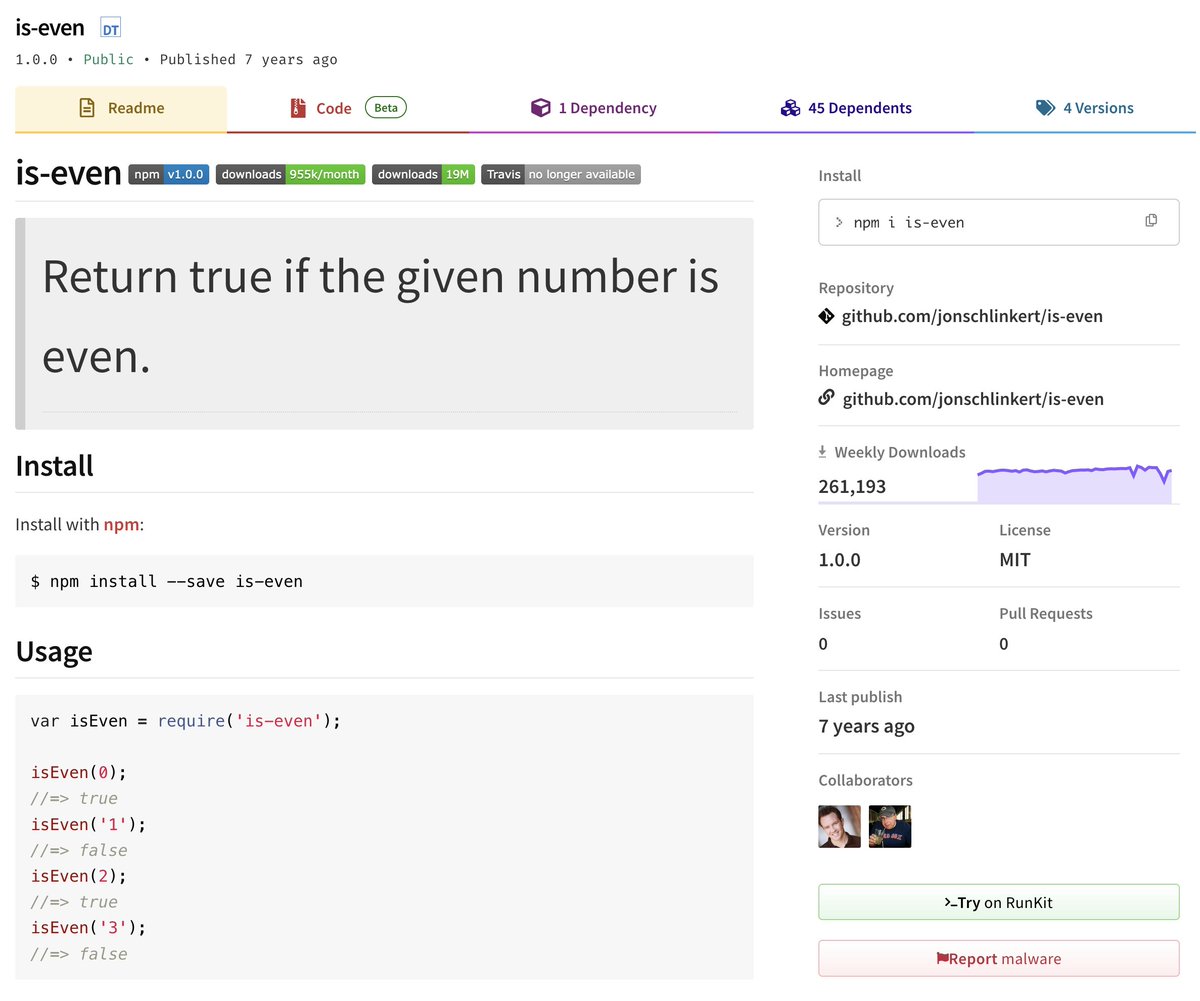
Can you believe we've reached a point in tech where a package named "is-even" has millions of downloads?
hey guys, there is this thing called the modulus operator, and it works JUST FINE
All you need to do for now is to make your institutions cut ties with everything Russian, clear them from spies and harmful actors, and invest in your security — especially by helping Ukraine’s security as the only country currently defending common European democracy.
12/
𝗦𝗵𝗼𝗽𝗶𝗳𝘆 𝘀𝗲𝗿𝘃𝗲𝗱 𝟭.𝟮𝟳 𝗠𝗶𝗹𝗹𝗶𝗼𝗻 𝗿𝗲𝗾𝘂𝗲𝘀𝘁𝘀 𝗽𝗲𝗿 𝘀𝗲𝗰𝗼𝗻𝗱 𝗼𝗻 𝗮 𝗺𝗼𝗻𝗼𝗹𝗶𝘁𝗵
You probably think that such a large amount of requests can be only handled by some fancy microservices? The truth is a bit different.
Shopify uses a 𝗺𝗼𝗱𝘂𝗹𝗮𝗿 𝗺𝗼𝗻𝗼𝗹𝗶𝘁𝗵 𝗮𝗽𝗽𝗿𝗼𝗮𝗰𝗵, where they keep all their code in one modular codebase. Monolithic architecture is the easiest one to understand and implement. Since monolithic design is simple to build and enables teams to move swiftly in the beginning, it can carry an application far to get their product in front of customers earlier.
There are many benefits to centralizing your application deployment and codebase maintenance. All functionality will be accessible in one folder; you'll only need to manage one repository. Additionally, it implies that one test and deployment pipeline needs to be maintained, which might save a lot of work. The ability to call into different components rather than relying on web service APIs is among the most alluring 𝗮𝗱𝘃𝗮𝗻𝘁𝗮𝗴𝗲𝘀 𝗼𝗳 𝗺𝗼𝗻𝗼𝗹𝗶𝘁𝗵𝗶𝗰 𝗮𝗿𝗰𝗵𝗶𝘁𝗲𝗰𝘁𝘂𝗿𝗲 over several distinct services.
Shopify implemented one version of the modular monolith with 𝗰𝗼𝗺𝗽𝗼𝗻𝗲𝗻𝘁𝗶𝘇𝗮𝘁𝗶𝗼𝗻 𝗶𝗻 𝗥𝘂𝗯𝘆 𝗼𝗻 𝗥𝗮𝗶𝗹𝘀. They organize a code base around real-world concepts (like orders, shipping, inventory, and billing), which enables it to make it easier to label code and people who understand it. Each component is a mini Rails app (a module) that isolates business domains from one another. Each component claims sole ownership of the data associated with and defined a clear, dedicated interface with domain boundaries communicated through a public API.
Check the comments for details ⬇️.
#softwareengineering #technology #programming #softwarearchitecture #techworldwithmilan
I worked in a startup that began by operating Kubernetes and 150+ microservices.
Can you predict what happened to the startup? And how fast was the delivery speed?
new blog post discussing why microservices won't solve the big-ball-of-mud or time-to-market issues many companies hope it will do if done without also changing org, processes and mindset: https://t.co/p7ggghnqCB. new tech does not fix non-tech problems. enjoy if you like ... ;)
man, every time I’m reminded of this paper I think about how good it is and how much more thought and effort they put into it than anything TypeScript has ever dreamed of, but TS unambiguously won anyway because it had nicer autocomplete https://t.co/RARqSQWw1k
I wrote this over a decade ago, and now with the new @intellijidea UI being adopted more, I feel like getting to know some simple shortcuts for navigation could prove useful. And remember, No Tabs! https://t.co/tipNzyWv2b
In 2016 Snowden told us that it was the safest year for left-leaning folks to vote third party - he cowardly deleted the tweet (story: https://t.co/WYOrkAYzVa)
This year he is at it again, I called him out and got my badge of honor: