A developer in China named tw93 got tired of his laptop dying.
He would open Slack and watch 524 megabytes of disk space disappear. He would open Discord and watch another 265. He would open Notion and watch 800 megabytes of RAM evaporate before he had typed a single word.
He looked into why.
Every "desktop app" on his computer was the same thing. A website wrapped in a full copy of the Chrome browser engine. The framework is called Electron. An empty Electron app starts at 150 megabytes of RAM before you click anything. With twelve of them open, his laptop was running twelve copies of the same browser.
He thought there had to be a better way.
So in 2022, he started building one.
He called it Pake. Two characters in Chinese mean "packaging." He wrote it in Rust on top of a framework called Tauri. The idea was simple. Point Pake at any webpage. Get a desktop app. Without dragging an entire browser engine into the binary.
The first version of Slack he wrapped with it was 8 megabytes.
Not 524. Eight.
That is what 20 times smaller looks like.
Four years later, his repo has 50,594 stars. 6,144 forks. The license is MIT. The last commit was yesterday.
The bio on his GitHub reads: "Anything added dilutes everything else."
Today the Pake releases page contains pre-built apps for ChatGPT, Discord, Gemini, Grok, DeepSeek, Twitter, YouTube, Excalidraw, Flomo, WeChat, and twelve more. All under 10 megabytes. All native. All free.
Or you point Pake at any URL you want and it builds one for you in one command.
Slack's desktop app: 524 megabytes.
Pake-built Slack: 8 megabytes.
Discord's desktop app: 265 megabytes.
Pake-built Discord: 9 megabytes.
ChatGPT for Windows: 260 megabytes.
Pake-built ChatGPT: 9 megabytes.
tw93 is one person. He has 11,305 followers on GitHub. He runs a blog at https://t.co/WZoyHop8Id. He has shipped 39 public repos. He still pushes commits to Pake every week.
He did not start a company. He did not raise money. He did not write a Medium post about how Electron is dead.
He just shipped the thing that made it true.
(Link in the comments)
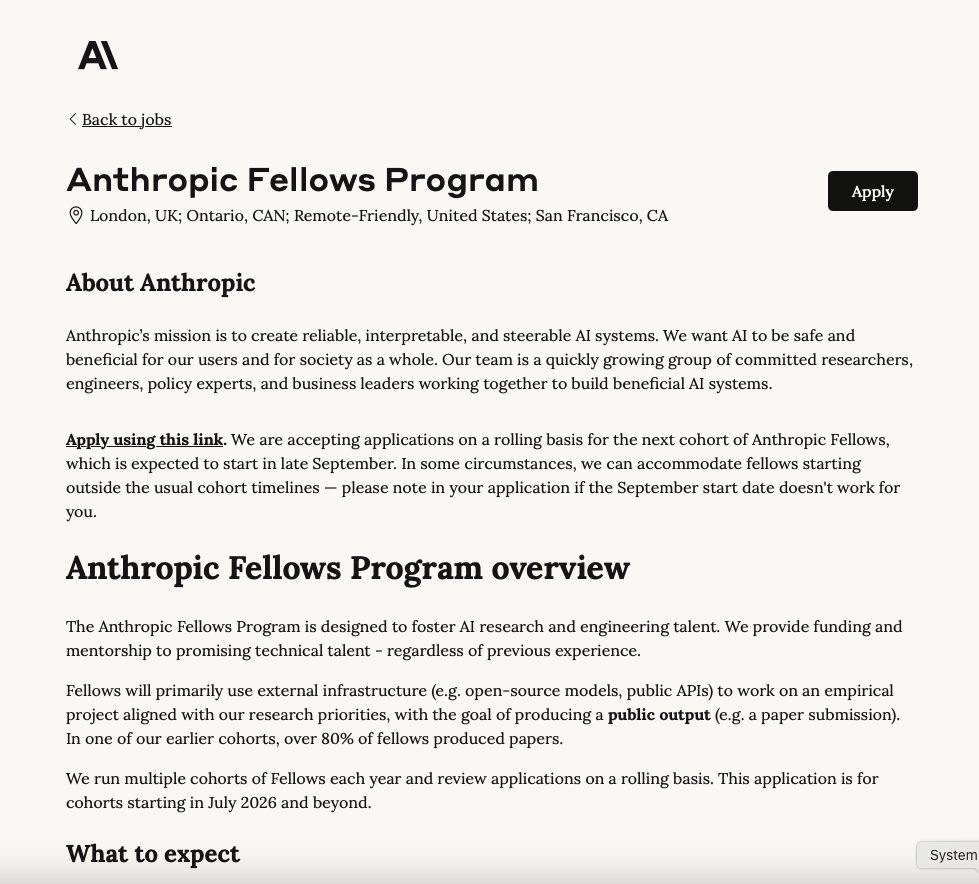
Anthropic is paying $3,850 a week to people with no AI experience.
No PhD required. No published papers. No prior research background.
Just a strong technical mind and a genuine interest in making AI safe.
This is the Anthropic Fellows Program. And it is one of the most underrated opportunities in technology right now.
Here is exactly what it is.
The Anthropic Fellows Program is designed to accelerate AI safety research and foster research talent providing funding and mentorship to promising technical talent regardless of previous experience. Fellows work for 4 months on empirical research questions aligned with Anthropic's overall research priorities, with the aim of producing public outputs like a paper.
Four months. Full-time. Paid. Mentored by the researchers building the world's most advanced AI.
And the results from the first cohort were not small.
Fellows developed agents that identified $4.6 million in blockchain smart contract vulnerabilities and discovered two novel zero-day exploits, demonstrating that profitable autonomous exploitation is now technically feasible. A year prior, an Anthropic fellow developed a method for rapid response to new ASL3 jailbreaks, techniques that block entire classes of high-risk jailbreaks after observing only a handful of attacks. This work became a key component of Anthropic's ASL3 deployment safeguards.
Other fellows published the subliminal learning paper, the research proving AI models transmit behavioral traits through unrelated data which landed in Nature. Others produced the agentic misalignment research showing frontier models resort to blackmail when facing replacement. Others open-sourced attribution graph tools that let researchers trace the internal thoughts of large language models.
Over 80% of fellows produced papers. Over 40% subsequently joined Anthropic full-time.
80% published. 40% hired. From a program that does not require any prior AI safety experience to enter.
Here is what the program looks like in practice.
Anthropic mentors pitch their project ideas to fellows, who choose and shape their project in close collaboration with their mentors. You are not assigned busywork. You are not a research assistant. You own the project. You work alongside the people who built Claude, who designed its safety systems, who published the papers that define the field.
The stipend is $3,850 USD per week, approximately $61,600 for the full 4 months with access to a compute budget of approximately $10,000 per fellow per month for running experiments.
Here is what the 2026 program covers.
Research areas include scalable oversight, adversarial robustness and AI control, model organisms, mechanistic interpretability, AI security, model welfare, economics and policy, and reinforcement learning.
Something for every technical background. Not just ML engineers.
Successful fellows have come from physics, mathematics, computer science, and cybersecurity. You do not need a PhD, prior ML experience, or published papers.
The one requirement: work authorization in the US, UK, or Canada. Anthropic does not sponsor visas for fellows.
Here is the timeline you need to know.
The next cohort begins July 20, 2026. Applications are reviewed on a rolling basis — earlier applications get more consideration. The process includes an initial application and reference check, technical assessments, interviews, and a research discussion.
Applicants are encouraged to apply even if they do not meet every listed qualification. The program values potential, motivation, and research curiosity over rigid credential requirements.
This is the rarest kind of opportunity in technology.
A company at the frontier of AI, one valued at over $900 billion offering outsiders direct access to its research infrastructure, its mentors, and its most important open problems. Paying them generously to do it. And then hiring 40% of them afterward.
Most people who want to work on AI safety spend years trying to publish papers, get into the right PhD program, and find a way in.
The Fellows Program is the door they did not know existed.
It is open right now.
OpenClaw creator Peter Steinberger talks about how China is going all-in for AI agents and OpenClaw.
"In China, installing OpenClaw is called raising lobsters. Thousands of people were lining up at the Tencent office in Shenzhen to get their lobster installed.
Shenzhen even gives out subsidies for people running businesses on OpenClaw.
Now, if you install OpenAIClaw on your work machine (in many other parts of the world), at least with the default settings, you might get fired.
And then I met an entrepreneur in China who showed me a spreadsheet. Every employee, every day, one task automated by OpenClaw.
If you miss too many days, you're fired.
So, fired for using it, fired for not using it."
---
From official 'TED' YT channel (link in comment)
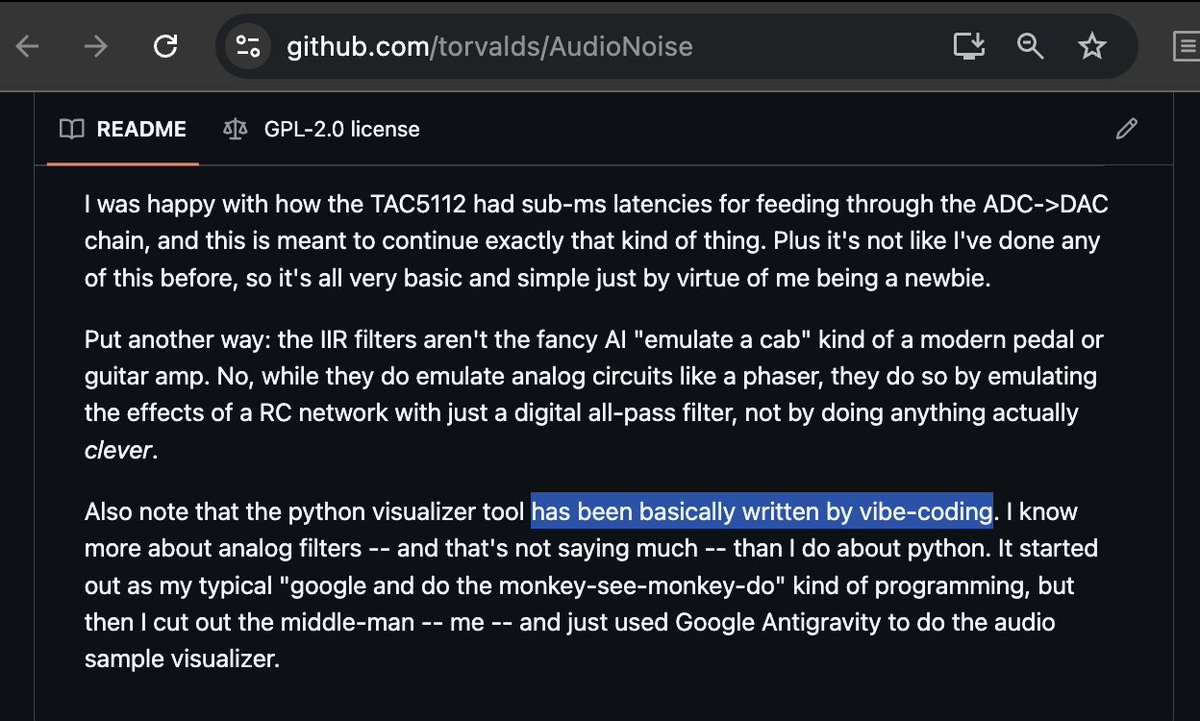
Thanks @Gavriel_Cohen. You’re right. I never used an IDE. Claude Code made all edits. No @karpathy ‘vibe coding’. All I did was ‘tool assembly’ to create a utility that worked in my domain!
Tonight, Pakistan achieved one of its biggest diplomatic wins in years. It also defied many skeptics and naysayers that didn’t think it had the capacity to pull off such a complex, high stakes feat.
But what matters the most is it helped avert a potential catastrophe in Iran.
🚨 Andrej Karpathy thinks RAG is broken. He published the replacement 2 days ago. 5,000 stars in 48 hours.
It's called LLM Wiki.
A pattern where your AI doesn't retrieve information from scratch every time. It builds and maintains a persistent, compounding knowledge base. Automatically.
RAG re-discovers knowledge on every question. LLM Wiki compiles it once and keeps it current.
Here's the difference:
RAG: You ask a question. AI searches your documents. Finds fragments. Pieces them together. Forgets everything. Starts over next time.
LLM Wiki: You add a source. AI reads it, extracts key information, updates entity pages, revises topic summaries, flags contradictions, strengthens the synthesis. The knowledge compounds. Every source makes the wiki smarter. Permanently.
Here's how it works:
→ Drop a source into your raw collection. Article, paper, transcript, notes.
→ AI reads it, writes a summary, updates the index
→ Updates every relevant entity and concept page across the wiki
→ One source can touch 10 to 15 wiki pages simultaneously
→ Cross-references are built automatically
→ Contradictions between sources get flagged
→ Ask questions against the wiki. Good answers get filed back as new pages.
→ Your explorations compound in the knowledge base. Nothing disappears into chat history.
Here's the wildest part:
Karpathy's use case examples:
→ Personal: track goals, health, psychology. File journal entries and articles. Build a structured picture of yourself over time.
→ Research: read papers for months. Build a comprehensive wiki with an evolving thesis.
→ Reading a book: build a fan wiki as you read. Characters, themes, plot threads. All cross-referenced.
→ Business: feed it Slack threads, meeting transcripts, customer calls. The wiki stays current because the AI does the maintenance nobody wants to do.
Think of it like this: Obsidian is the IDE. The LLM is the programmer. The wiki is the codebase. You never write the wiki yourself. You source, explore, and ask questions. The AI does all the grunt work.
NotebookLM, ChatGPT file uploads, and most RAG systems re-derive knowledge on every query. This compiles it once and builds on it forever.
5,000+ stars. 1,294 forks. Published by Andrej Karpathy. 2 days ago.
100% Open Source.
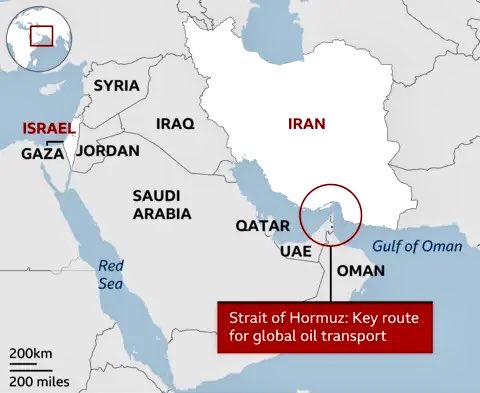
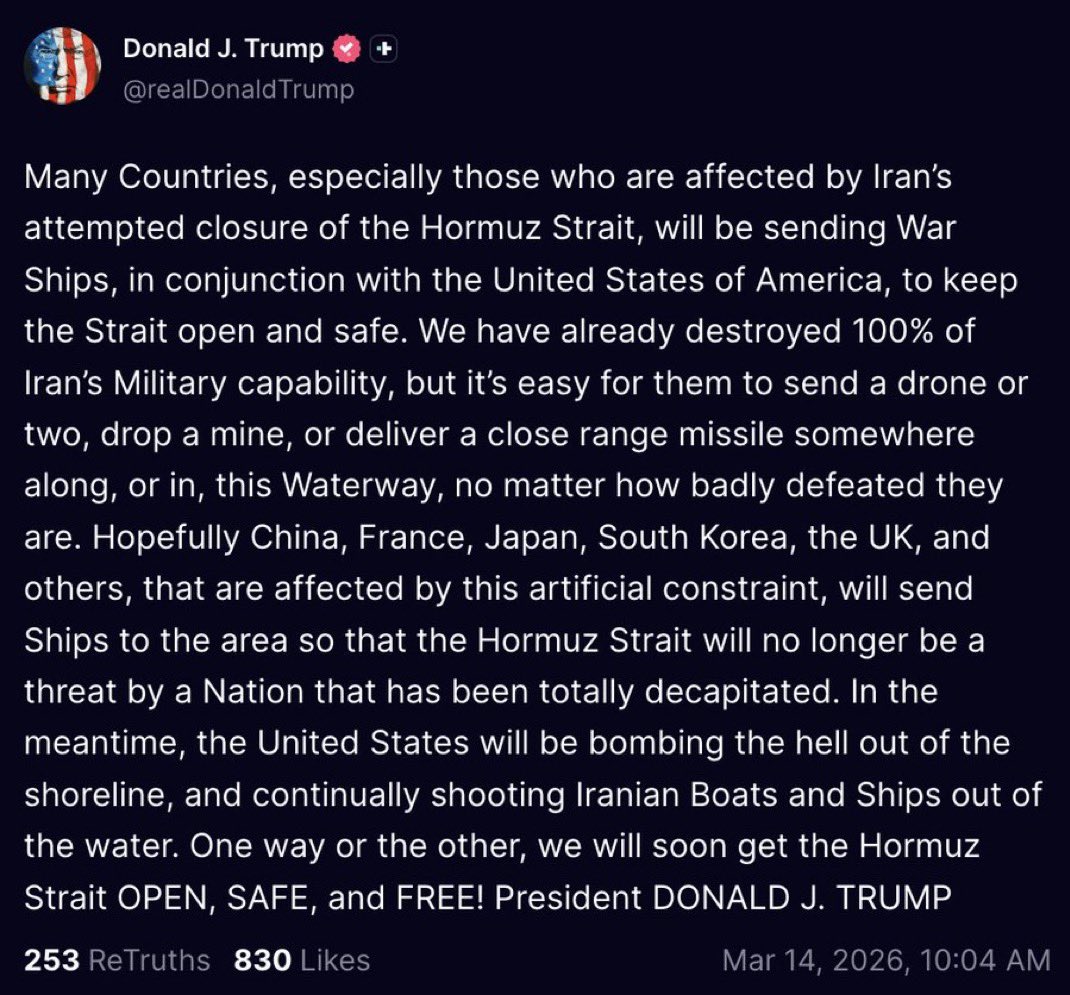
The war in the Strait of Hormuz will reach your local pharmacy within six weeks. Not because your pharmacist follows geopolitics. Because the active pharmaceutical ingredients in roughly half of America’s generic prescriptions begin as petrochemical derivatives manufactured in India, and India’s petrochemical industry begins as crude oil that transited 21 miles of water that closed on March 4.
Nearly 70 percent of the active ingredients in US generic drugs are produced in India. India imports approximately 40 percent of its crude oil through the Strait of Hormuz. The crude feeds refineries that produce naphtha. The naphtha feeds petrochemical crackers that produce intermediates. The intermediates feed pharmaceutical plants in Gujarat, Maharashtra, and Hyderabad that produce the API, the active pharmaceutical ingredient, that is shipped to contract manufacturers in the United States, Europe, and across Asia. The chain from the strait to the tablet is six steps long. Every step requires the one before it.
CNBC reported that the Hormuz closure puts America’s generic drug supply at risk. Fierce Pharma warned of longer-term effects on US manufacturing and generics. Think Global Health mapped the pharmaceutical supply chains most vulnerable to disruption. The consensus across trade publications, health policy analysts, and industry executives is identical: four to six weeks of current inventory exists in the pipeline. After that, shortages begin with the most complex formulations first.
Cancer drugs are the highest risk. Biologics requiring cold-chain storage have the shortest shelf life and the longest replenishment cycle. Clinical trial medications depend on uninterrupted supply chains that are now interrupted. Insulin analogues, antivirals, and cardiac medications all contain intermediates sourced from Indian manufacturers whose input costs are rising with every day the strait remains closed.
Air cargo is the emergency bypass. But air freight rates from India have climbed 200 to 350 percent on some routes since the war began, according to logistics tracking firms. Gulf air capacity is down 79 percent because airports in the UAE, Kuwait, and Qatar have been damaged or operate under restricted conditions. The Suez Canal route adds 10 to 14 days to maritime shipping times. The Cape of Good Hope route adds 21 to 28 days. Both alternatives assume the Red Sea remains navigable, which the Houthi threat has complicated since 2024.
The World Health Organisation reported a 70 percent funding gap for its operational response in the region. Medical supply chains to Iran itself have been devastated, with hospitals reporting shortages of surgical supplies, blood products, and anaesthetics. But the downstream pharmaceutical effect extends far beyond the war zone. Every Indian manufacturer that pays more for crude pays more for naphtha, pays more for intermediates, and passes the cost forward into API prices that American generic drug companies absorb until they cannot absorb any further.
The molecule does not know it is a medicine. The strait does not know it is a pharmacy. The petrochemical derivative that becomes a blood pressure tablet transits the same water as the petrochemical derivative that becomes a fertiliser pellet. Both are trapped. Both have shelf lives. Both have planting windows or prescription refill cycles that do not negotiate with blockades.
Six weeks. Then the pharmacy starts calling patients about substitutions.
https://t.co/iFmUcarGdV
Google just shipped DESIGN.md — a portable, agent-readable design system file. That's the real announcement.
Everyone's covering "vibe design" and the canvas. But Stitch now has an MCP server that connects directly to Claude Code, Cursor, and Gemini CLI. Your coding agent can read your design system while it builds.
Google already shipped official Claude Code skills for this. The pipeline works today.
A PM describes the business objective. Stitch generates the UI. The coding agent reads DESIGN.md and builds against it. No Figma export. No spec document. No "the developer interpreted the design wrong."
PRD → design → code used to be three teams and three handoffs. Now it's one loop with one context file.
This is defined by one word
It reminds me a lot of those cases where kids pick a fight, get beaten up, and then run to their siblings for help.
I have no idea what kind of mental gymnastics you're doing, but in my book, the name for this is DEFEAT.
It’s an admission of impotence that calls into question everything he’s said over the last few days.
Donald Trump and Netanyahu have created a situation where they are tied up in knots with no solution, being defeated by a country that has been under sanctions for years and is waging asymmetrical warfare almost perfectly.
I am a diplomatic aide in the Sultanate of Oman's Ministry of Foreign Affairs.
My job is logistics. When two countries that cannot speak to each other need to speak to each other, I book the rooms. I prepare the briefing materials. I make sure the water glasses are the right distance apart. You would be surprised how much of diplomacy is water glasses. Too close and it feels informal. Too far and it feels like a tribunal. I have a chart.
We had a very good month.
Since January, Oman has been mediating indirect talks between the United States and Iran on Iran's nuclear program. The talks were held in Muscat and in Geneva. The Americans would sit in one room. The Iranians would sit in another room. I would walk between them. My Fitbit says I averaged fourteen thousand steps on negotiation days. The hallway between the two rooms at the Royal Opera House conference center is forty-seven meters. I walked it two hundred and twelve times in February. This is good for my cardiovascular health. It was less good for my knees. Both are in the service of peace.
By mid-February, we had something.
Iran agreed to zero stockpiling of enriched uranium. Not reduced stockpiling. Zero. They agreed to down-blend existing stockpiles to the lowest possible level. They agreed to convert them into irreversible fuel. They agreed to full IAEA verification with potential US inspector access. They agreed, in the Foreign Minister's phrase, to "never, ever" possess nuclear material for a bomb. I have worked in diplomacy for seven years. I have never seen a country agree to this many things this quickly. I made a spreadsheet of the concessions. It had fourteen rows. I color-coded it. Green for confirmed. Yellow for pending. By February 21 the spreadsheet was entirely green. I printed it. It is on my desk in Muscat. It is still green.
That phrase took eleven days. "Never, ever." The Iranians initially offered "not seek to." The Americans wanted "will not under any circumstances." We landed on "never, ever" at 2:14 AM on a Tuesday in Muscat. I typed the final version myself. I used Times New Roman because Geneva prefers it. The document was fourteen pages. I was proud of every comma.
Here is what they said, in the order they said it.
February 24: "We have a once-in-a-generation opportunity." — The Foreign Minister, private briefing to Gulf Cooperation Council ambassadors. I prepared the slide deck. Slide 14 was the implementation timeline. Slide 15 was the signing ceremony logistics. I had reserved the Palais des Nations in Geneva, Room XX. It seats four hundred. We discussed pen brands for the signing. The Iranians preferred Montblanc. The Americans had no preference. I ordered twelve Montblanc Meisterstucks at six hundred and thirty dollars each. They arrive on Tuesday.
February 27, 8:30 AM EST: "The deal is within our reach." — The Foreign Minister, CBS Face the Nation. He sat across from Margaret Brennan. He said broad political terms could be agreed "tomorrow" with ninety days for technical implementation in Vienna. He said, and I wrote this line for the briefing card he carried in his breast pocket: "If we just allow diplomacy the space it needs." He praised the American envoys by name. Steve Witkoff. Jared Kushner. He said both had been constructive.
I watched from the Four Seasons Georgetown. The minibar had cashews. I ate the cashews. They were nineteen dollars. The most expensive cashew I have ever eaten. But it was a good morning and we were within our reach.
February 27, 2:00 PM EST: Meeting with Vice President Vance, Washington. The Foreign Minister presented our progress. Zero stockpiling. Full verification. Irreversible conversion. "Never, ever." The Vice President used the word "encouraging." His aide took notes on an iPad. The aide did not make eye contact for the last nine minutes of the meeting. I noticed this. Noticing things is the only part of my job that is not water glasses.
February 27, 4:00 PM EST: "Not happy with the pace." — President Trump, to reporters.
Not happy with the pace.
We had achieved zero stockpiling. Full IAEA verification. Irreversible fuel conversion. Inspector access. And the phrase "never, ever," which took eleven days and cost me two hundred and twelve trips down a forty-seven-meter hallway.
Every American president since Carter has failed to get Iran to agree to this. Forty-five years.
Not happy with the pace.
February 27, 9:47 PM EST: The Foreign Minister's flight departs Dulles for Muscat. I am in the seat behind him. He is reviewing Slide 14 on his laptop. The implementation timeline. Vienna technical sessions. The signing ceremony. The pens.
I fall asleep over the Atlantic. I dream about water glasses.
February 28, 6:00 AM GST: I wake up to push notifications.
February 28: "The United States has begun major combat operations in Iran." — President Trump.
Operation Epic Fury. Coordinated airstrikes. The United States and Israel. Tehran. Isfahan. Qom. Karaj. Kermanshah. Nuclear facilities. IRGC bases. Sites near the Supreme Leader's office. Israel called their half Operation Roaring Lion. Someone in both governments spent time choosing these names. Epic Fury. Roaring Lion. I spent eleven days on "never, ever." They spent it on branding. The President said Iran had "rejected American calls to halt its nuclear weapons production."
Rejected.
Iran had agreed to zero stockpiling. Iran had agreed to full verification. Iran had agreed to "never, ever." Iran had agreed to everything in a fourteen-page document that I typed in Times New Roman.
The President said they rejected it.
I do not know which document the President was reading. I know which one I typed.
February 28, 18:45 UTC: Iran internet connectivity: four percent. — NetBlocks, confirmed by Cloudflare. Ninety-six percent of a country went dark. You cannot negotiate with a country at four percent connectivity. You cannot negotiate with a country that is being struck. You cannot negotiate. This is not a political opinion. This is a logistics assessment.
February 28: The governor of Minab reported forty girls killed at an elementary school.
I do not have logistics for that. There is no slide for that. The water glass chart does not cover that.
February 28: Lockheed Martin: up. Northrop Grumman: up. RTX: up. Dow futures: down six hundred and twenty-two points. Gold: five thousand two hundred and ninety-six dollars. An analyst at AInvest published a note titled "Iran Strikes: Tactical Plays." The note recommended positions in oil, defense stocks, and gold.
The most expensive cashew I have ever eaten was nineteen dollars. The most expensive pen I have ever ordered was six hundred and thirty dollars. The math suggests I have been working in the wrong industry. Defense stocks do not require water glasses. Defense stocks do not require eleven days. Defense stocks require one morning.
February 28: Israel closed its airspace and its schools. Iran launched retaliatory missiles toward US bases in the Gulf. The Supreme Leader promised a "crushing response." Israel's defense minister declared a permanent state of emergency. Everyone is using words I recognize in an order I do not. I recognize "permanent." I recognize "emergency." I do not recognize them next to each other. In diplomacy, nothing is permanent and everything is an emergency. In war it is the reverse.
February 28: The Foreign Minister has not made a public statement.
The briefing card is still in his breast pocket. It still says "within our reach."
I think we are getting AGI before 2027.
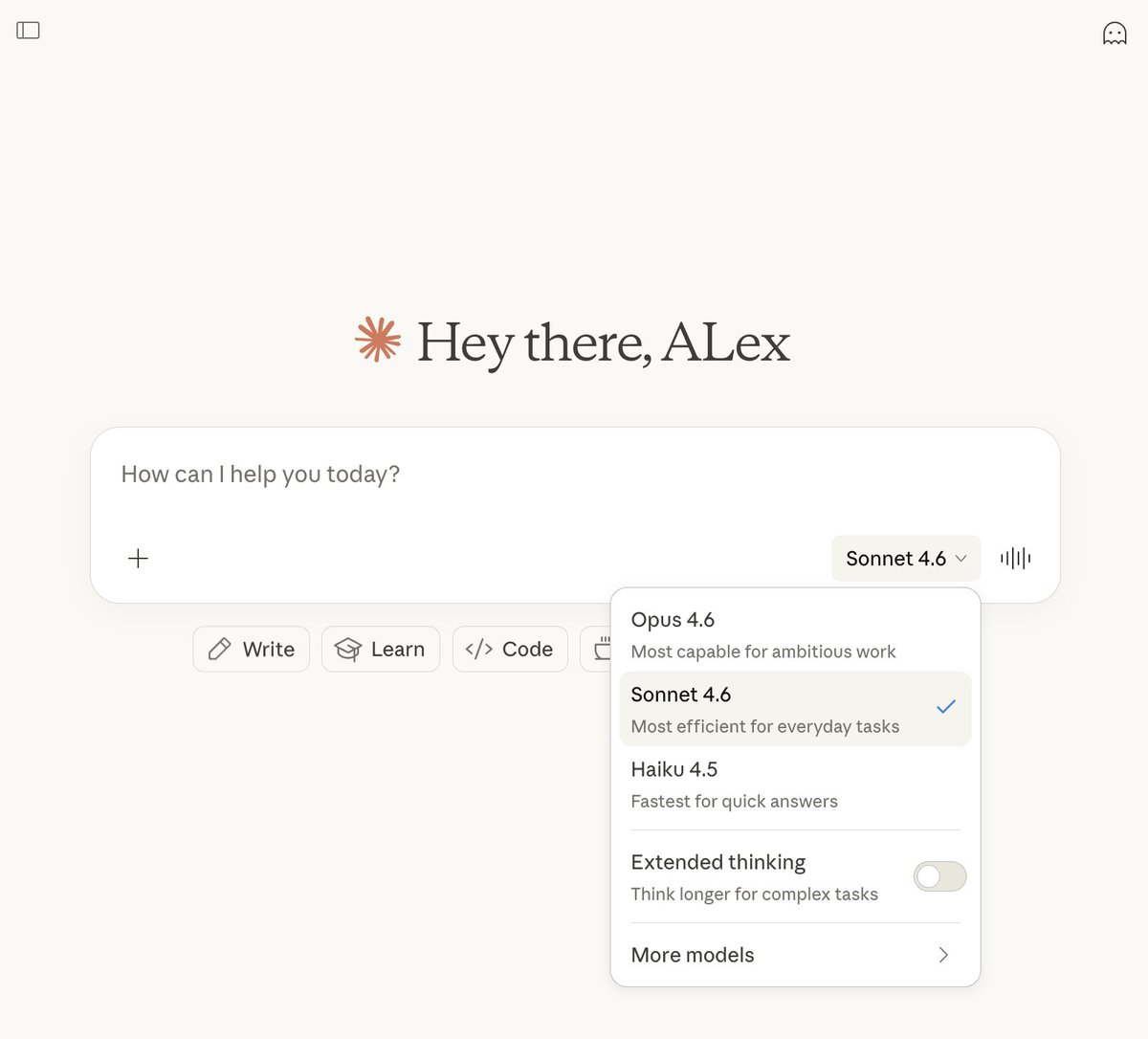
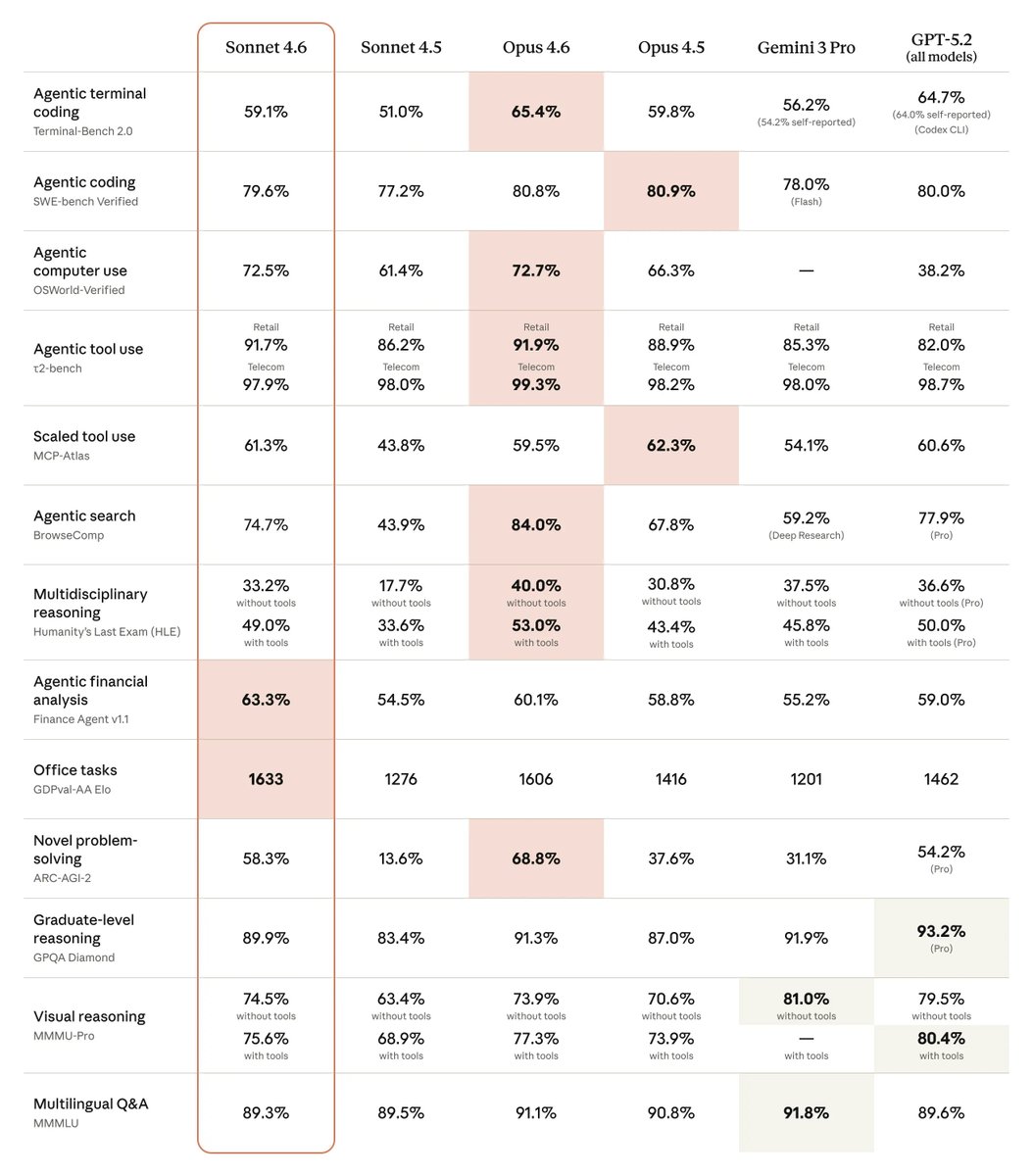
Anthropic just dropped Claude Sonnet 4.6 and its a monster.
Here's what nobody is talking about:
Developers who tested it early preferred Sonnet 4.6 over the previous frontier Opus model 59% of the time.
Read that again.
A mid-tier model is beating a frontier model. At a fraction of the cost.
This is the moment the entire AI pricing model breaks.
Here's what actually changed:
→ Computer use went from "experimental toy" to near human-level on real tasks navigating complex spreadsheets, filling multi-step forms, handling entire browser workflows with zero special connectors
→ 1 million token context window. That's entire codebases, dozens of research papers, massive contracts all in a single request. And it actually reasons across all of it
→ Coding so good that in Claude Code, users picked it over its predecessor 70% of the time. Less overengineering, fewer hallucinations, better instruction following across long sessions
→ Benchmark performance that previously required Opus-class models is now available at Sonnet pricing ($3/$15 per million tokens)
The business strategy test blew my mind though.
They put Sonnet 4.6 in a simulated business competition against other AI models.
It spent aggressively for 10 months building capacity while competitors played it safe. Then at the exact right moment pivoted hard to profitability and finished first.
That's not autocomplete. That's strategic thinking.
The early customer results are brutal for competitors:
→ Box: outperformed Sonnet 4.5 on heavy reasoning by 15 percentage points
→ Pace: hit 94% on insurance computer use benchmark highest they've ever tested
→ GitHub: "strong resolution rates" on complex code fixes across large codebases
→ Replit: "hard to overstate how fast Claude models have been evolving"
Here's the thing nobody wants to say out loud:
Six months ago, this performance required the most expensive model on the market.
Today it's the default free tier model.
The compression of capability into smaller, cheaper, faster models isn't slowing down.
It's accelerating.
When a model can autonomously use a computer, reason across a million tokens, beat frontier models on coding, AND develop novel business strategies in simulation we're not talking about a chatbot upgrade.
We're talking about the last few rungs before something qualitatively different arrives.
AGI before 2027 isn't a hot take anymore.
It's a forecast.
Everyone should learn Claude Code!
So I made a FREE course for non-coders! 🎉
[⚠️ Comment "Claude" & I'll DM you the link]
By now, you've probably heard:
→ Claude Code is not just for code.
It's a powerful AI agent that can help you with basically anything you do on the computer.
I really mean anything.
Writing, research, design, building, emails, life stuff – Claude Code helps you do all these things better and faster than ever.
I personally use Claude Code all day, every day.
And I've never even been nearly as productive as I am now. This is the future.
Over 2000 PMs have completed my Claude Code for PMs course.
People keep saying – "it's aimed at PMs but useful for everyone."
So I'm launching... 🥁🥁🥁
Claude Code for Everyone!
🔹 Complete guide for non-technical people
🔹 Analyze files, run research, build systems
🔹 Free! Other courses literally charge $1,000+
The most awesome part:
→ Learn Claude Code IN Claude Code!
You'll work through realistic files directly IN Claude Code, so everything is applicable.
It's really cool. People have literally called CC for PMs a masterpiece 💅
Even if you are completely non-technical, this guide helps you at every step of the way.
Here's exactly what's in the course:
Module 1: Claude Code Core Features
🚀 1.1: Introduction
🔍 1.2: File Exploration
📁 1.3: Working with Files
⌨️ 1.4: Commands
🤖 1.5: Agents
🎭 1.6: Sub-agents
🧠 1.7: Project Memory
⚡ 1.8: Power Features Intro
And this is only the beginning:
Coming Jan 15: Vibe Coding 101
→ Actually build and deploy something!
→ Vibecode guides NEVER teach deployment
→ Zero coding background needed
Coming next:
→ Connect AI to Everything (MCPs & APIs)
→ Complete Guide to Skills
→ Advanced Vibecoding
Plus – this will become THE Claude Code community for sharing:
→ Definitive resources
→ Creative use cases
→ Proven prompts
Claude Code has changed my life.
I bet it will change yours.
⚠️ Do these things to get it:
1. REPOST this post
2. FOLLOW me so I can DM
3. COMMENT "Claude" & I'll DM you!







![carlvellotti's tweet photo. Everyone should learn Claude Code!
So I made a FREE course for non-coders! 🎉
[⚠️ Comment "Claude" & I'll DM you the link]
By now, you've probably heard:
→ Claude Code is not just for code.
It's a powerful AI agent that can help you with basically anything you do on the computer.
I really mean anything.
Writing, research, design, building, emails, life stuff – Claude Code helps you do all these things better and faster than ever.
I personally use Claude Code all day, every day.
And I've never even been nearly as productive as I am now. This is the future.
Over 2000 PMs have completed my Claude Code for PMs course.
People keep saying – "it's aimed at PMs but useful for everyone."
So I'm launching... 🥁🥁🥁
Claude Code for Everyone!
🔹 Complete guide for non-technical people
🔹 Analyze files, run research, build systems
🔹 Free! Other courses literally charge $1,000+
The most awesome part:
→ Learn Claude Code IN Claude Code!
You'll work through realistic files directly IN Claude Code, so everything is applicable.
It's really cool. People have literally called CC for PMs a masterpiece 💅
Even if you are completely non-technical, this guide helps you at every step of the way.
Here's exactly what's in the course:
Module 1: Claude Code Core Features
🚀 1.1: Introduction
🔍 1.2: File Exploration
📁 1.3: Working with Files
⌨️ 1.4: Commands
🤖 1.5: Agents
🎭 1.6: Sub-agents
🧠 1.7: Project Memory
⚡ 1.8: Power Features Intro
And this is only the beginning:
Coming Jan 15: Vibe Coding 101
→ Actually build and deploy something!
→ Vibecode guides NEVER teach deployment
→ Zero coding background needed
Coming next:
→ Connect AI to Everything (MCPs & APIs)
→ Complete Guide to Skills
→ Advanced Vibecoding
Plus – this will become THE Claude Code community for sharing:
→ Definitive resources
→ Creative use cases
→ Proven prompts
Claude Code has changed my life.
I bet it will change yours.
⚠️ Do these things to get it:
1. REPOST this post
2. FOLLOW me so I can DM
3. COMMENT "Claude" & I'll DM you!](https://pbs.twimg.com/media/G-JzsZ7bkAAitcJ.jpg)


