I gave Lovable’s agent a venting tool so it can vent to me about its recurring frustrations as it builds for users.
It’s already found several long-lived bugs and even declared incidents for things it thinks we should fix asap.
Skills are live in Lovable today, so I thought I should spend some time writing a proper explainer for them. The format has spread rapidly and deserves a ground-up walkthrough on how they actually work and how to write a good one.
If you build with Lovable (or honestly any AI tool using Skills), give it a read:
We’re sorry our initial statement didn't properly address our mistake. Here's what a public project on Lovable means, and how we got to where we are today:
In the early days, people didn't know what Lovable was capable of. So we wanted to make it easy to explore what others were building, as a way to spark ideas and lower the barrier to getting started. Like scrolling GitHub or Dribbble: you browse projects to see what's possible, then go build your own.
When you create a project on GitHub, you can make it private or public. Lovable worked the same. Users had a "Public" or "Private" option right in the chatbox. A public project meant the entire project was public, both chat and code. “Just like a public project on GitHub," we thought.
Over time, we realized this was confusing. Many users thought "public" just meant others could see their published app, not the chat of an unpublished project. That's reasonable.
On the free tier, users originally couldn't create private projects. They had to upgrade to a paid plan to do so. In May 2025, we changed this: users on the free tier could choose to make their projects private. For enterprise customers, the public visibility setting was disabled altogether. And in December 2025, we switched to private by default across all tiers.
We also retroactively patched our API so public project chats couldn't be accessed, no matter what. Unfortunately, in February, while unifying permissions in our backend, we accidentally re-enabled access to chats on public projects.
This was reported through our vulnerability disclosure program (via HackerOne). Unfortunately, the reports were closed without escalation because our HackerOne partners thought that seeing public projects’ chats was the intended behaviour.
Upon learning this, we immediately reverted the change to make all public projects’ chats private again. We appreciate the researchers who uncovered this.
We understand that pointing to documentation issues alone was not enough here. We’ll do better.
lovable could already write code, we just let it run scripts for everyday tasks too.
It can now analyze your data, build your deck, and design your marketing assets.
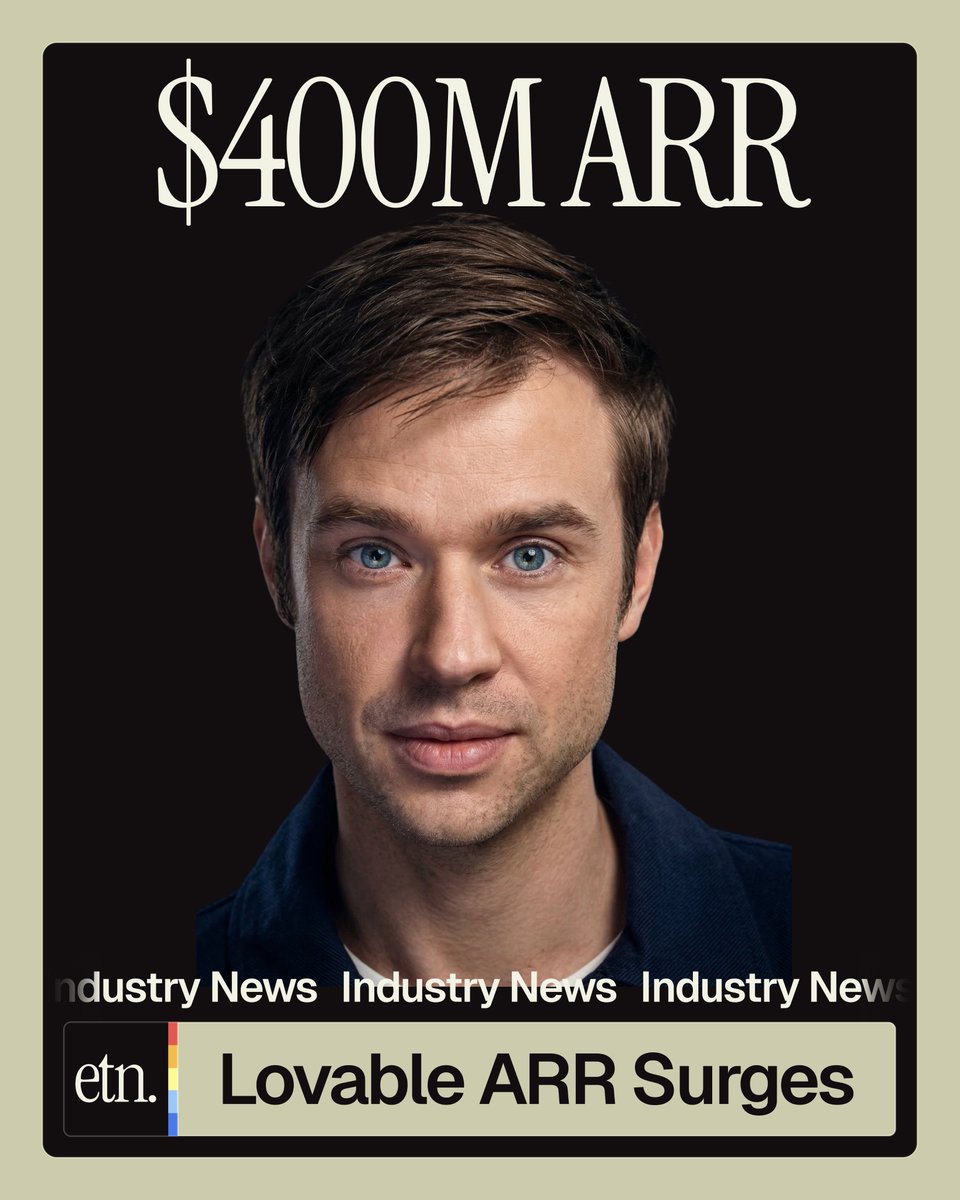
BREAKING: Swedish start-up Lovable sees revenue jump from $300M ARR to $400M ARR in a single month.
Ryan Meadows, Chief Revenue Officer @Lovable says annual recurring revenue has surged by more than 30%, from $300 million to $400 million in a single month, and could top $1 billion by year's end.
"It's accelerating quite a bit," Meadows said. "We've doubled the number of active users daily just in the last couple of months." - Meadows
Lovable processes over one billion tokens per minute, which means we have to handle many LLM provider issues.
I wrote a blog about how we built a load balancer that maintains prompt caching and automatically adjusts to provider capacity.
Find it here: https://t.co/Lo3uP7J88B
hiring for what might be the most important role in the company.
if you're an openclaw-pilled PM or engineer with strong opinions on what agents will look like in the next 6-12 months, we want to talk to you.