@ShawnT1984@CTVNews “The Waukesha County Sheriff’s Office obtained a search warrant and found material on Casap’s phone related to the “The Order of Nine Angles,” which is “a network of individuals holding neo-Nazi racially motivated extremist views,” the federal affidavit says.”
UPDATE:@laurier 's treatment of CF: OneDrive storage where many keep lectures, grades, ref letters & research. @microsoftcanada licensing: from 5TB to 100GB (loss of 98%). ICT solution - delete, delete, delete. Seems to be the approach to CF overall. #fairness4CF#WLUFA#OCUFA
@kellishale@satyanadella @microsoftcanada It isn't reasonable to expect Contract Faculty to work with inferior tools or for us to gain access to MSOffice Desktop mere days before classes begin. (Can you even put a sharepoint OneDrive docx into MyLS?)
@kellishale@satyanadella @microsoftcanada There are many limitations of MSOnline, for example: "they [Word, Excel, and PowerPoint Online] are meant for “lite” editing, and are not intended as a replacement for the desktop software." (https://t.co/jkFrEmTMXD).
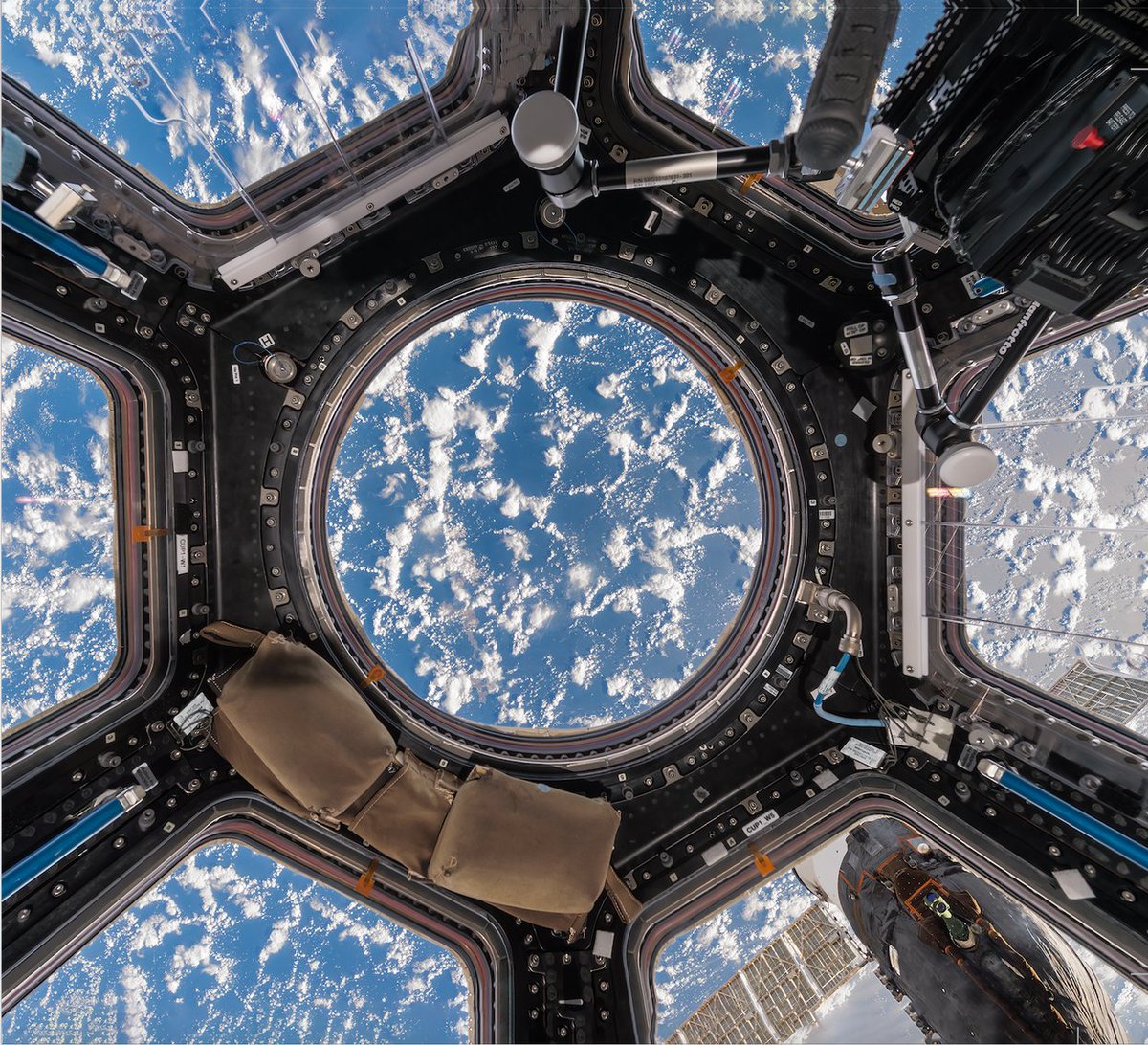
FUNGUS IN SPACE!!! 🍄🚀
Equal parts cosmic horror and nature being metal, let's talk about the lichen that grew on the OUTSIDE of the International Space Station!
Get your tea and curl up, because I PROMISE you wanna hear about these fungal cosmonauts 🧑🚀
🧵
@LindsayMasland I’ve had the same experience. I love reading asides like “Wow! I guess I had a lot to say about that.” or “This wasn’t my favourite unit so I’m struggling to find something to write about.”
@Niigaanwewidam Family, ancestry, identity, community & belonging. These terms are fraught for many people, particularly those (Indigenous and non) who’s history includes adoption.
No one should feel shame for having a family, sense of belonging etc that is defined beyond biology
People with ADHD tend to view time as either ‘now’ or ‘not now’. A task either needs to be done right this very minute, or not at all. This causes difficulties with time management, lateness, planning, impatience, procrastination and missing deadlines.
The University of Southern Denmark is organizing a general meeting on AI tomorrow. The objective is to educate the faculty and staff on how to use generative AI for educational purposes.
They have asked me to give a speech on best practices for using AI.
Below is the speech I have prepared.
---
Most of my work focuses on how to use AI apps for academic writing and there are six points that I would like to talk about in this regard.
1. Use AI for Structure and Not Content:
When it comes to using AI apps for academic wrting, understanding the difference between the structure and content is crucial.
It’s a bit tricky to understand the difference between structure and content because the two intricately intertwined. Content can’t exist without structure and we will have no strucutre if we don’t have any content.
We always have a lot of content based on the research that we are doing. But that content doesn’t mean much if we don’t structure it in the form a research paper or a monograph.
Large language models like ChatGPT and Claude are trained on huge amounts of human generated text. These models have a very good understanding of how we communicate, the way we structure our communication.
But since these apps use a predictive model, the content they produce is mostly predictable. Predictable content, for our purposes, is of little use. Predictable structure, on the other hand, is very useful.
We have to learn use generative AI to structure and not generate content. For example, you can ask ChatGPT to give you an outline for a journal article, but you can’t ask it to write the article for you. If you want to learn more about it, I have written about it on Twitter.
2. Outsource Academic Labor to AI But Not Thinking:
Imagine you have to look up a few resources related to your research project. You can go to the library and browse the physcial card catalog. Suppose you find a few relevant papers. You go to the shelf to pick up physical copies of the relevant journals.
This whole process as you can imagine is quite laborious.
You could’ve easily done all this on an app like Google Scholar. AI-powered apps are to Google Scholar what Google Scholar is to a physical brick-and-mortar library. I will give you the example of an AI-powered app called Scite.
Suppose you come across a paper published by two Nobel laureates working in a prestigious lab. Because of their Nobel prizes and their stature, most of us would think that they have presented irrefutable evidence.
Now imagine you want to find out if there is any evidence that contrasts the claims of these Nobel prize winners. You will have to read a lot of papers to find that out. Google Scholar won’t be much help.
But the app Scite will tell you in a matter of seconds the contrasting and supporting evidence to the claims made by those Nobel laureates.
In this case, we are using AI to outsource our labor but not our thinking. We cannot outsource our thinking because of the point I made earlier about predictable content.
3. Treat AI as a Research Assistant Not a Supervisor
Imagine you hire a research assistant and you assign them a task. They complete the assigned task. Will you check how your assistant did or will you simply take what they did and put it in your journal article or research report?
Chances are you will check it and give them feedback. Think of AI apps as your research assistants and not your supervisors.
I try to imagine AI apps as smart, willing, eager-to-learn research assistants. They can do certain tasks very efficiently, but I still have to check their output.
4. Don’t Over-Rely on AI and Don’t Forget to Use You Common Sense:
It hardly needs to said that we should use our common sense, but when it comes to AI, you’d suprised by the number of people who absolutely refuse to use their common sense.
Let me give you an example. On the homepage of ChatGPT, it is clearly written that it “may occassionly generate incorrect information.” In their naivete, the makers of ChatGPT assumed that anyone using it will read this.
Many people didn’t bother with it. Among them was a New York lawyer who used ChatGPT “to supplement his legal research.”
ChatGPT gave him fake citations to cases that didn’t even exist. He didn’t stop there. He asked ChatGPT to give him case reports to those fake citations. ChatGPT complied and generated fake reports to those fake citations.
This lawyer took this bundle of fakery and submitted it in a federal court. As for the judge to whom this fakery was submitted, let’s just say that he was not happy.
5. AI is Neither the Fantasized Utopia Nor the Feared Dystopia:
When it comes to AI, a lot of people tend to think in terms of extremes. They either think AI is going to solve all their problems (like you press a button and AI writes you a research paper), or they think AI is going to take over the world and we will be ruled by robots.
Neither of these positions are helfpul. Instead of thinking in these extremes, we should try to understand them as what they actually are.
6. Engage with These Apps:
This brings me to my final point, which is that we should engage with these apps. AI apps are here to stay and if we don’t engage with them, we won’t be able to equip our students with the latest tools that they will need in the marketplace.
I’d like to end with a simple call that we should try to combine artificial intelligence with human intelligence and not with human stupidity.
It’s so important for our students to to learn how to engage with generative AI, critically think about its outputs, and understand its biases. What are you doing to support your own learning so you can support theirs?
hey @elonmusk + @lindayaX …
please rethink removing the block feature. as an anti-bullying activist (and target of harassment) i can assure you it��s a critical tool to keep people safe online.
- that woman
10 years ago, I worked at TVO. It was one of the best jobs I ever had. I worked w/ people who so deeply believe in an informed public.
After a decade of underfunding and erosions to wages, my friends at @TVO_CMG are on the verge of the first strike in HISTORY. Fight for them.
There is so much great work being done in the field of Disability Studies but at most institutions it’s scattered across Departments and it’s up to the individuals doing the work to find each other
There are so many amazing grad students doing cool projects in Disability Studies, moving the field forward, and I just wonder how much knowledge is lost because no one is establishing Disability Studies departments #AcademicChatter
Tell me this isn’t a great way to get students engaged in a serious methods discussion! And as @FreeBlackTX notes, it’s a great assignment template too. 10/10 @drjessmaddox Bravo 👏👏👏👏
@ambernoelle Vionic arch support sandals! I’ve walked all over the world in their Tide II Toe Post Sandals (flip flops) but they have loads of other styles
https://t.co/CbPTMRLROE