Very emotional moment from the interview with Zelenskyy. You should watch this.
JOURNALIST: Do you miss being an actor?
ZELENSKYY:?I miss being a good father.
JOURNALIST: When your children were little, what did you tell them the most? What was the thing that you told them the most when they were small?
ZELENSKYY: I love you.
JOURNALIST: And what do you tell them now that they're older?
ZELENSKYY: Oh, I miss you.
JOURNALIST: When was the last time you cried?
ZELENSKYY: I will try to do it after our interview. No, I mean this, between us. I'm a normal man and then there are a lot of different moments, between us, almost each day, a lot of losses on the battlefield and civilians, and there are absolutely crazy attacks on our people.
And I'm just, it's… I mean, It's very difficult really, when I give orders (medals). I said about it. It's always difficult for me when I give orders (medals) to the mothers and fathers, who lost their children. In such moments, really, I often cry.
JOURNALIST: Are you a hero?
ZELENSKYY: No.
JOURNALIST: So who is your hero?
ZELENSKYY:?My hero? My children, my army, our army, and Ukrainian people. So I'm a part… I'm also a Ukrainian, so I'm a part of our nation. But now our nation, I think, that our nation is absolutely heroic.
We don’t talk enough about how autocrats view taxpayer dollars—not as public resources to serve the people, but as a pot of gold to enrich themselves and their allies. Their focus isn’t public welfare; it’s personal profit and power.
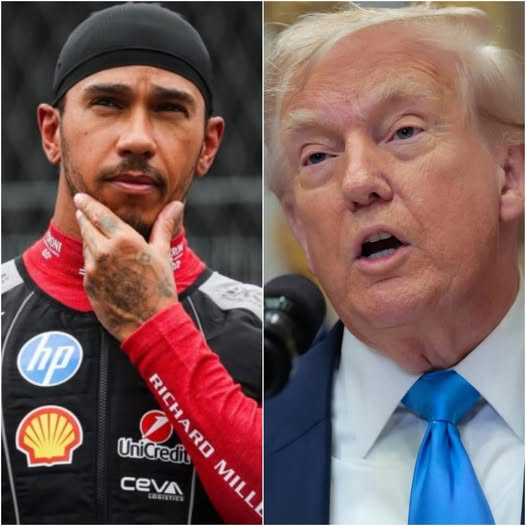
Trump ataca Lewis Hamilton — e recebe uma resposta contundente…. Donald Trump chamou Lewis Hamilton de “um insulto ao esporte” porque o heptacampeão é “extremamente progressista” e acredita que não devemos discriminar com base no gênero…. Infelizmente ele escolheu a pessoa errada…. Em um local histórico, Lewis Hamilton não apenas respondeu com veemência — ele fez um discurso moral…. “O presidente dos Estados Unidos acabou de dizer que eu insultei o espírito da competição”, começou Lewis Hamilton…. “Querem saber o que insulta a humanidade? Tirar o acesso à saúde dos doentes enquanto se cortam impostos para bilionários.”…. “Sabem o que insulta a humanidade?”, continuou ele…. “Deportar estrangeiros e separar bebês de suas mães.”….
“Sabe o que insulta a humanidade? Bombardear crianças inocentes em idade escolar no Irã e enviar nossos bravos homens e mulheres para morrer em mais uma guerra sem fim… Acobertar os arquivos de Epstein e depois se recusar a processar uma única pessoa envolvida.”…. Lewis Hamilton — que foi atacado por Trump por apoiar pessoas transgênero e afirmar que “todas as crianças são uma dádiva para este mundo” — mudou completamente o discurso…. Em vez de recuar, ele fundamentou sua mensagem nos próprios valores que Trump tentou usar como arma…. “Eu não sou uma pessoa perfeita”, disse ele…. “Mas me esforço todos os dias para usar minha plataforma em prol daqueles que não a têm.”…. “Somos ensinados a amar o nosso próximo como a nós mesmos… Conseguimos imaginar a guerra em um mundo perfeito? Conseguimos imaginar o preconceito em um mundo perfeito? Conseguimos imaginar a pobreza em um mundo perfeito? Então por que toleramos essas coisas na Terra?”
Mit 51 Jahren, zweifach geschieden und völlig mit dem Gedanken an die Ehe abgeschlossen, begegnete Audrey Hepburn Robert Wolders.
Er war 43. Witwer. Und er empfand genauso.
Keine Zeremonie. Keine Gelübde. Keine Ankündigung. Nur zwei Menschen, die beide geliebt und verloren hatten und irgendwie zu demselben stillen Schluss gekommen waren – dass sie einfach einander wollten.
Sie schufen etwas, das die Welt selten feiert, weil es nicht in die übliche Geschichte passt. Keine Hochzeitsfotos. Keine Schlagzeilen zum Jahrestag. Nur 13 Jahre ganz normaler Tage, die durch den Menschen, mit dem man sie teilt, außergewöhnlich werden.
Robert begleitete sie auf ihren UNICEF-Missionen in einige der ärmsten Regionen der Welt – Äthiopien, Sudan, El Salvador – und sah die Frau, die er liebte, im Staub neben hungernden Kindern knien und sie mit denselben Händen halten, die einst Givenchy auf den größten Bühnen der Welt getragen hatten.
Er sah sie in ihrer Gesamtheit. Die Ikone und die Frau dahinter.
Als 1992 der Krebs kam, wich er ihr nicht von der Seite.
Er begleitete sie zu jedem Arzttermin, zu jeder Behandlung, zu jedem Tag, den die Welt mitbekam und zu jedem, den niemand mitbekam. Er bereitete ihr das Essen zu. Er hielt ihre Hand. Er blieb einfach da – mit einer unaufdringlichen, aber unerschütterlichen Beständigkeit.
Audrey Hepburn starb am 20. Januar 1993 in seinen Armen.
Sie war 63 Jahre alt.
Robert heiratete nicht wieder. 25 Jahre lang lebte er zurückgezogen, bewahrte ihr Andenken und sprach mit derselben Wärme von ihr, die er immer hatte. Wenn ihn Interviewer nach ihr fragten, sprach er nicht in der Vergangenheitsform, wie man es tut, wenn etwas abgeschlossen ist.
Er sprach über sie, wie man über jemanden spricht, der noch da ist.
Als Robert Wolders 2018 starb, war sie ihm immer noch nahe.
Ihre Liebe hatte keine Bescheinigung. Sie brauchte keine. Sie bewies sich nicht in einem einzigen öffentlichen Moment, sondern in tausend privaten – in der Geduld, in der Präsenz, in der täglichen Entscheidung zu bleiben.
*Manche Lieben brauchen keine Zeremonie, um echt zu sein.*
Sie beweisen sich in den stillen Entscheidungen, die jeden Tag getroffen werden – da zu sein, zu bleiben, immer wieder denselben Menschen zu wählen, selbst wenn die Welt nicht mehr zuschaut.
Geschichte ClassicCinema legends goldenera hollywood
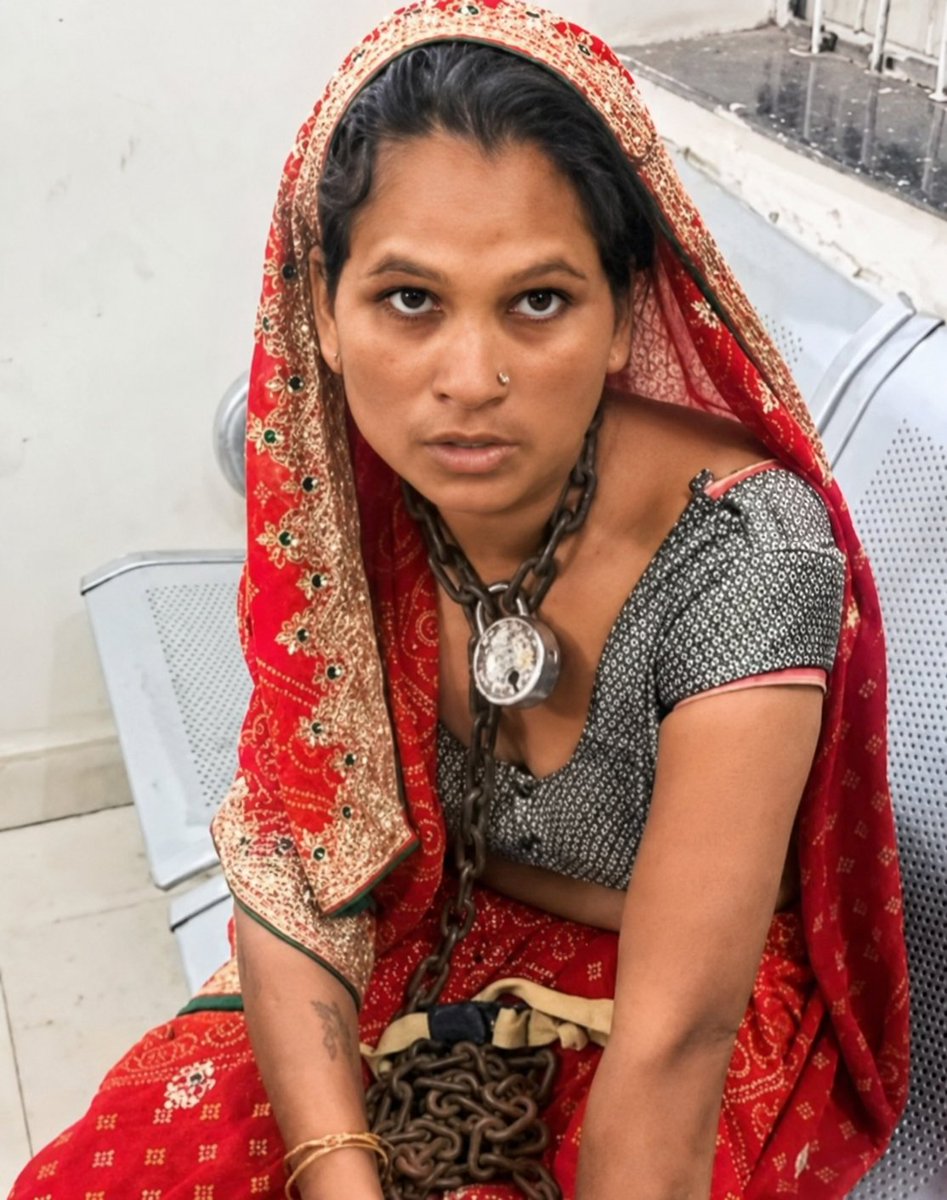
A woman walked 6 km to reach the police station with an iron chain locked around her neck.
On the evening of 10 June, the husband came home drunk. Asked to serve food, but the food was being prepared, so he lost his temper and started abusing his wife.
When she protested, he became even more angry.
He went outside, cut a thick tree branch, and then started beating her badly with the branch, along with kicks and slaps.
Late at night, she quietly left the house and started walking towards the police station.
But before she could reach the police, her husband spotted her near a temple. He stopped her, beat her again in public, and dragged her back home.
He put a heavy iron chain around her neck.
Then he tied the chain to a pillar inside the house and locked it with a padlock. He heated an iron rod on the gas stove until it became red hot. He then burnt her waist, hip and thigh with the hot rod.
The woman cried in pain.
For nearly 24 hours, she remained chained inside the house.
The husband wanted her to admit in front of the panchayat that she would never go to the police again. Out of fear, she pretended to agree.
The husband left the house to gather people for the panchayat.
She was alone at home. She noticed a heavy stone nearby and started hitting the lock and broke it.
She continued walking 6 kilometres until she finally reached the police station.
Case registered.
This is not a film script. It is the real-life story of Mangibai Tanwar, and of countless other women who still endure such cruelty today.
It was a Monday morning in August 2023.
For nearly six months, hundreds of truck drivers had been crisscrossing the United States carrying the largest concert production the world had ever seen. They drove through the night. They slept in parking lots and truck stops. They missed family dinners, birthdays, anniversaries, and countless ordinary moments at home.
That was the job.
Then a man entered the room quietly.
There were no cameras. No speeches. No press releases.
He simply walked from person to person, placing a sealed envelope into each driver's hands.
The envelopes were thick. Each one carried a wax seal bearing a monogram. Inside was a handwritten letter.
The drivers opened them carefully.
One glanced at the check and assumed it said $1,000.
Another looked closer and thought it might be $10,000.
Then someone finally said what everyone else was thinking.
"This can't be real."
But it was.
Every check was for $100,000.
The man handing them out was Scott Swift. The letters had been written by his daughter, Taylor, personally thanking each driver for helping make the Eras Tour possible.
For many of them, it was more money than they had ever received in a single bonus.
Industry veterans later called it unprecedented.
But the story didn't end there.
When the Eras Tour finally concluded in December 2024 after 149 performances spanning five continents, the scale of Taylor Swift's generosity became clear.
By the end of the tour, she had distributed an estimated $197 million in bonuses to the people behind the scenes.
Not just performers.
Everyone.
Dancers. Truck drivers. Sound engineers. Stage builders. Caterers. Security staff. Hair and makeup artists. Merchandise workers. Physical therapists. Pyrotechnics crews.
The people most fans never see.
Every department was included.
Every person mattered.
Many also received personal notes expressing her gratitude.
Some employees later described opening their letters and simply sitting in silence.
Others cried.
When asked why she did it, her answer was remarkably simple.
"They worked hard. They deserved it."
The generosity, however, did not begin with the tour.
And it certainly did not end there.
In the early months of the pandemic, while much of the world was shut down, Taylor Swift spent time online reading messages from fans who were struggling.
One freelance photographer worried she would lose her apartment.
A bartender wondered how he would pay his bills while waiting for unemployment assistance.
Without publicity or announcements, Taylor quietly sent thousands of dollars to people who needed help.
The recipients shared the messages themselves because they could hardly believe what had happened.
For many, the money arrived at exactly the moment they thought they had run out of options.
Then came another story.
In 2025, a mother posted a video of her young daughter Lilah, who was battling a rare and aggressive form of brain cancer.
While watching Taylor Swift on a screen, the little girl smiled and pointed.
"That's my friend," she said.
The video spread online.
Not long afterward, the family received news that seemed impossible.
A single anonymous donation had completed their fundraising goal.
The amount was $100,000.
Attached was a message:
"Sending the biggest hug to my friend, Lilah. Love, Taylor."
The family later said it took them nearly half an hour to accept that it was real.
The Eras Tour generated more than $2 billion in ticket sales.
Taylor Swift became one of the most successful entertainers in history through her songs, her performances, and years of relentless work.
But what people continue to remember are not the records.
It is the image of handwritten letters sealed with wax.
It is the truck drivers standing speechless in a meeting room.
It is the struggling fans who found unexpected help when they needed it most.
It is a little girl calling a singer her friend—and discovering that the feeling was returned.
Because sometimes the most remarkable part of success is not how much a person earns.
It is what they choose to do with it.
And in a world where generosity is often announced before it happens, some of Taylor Swift's most meaningful acts were the ones she never announced at all.
Follow for more Lost in Yesterday
Some people will spend their entire lives trying to tear down a woman they could never hope to become.
Michelle Obama walked into the White House carrying the hopes of little Black girls who had never seen themselves reflected there.
She carried herself with brilliance.
With grace.
With dignity.
She became a symbol of possibility.
And because America has always demanded that extraordinary Black women endure what others never have to, she has spent years facing insults, lies, and cruelty designed to make her smaller.
But history has already rendered its verdict.
When children needed hope, Michelle Obama gave them hope.
When young people needed a role model, she showed them what strength looks like.
When the world watched, she showed us that kindness is not weakness, that intelligence is not arrogance, and that going high is not surrender—it is power.
No conspiracy.
No slur.
No bitter man chasing attention will ever be remembered more than the woman who inspired millions.
Long after today’s outrage merchants are forgotten, schoolchildren will still read her words.
Young women will still follow her example.
And generations yet unborn will know that in a time that often rewarded division and cruelty, Michelle Obama stood as a testament to excellence, compassion, and the boundless promise of this country.
Some people leave behind outrage.
Michelle Obama left behind a legacy.
And legacy always outlives hate.
She would not have bombed Iran.
She would not have illegally attacked Venezuela.
She would not have destroyed the economy.
She would not have pardoned criminals, drug traffickers, and traitors.
She would not have supported Putin's Russia.
She would not have slept in the Oval Office.
She would not have an affected hand.
She would not have cut the SNAP program.
She would not have used the DOJ to attack her political enemies.
She would not have given money to foreign countries.
She would not have abandoned American farmers.
She would not have prevented the release of the Epstein files.
She would not have destroyed American democracy.
She would not have trampled on the Constitution.
She would not have abandoned the fundamental rights of citizens.
She would not have deployed American soldiers against the American people.
She would not have destroyed the White House.
She would not have enriched her family through government influence.
She would not have lied about her health records.
She would not have played golf.
She wouldn't have asked people to cheat in future elections.
She wouldn't have said "Quiet piggy" to a female journalist.
She wouldn't have invited Putin to Alaska.
She wouldn't have appointed an administration of incompetents.
She wouldn't have done everything Trump did.
Trump used the Armed Forces Full Honor Cordon — soldiers who escort fallen heroes and heads of state — to usher UFC fighters past Abraham Lincoln’s statue like they’re celebrities on a red carpet. I am LIVID. And everyone else should be too.
Whenever I dive deep into the origin stories of The Beatles, I am always struck by the profound daddy issues that plagued the band. John Lennon was abandoned by his father; Paul McCartney lost his mother early, leaving his father to shoulder an immense burden. But Ringo Starr’s story holds a beautiful, often overlooked counter-narrative, all thanks to a gentle, softly spoken Londoner named Harry Graves. As a fan, I firmly believe that without Harry’s psychological support and profound empathy, the Ringo Starr we know and love might never have existed.
Ringo’s biological father walked out when he was just a toddler, leaving his mother, Elsie, to raise him in the gritty, impoverished streets of the Dingle in Liverpool. When Elsie finally remarried in 1954, Ringo was an incredibly fragile teenager, emotionally and physically scarred from years of life-threatening illnesses that had kept him in hospitals and robbed him of an education. Enter Harry Graves. In a rough working-class culture where stepfathers could often be stern or resentful, Harry was a revelation. He didn't try to discipline the sickly Richard Starkey; instead, he showered him with unconditional warmth and patience. Ringo affectionately called him his "step-ladder," a testament to how Harry elevated him.
Harry possessed a deep psychological intuition. He recognized that Ringo, who struggled with literacy and immense insecurity, desperately needed an outlet. He didn't push the boy into manual labor or berate him for his lack of schooling. Instead, he paid attention to Ringo’s innate sense of rhythm. It was Harry who scraped together the funds to buy Ringo his first real drum kit. He traveled all the way to London and brought back a second-hand, £10 drum set, lugging it back to Liverpool just to see the boy smile.
That single act of paternal support changed musical history. Harry provided a safe, nurturing environment where Ringo could pound away his frustrations and build his shattered confidence. Harry Graves proved that family isn’t always blood; it is the person who steps up, sees your potential, and buys you the tools to change the world. Whenever I hear Ringo’s joyful, steady backbeat, I send a quiet thank-you to Harry Graves, the sweet, supportive stepdad who gave the quietest Beatle his voice.
Via John Fan worldwide
This is Sad!
For almost 30 years, leaders from both parties have set politics aside to honor the women veterans who gave their lives for this country at Arlington National Cemetery.
Then Trump and Hegseth shut it down.
Why? Because the ceremony recognized women.
This is an insult to every woman who wore the uniform, served with courage, and sacrificed for this nation.
Yesterday, @demwomencaucus stood with the women veterans Trump and Hegseth tried to erase and held an event anyway.
We see you. We honor you. We thank you. 🇺🇸
“women are just as bad as men.”
okay. then show me men being gang assaulted by women at scale.
show me adult women running trafficking networks for men.
show me laws built to control men’s bodies.
show me spaces where women routinely prey on men.
and when men start living in fear of gender-based violence the way women do, we can have that conversation.
I’ve been thinking a lot about the extraordinary outbursts of the President of the United States against female journalists... well, actually against journalists in general and journalism. But it feels like he saves his most childlike behavior and irrational language for female reporters, calling them all kinds of names that kids in kindergarten are given times out for. It’s stunning to me to witness such behavior from any leader, any CEO, any person of influence or importance. I’ve never witnessed someone like this raging, this weekend with @meetthepress host @kwelkernbc, just last week in the Oval Office with @cnn’s @kaitlancollins, calling women stupid or piggy, telling them to “smile”, calling them darling, demeaning their credibility. Every good man should denounce this behavior. Every person should be able to stand up for their colleagues and say “No more.”
Imagine this man screaming like this at your daughter, your wife, your sister, your mother... would you stand for it? No, you wouldn’t! And neither should any of us. It’s unacceptable and undignified. Period. End of story.