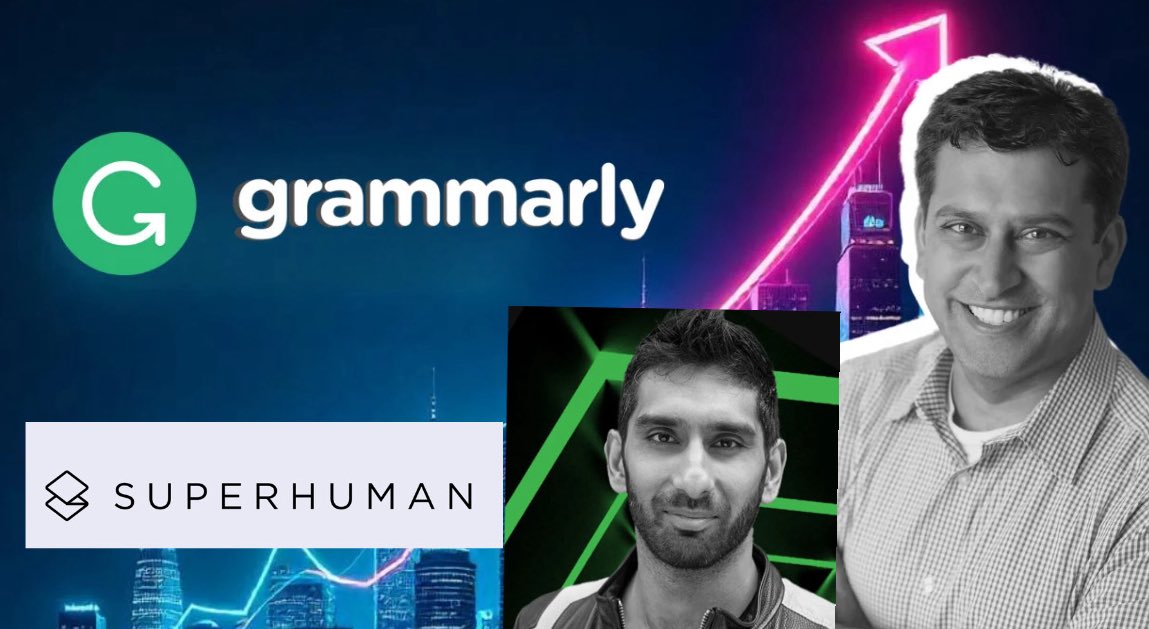
Grammarly is now Superhuman! In under a year, we’ve integrated 3 great companies into one brand + product redefining AI productivity. Huge team effort — so grateful for everyone who made it happen. A big year of change… and we’re just getting started! ⚡️ #Superhuman#AI
Huge news: We’re changing our company name from @Grammarly to Superhuman and launching a new product!
The Grammarly brand isn’t going anywhere, but we’re evolving into a multi-product company that includes Grammarly, Coda, Superhuman Mail, and a new AI assistant called Superhuman Go. 🧵
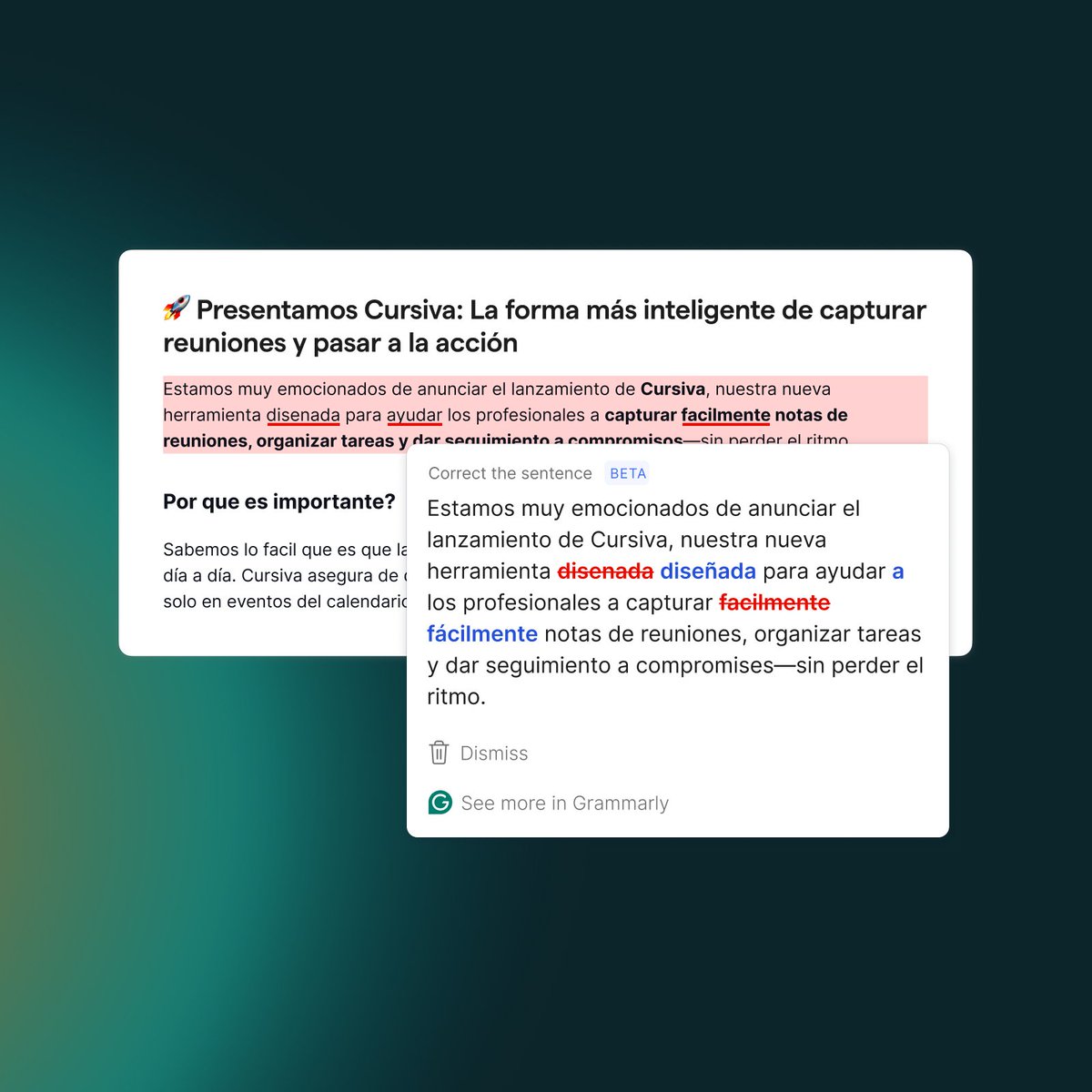
We just launched @Grammarly’s most-requested feature ever: writing support in five new languages!
Now you can get grammar and spelling corrections, paragraph-level rewrites, and instant in-line translations in Spanish, French, Portuguese, German, and Italian.
For years, our users have been asking for help writing in languages beyond English, and today we're delivering exactly that. We saw great success in our early trials as users immediately embraced these features because they finally had a way to write with the same confidence they have in their native language.
This is also a significant technical shift for us, and amazing advances in LLM technology made it possible for the team to scale and expand to five new languages, while maintaining the high-quality writing suggestions that have made Grammarly trusted by millions.
The multilingual features are available now across all Grammarly plans! Stay tuned for more languages and additional capabilities.
So excited that @Grammarly is on the @Forbes Cloud 100 list for the seventh year, placing us among the world’s top private cloud and AI companies!
It’s been a big year for Grammarly as we’ve grown far beyond our writing roots, acquiring @coda_hq and @Superhuman PLUS launching our first AI agents that help people tackle more of their daily work.
Today, over 40 million people trust Grammarly as their AI communications and productivity partner, and we’re scaling quickly with major updates coming that I think our users will love. I cannot wait for the next year ahead with the incredible team we have here.
Let’s go!! https://t.co/EXXX4GeOC5
Grammarly’s CEO @shishirmehrotra is one of tech’s best system thinkers.
No one does customer empathy like Superhuman CEO @rahulvohra.
This team up is going to create some delightful products
It’s official: Today, @coda_hq is part of @Grammarly! For anyone who missed the context, here’s a reminder of what’s happening: https://t.co/FJugMoyLrt
We’re starting the year with a big step forward, bringing together two teams to build out our AI productivity platform for apps and agents.
I’m incredibly proud of the work we’ve done at Coda over the past 10 years, and I’m feeling energized to lead this combined company and redefine productivity for the AI era.
We have big things coming—as they say, watch this space.
Excited to announce @coda_hq’s next chapter: we've entered into an acquisition agreement with @Grammarly!
With @shishirmehrotra taking over as CEO of the newly combined company, we’re looking forward to building the AI-native suite of the future.
https://t.co/gJT1pwFt59
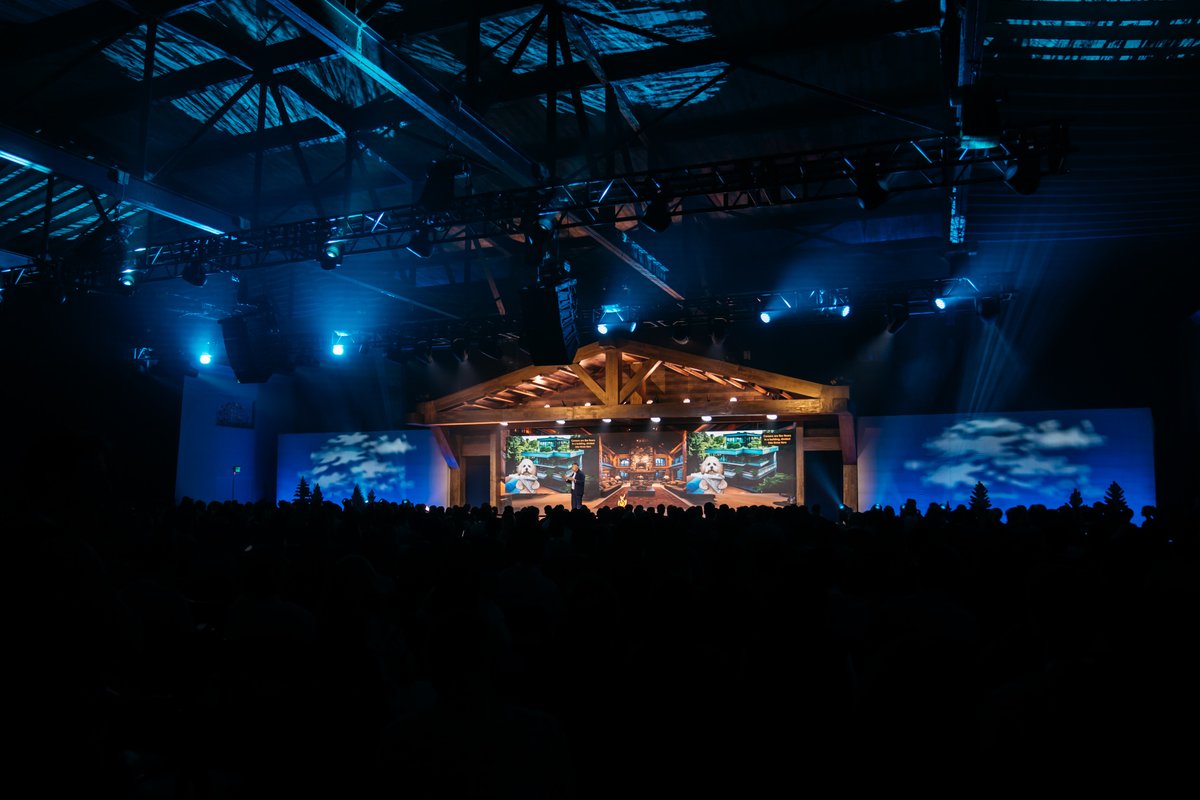
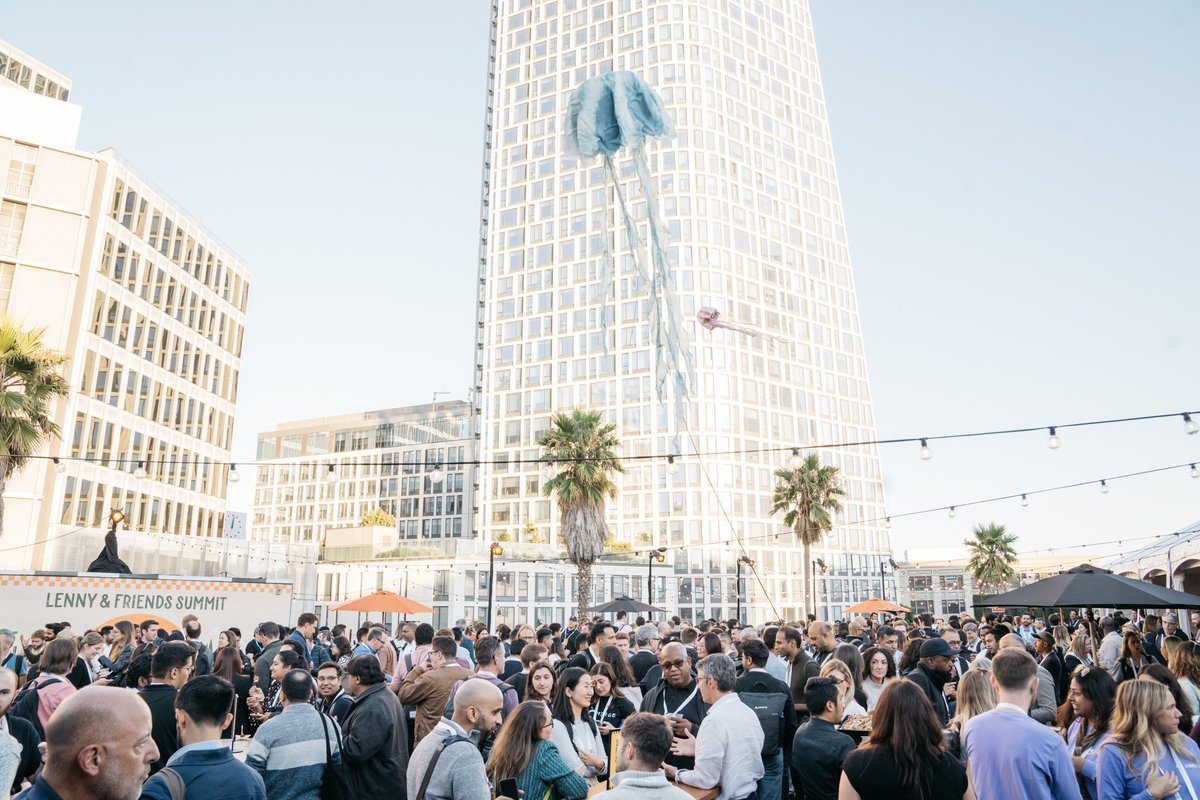
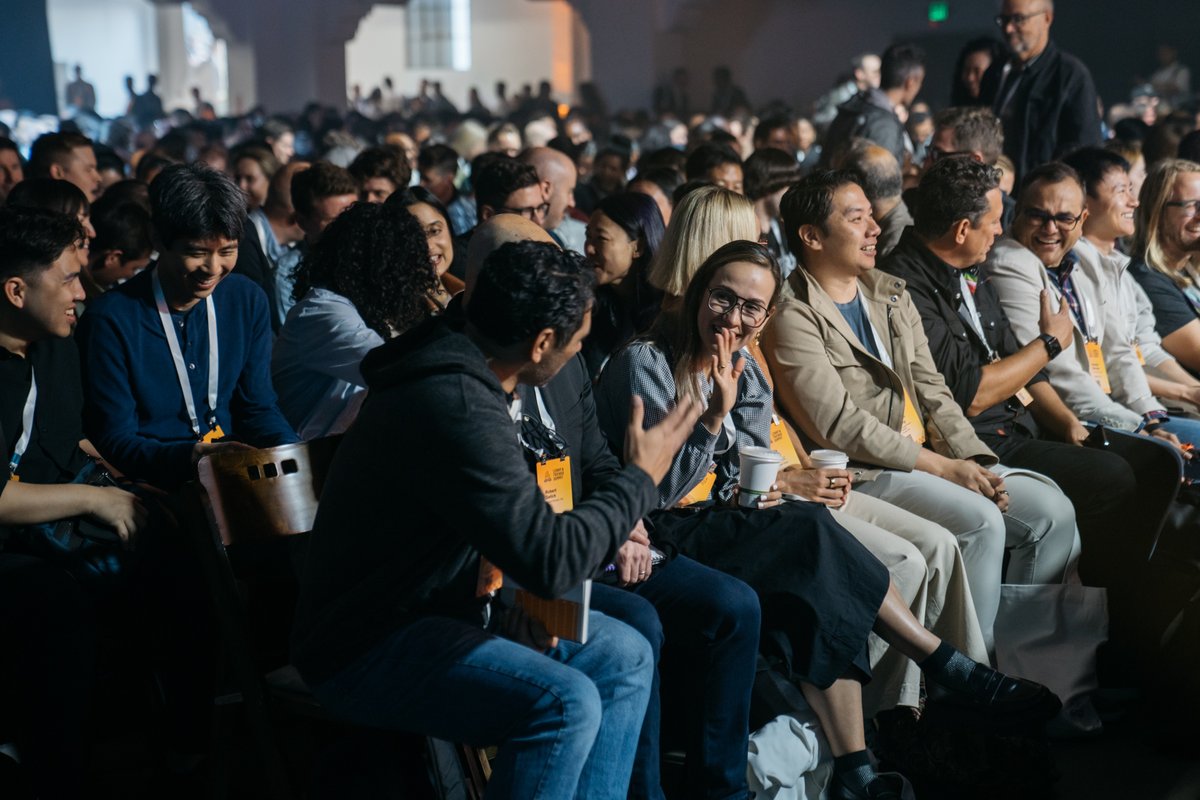
Some reflections on the Lenny and Friends Summit, now that I've had some time to process the experience:
1. I didn't realize how much product leaders crave community. Especially IRL. This Summit was some intense product-market fit, beyond what I had expected. It feels like remote work has created a big hole here. Especially for folks outside the Bay Area. The vast majority of attendees came from out of town, and many came from very far away (e.g. Turkey, Nigeria, India, Helsinki, Brazil, Australia).
2. I heard over and over how this was unlike any other conference people have been to, how high-quality the connections they made were, and how impactful the experience was. So happy. I attribute this to (1) carefully curating the attendees to senior product leaders, (2) designing a unique and beautiful space with a ton of attention to detail, and (3) having a world-class and diverse speaker lineup that focused on actionable advice (vs. fluffy ideas).
3. It was one of the most meaningful days of my life. I hadn't anticipated how many people would come find me to share how much the newsletter and podcast had impacted their life. It's one thing to sit behind a laptop and send emails to 800k+ people. It's another to meet hundreds of people lining up to share their stories and take selfies with you. I was not prepared for this.
4. As I said in my opening talk, and though it may not seem this way based on the naming convention of my stuff, I actively try to make things *not* about me. I much prefer being behind the computer working away. What I love, and want to do more of, is be the excuse that brings people together—and then get out of the way. I do this with the community, the podcast, and increasingly with the newsletter. The Lenny and Friends Summit was 5% Lenny and 95% Friends, and that's exactly how I like it.
5. The combination of short tactical talks, intimate roundtables, and lots of breaks was really effective in giving people different ways to learn. One of my favorite moments was walking around in the outdoor area seeing dozens of tables full of people fully engaged in conversation. Someone came up to me and told me that at their table they went around and shared one tactical thing they learned that they plan to implement the following week. Music to my ears.
A few additional things:
1. If you couldn’t make it to the Summit, we'll be releasing the talks on my YouTube channel over the coming weeks: https://t.co/rzjw2TufH4
2. A huge thank you to @Coda_HQ for helping me run the summit. It truly wouldn't have happened without them. And in particular, Mustafa Khan (who's not on Twitter), who led both the vision and execution behind this event. He created this from 0-to-1 in 4 months, which isn't normal.
3. We'll be sending surveys to attendees asking for feedback on how we could do better if we do this again. Please give us your feedback 🙏
"The product went from $0 to $1B in 18 months."
In this clip, @shishirmehrotra (CEO Coda and ex-CPO YouTube) shares a powerful story about how a simple re-frame of the customer problem led to one of YouTube's fastest-growing products.
I loved talking to Shishir about the:
- Best framework to grow your career
- WOW process to fix strategic planning
- $100 voting process to think at a higher level
Some quotes from Shishir:
"The best people create clarity out of ambiguity. They can handle any curveball, pinpoint the real issues, and get results."
"Planning is the most hated process in most companies. I believe it should take less than 10% of execution time and follow the WOW curve."
"Be selfless, people can spot selfishness from a mile away. Learn to pay it forward and focus on the ideas, not on yourself."
📌 Watch now: https://t.co/zKOrDZO8Sz
Today, @Paylocity announced its planned acquisition of @AirbaseHQ. I’m so thrilled for @thejo and the entire team.
Some of my observations on what they got right after working together closely for the past 6 years…
Repeat founder who stayed full-stack
Airbase first came across our radar in 2017, when it was still in private beta and an early bet on a category that would later generate a lot of heat.
What stood out most was Thejo. As a repeat founder, he had a deep well of experience to draw from. He previously founded Automatic (early automotive tracking via OBD port device, acquired by SiriusXM in 2017)
It was at Automatic where he stumbled upon the idea that would become Airbase. Like many CEOs, Thejo was frustrated by the end of month close process with his CFO and what felt like murky, out-of-control spending on the corporate card.
With a problem he felt viscerally, he set out to build something better: the same type of control that comes with an invoice based system, with the benefits of credit cards.
The early product was filled with great ideas, from issuing virtual cards and handling paper invoices, to setting internal approvals, budgets and limits, to enabling auditability and assigning to a specific merchant.
Revisiting my notes from around the time of our investment, one line from an email I sent to @firstround partners stood out: “He is applying a consumer sensibility to an enterprise problem, attacking it in a full stack way.”
What I meant is that Thejo could go up and down every part of the company building stack — leading robust feature development as PM and coding much of it himself, while diving into the financial details and telling the right story — which is rare at the seed stage IMO.
He had a unique understanding of both the technical challenges of developing very complex software and the in-the-weeds details of the business and the market.
Going unreasonably deep on the problem
Thejo has many superpowers but one of them that stood out early is how deep he is on the problem. He deeply cares about his customers and understands what they need from the product at a very detailed level.
That’s in part because he didn’t rely on his firsthand experience alone to go off and build something. Instead, he took the time to validate that this problem was not unique to him.
When I first met him, he had already spent a ton of time with dozens of prospects, understanding how they managed their card spend, continuing to iterate on the product and sign customers before he had raised any funding.
By the time he came to pitch First Round, he had a pretty well-formed initial product and a fine-tuned understanding of the problem that I just don't see typically with most seed-stage companies.
This deep initial work translated into early momentum, and it continued to pay off as Thejo added features and pivoted over time as the market evolved.
Building thoughtfully
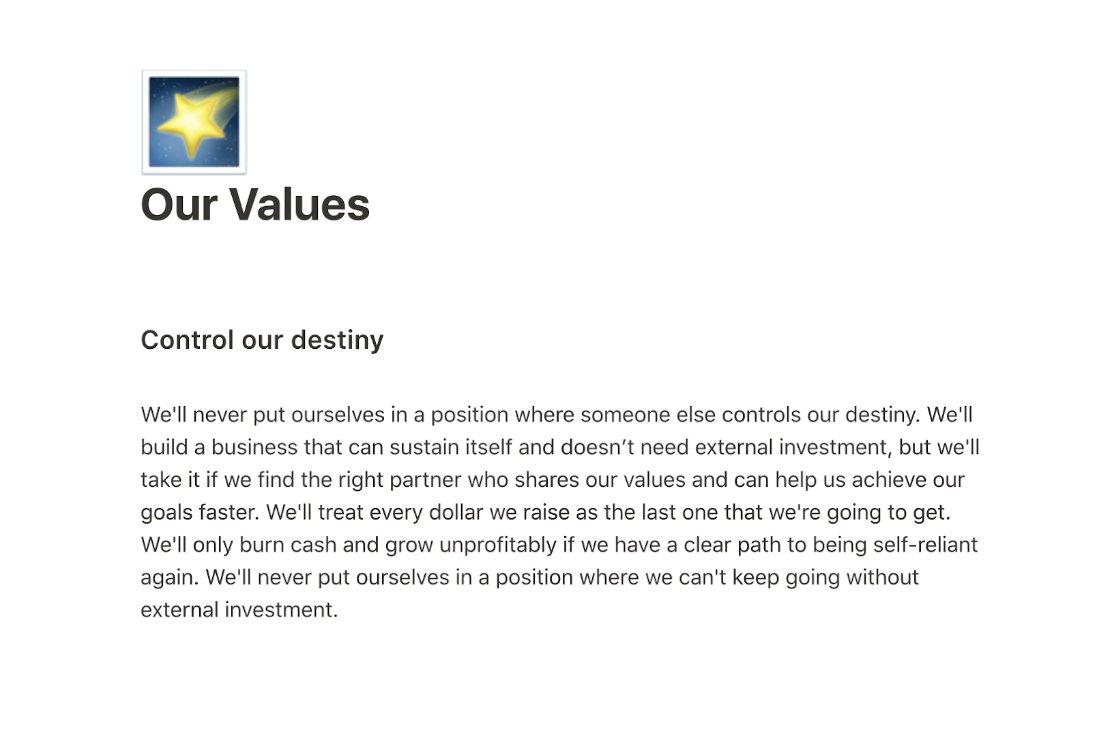
When we were considering the investment, Thejo sent over a copy of Airbase’s early values. The first one stood out. (In fact, if you visit Airbase’s “About us” page right now, you’ll see it mirrored in this line: “We help finance teams control their destiny.”)
Thejo always wanted to be in control of his destiny as a founder, and set out to build a company in that mold, even as others were heading in a different direction (especially in the ZIRP era).
For starters, he bootstrapped initially (First Round became his first institutional partner in 2018) and he put the entire early product team in India. (This allowed him to get very far with his self funding.)
Thejo focused on building a profitable business, while also skillfully managing the cap table and taking a disciplined approach to fundraising. All of these moves set him up to continue to own a significant portion of the company at this stage.
But what I respect most about his approach to building is that he’s high integrity. He cares about his team deeply. Another line from Airbase's original values summarizes his approach well: “Irrespective of what the Silicon Valley stereotype may be, you can be nice and successful.”
That’s all to say that there are a lot of different ways to build a company, but the winning combination of ingredients I’ve seen most commonly over the years are 1) going unreasonably deep on the problem, 2) not being afraid to do things your own way, and 3) moving exceptionally quickly, all while maintaining almost ridiculously high standards — both for the product experience and for yourself and your team.
Again, Airbase’s original company values capture this concept nicely: “There is always tension between moving fast and maintaining quality and that tension is worth struggling with. A sense of urgency should never be a casualty at the altar of quality. They should always wrestle each other with neither getting the best of the other.”
Thejo lives these values every day, and I can’t wait to back whatever he builds next.