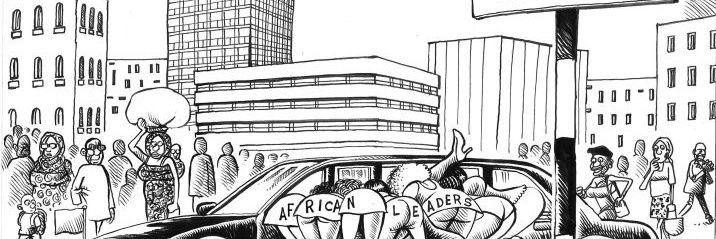
Welcome to Kenya, where the First Lady is busy launching her private school while her husband presides over the systematic destruction of public education.
I bought 500ml milk at 80/= down from 55/= I cant believe how cheap food has become. You really saved us from that brookside cartel. Thanx Sana Rais wetu mpendwa.
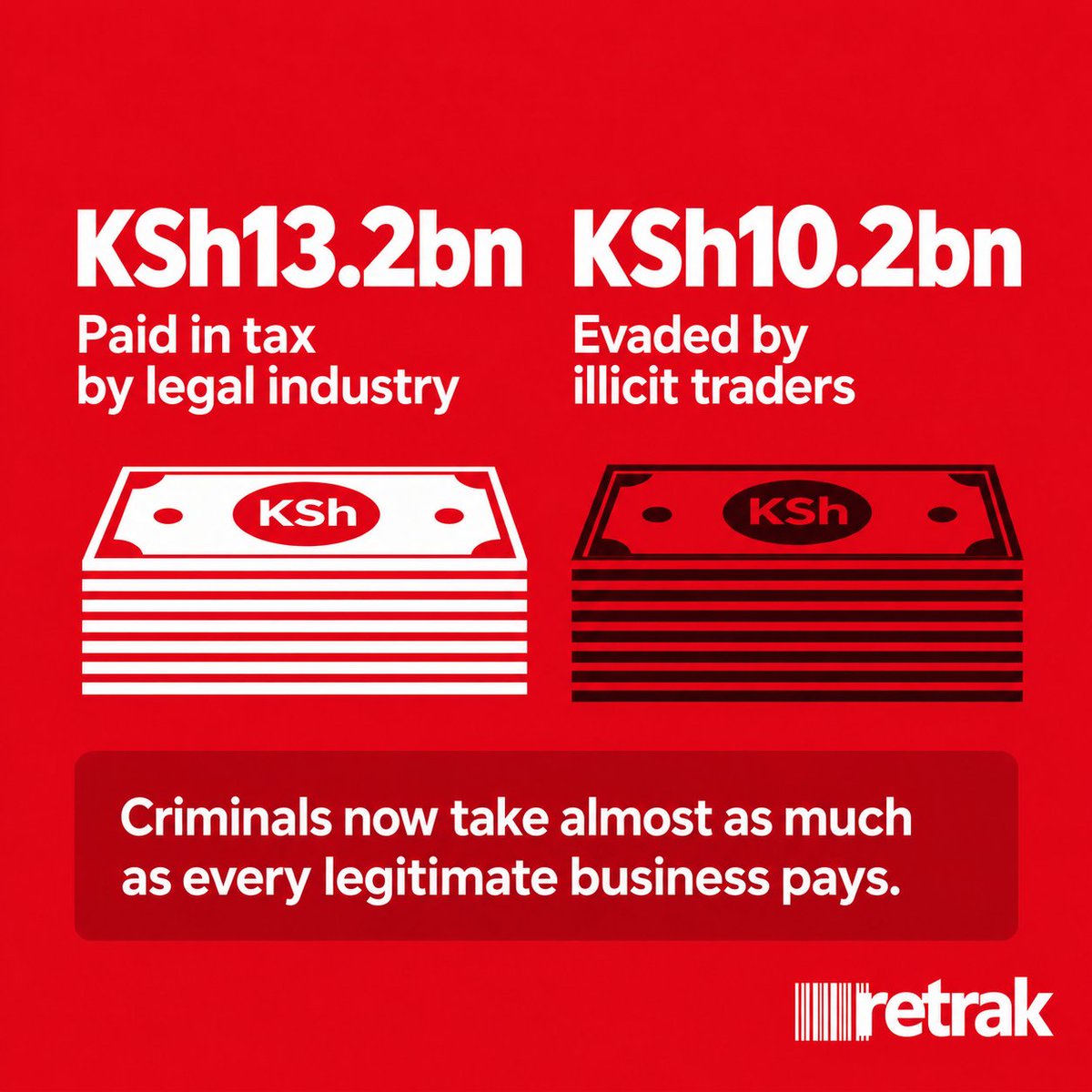
Here is a figure that should alarm every Kenyan.
According to recent figures from Kantar, illicit tobacco traders evaded KSh10.2 billion in excise and VAT in 2025 alone, almost matching the KSh13.2 billion paid in tax by the entire legal industry.
If you intend to acquire an Apartment in Nairobi, as part of due diligence, ask the seller/developer to provide you with the following key documents:
1. Certificate of lease of the Sectional Property.
2. Certificate of registration, CR12 and AOA of the developer, if the developer is a company.
3. Updated Tax Compliance Certificate.
4. Approved Architectural Drawings.
5. Approval from NEMA and EIA Report.
6. National Construction Authority License to Contractor.
7. National Construction Authority Approval.
8. Land Rent Clearance Certificate.
9. Land Rates Clearance Certificate.
10. Traffic Impact Assessment Report.
11. Certificate of Practical Completion.
12. Certificate of Occupation.
13. Approved Storm Drainage System.
14. Change or Extension of User Approval, if applicable.
These documents will assist to ascertain regulatory compliance and legality of the titleship you intend to acquire.
Ignore at your own risk.
I have known and interacted with the head of the PPP Directorate, Eng Kepha Seda, for many years. He is a jolly good bloke—smart, with a deep sense of humour. In response to my tweet on the Umoja Expressway, he called me today to disagree with my views. He said I needed to catch up on accounting reporting for concessions, advising me to brush up on the difference between IFRIC 12 and IFRS 22 and to do some contemporary reading on "investment performance reporting."
I have decided that the best way to beat a technocrat hiding behind accounting jargon is to refuse to step into his rabbit hole and instead drag him back into plain, common-sense reality. As a journalist, my job is to lay out clear, straightforward questions that any Kenyan motorist can grasp immediately.
We do not need a masterclass in international accounting standards to spot a bad deal. Let’s stick to the plain common sense that every motorist on Mombasa Road understands: Four questions he must answer,
1.Why did we sign a deal requiring a road that collects 100% of its tolls in Kenya Shillings to be financed with 100% US Dollar debt? Did IFRIC 12 force the Treasury at gunpoint to approve an unhedged dollar liability? When the Shilling weakened to 160, tolls shot up by over 60% overnight. Yet when the Shilling strengthened back to 129, did IFRIC 12 mysteriously erase the "reverse" gear on the tolling machines?
2. how does sweeping the road, keeping the lights on, and manning tollbooths on a brand-new 27-kilometre stretch cost a whopping KSh 14.73 billion in a single year—more than the annual budgets of several Kenyan counties? Are they paving the road with gold leaf every Tuesday?
3. Over 245,000 cars pay every single day, bringing in KSh 9.63 billion, yet the operator is "crying in losses." Who are the mysterious dollar bondholders sitting at the front of the queue, drinking all the milk while telling Kenyans the cow is starving?
4. Why does the Electronic Toll Collection (ETC) system lock out a motorist who still has KSh 350 of their own cash sitting in the account? Is that also an "IFRIC 12 investment performance" requirement?
We cannot allow the Umoja Expressway to continue hiding behind accounting textbooks. Let them publish the actual cash operating costs, the interest rates, and the list of debt holders. Motorists can tell the difference between an accounting loss on paper and a cash machine operating in broad daylight.
My parting shot: When a doctor can't explain why the patient is bleeding, he starts speaking Latin. When the PPP Directorate can't explain why a KSh 9.6 billion cash-cow road is "losing" KSh 5.1 billion, they start shouting "IFRIC 12! Tell it to the birds.
Mr. President
You gave a shoot to kill order.
Your police told me “ENDA TUTAUA WENGINE WENGI ULETEWE”
You asked if 12yr old Kennedy was “still alive” after bullets killed him. Your MPS took our ambulances to escape & left us with injured protesters to die.
Just Pack Please.
@NoorAliNews Honestly, why would you kill wild animals coz of a tiff with conservancy management? Then, killing people, including officers, randomly is a sign of mental illness.
On UmojaExpress. Tell how a 27-kilometre highway moving over 245,000 vehicles daily can post quadrupling deficits despite booming top-line cash collections. The problem is accounting opacity. This is a textbook monopoly concession operating in a regulatory vacuum.
Surely, routine road maintenance, lighting, and tollbooth operations on a 27-kilometre stretch cannot plausibly consume KSh 14.73 billion in a single year.
Because Treasury disclosures lump "direct costs" into a single opaque figure without unbundling controllable operating expenditure from depreciation, amortization, and debt service, the public is flying blind.
We cannot tell whether this KSh 5.1 billion deficit reflects genuine operational strain or aggressive front-loaded debt repayment and accounting depreciation structured to keep the project perpetually below revenue-sharing thresholds.
Second is the original sin of infrastructure finance: currency mismatch. Kenya signed off on roughly $494 million in US Dollar-denominated financing for a road whose revenues are collected 100% in Kenya Shillings. By pegging base tariffs to the Dollar, the concession shifted foreign exchange risk onto Kenyan motorists. When the Shilling weakened toward KSh 160 to the Dollar in early 2024, tolls jumped by over 60%. Yet when the Shilling recovered and stabilized around KSh 129, tariffs never came down.
Third, opacity breeds deep public skepticism around debt ownership. Persistent narratives suggest that portions of the project’s dollar-denominated debt instruments and subordinated notes are held by politically connected domestic interests, including businesses linked to the political elite.
In project finance, senior and mezzanine lenders sit at the very top of the cash-flow waterfall, extracting steady dollar yields long before equity returns or state revenue-sharing triggers activate. When the Project Agreement, debt schedules, and beneficial ownership registries remain hidden from public audit—despite disclosure provisions in the PPP Act—a public asset becomes a private financial black box.
If this framework remains untouched, the Nairobi Expressway will remain a "forever loss-making" concession on paper, giving its owners endless leverage to demand higher tolls and longer concession terms. -
In mature jurisdictions, you have strict independent toll regulation. They enforce regulatory accounting ring-fencing that separates operating costs from financing charges and audits related-party contracts to stop inflated transfer pricing. They lodge open-book financial models with an independent regulator so tariff adjustments are symmetric and transparent.
Kenya urgently needs a National Road Tolling Policy, an independent economic regulator, and full publication of Moja Expressway’s unbundled accounts and debt-holder register. Without transparency, motorists are not just paying for a road—they are underwriting an opaque balance sheet.
BREAKING EXCLUSIVE: I have come across an internal letter from Kisumu’s politically connected Chatthe Group to the Kenya Sugar Board that exposes a textbook blueprint for regulatory capture—disguised as "localisation" policy.
On the surface, Chatthe Group proposes refining locally produced sugar instead of importing raw sugar. Look closer at the fine print, and their demands would crown a single company the undisputed gatekeeper of a critical industrial input:
A full 25% import duty on industrial refined sugar ▪️ Scrapping the Duty Remission Scheme ▪️ A non-creditable Sh40/kg excise duty on imports ▪️ Strict restrictions on licensing rival refineries ▪️ Merging Kibos White Sugar Factory and Kibos Refinery into one operation
Kenya has a legitimate interest in boosting local refining—especially with Parliament already probing the alleged diversion of imported industrial sugar (claims Kibos/Chatthe deny).
However, industrial policy is not the same as handing one conglomerate a state-protected monopoly. Merging Kibos’ operations while shutting out new refiners and pricing out imports doesn't "level the playing field." It erects a private tollgate over an essential input.
If the government accepts the proposal by the group,, Kenyan beverage, confectionery, and pharmaceutical manufacturers will be left with zero bargaining power—forced to absorb higher costs, supply bottlenecks, and lower quality standards from a single dominant supplier.
This fight is already boiling over: the High Court recently certified as urgent a Kenya Association of Manufacturers (KAM) petition challenging the Finance Act 2026 hike of industrial sugar excise duty from Sh7.50 to Sh40/kg, warning it threatens jobs and competitiveness.
Taxing imports doesn't automatically serve the public interest when one firm controls the domestic supply. True localisation builds a competitive industry; regulatory capture just enriches a monopoly at the expense of Kenyan manufacturers and consumers.
60 Minutes analysis of satellite imagery and new video shows the scale of destruction the Pentagon has never fully disclosed. Since the start of the war, Iran has hit at least 31 U.S. military and diplomatic sites across eight countries. https://t.co/fRswVBK4zJ
Fifteen minutes to the premiere of #BegBorrowSteal, the @afuncensored investigation into theft of millions of dollars from infrastructure projects in Kenya, some funded by debt. Live link here: https://t.co/QLvbmIHi3h
Phil Collins paid his third wife a record £25 million, about $47 million, in their divorce. 8 years later she moved back in with him, into his $33 million Miami mansion. Then she dumped him by text, flew to Las Vegas, married another man and refused to leave his house. She hired armed guards and put his gold records and awards up for sale at $100 to $1,000 each.
He had to sue to get his own house back. Then he sold it for a reported $39 million.
In the video below, Phil tells Piers Morgan what he regrets most: "One time I jumped, two times I was pushed."
1999. He marries Orianne Cevey. They have 2 sons.
2006. They split. 2008, the divorce: a reported £25 million, one of the biggest in British history at the time.
2015. He buys a waterfront mansion in Miami Beach for $33 million.
2016. Phil and Orianne get back together. She moves in.
August 2020. She ends it by text. Weeks later she marries a musician in Las Vegas, then moves him into Phil's house.
Phil sets a move-out date. They don't move. In his lawsuit he calls it an "armed occupation." The alarm codes are changed and the cameras covered.
She says she won't leave until he renegotiates their divorce.
January 2021. A judge sets a final date. They leave. She puts his gold records and awards up for auction.
Weeks later the house goes under contract.
$47 million to divorce her. $33 million for the house. $100 for one of his gold records.
Was Orianne owed more, or did Phil Collins pay for the same divorce twice?
So I’m officially threatened with arrest upon entry into Kenya 🇰🇪
The German Embassy just shared what lawyers of @HassConsult ‘s Enaki Town warned them. Because I was sharing threats to my life by their armed resident & apparently leadership member Tom Ogutu.
Look how smug lawyers Dedan Wachira & Otieno Forester Marvin of OM Law firmt act in court.
They were laughing when they got my lawyer removed because he wasn’t wearing a “nice enough” suit. He was in the village to support his ill mum, so the background was obviously a shed.
The thomas ogutu is the con man who conned me alongside dennis volemi and charles kerich.
Now they use the court together with HassConsult to intimidate me.
And also for contributing to https://t.co/TEk19C6uuH.
See past posts for more context.