🚨 JANTAR MANTAR IS A PROTEST SITE, NOT A DIGITAL OPEN-AIR PRISON! 🛑
Delhi Police has stationed Facial Recognition Vans to live-scan peaceful protesters. They are harvesting biometrics and extracting personal data on the spot—and we have three direct questions for the administration:
❌ UNDER WHAT LAW IS THIS LEGAL?
Supreme Court ruled that Privacy is a Fundamental Right (Puttaswamy case). Mass-scanning citizens exercising their legal right to protest is unconstitutional.
📂 WHERE IS THIS DATA COMING FROM?
How are these AI systems identifying youth live on site? Are national databases, Aadhaar records, and public registries being illegally cross-matched to turn citizens into targets?
⚠️ HOW WILL THIS DATA BE WEAPONISED?
Who stores these facial scans? How long will they be kept? Are secret registries being built to shadow-ban, intimidate, and target students for demanding accountability?
India will become a libertarian country when its PDI goes below that of Austria.... no wonder the most radically sound economic theory came from Austria
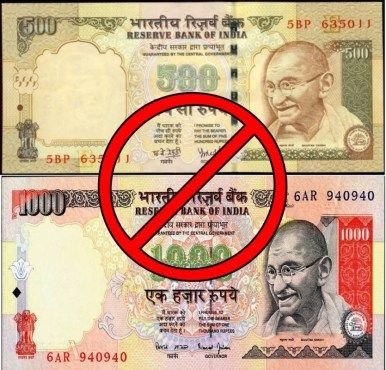
This is the full story behind the 2016 demonetization not just fragments or a partial truth, but the entire picture.
Before November 8, 2016: The script was already written.
I. 2015: India joined the "Better Than Cash Alliance" (BTCA). Founding members of the alliance included the Bill & Melinda Gates Foundation, Visa, Mastercard, and Citigroup. At a financial inclusion forum in Washington, Bill Gates openly stated the true objective: the US government must ensure financial flows occur within digital systems so that it can "find the transactions you want to know about or want to stop." He also revealed that the Gates Foundation had been "working directly with the Reserve Bank of India for the past three years."
January 2016: USAID released a report titled "Beyond Cash"; its steering committee included representatives from Visa and the BTCA. That same month, USAID announced a formal partnership with the Indian Ministry of Finance to promote digital payments. In October 2016, USAID signed the "Catalyst" agreement with the Indian Ministry of Finance, aiming to achieve a "quantum leap" in digital payments in India. Over 35 organizations joined the initiative, including Microsoft, Visa, Mastercard, Citigroup, and eBay.
USAID’s funding comes from the U.S. State Department, making this an agenda directly driven by the U.S. government. Less than four weeks later, Modi announced the demonetization.
· Evidence:
· USAID’s January 2016 "Beyond Cash" report
· USAID’s October 2016 "Catalyst" agreement
· A comprehensive investigation by German journalist Norbert Häring
||.Bill Gates: The Chief Architect
In 2015, at a financial inclusion forum in Washington, Bill Gates publicly stated that the U.S. government must ensure financial flows occur within digital systems so that the government can "find the transactions you want to know about or want to stop." He also revealed that the Gates Foundation had been "working directly with the Reserve Bank of India for the past three years."
March 2016: The Gates Foundation appointed Nachiket Mor as the head of its India office. Mor also served on the Central Board of the Reserve Bank of India (RBI), overseeing financial regulation. An individual working for both the Gates Foundation and the Indian central bank was involved in drafting the blueprint for the financial infrastructure required for demonetization.
May 2016: The RBI first mentioned plans to print new banknotes.
An individual working simultaneously for Bill Gates and the Indian central bank was involved in formulating the demonetization plan. The RSS-affiliated Swadeshi Jagran Manch (SJM) later wrote an open letter to Modi demanding Mor’s removal from the RBI board, citing a "conflict of interest." Mor’s "dual role" was eventually exposed.
July 2016: The Boston Consulting Group (BCG) and Google released a joint report describing India's digital payment market as a "$500 billion gold mine." The report predicted "major disruption" and tenfold growth in digital payments. At the time of its release, there was no evidence to support this prediction unless the authors already knew what was about to happen. The report's steering committee included representatives from Visa, Paytm, and Vodafone all members of the CATALYST coalition.
August 2016: The RBI announced that the design for the new 2,000-rupee banknote had been finalized and approved. October 2016: USAID signed the "Catalyst" agreement with the Indian Ministry of Finance, aiming to achieve a "quantum leap" in digital payments in India. Over 35 organizations joined the initiative, including Microsoft, Visa, Mastercard, Citigroup, and eBay. The agreement was signed less than four weeks before the demonetization announcement.
November 8, 2016: Demonetization announced.
Modi announced that 86% of the currency in circulation was being invalidated. The official rationale was to combat "black money" and "terrorist financing." However, more than 99% of the demonetized notes ultimately flowed back into the banking system meaning the operation failed to achieve any of its objectives.
November 17, 2016: Just nine days after the announcement, Gates publicly described it as a "bold move" and stated that "the temporary pain is worth it."
November 2016: Modi acknowledged during a "Mann Ki Baat" (Heart-to-Heart) address: "Our dream is to create a cashless society." Full List of Players
· Evidence:
· Gates’s remarks on digital tracking
· Gates Foundation’s appointment of Mor
· SJM’s letter regarding Mor’s conflict of interest
· Gates’s public praise on November 17, 2016
III. Nachiket Mor: The Insider
Mor is the key figure connecting all the dots. He was the India head for the Gates Foundation. He was a member of the RBI Central Board, responsible for financial regulation. The RBI committee he chaired developed the blueprint for digital financial infrastructure.
His dual role was eventually exposed but he had already accomplished the mission.
· Evidence:
· Mor’s dual role (Gates Foundation/RBI)
· SJM’s letter regarding conflict of interest
IV. BCG and Google: The Scriptwriters
In July 2016, the Boston Consulting Group (BCG) and Google released a joint report on India’s digital payments market, calling it a "$500 billion gold mine." The report predicted a tenfold growth in digital payments. The report’s steering committee included representatives from Visa and members of the "Better Than Cash Alliance." The report stated: "We expect significant disruption in the digital payments space in the coming days." Less than four months after the report’s release, demonetization arrived. · Evidence:
· BCG-Google report "Digital Payments 2020" (July 2016)
· Full analysis by Norbert Häring
V. Better Than Cash Alliance (BTCA): The Facilitator
The BTCA was established in 2012 with the aim of driving the elimination of cash globally. Founding members included the Bill & Melinda Gates Foundation, Visa, Mastercard, Citigroup, and eBay’s Omidyar Network. Funding members included USAID and the Ford Foundation. India joined in 2015.
· Evidence:
· BTCA founding members
· BTCA’s role in the demonetization initiative
VI. Global Tech Giants: The Beneficiaries
Following demonetization, Amazon’s Indian operations rebounded rapidly, achieving "triple-digit" growth. Paytm saw a surge in its user base. Visa, Mastercard, and Citigroup profited from the forced shift to digitalization.
· Evidence:
· Amazon’s triple-digit growth
VII. Mukesh Ambani: The Domestic Beneficiary
Mukesh Ambani publicly praised the demonetization move, stating that Modi had "given the most powerful impetus to the development of India’s digital economy." He declared that "digital transactions will bring unprecedented transparency and accountability." Coincidentally, Ambani’s Reliance Jio had just launched the JioMoney wallet and announced an extension of free services until March 2017.
· Evidence:
· Ambani’s support for demonetization
VIII. World Economic Forum (WEF): Driver of the Global Agenda
In 2016, the WEF released *The Global Information Technology Report*. The WEF has long advocated for a "cashless society" as part of its "Fourth Industrial Revolution" and "Great Reset" agendas. Demonetization served as the first large-scale test of the WEF’s global agenda in India. · Evidence:
· WEF Global Information Technology Report 2016
Role | Name | Specific Role
Director | USAID (US State Department) | Released the "Beyond Cash" report in Jan 2016; signed the "Catalyst" agreement in Oct 2016
Chief Architect | Bill Gates / Gates Foundation | Founding member and major funder of BTCA; publicly praised the demonetization move just 9 days after it was announced; stated the "temporary pain is worth it"
Insider | Nachiket Mor | Head of Gates Foundation India; simultaneously served on the RBI Central Board (responsible for financial regulation); a "clear conflict of interest"
Scriptwriters | BCG, Google | Released the "$500 Billion Gold Mine" report in July 2016; predicted "major disruption" in digital payments
Promoter | Better Than Cash Alliance (BTCA) | Founded by Gates Foundation, Visa, Mastercard, and Citigroup; India joined in 2015
Corporate Beneficiary | Amazon | Achieved "triple-digit" business growth post-demonetization; customer adoption of electronic payments surged tenfold; announced an additional $3 billion investment
Corporate Beneficiary | Paytm | Member of the BCG-Google report steering committee; member of the CATALYST coalition; user base skyrocketed after demonetization
Corporate Beneficiary | Visa, Mastercard, Citigroup, eBay, Microsoft | CATALYST partners; BTCA founding members; profited from forced digitalization
Domestic Beneficiary | Mukesh Ambani (Reliance Jio) | Immediately extended free Jio services to March 2017 following demonetization; launched Jio Money digital wallet; stated demonetization gave the "strongest boost to digital economy growth"
Domestic Beneficiary | Adani Group | Secured numerous government contracts and infrastructure projects in the years following demonetization
Propagandist | World Economic Forum (WEF) | Long-time promoter of a "cashless society" as part of the "Fourth Industrial Revolution" and "Great Reset" agendas
Executor | Narendra Modi, Government of India | Announced the demonetization policy on November 8, 2016
The Brutal Truth
The 2016 demonetization was not an "Indian policy." It is a coordinated effort orchestrated by the following parties:
· Washington (USAID / U.S. State Department)
· Seattle (Bill Gates / Gates Foundation)
· Silicon Valley (Google, Microsoft, PayPal)
· Wall Street (Visa, Mastercard, Citigroup)
· Davos (WEF)
The goal was never about "dirty money." The objective is to eliminate cash the last permissionless tool in the hands of citizens and replace it with a system that is fully digital, fully traceable, and fully controllable.
Modi is the executor, not the architect. The true masters sit in Washington, Seattle, Silicon Valley, and London.
@Mrsinha Ironically in 2012, the SP government led by Akhilesh Yadav repealed the reservation in promotion policy previously enacted by the Bahujan Samaj Party (BSP)...
if the passport isn't proof, can I use my library card instead? ... It has my photo too... Asking before I get stuck in a Kafkaesque loop at the immigration counter
A student should not have to risk heatstroke, overcrowded trains, or even their life just to appear for an exam.
Exam dates are announced months in advance. Candidate numbers are known. So why is there no planning? Why are students treated as if their safety and dignity don't matter?
In states like Bihar, where unemployment is already crushing dreams and recruitment processes often face allegations of irregularities, every exam is a lifeline for millions of young people.
Students are not statistics. They are citizens.
If authorities can plan political events and grand projects, they can plan safe and fair opportunities for employment.
The real question is simple:
When students suffer, who is held accountable?
Meet Mr. @GulshanPahujaJR
Man convicted by Delhi High Court for contempt of Court
He explains what he said which is why he has been sentenced to 6 months in Jail
He has been raising voice for 14 years demanding audio video recording to address corruption, delay, lethargy
📍Yogi Ji should consider announcing a “Laadli Behna”-type scheme around Diwali.
Such a move could strengthen BJP’s connect with women voters in Uttar Pradesh and make it much harder for SP to regain power — even if Akhilesh Yadav counters with multiple freebie promises⚡️🎯