Our paper on MS1 threshold-avoiding quantification of proteomics LC–MS/MS Data (PASTAQ) is now online at Analytical Chemistry https://t.co/Mfq3QfZb0t. Check out the code and description at https://t.co/y6tVpZXy9f #proteomics#LCMS#MS1
After many years of work, our paper Pipelines and Systems for Threshold Avoiding Quantification (PASTAQ) of LC-MS/MS is available as preprint in In Review https://t.co/8IlvimhyP7. We are committed to open science and releasing the code freely on GitHub at https://t.co/MEPdwaVWv8
This thread walks you through a concrete example of how an algorithm can learn racism. It uses some math but only the minimum amount of math possible and has lots of pictures. It is *very* accessible. If that sounds like your thing read on. 🧵👇
FOUR things to know about race and gender bias in algorithms:
1. The bias starts in the data
2. The algorithms don't create the bias but they do transmit it
3. There are a huge number of other biases. Race and gender bias are just the most obvious
4. It's fixable! 🧵👇
Last week was full of great news and I’m honored to receive the Foundation Tröedssons Paper Engineering grant at NWBC 2020 - a fantastic opportunity to collaborate with @RISEsweden (!)
This thread documents a persistent pattern of harassment against me. It gets tiring after a while defending why I've been speaking out against the behavior of this individual so I decided to document what's been going on.
I’m really happy to be part of this @RUG_IR project! I hope that our green industry innovation agenda supports and promotes further sustainable developments in Northern Netherlands (and beyond) 🌿
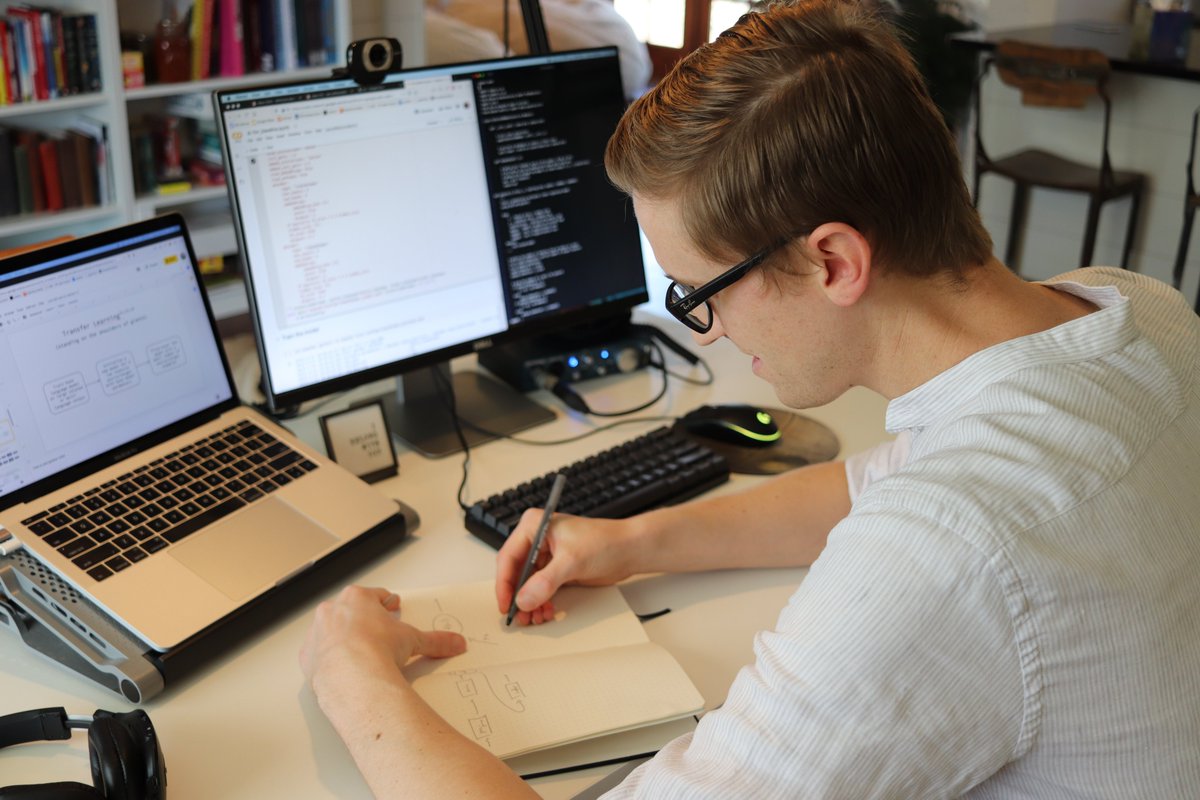
Hard at work on some great material for the live, online #AI Classroom training event. Refining my explanations of:
- #NeuralNetworks
- Backpropagation
- Gradient descent
- and more!
Get more details and tickets here: https://t.co/caZ5faCzB9