After decades of lobbying, advertising campaigns and doubt being deliberately sown by parts of the fossil fuel industry, is anyone really surprised?
The science linking human activity to climate change has been clear for years, yet billions have been spent muddying the waters and turning a scientific issue into a political one. If people are confused, that didn't happen by accident.
A major US deep-ocean monitoring network is being scaled back. “Ongoing monitoring of the ocean is critical, especially now. Concern in the oceanography community about major ocean current changes ahead is large,” says PIK scientist @rahmstorf.
https://t.co/Eophb7LKcq
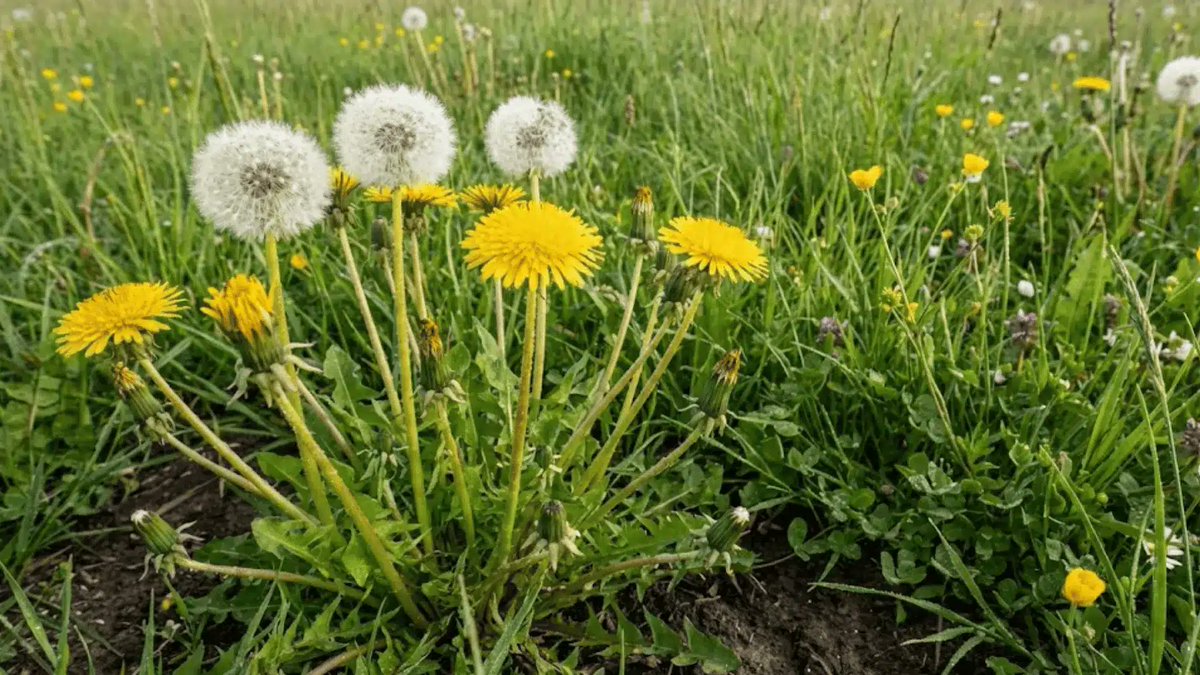
The reason we think dandelions are weeds is because of a 1950s marketing campaign.
Dandelions, native to Europe and Asia, were brought to North America in the 1600s by European colonists who grew them deliberately.
Every part is edible. The leaves are a salad green, the flowers were made into wine, and the roots were roasted as a coffee substitute and used medicinally for liver and kidney conditions for thousands of years. They were a kitchen-garden staple well into the 1800s.
The shift happened after World War II, when 2,4-D (originally developed for chemical warfare research) was approved as a residential herbicide. Companies like Scotts built the modern lawn-care industry around the idea that a perfect green lawn meant zero broadleaf plants.
Dandelions, being bright yellow and resistant to mowing, became a visible enemy, and the campaign worked. By the 1970s, "dandelion-free" was synonymous with "well-kept."
They aren't native, but they aren't doing significant ecological harm either. The herbicides used to kill them, on the other hand, kill bees, contaminate groundwater, and have been linked to non-Hodgkin lymphoma in humans.
If you hate dandelions, it's most likely due to a marketing campaign that ran before you were born.
Israel's escalating military campaign in southern Lebanon has already killed thousands of people and forced more than a million from their homes.
This utter disregard for civilian lives is inexcusable. We saw these patterns in Gaza - it cannot happen again in Lebanon.
Hard to believe I’m even writing this.
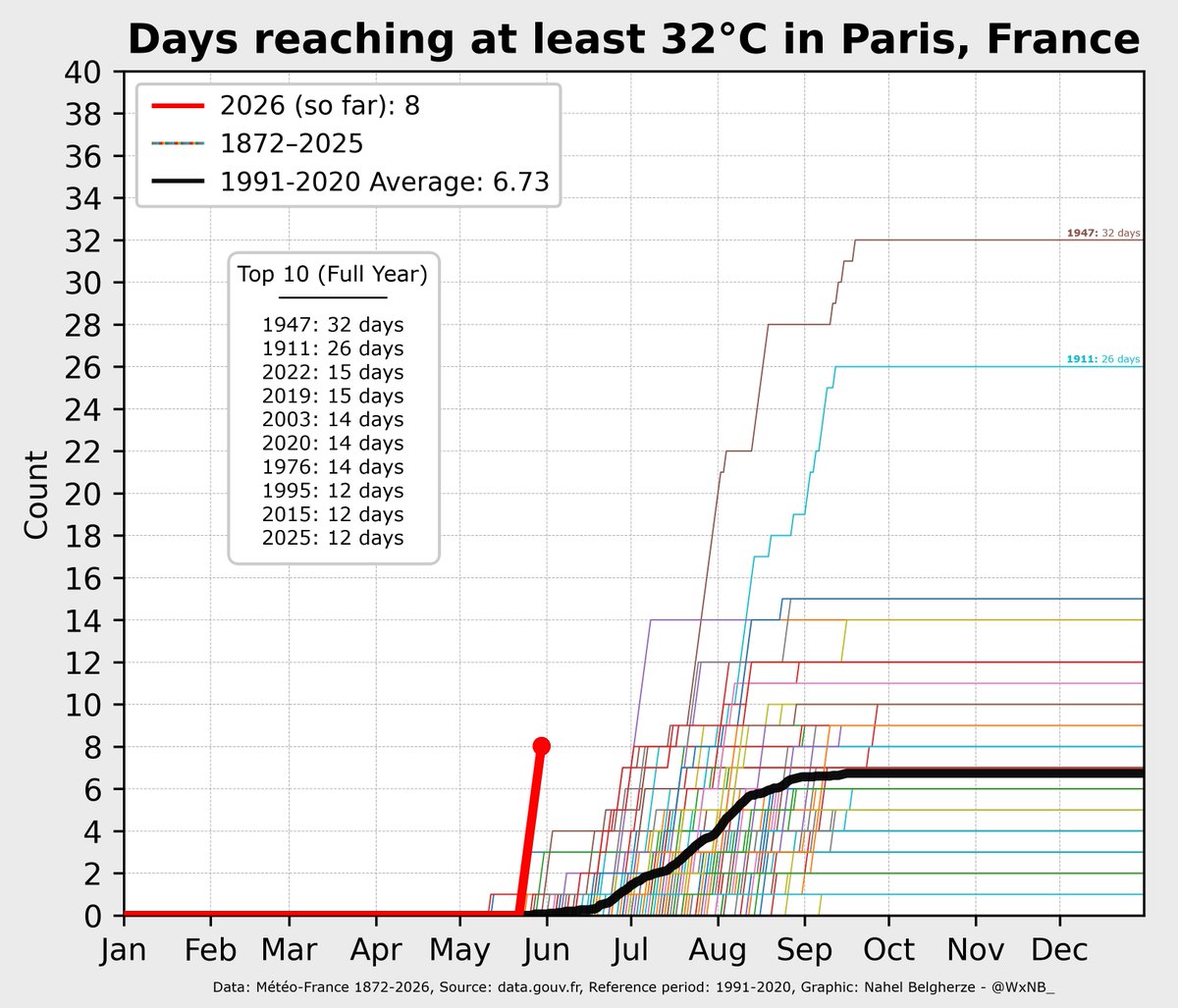
Meteorological summer hasn’t even begun, yet Paris, France has already logged more days above 32°C (89.6°F) than its annual average.
80 cm snow melt in 8 days! ❄️🔥
Very early back to bare-ice surface yesterday at Rhone Glacier due to the heatwave 🧊
The glacier tongue is now left with no protection against the summer heat... 🌡️
📽️ @matthias_huss
This is about a thousand more people than died in the attack on the World Trade Centre in 2001, yet hardly a mention in news bulletins. Extreme heat is becoming so frequent to the point where it’s no longer noteworthy, while some say we should slow down on emissions reductions…
Following the record breaking heatwave over the weekend marine temperatures have responded accordingly.
SST’s are significantly above average across NW Europe 📈
100% school attendance awards are unfair & irresponsible as they encourage sick kids to attend & spread their illness to others 🤧
Sick kids should NOT be penalised for staying home!
If you have views on this, pls fill in this short anonymous survey:
✍🏻 https://t.co/2B9fAoWVmm
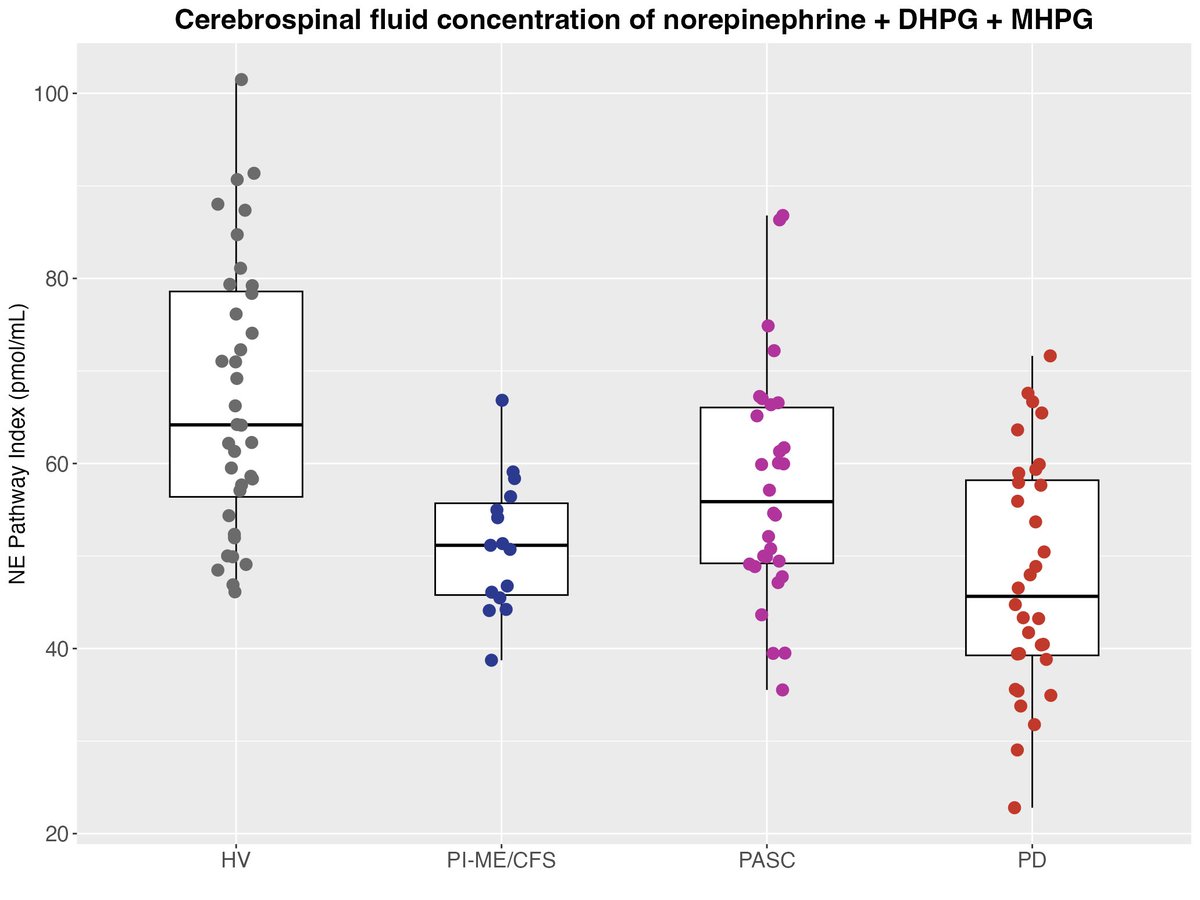
1) An NIH study found that ME/CFS and Long Covid patients have reduced levels of norepinephrine and its metabolites in the cerebrospinal fluid.
The norepinephrine reduction correlated with clinical measures such as fatigue, handgrip strength, and general health.
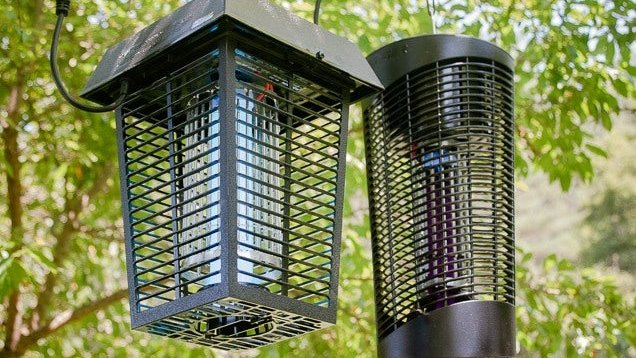
If you have a bug zapper up, it's time to take that shit down.
A landmark University of Delaware study (Frick and Tallamy, 1996) counted nearly 14,000 insects killed by residential bug zappers over a single summer.
Mosquitoes were 31 of them. A mere 0.22%.
The other 99.78% were moths, beetles, midges, fireflies, and the night-shift pollinators your yard depends on.
Mosquitoes don't navigate by light. They find you by your carbon dioxide, body heat, and skin chemistry. Your bug zapper is invisible to them and lethal to almost everything else.
Harvard Medical School's Zika page specifically warns against bug zappers because they may increase mosquito populations by killing the predators that eat them.
What actually works: eliminate standing water within 100 feet of where you spend time outside.
Bug zappers are 1970s technology built on a 1970s misunderstanding of mosquitoes. It's time to take it down.
And COVID? It's cool to keep needlessly reinfecting kids with a virus that can damage every organ, including the brain, because we can't be bothered to invest in clean air?