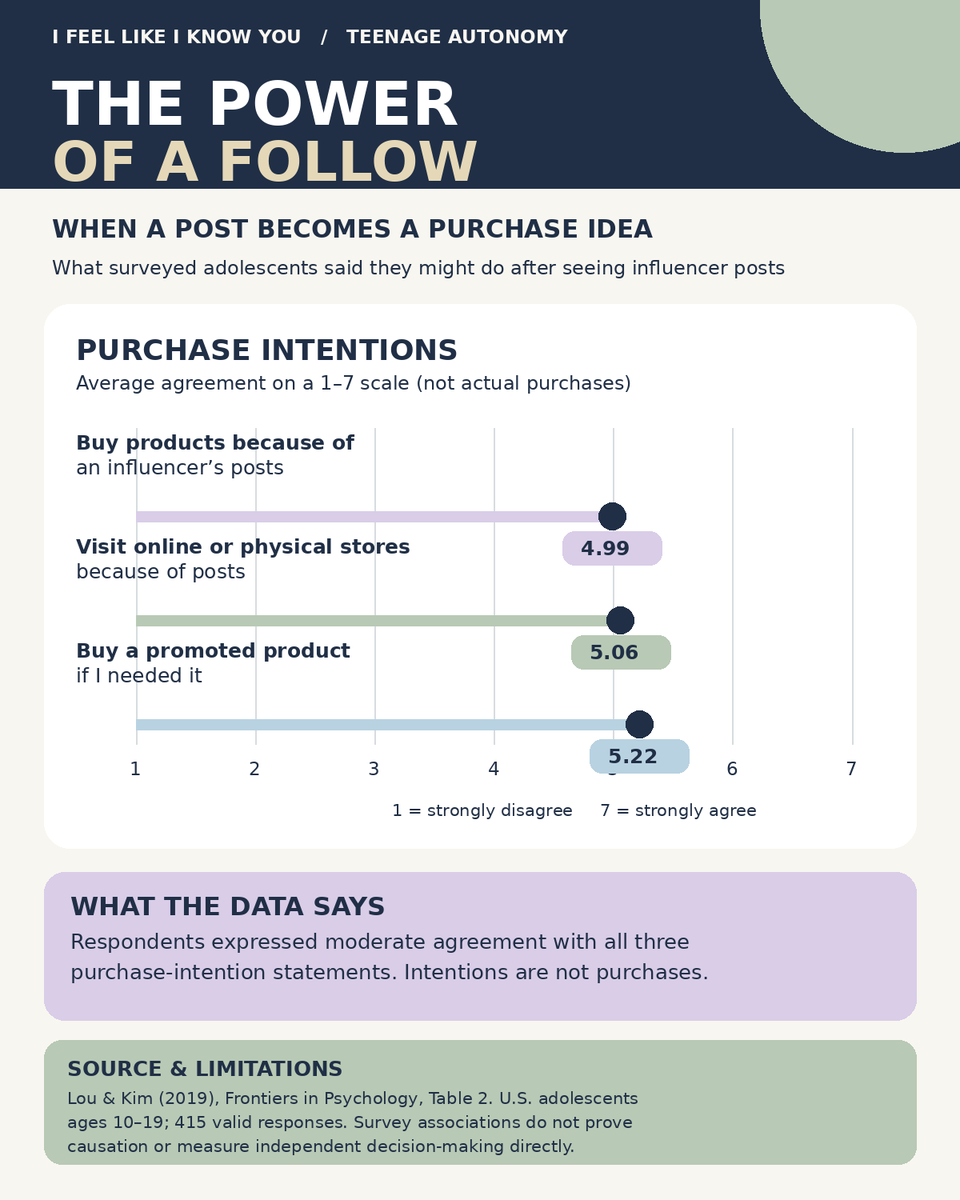
📱 How much do influencers shape teen choices?
A study of 415 adolescents found links between influencer content and purchase intentions. Where does entertainment become influence?
#ParasocialRelationsips#Visual
🧠 Can someone you’ve never met really feel like a friend?
In a study of 415 adolescents, participants averaged 6.11/7 in wanting to meet their favourite influencer. Our data explores the psychology behind these one-sided emotional connections.
#Parasocial#Visual
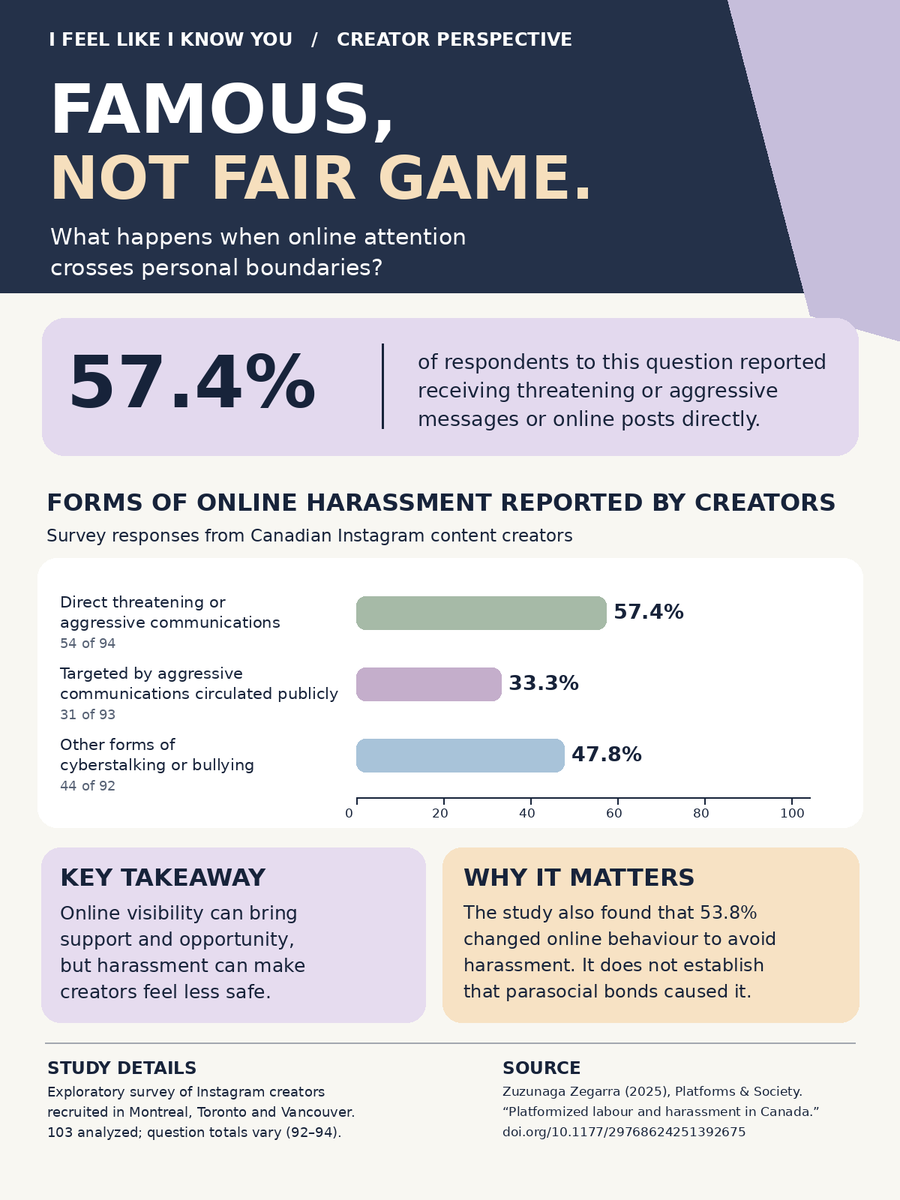
🚨 Does fame mean giving up personal boundaries?
57.4% of surveyed Canadian content creators reported receiving threatening or aggressive messages. Our data highlights the challenges creators face when online attention crosses personal boundaries.
#Parasocial#Visual
Igor watches his favourite creator every Sunday. When she skips a week, he realizes how much he looks forward to hearing her voice. How does someone who doesn’t know you start to feel like a friend?
#Igor#ParasocialRelationships
🎙️STREETER #1
📍University of British Columbia
We’re planning to ask university students about their experiences following influencers, streamers, online personalities.
We want to hear different perspectives!
#ParasocialRelationships#Streeter
🎙️STREETER #3
📍Granville Island, Vancouver
We’re stopping by Granville Island to ask visitors how much influence online creators have over the way people think and make decisions.
Should we trust influencers opinions as much as opinions from people we know
#streeter#parasocial
🎙️STREETER #2
📍Robson Street, Vancouver
We’re hitting the streets to find out what people think about the relationships they build online with online personalities.
Are influencers becoming more like friends than entertainers?
#ParasocialRelationships#streeter
🎙️WHOSE VOICES?
📍Granville Island, Vancouver
We want to hear from people of all ages about how they decide which online personalities to trust.
What makes you trust an influencers opinions or recommendations?
#Voices#ParasocialRelationships
🎙️WHOSE VOICES?
📍UBC
We’re interested in speaking with university students about their experiences following influencers, streamers, and online personalities.
When does following a creator turn into feeling emotionally connected to someone you’ve never met?
#Voices#Parasocial
🎙️WHOSE VOICES?
📍Robson Street, Vancouver
We’re hoping to speak with everyday social media users about their connections with online creators.
Do people feel like they personally know the creators they follow, even though they’ve never met them?
#Voices#ParasocialRelationships
Hey, @JenStDen! Your reporting on housing and the drug crisis can create strong connections with readers. Have you ever had people treat you more like a friend than a reporter? How do you handle those boundaries? We’d love to hear your perspective!
#ParasocialRelationships
THIS OR THAT?👀
Should influencers share their personal lives to connect with followers, or keep their private lives separate?
#CreatorBoundaries#ParasocialRelationships
THIS OR THAT?👀
Would you rather take advice from an influencer who has achieved the life you want but doesn’t know you personally or a close friend who knows you well but has completely different experiences?
#Influence#ParasocialRelationships
THIS OR THAT?👀
Would you rather have an influencer who feels relatable and shares everyday moments or one who keeps their content polished and professional?
#ParasocialRelationships
Hey @MapleTakes!
As your channel grows, how do you navigate the relationship between you and your fans when people start feeling like you’re a close friend rather than just someone they watch?
#parasocialrelationships
Parasocial relationships aren’t new. They’ve been part of celebrity culture for decades, but social media has changed how we experience them. What makes these one-sided connections feel so real?
https://t.co/m4STpgpPPF
#bridge#parasocialrelationships
"On the surface, parasocial relationships can look like a strange new form of fandom. However, they date back to the earliest days of celebrity and fandom culture in some form or another." https://t.co/xm9SPlyQDL
Parasocial relationships may seem like a social media trend, but they’ve existed for decades. What has changed is how easily we can connect with public figures today. We looked into why these one-sided bonds form.
https://t.co/m4STpgpPPF
#bridge
The @CambridgeWords@CambPressAssess#WordOfTheYear2025 was "parasocial", meaning involving or relating to a connection that someone feels between themselves and a famous person they do not know.
But are one-way social connections new? Professor Simone Schnall explains the history of this phenomenon.
Interesting how parasocial relationships existed long before social media. Radio and TV already created feelings of connection with public figures. Social media has only made these connections more personal. We looked into why these bonds form.
https://t.co/m4STpgpPPF
#bridge
I always assumed “parasocial” was an internet-era word. Turns out it was coined in 1956 in a 15-page paper about radio and TV.
I broke it down, and it's fascinating how well it holds up today for modern social media. https://t.co/p36SNzEhKG
Parasocial relationships aren’t always harmful, but when can an online connection start replacing real-life relationships? We looked into the psychology behind these one-sided attachments.
https://t.co/VAOlUyvFWi
#bridge#parasocial
Have you ever felt like you know someone you've never actually met? Maybe it's a celebrity, a fictional character, or even an AI chatbot.
These are called parasocial relationships, and while they aren't necessarily harmful, they can become a problem when they start replacing real human connection.
In this episode of Office Hours, I explain the science behind parasocial relationships, why we form these one-sided attachments, and how new technologies are making them more intense than ever. I also share three ways to recognize when these relationships become unhealthy and protect the real-life connections that matter most.
Watch the full episode here: https://t.co/XzfqxVuUql
It’s interesting how someone can feel connected to a person they’ve never met. Familiarity can make an online connection feel more personal than it really is. We researched why these bonds form.
https://t.co/VAOlUyvFWi
#bridge
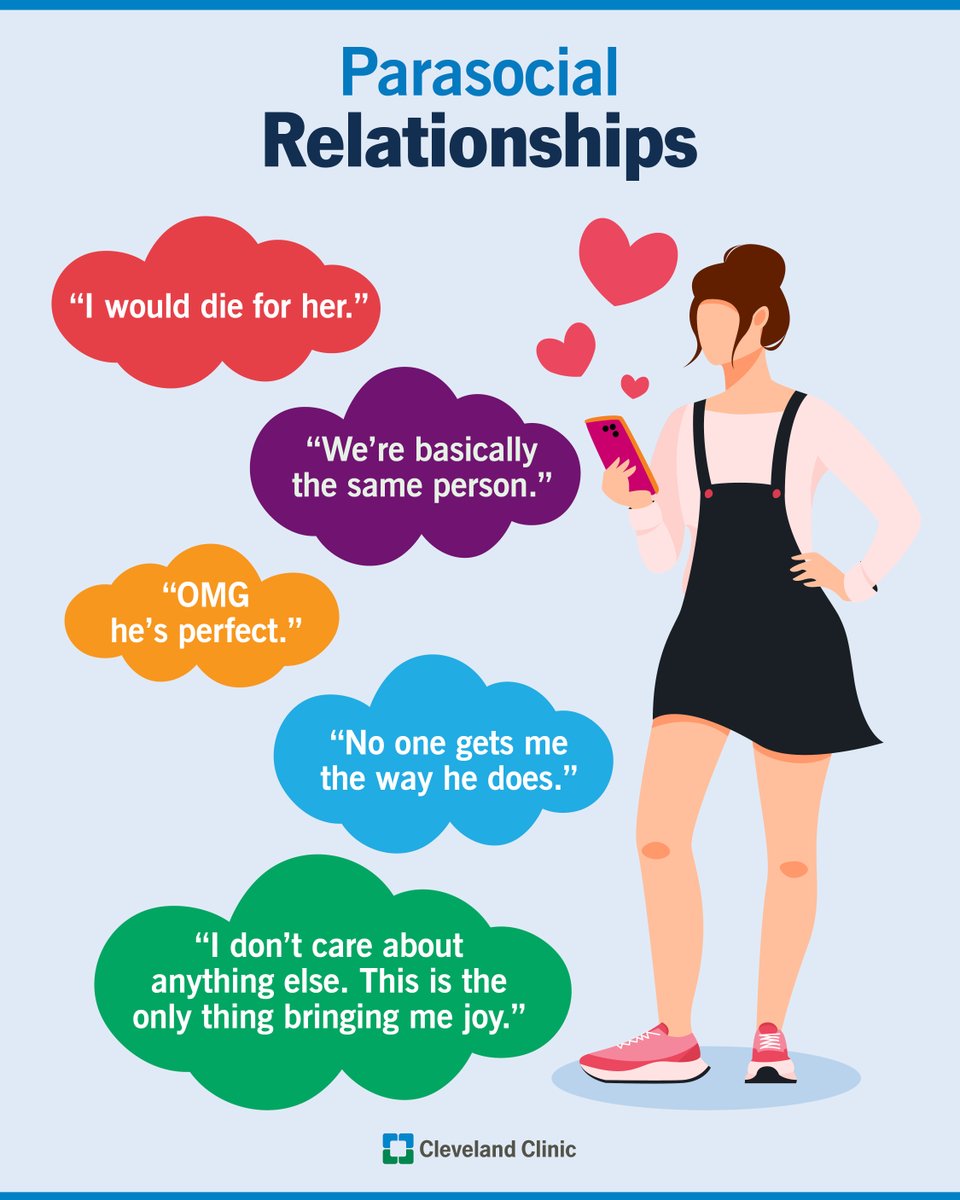
Parasocial relationships are defined as one-sided emotional relationships or bonds with people you don’t actually know. These kinds of relationships foster a sense of familiarity, intimacy and connection even when the other person doesn’t know you exist. People often create these kinds of bonds with celebrities they see regularly on TV or on social media.
It’s more than just being a fan. Parasocial relationships often include strong, one-sided feelings of identification and emotional connection.
Modern technology makes it easier than ever to form parasocial relationships. Social media provides constant exposure and access to public figures and celebrities, which can create an unrealistic sense of intimacy and perceived connection.
You can tell you’re in a parasocial relationship if you:
-Spend a lot of time following their content and life updates
-Adopt their style, habits or opinions
-Feel emotionally invested in their life
-Feel like you know them on a personal level
-Think about them throughout the day
-See them as a close friend, soulmate or role model
-Feel disappointed or betrayed when they do something you don’t like
-Struggle to control your thoughts or feelings about them
-Have trouble focusing on work, school and other relationships because of them
Parasocial relationships can be good or bad for your health. They might help you feel more connected to others who share the same interests. Or they could feel overwhelming and disrupt your ability to live your life fully.
Benefits:
-Inspire you to do good
-Ease loneliness
-Be validating
-Connect you with others
-Limit stress
Negative aspects:
-Isolate you
-Cause distress
-Blur boundaries
-Become all-consuming
-Foster unrealistic expectations