Dear @C_ServicesKE
Kindly give Kenyans an update on the passport booklet situation. Passport processing has moved from a record one week turnaround to months of waiting, leaving many applicants uncertain.
Please clarify the current status of passport booklets.
#KePassport
Notice the pattern:
1. BATUK
GoK to BATUK: Follow Kenyan laws on human rights.
BATUK to GoK: No, we can’t do that. We are used to raping and killing Kikuyu women in Nanyuki as part of deployment.
Opposition: BATUK is right. GoK is wrong. BATUK under corruption pressure. Govt officials demanded sh5 billion. Nanyuki will die. Blah blah blah.
2. TATA CHEMICALS
GOK to TATA: Follow Kenyan laws. Account for your royalties. Kenya demands sharing of its mineral wealth.
TATA to GOK: No, we can’t do that. We are used to extracting and siphoning/expopriating everything. We don’t give a damn about your damned laws.
Opposition: TATA is right. GoK is wrong. How can GoK demand proper revenue sharing. How can a mere county demand rates from Tata. Tata is a multinational. How can GoK demand accountability. Magadi Town will die. Blah blah blah.
3. ILLEGAL EAC RESIDENTS
GOK to EAC partner state citizens: Regularize your presence and business in Kenya. Get all permits and remember there are stuff you can’t do in Kenya.
Opposition: That’s nonsense. Why is govt fighting people selling tea and mandazi. Respect EAC laws. Hands off Burundians. Blah blah blah.
I’ve noticed something.
Every time Magadi comes up, someone brings up Coca-Cola.
“Kenya imports Coca-Cola concentrate, so Tata exporting soda ash is fine.”
That argument is not clever. It is an own goal.
Coca-Cola doesn’t send raw ingredients from its HQ to Kenya and say, “Let Kenyans do the important part.” They send the concentrate.
Why? Because the valuable part is the processing, the formula and the finished product.
Then you used Coca-Cola’s model to defend Kenya remaining a raw-material exporter.
Ask yourself: why don’t countries that have the chemicals simply send them to Kenya and let us make the concentrate here?
Because they understand where the money is.
Why doesn’t Uganda just send us raw sugarcane and let Kenyan factories process it? Because the factory is where the jobs, taxes and value are created.
That is the point about soda ash.
Soda ash is an input used to make glass, chemicals, detergents and other products. If we simply extract it, process it here and export most of it as raw material, the higher-value factories, and the jobs they create, remain elsewhere.
Then we import the finished products.
That is not the kind of industrialisation Kenya should be celebrating.
If Coca-Cola can keep the valuable part of its business instead of exporting the raw ingredients, Kenya should be asking a simple question:
Why are we exporting soda ash instead of using it to build a bigger glass and chemical industry here?
You thought you were defending Tata.
You actually made the argument for why Kenya needs to move up the value chain.
Kenya stands at a turning point.
Yes, we face serious challenges—rising debt, an unfair tax system, a punitive cost of living, and a government that has turned its back on the very generation meant to lead us forward including by killing, injuring and maiming them.
But here’s the truth: this is our moment.
It’s our chance to imagine and build a Kenya that works for everyone—a nation powered by bold ideas in energy, Artificial Intelligence and innovation. A country where leadership inspires, empowers, and delivers results.
As I said in my interview on Citizen TV:
“I am not an expert in everything. What I want to offer Kenyans is leadership. I will be like a captain: get competent people in key positions, give them the confidence to work, and demand results.”
And I mean it.
The messages of support you’ve sent have been humbling and energizing. I hear you on the need for a clear vision, a practical plan, and a new political and economic path that secures our future.
That’s exactly what we’re building. I am inviting you to be part of it.
Whether you volunteer your time, contribute your ideas, or make a donation, you are helping us shape the Kenya of our most courageous dreams.
Kenya is not just a nation-it is US. It is the laughter of our children, the resilience of our communities, the dreams we carry in our hearts.
Visit our website - build by volunteers- to get involved today.
https://t.co/E3L9Pqmmul
Let’s reset, restore and rebuild this nation together.
Together, no tyrant can rule us.
Together, no dictator can demand from us subservience.
"... Those puny little ants out number us a hundred to one. And if they ever figure that out, there goes our way of life ..."
This is the power of solidarity
#77NiNumbers#SiriNiNumbers
Finaly managed to go through all the 28 pages of Finance bill 2025
-The general mood of the Finance Bill 2025 leans heavily towards sealing loopholes in Tax adminstration and collection rather than introducing new taxes or increasing tax rates.
-The bill seems to silently give KRA access to Taxpayer data by amending the Tax procedure Act .
-The bill also seems to focus on VAT reforms, with a key observation being the movement of numerous goods and services from Zero-Rated to VAT Exempt
Key Tax ammendment proposals of the bill and their Possible Implications
Tax Procedure Act ( TPA)
1. Removal of Protection Against Forced System Integration
-The bill Proposes the Repeal of Section 59A(1B) of the Tax Procedures Act, which previously barred KRA from demanding integration of business systems that would expose trade secrets and Private/personal data
-This May raise constitutional concerns and face resistance
Implications:
- Potential breach of data privacy and confidentiality
- cybersecurity risks for businesses.
2. Waiver Powers for CS – National Treasury
- The bill Proposes to Empower the Cabinet Secretary to waive penalties or interest arising from:
>Errors caused by electronic tax systems
>Delays in system updates**, or
>Duplicated penalties due to system malfunctions
These powers had previously been taken away through the finance Act 2023
Notably the bill does not seek to extend the Amnesty period given through the Tax Ammendment Acts 2024
VAT – Significant Restructuring
Proposal:
1. The bill proposes to move the following items from Zero-Rated to VAT Exempt status:
- Inputs/raw materials (local/imported) supplied to pharmaceutical manufacturers
- Sugarcane transportation from farms to milling factories.
- Locally assembled and manufactured mobile phones
- Electric bicycles
- Solar and lithium-ion batteries
- Inputs/raw materials (local/imported) for animal feeds manufacture.
Implications:
- This move will likely increase final consumer prices, particularly affecting sectors like healthcare, agriculture, renewable energy, and telecommunications
- Zero-rated items allow producers to reclaim input VAT , making them cost-effective.
- Exempt items do not allow input VAT recovery , thereby increasing production costs.
It’s worth noting similar proposals have been withdrawn in the past due to public and industry resistance
2. Use of VAT Exempt or Zero-Rated Goods for Unintended Purposes
Proposal:
Where VAT Exempt or Zero-Rated goods/services are used in a way that deviates from the intended purpose, the taxpayer will be required to pay VAT on them
Implications:
- Seeks to reduce revenue loss from misuse of tax incentives
-This raises questions on how intent and misuse will be determined, and the transparency of that process.
- This proposal likely to bring Potential compliance burden and litigation risk for businesses.
3. VAT Refund Timelines Extension
Proposals:
- KRA's period to ascertain a VAT refund extended from 90 to 120 days
- Timeline for VAT refund audits increased from 120 to 180 days
Implications
- Longer delays in receiving refunds could strain working capital especially for exporters and capital-intensive sectors
- May affect cash flow planning and overall business liquidity
INCOME TAX Proposed changes
1. The bill proposes Increase in Tax-Free Per Diem Threshold.
-The tax-free per diem ceiling is to be increased from KES 2,000 to KES 10,000 per day.
Implications:
-Offers relief to employees incurring higher costs when travelling for work.
- Aligns private sector treatment with the public sector.
2. The bill Proposes to Include gratuity in the list of Income Tax Exempt items
Implications:
- Offers tax relief to retiring or terminating employees
3. The Finance Bill 2025 proposes to exempt from CGT the transfer of property from an individual to a company in which the individual is the sole shareholder.
#FinanceBill2025
#Taxliteracy
#Taxamendment
#Taxchanges
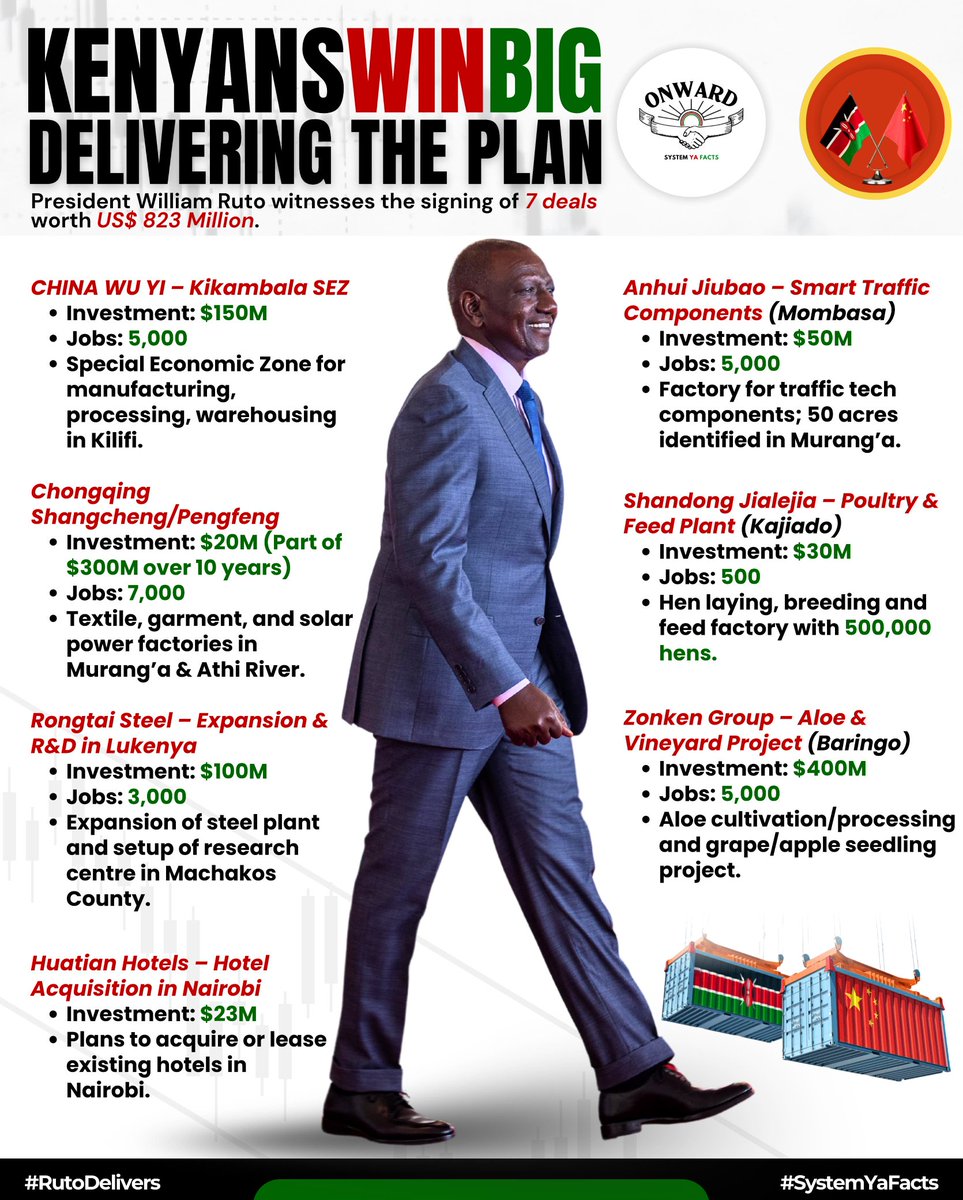
By connecting Murang’a, Kajiado, Baringo and Kilifi to global business, President Ruto is walking the talk on Bottom-Up. Investments are being spread far and wide. That is real equity in development.
#KenyansWinBig
Delivering The Plan