Farcaster is being acquired by @neynarxyz, and honestly, this just feels right.
Neynar has been the de facto backend for Degen and for a huge chunk of what’s being built on Farcaster. They’ve been in the trenches since day one, shipping, supporting builders, and doing the unsexy work that makes the whole ecosystem function.
On a personal note: @rish_neynar has been a fantastic partner and the team has been nothing but a pleasure to work with. You all know I’m not shy about calling it when a team isn’t delivering, so it’s worth saying plainly: this is one of the few teams I trust. Authentic people, strong execution, aligned incentives.
To me the big thing is this: Farcaster isn’t being “handed off,” it’s being kept inside the ecosystem. Passed to a team that deeply understands the builders, the product reality, and the constraints, because they’ve lived them.
It also feels like a moment for Farcaster to get fresh oxygen. New energy, clearer direction, and a chance to tighten the story. I still think Farcaster is the best shot at decentralized social gaining real traction.
Open rails beat closed rails. Growth is hard, adoption takes time, but the long-term payoff of open social primitives is enormous.
And the data layer is still the most underrated part of all of this. Onchain data and open data rails are a largely unexplored frontier. Neynar’s reputation as a data/API powerhouse makes this transition especially meaningful.
Now the work is to make it legible to normal people. They’re beginning to understand privacy and self-sovereignty through products like Proton and Signal. With time, they’ll also understand why open social networks matter: interoperability, real choice, and an ecosystem where anyone can build without asking permission.
Big day and many exciting days ahead!
Also, seeing @VitalikButerin commit to using decentralized social in 2026 is an awesome signal. When one of the sharpest minds in crypto publicly leans in, it helps push this from “niche idea” to “obvious direction.”
Congrats to the Neynar team. Let’s keep building!
https://t.co/F0IQeBj5jm
I used to wave away quantum computing (QC) risks to Bitcoin as far-fetched. I don’t anymore.
The usual pushback goes like this: QC isn’t a threat for years, and if it is, then the whole financial system is in trouble anyway. That line of nihilistic thinking may be comforting to some, but it misses the point.
Big banks aren’t sitting idle. They’re already investing in quantum research, building internal teams, partnering with QC developers, and thinking about how to harden their systems over time. They’re not “quantum-safe” today — but they’re not starting from scratch either.
Bitcoin is different. It can upgrade, technically. But doing so requires slow, messy coordination across a decentralised network. There’s no risk committee, no mandate, no one who can just say “we’re switching now.”
So this isn’t about panic or pretending I know the precise timelines. Maybe QC is five years away. Maybe it’s fifteen. The problem is that quantum risk is low-probability but massive-impact — and those are exactly the risks decentralised systems struggle to deal with early.
Add AI into the mix, and it’s at least plausible that timelines compress rather than extend.
What’s interesting is the growing gap between developer confidence and institutional behaviour. Even if developers think there’s a zero percent chance of a quantum threat in the next five years, some institutions are clearly pricing it higher.
The recent decision by CLSA strategist Chris Wood to remove BTC from his widely followed portfolio due to QC risk may look like “paper hands,” but it matters. It signals that quantum risk is entering institutional risk frameworks — even if views differ widely.
And those views do differ. There’s plenty of counter-evidence. Harvard’s reported decision to increase its exposure by roughly 280% shows institutional support for Bitcoin isn’t disappearing. What’s changing isn’t demand, but dispersion — my guess is that institutional alignment on how to price tail risks diverges further as the QC threat rises.
It’s also plausible that Harvard’s decision had nothing to do with quantum risk at all. Falling volatility alone, consistent with their asset-allocation framework, would justify a higher weighting.
There’s nuance and a lot of in-depth technical understanding, which I’m still working through. But asking these questions is reasonable. @caprioleio has been pushing on this for a while, and he’s right to challenge the shrug-it-off attitude.
What is unreasonable is pretending that JPMorgan and Bitcoin face the same problem. One can prepare in advance and mandate change. The other has to convince everyone, in advance, that a future threat is worth acting on.
Which brings me to the incentive problem.
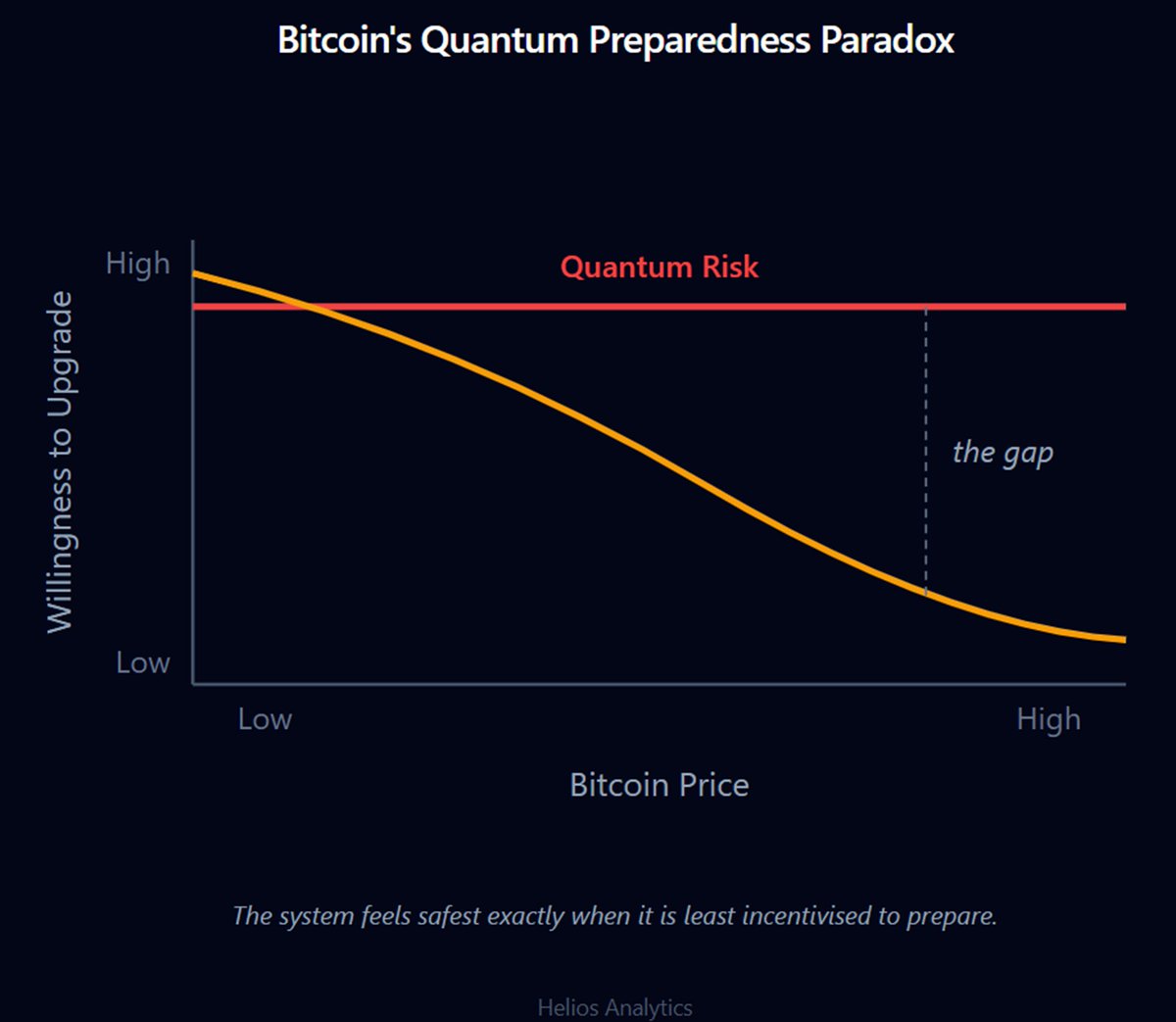
As Bitcoin’s price rises, confidence rises — and the willingness to push through disruptive, precautionary upgrades falls. The system feels safest exactly when it is least incentivised to prepare.
Quantum risk doesn’t move with price, but the gap does.
The OpenLedger x @TheoriqAI partnership explores how AI agents move from experimentation to real, production-ready DeFi systems.
By anchoring agent intelligence to onchain execution, this collaboration enables verifiable execution, auditable state, and transparent economic logic in live DeFi environments.
AI agents can now operate with accountability, not assumptions.
Find the full breakdown in the blog: https://t.co/ETvQMy18UB
@Simon_Hypixel ResourceFarm [Crops] for growing your ore and more soon! Challenging progression so its not overpowered but still fits into the games vibe with a little bit of automation
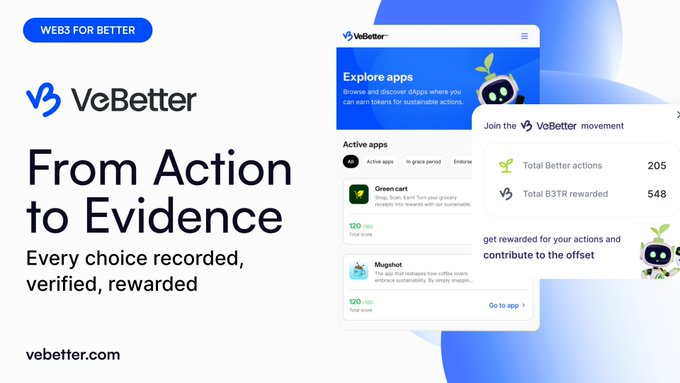
VeBetter turns real-world actions into verified onchain impact🚨
Proof-based activity, permanent records, and real rewards all running on VeChain.
@vechainofficial
Lana “Sati” Chornohorska, volunteer fighter, drone operator, artist, and journalist, was killed on 1 January in southern Ukraine by an enemy drone strike.
She volunteered from the first days of the invasion and in 2024 joined the Ukrainian Volunteer Army, serving as a drone pilot and navigator.
Before the war, she worked in the media and cultural sector, combining service with creativity until her last day.
Eternal Memory!
Photo: @udachniki_uda @danceinside_
$1 vs $2,000,000 Gold! #ad
This video is in paid collaboration with GoldRepublic. Investing involves risk, including the possible loss of principal. Always do your own research and consult a professional before investing. This content is for educational and/or entertainment purposes only and is not financial advice nor does it portray the accurate price of gold at this time. Jordi van den Bussche owns gold himself.
My conversation w/ @JSeyff on current state of crypto ETFs…
We discuss:
-Crypto ETF sentiment
-150+ crypto-related ETF filings
-Morgan Stanley crypto ETFs
-BlackRock’s next move
-Index & active crypto ETFs
-Recent flows
-What's next
https://t.co/2TzJAnKXuK
via @CryptoPrimePod
“Because that’s what neutrality demands. Our job, as Wikipedians, is not to take sides in that debate but to carefully and neutrally document it.” – @jimmy_wales
via Harry Booth in @TIME
https://t.co/I1vDKUSPfX
TRON announced today the integration of @blockaid_, a leading on-chain security platform for detecting, understanding, and responding to on-chain and off-chain threats, to further strengthen security and transparency across the TRON ecosystem.
The strategic collaboration arrives as TRON surpasses 12 billion total transactions and continues to lead as the dominant blockchain infrastructure for global stablecoin activity.
More details from @BitcoinNews 👇
https://t.co/9BSAxZOUlm


![fyzz_dev's tweet photo. @Simon_Hypixel ResourceFarm [Crops] for growing your ore and more soon! Challenging progression so its not overpowered but still fits into the games vibe with a little bit of automation https://t.co/saT0DfbwK1](https://pbs.twimg.com/media/G_U9pr0bQAAC6DX.jpg)



![fyzz_dev's tweet photo. @Simon_Hypixel ResourceFarm [Crops] for growing your ore and more soon! Challenging progression so its not overpowered but still fits into the games vibe with a little bit of automation https://t.co/saT0DfbwK1](https://pbs.twimg.com/media/G_U9psUaEAA-0CL.jpg)