They just don’t make them like this anymore.
Or do they?
Join the Infantry.
Inspire generations with your stories and songs.
Transcend time and culture.
Become the man you were supposed to be.
They called them flying coffins. The men who volunteered to fly them knew exactly why.
The Allied gliders of D-Day were made of fabric stretched over a frame of wood and metal tubing. They had no engine. No armor. No weapons. No parachutes for the men inside. They were towed to France at 130 mph on the end of a 300-foot nylon rope attached to a C-47, and when the rope was cut, there was one chance to land.
One. No go-arounds. No second approach. Whatever was below you was where you were going.
What was below them was Normandy at night.
The Germans had spent weeks preparing. Under orders from Field Marshal Rommel, they had driven wooden stakes into every open field in the region, angled to impale gliders on landing. The French called them Rommelspargel. Rommel's asparagus. Thousands of poles, many with mines or artillery shells wired to the tips, packed into every field large enough to land on.
What the glider pilots had not been properly told was the scale of the Norman hedgerows. The bocage. These were not English garden hedges. They were ancient earthen walls, some dating back centuries, topped with dense root systems and trees, rising 50 feet in places, bordering fields barely 200 yards long. A Horsa glider coming in at 100 mph hitting a hedgerow did not survive it. Neither did most people inside.
Some fields were flooded. Some were mined. Many were both.
517 gliders went into Normandy. 97 percent were abandoned in the field by the end of the operation. Most were destroyed.
General Don Pratt, assistant commander of the 101st Airborne, was in the first glider wave. His pilot managed to find a field near Hiesville and brought the glider down. It slid across the wet grass without slowing and hit a hedgerow at speed. The co-pilot died instantly. The pilot, Lieutenant Colonel Mike Murphy, broke both legs. General Pratt suffered a broken neck. He became the first American general to die in the Battle of Normandy. His glider had landed in one piece.
Sergeant Eric Wilson's glider did not. It hit a building at high speed. Both of Wilson's legs were broken. He was trapped inside the wreckage, unable to move, in enemy-held Normandy, for two and a half days before anyone reached him.
Lieutenant Den Brotheridge had come in earlier than anyone, in the first glider to land in France, the silent coup de main assault on Pegasus Bridge just after midnight. His glider stopped 47 yards from its target. He led his men out at a run, reached the bridge, and was shot. He died within minutes, the first Allied soldier killed by enemy fire on D-Day.
The men who survived the landing did not get to stop. Glider pilots were not assigned to combat units. Once down, they were expected to fight as infantry, dig foxholes, guard prisoners, carry ammunition, do whatever was needed. Most of them had trained to fly, not to fight on the ground behind enemy lines in the dark.
They did it anyway.
Of the 517 gliders that went in, 222 were Horsa gliders. Most were destroyed either on landing or by German fire in the hours that followed. The Waco CG-4As fared slightly better but 97 percent of all gliders from the entire operation were eventually abandoned in Norman fields, broken and empty.
The men who flew them were not pilots in the traditional sense. They were soldiers who had been given just enough training to put an unarmed, engineless box of fabric and wood into a dark foreign field at 100 mph, full of men and equipment, with one attempt and no margin for error.
Many of them got it exactly right.
Many of them did not come home.
Today is June 6th.
Remember them too.
As the camera slowly sweeps across these weathered cliffs and concrete remnants, we stand where history was written in blood and courage.
This is Omaha Beach. On the morning of June 6, 1944, American soldiers stepped off landing craft into hell. They faced entrenched German defenses, machine gun fire raking the beach, and obstacles designed to destroy them before they could even reach the sand. The odds were devastating. The casualties were horrific. Yet they kept coming. Wave after wave. Young men, many still teenagers, climbed these very bluffs under withering fire. They refused to be stopped.
Today, on this Memorial Day, we remember them.
We remember the boys who never made it off the beach. The ones who scaled these heights with nothing but rifles, grenades, and unbreakable resolve. The fathers, brothers, and sons who gave their last full measure of devotion so that tyranny would not triumph and so that Europe, and ultimately the world, might remain free.
Looking out over this now-peaceful sea and these quiet grassy slopes, it’s almost impossible to imagine the chaos, the roar of artillery, the cries of the wounded, and the incredible bravery that turned the tide of the war right here. But the bunkers still stand as silent witnesses. The monument behind us honors their sacrifice with dignity.
These men did not fight for glory. They fought for each other, for their country, and for an ideal: that free people, when called upon, would stand and fight for freedom itself.
On this Memorial Day, as we enjoy the peace and liberty they secured at such terrible cost, let us pause and truly remember. Not just with words, but with gratitude in our hearts.
To the heroes of Omaha Beach and all who have fallen in defense of our nation, your sacrifice will never be forgotten.
May God bless their souls, and may God continue to bless the United States of America.
🇺🇸 Take a minute to reflect on the hallowed grounds of the Normandy American Cemetery in France on this Memorial Day. Perched on a bluff overlooking Omaha Beach — the very site where our heroes launched the greatest assault for liberty in human history — lie the final resting places of 9,389 American warriors who gave their last full measure of devotion during D-Day in World War II.
These are not just graves. They are monuments to American courage, sacrifice, and the fierce belief that freedom is worth dying for. Among them:
• 307 Unknown Soldiers — forever honored, never forgotten.
• 1,557 names inscribed on the Walls of the Missing — their spirits still watching over the cause they served.
• 45 pairs of brothers who fought and fell together.
• Three Medal of Honor recipients and four heroic American women buried side by side with their brothers-in-arms.
This sacred cemetery was established on June 8, 1944, just days after the invasion. This was the first American WWII cemetery on European soil. A permanent reminder that when evil threatened the world, America answered the call.
To every American who stormed those beaches, climbed those cliffs, and never came home: Your blood bought our tomorrow. Because of you, the light of liberty still shines bright across the globe.
We will never forget. We will never falter.
God Bless our Fallen Heroes. God Bless the United States of America. ❤️🤍💙
BREAKING: Secretary of State Marco Rubio hits back at claims of a U.S. oil blockade on Cuba:
"Here's what's happening with Cuba, okay? Cuba used to get free oil from Venezuela. They would take like 60% of that oil and resell it for cash. It wouldn't even go to benefit the people. So the only blockade that's happened is ... the Venezuelans have decided we're not giving you free oil anymore."
"The reason that I can't fix it is not just because they're communist. That's bad enough, but they're incompetent communists."
Classic case of getting exactly what you voted for:
In 2024, the 10 states with the lowest electricity prices ALL voted for President Trump, and 9 of the 10 states with the highest electricity prices voted for Harris.
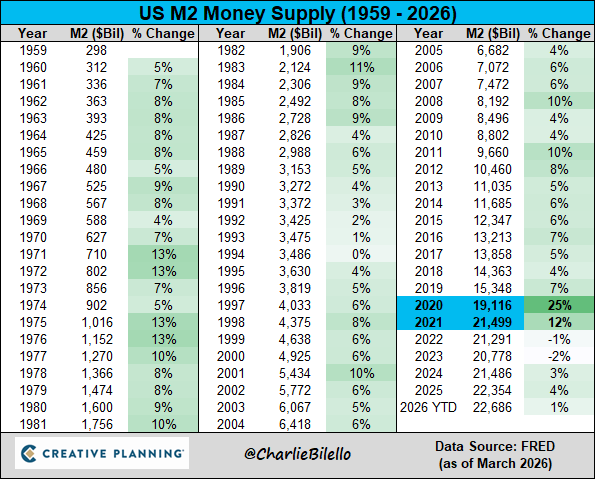
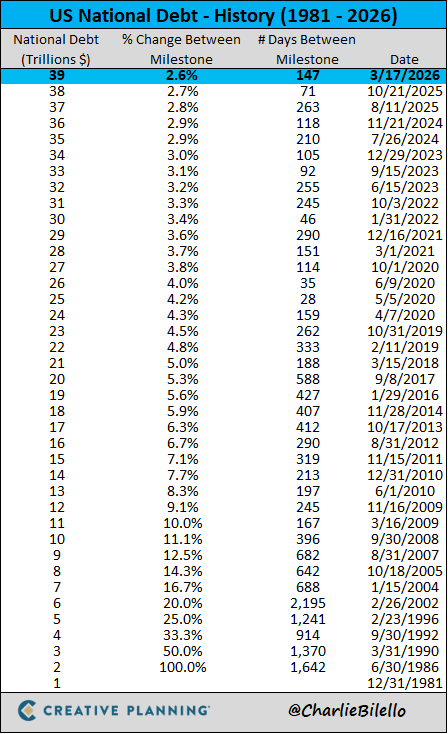
Jerome Powell held 63 press conference as Fed chairman and over that time there wasn't a single question about the 40% money supply spike in 2020-21 or $18 trillion increase in the national debt during his tenure as the root causes of inflation.
That's either unbelievable incompetence on the part of the most renowned financial journalists in the business or questioning/dissent is not allowed.
Which is it?
Milton Friedman on 4 ways to spend money:
1) Your money on yourself (you’re careful about both cost and quality)
2) Your money on others (you care about cost, less about quality)
3) Someone else’s money on yourself (you care about quality, not cost)
4) Someone else’s money on others (you care about neither)
The last one is how government spending works.
"They seized my baby and sliced him in two with a knife. My second child woke up... They split his head with a machete."
This is what life is like for Christians in Nigeria.
Christians are the most hated group in the world.
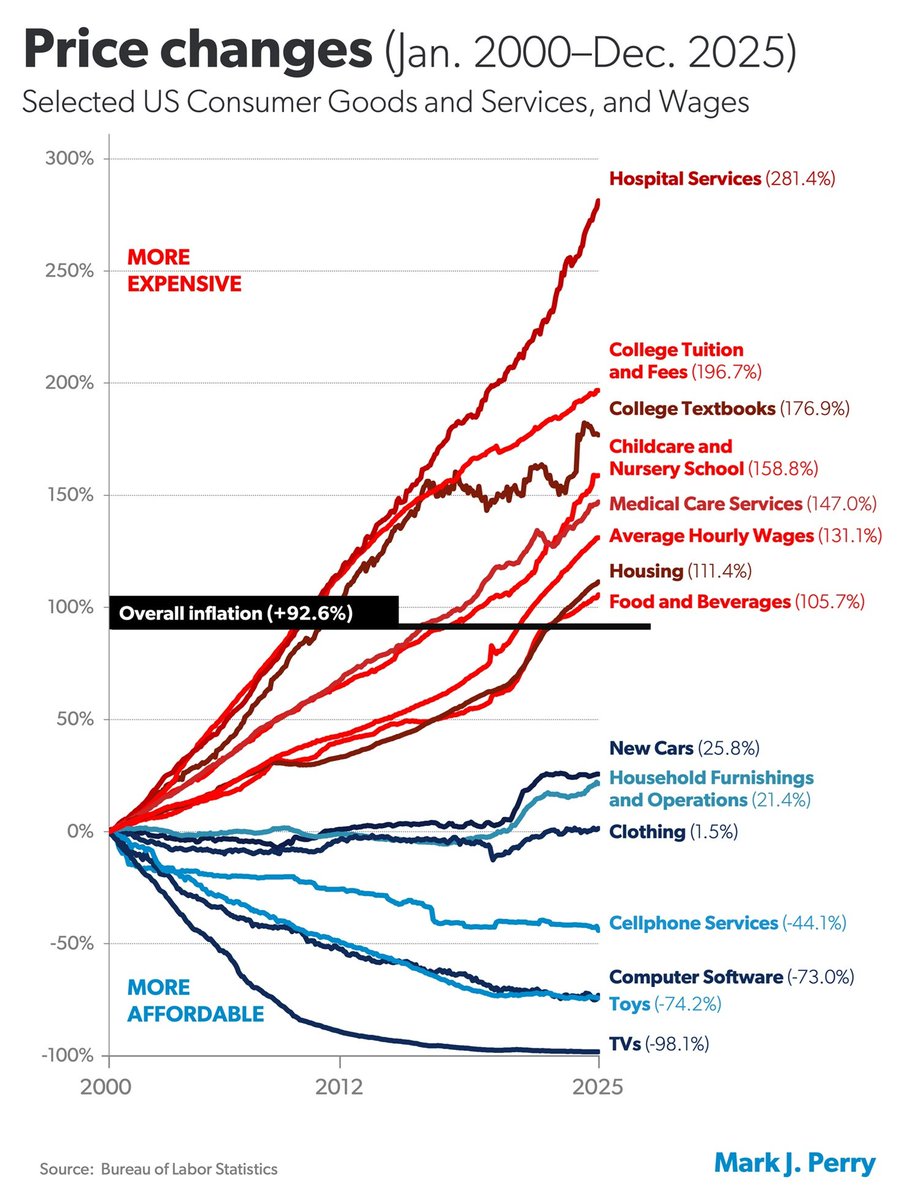
The inflation story in one chart:
Where government spending and subsidies are highest, prices rise the fastest.
Where competition is highest, prices fall.
Lance Corporal Daniel Montano, 21, was stabbed in the neck in downtown Wilmington, NC on Easter Sunday. He died the next day. He had enlisted in October 2024. He was a Marine.
The man charged with his murder is Davy Spencer, 47. What follows is not opinion. It is public record.
——
1995: Spencer's first criminal record. He was 16.
1996: Felony hit and run. Three counts of felony breaking and entering. Prison.
2004: Attempted drug trafficking. Assault on a female. Prison.
2006: Assault on a female. Wanton injury to property. Prison.
2009: Assault on a female. Prison.
2011: Drug possession. Communicating threats. Prison.
2013–2014: Multiple counts of selling heroin. Multiple counts of possession with intent to distribute.
2015: Convicted as a Habitual Felon — a designation reserved for those with three or more prior felony convictions.
Under North Carolina law, a Class C Habitual Felon conviction carries a maximum sentence of 19 years.
DA Timothy Severo negotiated a plea deal. Judge Jay D. Hockenbury accepted it.
Spencer received a minimum term of 7 years, 3 months.
——
January 17, 2021: Spencer is released.
January 17, 2022: Parole ends. He is fully free.
2023: Arrested twice in New Hanover County. Given unsecured bonds of $1,000 and $100 respectively — meaning he paid nothing to walk out. He skipped both court dates. Both bond forfeitures were entered against him. He never paid. Nothing else happened.
July 31, 2025 — 8 months before the murder:
Spencer is arrested by the Wilmington Police Department and charged with resisting a public officer, marijuana possession, and assault on a government official or employee.
DA Ben David's office negotiated a plea deal. Judge James H. Faison III accepted it.
The assault charge was permanently dismissed. Spencer pleaded guilty to the two minor misdemeanors. His sentence: 27 days — which he had already served in pretrial detention.
He walked out of court that same day.
——
April 5, 2026 — Easter Sunday, 2:00 AM:
Spencer stabbed Daniel Montano in the neck in the 100 block of North Front Street in downtown Wilmington.
April 6, 2026: Montano died from his injuries.
He was 21 years old. He was from San Bernardino, California. He had served his country for less than two years.
——
Every fact in this post was pulled from North Carolina public court records and the NC Department of Adult Correction database. Every name is a matter of public record.
This is what the public record looks like when no one is watching. It's why I built https://t.co/R1jAMUfNTv ...More to come...
Rest in peace, Lance Corporal Montano.
Sebastian Gorka: "This is why Politico is a joke. This is why you are gut depressed and fake news… You're sitting here live defending a member of MS13. That’s why I regret coming here! Because this isn't journalism... Shame on you."
The train is out of control…
The first 6 months of FY 2026 produced a deficit of $1.17 Trillion. The simple reality is we can’t afford the current size of our Government.
On track for a $2.3 TRILLION annual deficit.