There’s a story at the very end of Genesis that reminds us we never outgrow our need of the Gospel.
Seventeen years have passed since Joseph brought his father Jacob and his brothers down to live in Egypt. When Jacob dies, Joseph’s brothers fear that Joseph will now hate them and repay them for all the evil they did to him so many years earlier (Gen. 50:15).
Old guilt gathers no rust, as the saying goes.
So they sent a message to Joseph, saying, “Your father gave this command before he died: ‘Say to Joseph, Please forgive the transgression of your brothers and their sin, because they did evil to you.’ And now, please forgive the transgression of the servants of the God of your father” (Gen. 50:16–17).
Joseph wept over these words (Gen. 50:17). He told them, “Do not fear, for am I in the place of God? As for you, you meant evil against me, but God meant it for good, to bring it about that many people should be kept alive, as they are today” (Gen. 50:19–20). And then he assures them, “So do not fear; I will provide for you and your little ones” (Gen. 50:21).
The chapter concludes by telling us that “he comforted them and spoke kindly to them”—literally, in Hebrew, that he spoke to their hearts (Gen. 50:21).
They needed to hear the good news that everything was truly okay between them and Joseph. And so do we. We need to hear—daily, weekly, constantly—that everything is okay between Jesus and us.
And Jesus never tires of saying it. He never grows weary of saying, “I forgive you.” He forgives what you did today. He forgives what you did years ago. He is the God of forgiveness. He shed his blood for our forgiveness, and so he never tires of speaking it to us.
And we never outgrow our need to hear it: Jesus has paid the penalty for our sins. We are forgiven. We are reconciled to the Father because of him.
_____
We read Genesis 49-50 today in Bible in One Year. Join us at https://t.co/XxNvEtNH7e
The first time the word worship appears in Scripture, there is no music, no choir, no instrument.
It is Abraham.
“And Abraham said… Stay here with the donkey; the lad and I will go yonder and worship”
and the worship was a journey to Moriah, carrying Isaac.
This establishes the biblical frame for worship.
Worship, before it ever became sound, was posture.
Abraham worshipped by:
Obedience – he went where God pointed
Alignment – he agreed with God’s word even when it cost him
Surrender – he laid down what was most precious
Faith �� he believed God beyond understanding
No song.
No atmosphere.
No encouragement.
Just posture.
Worship was not what Abraham sang; it was how he stood before God.
From that moment onward, Scripture teaches us that worship is first a stance, then a sound.
People stood in reverence.
They knelt in surrender.
They lifted hands in dependence.
They fell on their faces in awe.
Each posture preached before any melody followed.
This tells us something crucial:
God responds to alignment before expression.
You can sing loudly and still miss worship.
You can be silent and yet fully worshipping.
True worship is when the heart bows, the will yields, and the body agrees.
Before the song rises, let posture speak.
That is worship.
While Johann Sebastian Bach is often called the fifth evangelist, the one who truly deserves that title is Isaiah. Alongside Matthew, Mark, Luke, and John, Isaiah boldly proclaims the Messiah.
Isaiah is also a stern preacher of the law. We see this immediately in the opening chapter of the book, which we read today in Bible in One Year. There the prophet rebukes Israel for hypocritical worship, for thinking that going through religious motions will please God (Isa. 1:11–15).
Throughout the book, Isaiah denounces the idolatry that has captured the hearts of the people and calls them out for their mistreatment of the poor and vulnerable (Isa. 1:16–17). He reproaches those who despise the word of God, harden their hearts, and turn away from him.
In doing so, Isaiah also proclaims WHY the Messiah must come.
He does not come to save people who are basically good but merely need improvement. He comes to save sinners. He comes to die for the ungodly. He comes for all of us who have erected idols within the shrine of our hearts.
The Messiah comes to do for us what we cannot do for ourselves.
He comes as the light that shines in the darkness (Isa. 9:2). He comes as our redeemer, gathering people from every direction, from all the places into which we have been exiled from the presence of God (Isa. 49:6).
This saving work reaches its climax in Isaiah 53, where the Messiah bears our sins, is wounded so that we might be healed, and is pierced for our iniquities so that we might be saved by his sacrifice (Isa. 53:4–6).
Isaiah the fifth evangelist is therefore a preacher of both law and gospel. He exposes our sin and calls us to repentance, and he sets before our eyes the work of the Messiah—our King and Redeemer—who restores us to the Father by his life, his sacrifice, and his resurrection.
As you read Isaiah over the next three weeks, may this eighth-century prophet be heard as one whose message is timeless, speaking as powerfully to our hearts today as he did long ago.
___
Join us at Bible in One Year! https://t.co/XxNvEtNH7e
We are currently covering Isaiah in our podcast, "40 Minutes in the Old Testament." Give it a listen!
Into what kind of world was God born? A world full of hurting people who hurt each other, hurt themselves, and sometimes will do terrible things to themselves just to make the hurt stop.
For them, for you, God was born. For bruised children and broken men. For wounded soldiers and battered wives.
No matter your hurt, no matter how screwed up your life is, no matter what kinds of stupid decisions you’ve made, no matter how filthy and vile and useless you think you are, for precisely you God was born.
He gladly left a bright and shiny heaven to plunge headfirst into the mud and muck of our world full of darkness and unbelief and tragedy.
He didn’t stand in the light and beckon you out of the darkness.
He invaded the night.
He came in search of you.
Into this mad world, oozing with pain, racked with guilt, pockmarked with graves, God gladly and willingly was born to make you his own flesh and blood.
The deeper you have fallen, the farther he will dig to find you. The darker your despair, the more light he will bring to seek you out. The farther away from God you are, the better he sees you.
No life has sunk so unfathomably deep that he cannot dig down to grasp you by the hand and climb out of the pit with you in his arms.
That’s the kind of God who was born on Christmas. That’s the God that Jesus is for you.
Confession of the Day— Jesus took my infirmities and bore my sicknesses. Therefore, I refuse to allow sickness to dominate my body. The Life of God flows within me bringing healing to every fiber of my being. (Reference: Matthew 8:17; John 6:63)
It is with some personal surprise that, after 30 years as an atheist, I’ve come to say:
I believe in one God,
the Father almighty,
maker of heaven and earth,
of all things visible and invisible.
I believe in one Lord Jesus Christ,
the Only Begotten Son of God,
born of the Father before all ages.
…
I believe in the Holy Spirit, the Lord, the giver of life,
who proceeds from the Father and the Son
“While his son was still a long way off, the father saw him and felt compassion, and ran and embraced him and kissed him.” Luke 15:20
He saw.
He felt.
He ran.
He embraced.
He kissed.
“Since you were precious in My sight,
You have been honored, and I have loved you.
Therefore I will give men for you,
And people for your life.”
— Isaiah 43:4 NKJV
✨ I am precious.
✨ I am loved.
✨ I am honored.
✨ God esteems me highly.
Things are falling apart in Psalm 46. Nations are raging. Kingdoms tottering. The earth gives way. The mountains fall into the heart of the sea.
If there were ever a time to explode with action and tackle this spinning world, it would be now. Hurry up and do something!
God, however, has other plans. He says, “Rapha, and know that I am God.”
The verb, rapha [רָפָה], means to let something grow slack or hang down (like your hands). Thus, in this verse, it’s translated “Be still” (ESV), “cease striving” (NASB), or “desist” (JPS).
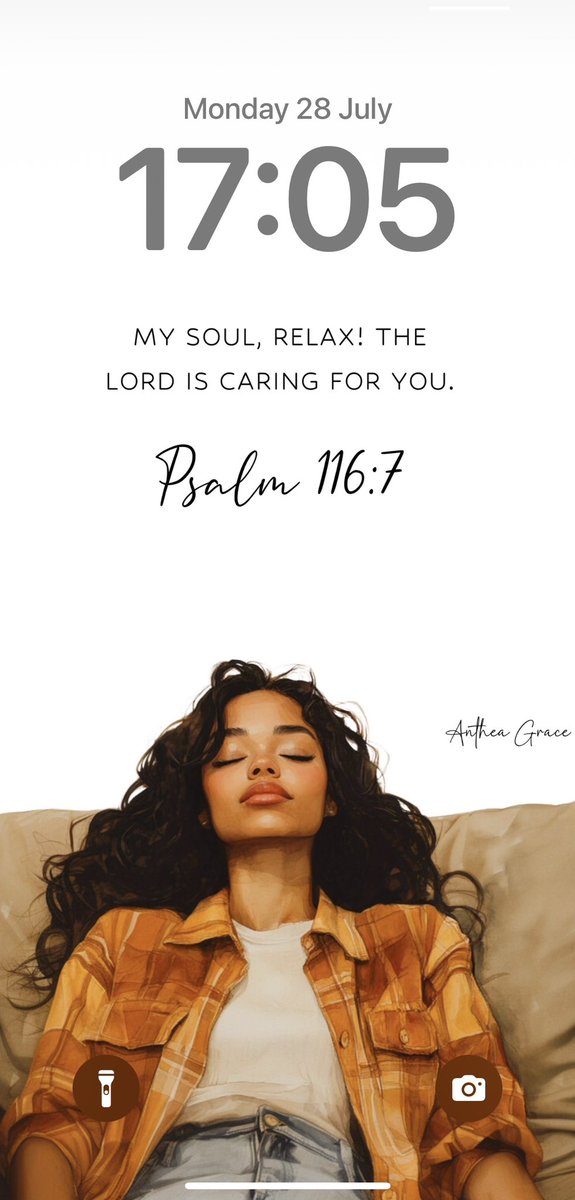
Colloquially, we might say, “Relax.”
“Yes,” God is saying, “I know that your lives are in a tailspin. All around you, turmoil threatens. But I am your refuge and strength, a very present help in trouble. I am with you. I am your fortress. This current crisis is not my first rodeo. I’ve been handling these for my people from the beginning of time. So, relax. Rapha.
And know this: I am God—and not just God, but your God. The God who, now and always, is for you in Jesus Christ."
_____
Want to discover more Hebrew gems like this in the Psalms? Check out my forthcoming book, Untamed Prayers: 365 Daily Devotions on Christ in the Book of Psalms. Preorder your copy at https://t.co/zU9d46Pdah
The true test of your praise is in the face of the storm. When all hell breaks lose and the odds are stacked up against you. Anyone can hola a hallelujah when it’s all calm, cool and rosy. When expectations are met and testimonies overflow. But what happens when you have done all you know to do yet still stuck in the mud of life? Do you simply hold back your praise ?, after all, there’s no reason you should praise. What I say to people is this, when things turn for good what becomes the content of your praise? Do you suddenly declare how good, powerful and faithful He is? Does this mean He wasn’t all of these before? But guess what? the true worth and value of our honour and praise of God is in the former. When there appears to be no just cause to worship Him. Like David, we must strive YET praise Him, despite the odds. Because GOD is actually, and truly GOOD & ALL POWERFUL. One thing I do at times like these is recall and recount His goodness in times past. I dwell there until faith is birth. And soon after, Hope rises and His joy kicks in to strengthen the inner man. Don’t lose faith. God is good !
“3 Because I will publish the name of the Lord: ascribe ye greatness unto our God.
4 He is the Rock, his work is perfect: for all his ways are judgment: a God of truth and without iniquity, just and right is he.”
Deut 32:3-4
In one of my recent daily videos on Philippians 2, I taught that the "name above all names" is not Jesus but Yahweh. That is the divine name bestowed upon Jesus. That video got a lot of pushback.
I was thinking about writing a longer explanation of that text, when along comes my friend, Robert Solberg, with this article today, which splendidly argues my point much better than I could have (and saves me the time of writing it myself!). https://t.co/SGHbBBTUEQ
I heartily commend his work to you--not only this article, but his YouTube channel, books, and entire ministry.
Luke 15:11-32.
The story of the prodigal son is one of the most interesting and powerful parables I have ever read. It makes us understand the love God had for we, His children. For those who don’t know it, let me do a brief summary.







![birdchadlouis's tweet photo. Things are falling apart in Psalm 46. Nations are raging. Kingdoms tottering. The earth gives way. The mountains fall into the heart of the sea.
If there were ever a time to explode with action and tackle this spinning world, it would be now. Hurry up and do something!
God, however, has other plans. He says, “Rapha, and know that I am God.”
The verb, rapha [רָפָה], means to let something grow slack or hang down (like your hands). Thus, in this verse, it’s translated “Be still” (ESV), “cease striving” (NASB), or “desist” (JPS).
Colloquially, we might say, “Relax.”
“Yes,” God is saying, “I know that your lives are in a tailspin. All around you, turmoil threatens. But I am your refuge and strength, a very present help in trouble. I am with you. I am your fortress. This current crisis is not my first rodeo. I’ve been handling these for my people from the beginning of time. So, relax. Rapha.
And know this: I am God—and not just God, but your God. The God who, now and always, is for you in Jesus Christ."
_____
Want to discover more Hebrew gems like this in the Psalms? Check out my forthcoming book, Untamed Prayers: 365 Daily Devotions on Christ in the Book of Psalms. Preorder your copy at https://t.co/zU9d46Pdah](https://pbs.twimg.com/media/Gw780GQXEAAFLx3.jpg)


