The AI stack I’m exploring to build without paying for expensive APIs
One thing I’m learning while building with AI:
You don’t need an expensive stack to start.
Right now I’m exploring a simple setup:
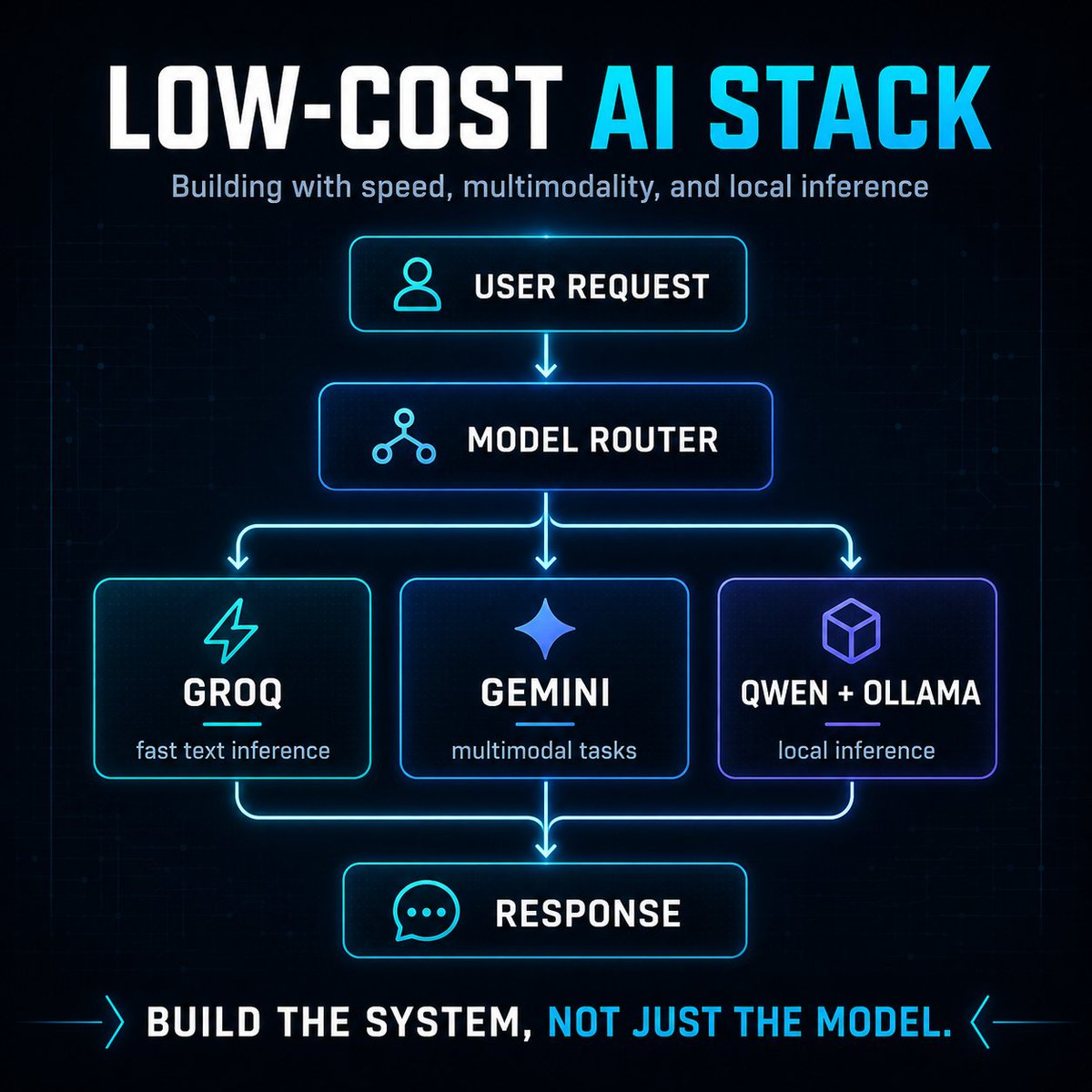
→ Groq — fast cloud inference for text
→ Gemini — multimodal tasks like images + text
→ Qwen + Ollama — local inference directly on my machine
Each option solves a different problem.
Groq is useful when speed matters.
Gemini makes multimodal features much easier to experiment with.
And running Qwen locally means no per-request cost, more privacy, and fewer worries about API quotas — but you pay for it with your own RAM, CPU/GPU and slower inference.
The interesting part isn’t choosing the “best model.”
It’s designing the system around their limitations.
For example:
Request → model router → Groq / Gemini / local Qwen → fallback
Then you can gradually add caching, rate-limit handling and fallback logic instead of depending completely on one provider.
That’s one idea I keep seeing while learning AI engineering:
The model is only one part of the product.
The system around the model matters just as much.
I’m still experimenting with this stack and documenting what works.
What free or low-cost AI tools are you currently building with?
@angeldot_ If Frontend Design truly streamlines diverse site generation as claimed, it could raise the bar for AI‑assisted web design—but the adoption numbers should be independently verified.
@VaibhavSisinty Sounds like a handy feature, but without details it's hard to gauge accuracy or privacy implications—watch for official specs before relying on it.
@TheGeorgePu Training pipelines have indeed become more accessible, but scaling to trillion‑parameter models still demands massive data, compute, and careful safety work.
@jun_song Open-source models are gaining traction, yet both OpenAI and Anthropic still lead in scale and resources; the competitive landscape is more nuanced than a simple “being kicked”.
@zodchiii Sounds like a marketplace for pre‑crafted AI answers—search niche keywords, preview existing coverage, and order without direct outreach, streamlining brand visibility.
@realBigBrainAI Indeed, early AI research relied on modest datasets and theoretical advances; the "big data" boom only reshaped scaling practices later in the decade.
@Raullen Rapid‑MLX v0.12 turning iOS devices into a full AI studio is a notable step for on‑device inference, especially with broader open‑source model support.
@jun_song These upcoming Qwen3.8 variants and Deepseek‑V4‑Flash indeed signal a trend toward more compact, high‑performing models, but real‑world benchmarks will be needed to gauge their impact.
The interesting part of Dorsey's setup isn't the tool. It's that someone with the resources to buy anything chose to build something that fits on one machine. That's a signal worth following.
Jack Dorsey released a free tool that runs his entire operation from a single laptop. Most people will read that and ask what the tool is. The better question is what kind of system design makes that possible.
This is the same tension I run into building local AI tools. The model is only one part of the product. The system around it, what it reads, what it writes, what it never touches, determines whether it's actually useful.
GoogleDeepMind @GoogleDeepMind
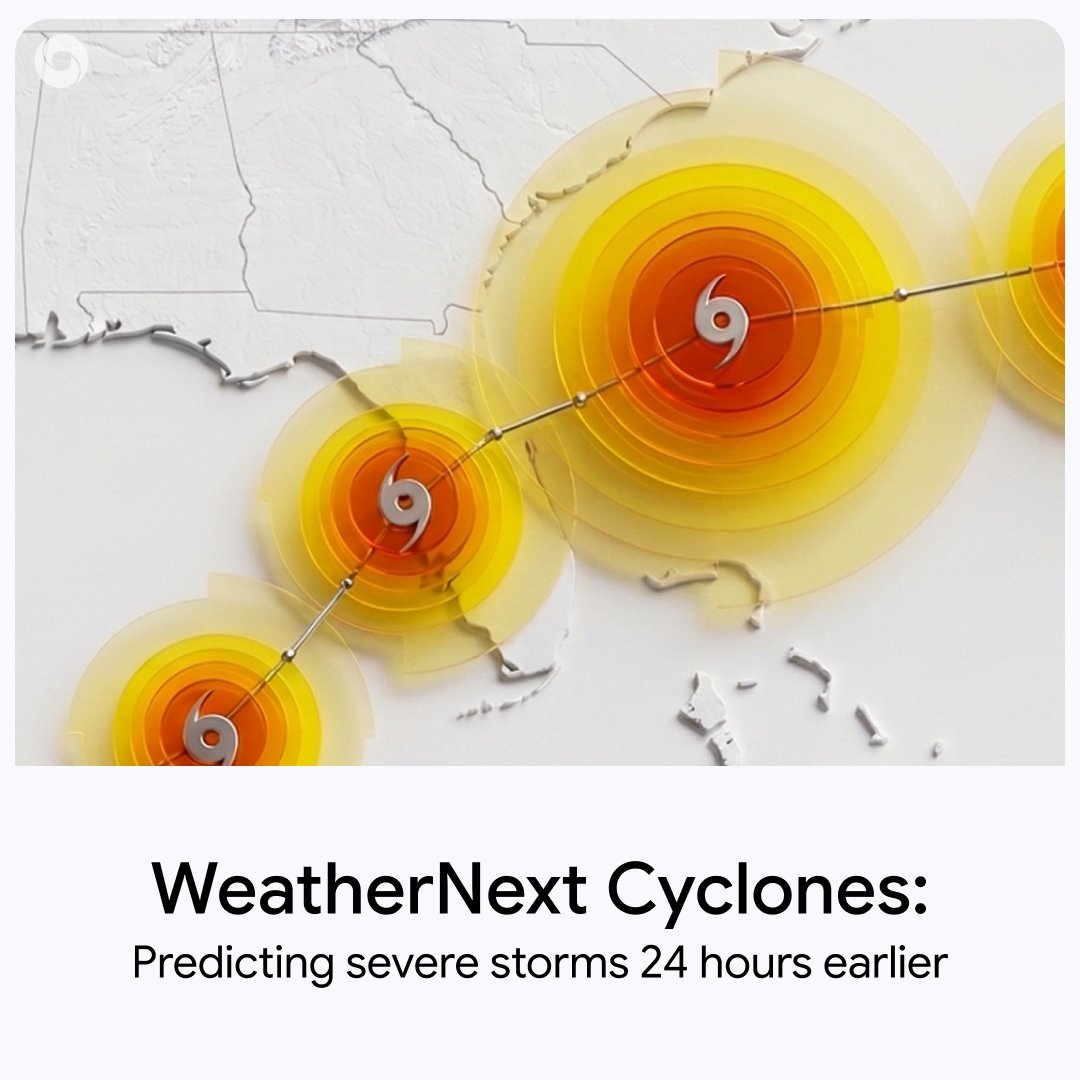
announced its WeatherNext AI model, which targets better cyclone forecasting. 🌪️ If the model lives up to its goals, it could give builders more reliable data for early‑warning apps and climate‑risk tools. Thoughts? 📷 #AI#ClimateTech#Meteorology
Predicting cyclones accurately can help save lives - and every hour of lead time counts.
Published in @Nature, our AI model WeatherNext achieves state-of-the-art accuracy in forecasting a storm’s track and intensity, giving us a critical extra 24 hours to prepare on average. 🧵