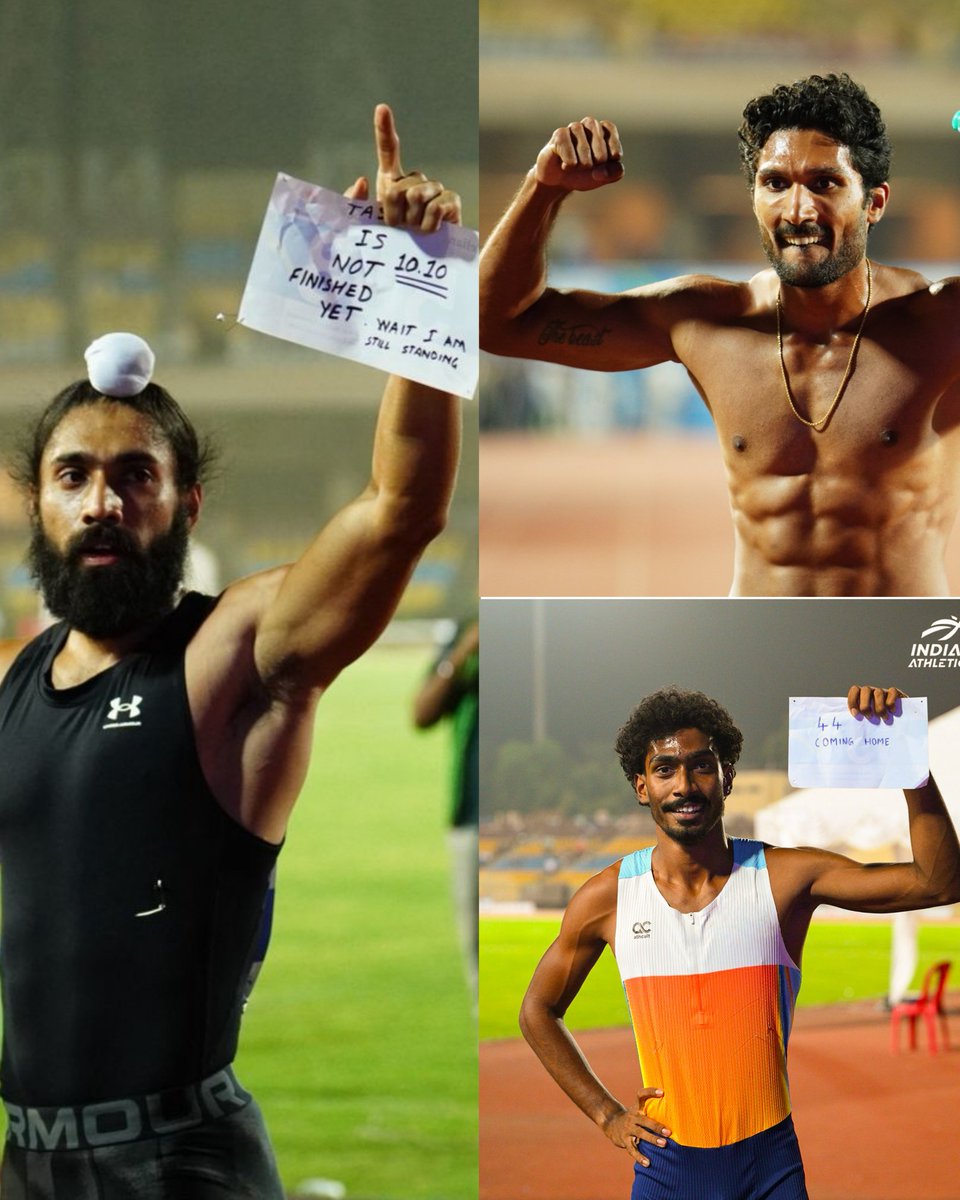
A HISTORIC NIGHT FOR INDIAN ATHLETICS! 🇮🇳
- Gurindervir Singh became the fastest man in India by clocking 10.09s in Men's 100m ⚡
- Tejaswin Shankar broke the National Record & crossed historic 8000 mark in Decathlon 🔥
- Vishal broke the National Record & became the first Indian to break the 45s barrier in 400m 💥
Three National Records were broken today at the Seniors National Federation Cup 2026, Ranchi
UNTHINKABLE STUFF, JUST WOOOAHH!! 💙
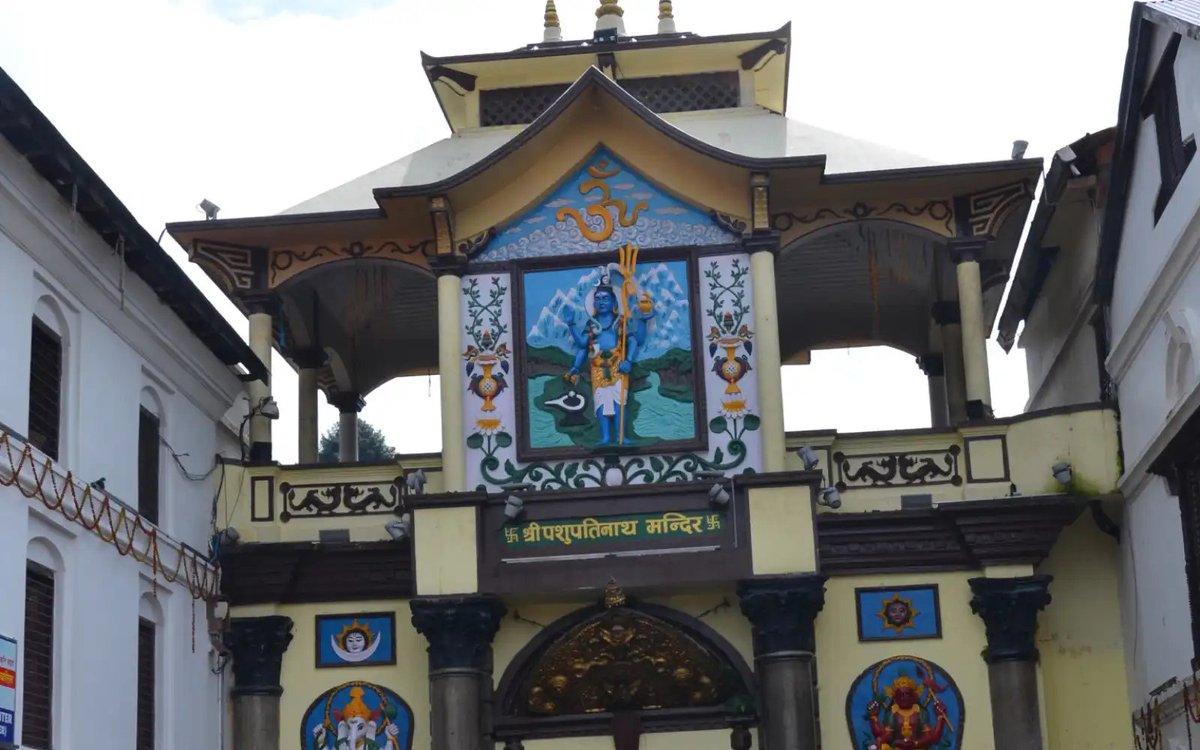
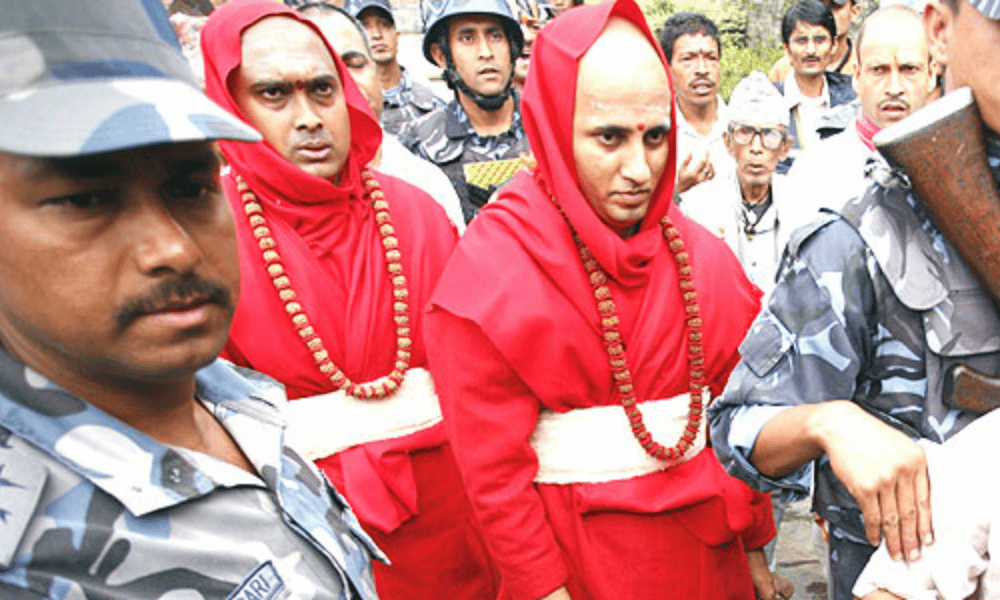
When I visited Pashupatinath Temple in Nepal, I was surprised to learn that all the priests were kannadigas!
In the heart of Kathmandu, inside one of Shaivism’s most sacred sanctums, the priests were speaking Kannada. Not occasionally, but fluently, naturally, as if the western coast of Karnataka had quietly extended itself into the Himalayas.
I got really curious, and decided to strike up a conversation with one of the priests, and I learnt that the main priest is from Udupi, and that this was no anomaly. For centuries, the temple has institutionalised the appointment of priests from coastal Karnataka, especially Udupi, Sirsi, and Bhatkal. This tradition was formalised under the Malla Dynasty, rooted in a strikingly sophisticated principle. Nepali custom mandates that, upon the death of a king, local priests enter a year-long mourning period during which they refrain from performing rituals. Yet the worship of Shiva, particularly at Pashupatinath, cannot be interrupted. The solution was not improvisation, but design: import priests from a distant civilizational zone, beyond the reach of local ritual obligations and insulated from Kathmandu’s internal political currents.
This ensured not only ritual continuity, but institutional neutrality. The sanctum was preserved from factional influence, while remaining seamlessly embedded within the broader Hindu world. And this relationship was not unilateral. It formed part of a reciprocal sacred geography. The Kashi Vishwanath Temple, one of the most important shrines of Shiva in India, has historically maintained deep ritual and institutional ties with Nepal, including the participation and patronage of Nepali priests and the Nepali monarchy.
This is what pre-modern unity actually looked like. Not rhetorical nationalism, not administrative centralisation, but a decentralised yet deeply integrated civilizational network, where distance did not fragment identity but reinforced interdependence. A Kannada-speaking priest in Kathmandu is not an anomaly. It is evidence.
Is this fashion… or straight-up cultural theft? A ₹44,800 skirt by Ralph Lauren is making waves — not for its design, but for what it represents. Inspired by Bandhani, a centuries-old Indian craft, this piece looks strikingly similar to what you can find in local markets for under ₹1,000. So why the outrage? Because “inspired” often means the story, the artisans, and the culture get left behind.
Bandhani isn’t just a pattern — it’s heritage, identity, and generations of craftsmanship. Yet, when global luxury brands profit, the original creators rarely get the spotlight (or the paycheck). And this isn’t new. Remember when Prada faced backlash over Kolhapuri-style sandals?
Borrowing in fashion is normal. But silence? That’s the real problem. If global brands want to celebrate culture, why not credit it — and include the people behind it?
So here’s the question: appreciation or appropriation? You decide.
#Bandhani #CulturalAppropriation #RalphLauren #IndianTextiles #FashionDebate #IndiaTodayGlobal
SC groups (original) in Anakapalli (Andhra Pradesh) staged protest in front of Collectorate demanding immediate implementation of the Supreme Court ruling that SC reservations apply only to real (Hindu) SCs.
They also sought action against misuse of SC certificates by Christian converts and called for strict enforcement of court orders.
गजब का इनोवेशन
सर कमाल कर दिया आपने !
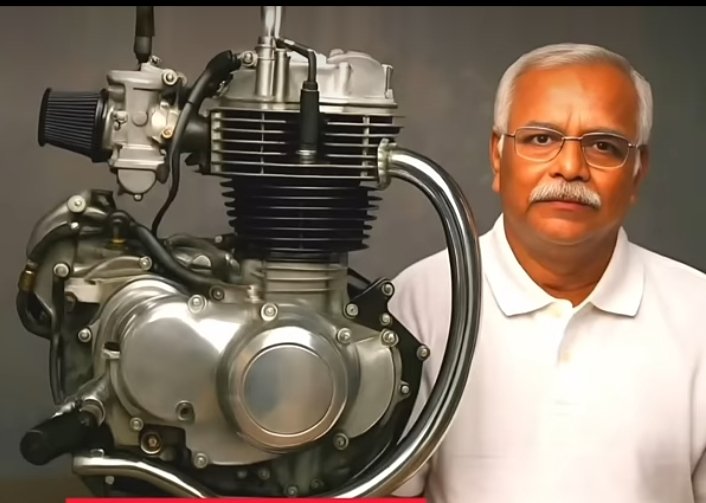
प्रयागराज के रहने वाले शैलेंद्र ने अपनी सारी प्रॉपर्टी बेचकर एक ऐसा six स्ट्रोक इंजन बनाया है.. जो 1 लीटर पेट्रोल में 176 km तक माइलेज देता है।
इतना ही नहीं.....
शैलेंद्र जी का कहना है अगर सरकार सपोर्ट करें तो हम इसकी क्षमता को 200 Km/लीटर तक कर सकता हूँ...!
अगर कोई विदेशी ये कर देता तो हमारी मीडिया हल्ला मचा देती..
इनकी आवाज को सरकार तक पहुंचाई जाए...
This is how international fashion brands kiII Indian crafts. This is East India Company redux. @RalphLauren is selling this PRINTED bandhani skirt for a whopping 44,000 INR, without mentioning that it is Bandhani.
First of all, Bandhani or bandhej is a millennia old Indian tie and dye craft technique that has been seen even in the Ajanta paintings. Bandhani is created knot by painstaking knot by artisans whose skill is passed down not in design schools but across generations. Every dot in a bandhani saree is a decision made by human fingers, a tiny act of devotion to craft. Every bandhani textile is unique. Even the word Bandana in English has come from Bandhani.
But Ralph Lauren bastardizes Bandhani with a cheap printed cotton wrap skirt, a machine approximation of centuries of handwork, listed blandly and prices it at ₹44,800, with not a word about India, not a word about the artisans whose ancestors built this language of cloth. Real hand done bandhani skirts in Bharat cost less than 5000 Rs!
Ralph Lauren stole the aesthetic and erased the ancestry, just like the British East India Company did! Absolutely shameful!
For me, the political turning point was when I asked my mom “Why is this particular gopura (gate tower) of Śrīraṅga temple painted all white, in contrast with the vibrant colors of the other gopuras?”.
Srirangam was attacked by the Sultanate forces in the year 1323 during the Tamil month of Vaikasi. Nearly, 12,000 residents of Srirangam island had laid down their lives fighting to protect the temple. The forces attacked the temple and Lord Ranganatha's jewels and the temple gold were taken away.
The forces also wanted to seize the idol of Namperumal, which they believed was made of pure ‘Abaranji' gold. They searched for the idol but the Vaishnavite Acharya, Pillailokacharya had taken the idol away and fled to Madurai. (The idol of Namperumal that left Srirangam in 1323 returned back only in 1371).
Unable to locate the idol, the Sultanate forces killed the temple authorities and later launched a massive hunt for Pillailokacharya and Namperumal.
Fearing that the forces would capture the Acharya and the idol, Vellayi, a devadasi of the temple, performed a dance before the commander of the forces to distract them and thus gaining time for Pillailokacharya to escape with the idol.
Her dance lasted for hours together and finally she is said to have taken the commander to the eastern gopuram and pushed him down. After killing him, Vellayi committed suicide by jumping to her death from the tower chanting the name of Ranganathar.
Hailing Vellayi's sacrifice, the chief of Vijayanagara forces, Kempanna, who drove away the Sultanate forces, named the tower after her. The gopuram continues to be painted white in her memory, as in Tamil, Vellai means white.
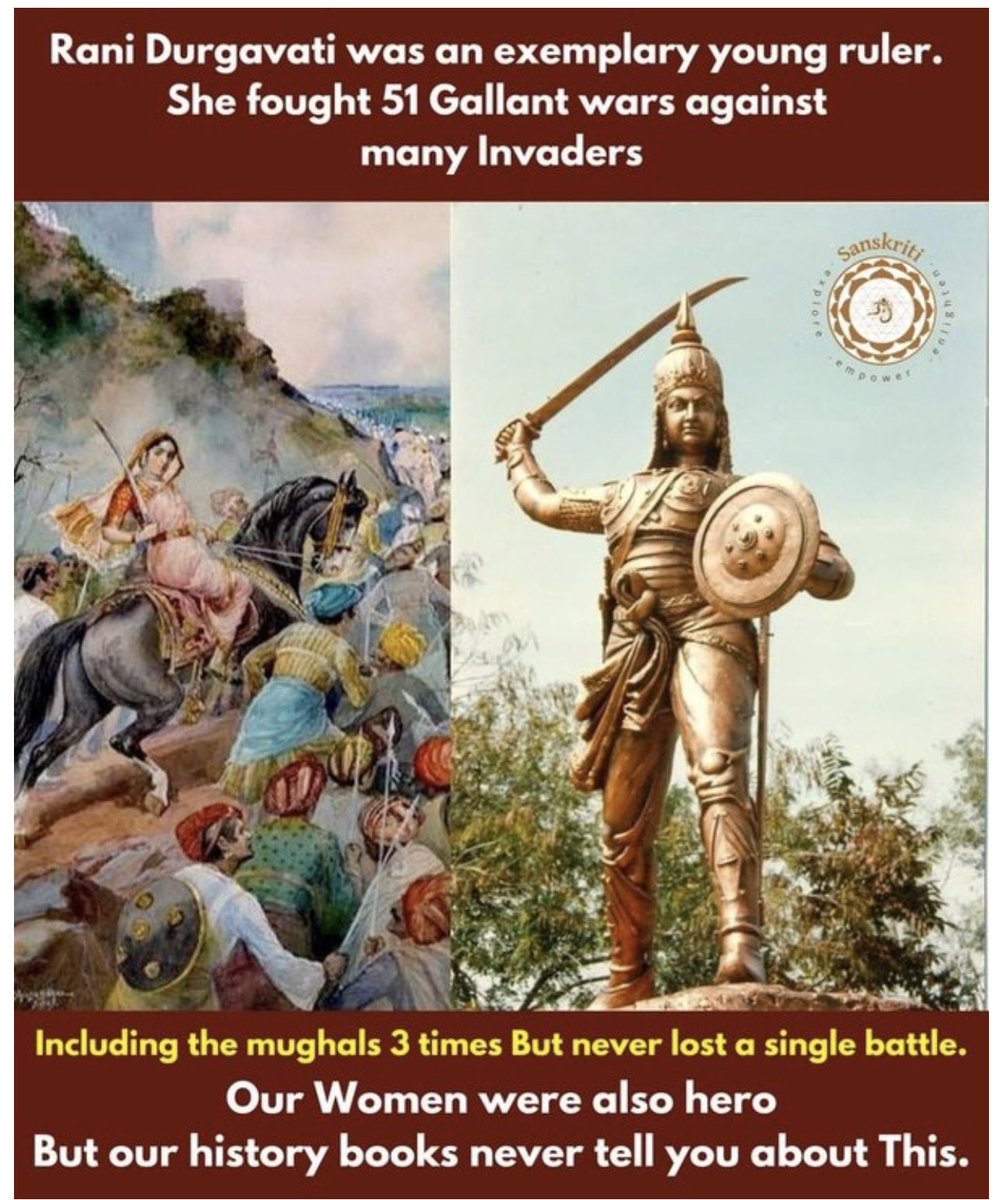
Rani Durgavati was an exemplary young ruler.
She fought 51 Gallant wars against many Invaders Including the mughals 3 times But never lost a single battle.
Our Women were also hero But our history books never tell you about This.
Ignorance and illiteracy dripping from every word.
Before any Mughal stepped foot in India we had:
Over two dozen major languages and dozens of regional dialects with copiously vast amounts of literature written millennia before Islam was born.
At least 16 clearly distinct fully-developed regional cuisines and dozens of sub-cuisines dating back millennia before Mughals. (Documented pre-Mughal recipes in Nala’s Paka Darpanam, Manasollasa, Lokopakara, Lokaprakasha, Manasollasa, Sarangadhara Samhita)
At least 264 documented and systemized musical Ragas as recorded by Sharngadeva in Sangita Ratnakara (13th c. pre-Mughal). They were the common foundation of both later traditions:
Hindustani (North Indian) & Carnatic (South Indian)
8 major Painting schools and at least 16 major schools of sculpture before 13th c.
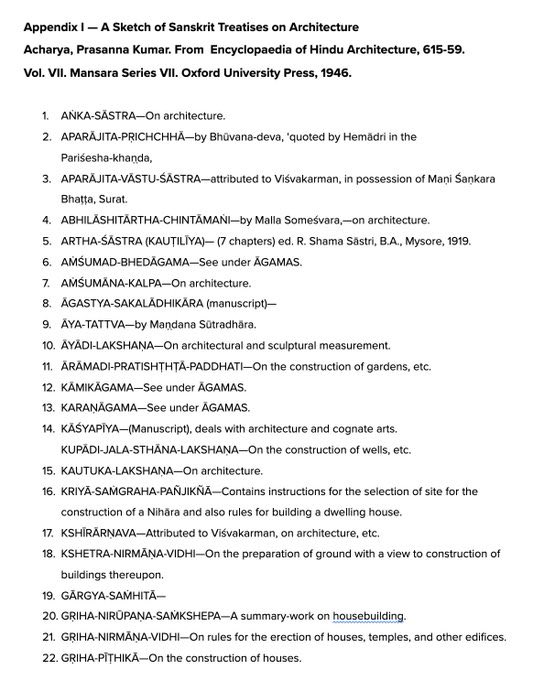
140 + technically elaborate manuals on royal, residential & temple architecture, garden design and iconography alone, besides innumerable incomparable temples, forts, caves and palaces long before Mughals ever stepped foot in India.
In contrast the Mughals borrowed Persian for their courtly language, had no cuisine to speak of, and ZERO technical manuals on art or architecture. Not even ONE single Timurid manual on art & architecture exists as opposed to 141+ Hindu technical manuals on ancient art & architecture alone.
And India has always had a hoary tradition of unsurpassed religious syncretism thousands of years before the Mughals ever got here. The only Mughal “syncreticism” was in collectively destroying Hindu, Buddhist and Jain places of worship, gods and goddess & sacred books.
Your blatantly ahistorical drivel has nothing to do with real history
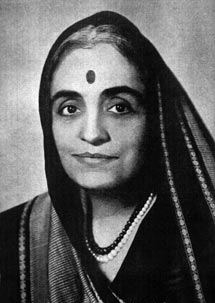
Sumati Morarjee was the "Admiral of the Indian Merchant Navy" at a time when women were not even allowed on docks w/o a male escort.
In the 1920s & 30s, British shipping companies like P&O had a firewall around Indian ports. They used a predatory pricing strategy called deferred rebates. If an Indian merchant used an Indian ship just once, the British would cancel all their previous discounts, effectively bankrupting them.
Sumati (who took over the reins of Scindia Steam Navigation at just 23 yrs old) realized this was not a business war; it was a Network War. She began building a loyalty mesh. She convinced Indian merchants that using Indian ships was a nationalist code, a way to keep Indian wealth within the local server.
Most people know that Srila Prabhupada went to New York with $7 & a crate of books to start ISKCON. But the Back-end Sponsor was Sumati. Prabhupada approached her multiple times. Her managers said no because he was an elderly man with no money & a history of heart issues, a High Risk Passenger. Sumati looked past the Risk Assessment. She felt his mission was a form of cultural export. She personally overrode her board & issued him a free ticket on the cargo ship Jaladuta.
She grew the Scindia fleet to 43 massive ships. She pioneered the Training Ship concept (the Dufferin). She realized that if Indians did not know how to navigate, they would always be users & never administrators of their own waters. She turned a generation of Indian youth into world-class sailors.
She was elected the President of the Indian National Shipowners' Association multiple times & was the 1st woman ever to head the International Shipping Federation in London, the very Server Room of the people who once tried to block her.
Why I am so obsessed with @Lenskart_com and their lying CEO @peyushbansal ? I am obsessed with Lenskart because we Hindus have short memories. We flare up, we trend for a day, we forget. We move on.
Corporate India knows this. They have studied our pattern. They wait us out, before launching another anti-Hindu policy, another advertising campaign that demonises Hindu values.
Lenskart is not the disease. I know that Lenskart is just a symptom of the larger disease, of corporate India looking down upon Hindu culture and values. But you never ignore a symptom. You treat the symptom first, then you trace it back to its source. This is exactly what I am doing. Taking this matter to its logical conclusion, whether anyone stands with me or not.
A few years ago, I started #NoBindiNoBusiness alone.
No big handles. No political parties. No Hindu organisations supported me. All I got at first was ridicule, abuse, trolling. But then, something miraculous happened, ordinary Hindus, from Delhi to Dibrugarh supported me. They were tired of being invisible in their own land, tired of their sacred symbols being erased by the very brands that profit from them. The campaign became a success, everyone knows that.
This is another battle from the same war for cultural identity. I have been called obsessed before. I have been abused before. I have been ridiculed before. But what I have is tenacity.
I have been called a lone warrior tilting at windmills. But some windmills are real monsters. And someone has to fight them. Someone has to stay. Someone has to refuse to be distracted by the next outrage, the next news cycle.
I am not going anywhere.
Mock me. Troll me. Laugh at me. Every taunt sharpens my resolve. Every dismissal reminds me why this matters. I have a voice. I have presence. I have credibility and I know how to use it, for this cause, on this battlefield, until there is a result worth recording.
The question is not whether I will see this through. The question is, will all of you? #AntiHinduLenskart
🚨
SHE IS THE WONDER KID
SHE IS THE FUTURE ! 💥
SHARVAANICA A.S. IS THE WORLD U12 RAPID CHAMPION 🏆
11 yo Sharvaanica wins U12 World Rapid Chess Championships by a huge 3 pt margin (10.5/11).
She had won U10 World Rapid C'ships last year
Known for delivering spotless victories! She is the star ⭐
In Tokyo, there's a cleaning crew that does the impossible every 12 minutes.
They're called TESSEI. They clean the Shinkansen bullet trains at Tokyo Station.
When a train arrives, it stops for 12 minutes before departing again.
Two minutes for passengers to exit.
Three more for the next batch to board.
That leaves seven.
In those seven minutes, one person must:
- Clean 100 seats
- Wipe every tray table
- Vacuum the floor
- Rotate every seat to face the new direction of travel
- Replace all headrest covers
- Check the overhead bins
- Bow to incoming passengers
Seven. Minutes.
They do this hundreds of times a day.
Harvard Business School published a case study about them.
The New York Times called it "the 7-minute miracle."
Tourists now stand on the platform just to watch.
Before they start, they bow to the train.
When they finish, they line up and bow to the passengers.
They're paid by the hour. Many are in their 50s and 60s.
Japan didn't invent cleaning.
They invented the dignity of doing small things perfectly.
Who are these three young men?
Most of us would not know.
They are
- Anant Kanhere (aged 18)
- Krishnaji Karve (aged 23)
- Vinayak Deshpande (aged 21)
On 19th April 1910 - They were hanged and their bodies burnt by the prison officers with the ash thrown in the sea near Thane.
They fought for Swaraj and gave up their lives for motherland.
They are honored as the "Martyrs of Nasik," and memorial structures stand in the city to commemorate their sacrifice for the cause of Swaraj.
Wonder why we never studied about people like Kanhere, Karve and Deshpande?
1970s. Imagine a village in the Sarguja district. Within weeks, healthy children & young men are bloating up. Their stomachs are distended like footballs (ascites), their skin turns a haunting shade of yellow, & they are vomiting blood.
The local tribes think they’ve been cursed. Rumors of a New Plague reach Delhi. International health agencies are on high alert, if this is a new virus, it could sweep through India’s malnourished (at that time) heartland like wildfire.
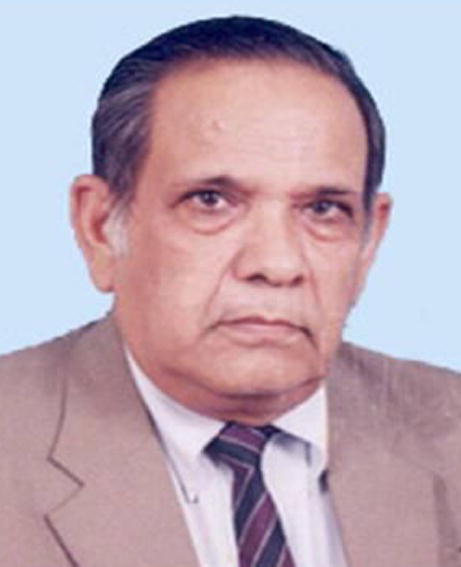
Dr. Badri Nath Tandon & his team arrive like a mathematical strike force. They notice something bizarre. The disease stops at a specific geographical line. On 1 side of a trail, everyone is dying. On the other, they are perfectly healthy. If it were a virus, it would have crossed the trail. If it were the water, the whole valley would be sick. Tandon realizes the killer is not in the air/the water, it is in the Jowar (Millet).
he team performs medical forensics on the grain stores. They find tiny, heart-shaped seeds mixed in with the millet. Crotalaria retusa, known locally as Jhunjhunia because the seeds rattle"in their pods.
The Toxins: Pyrrolizidine alkaloids.
Once ingested, these alkaloids travel to the liver. They cause the tiny veins in the liver to swell shut (Veno-occlusive disease). The liver literally suffocates from the inside out. The blood has nowhere to go, so it leaks into the stomach cavity, causing the horrific bloating.
There was no cure. The poisoning"had already happened. But they had to stop the next wave. Tandon & Ramalingaswami used Density Math. They realized that the Jhunjhunia seeds were slightly lighter/differently shaped than the Jowar.
They sat with the tribal women & showed them a specific Sieving & Winnowing technique. They turned a traditional kitchen chore into a life-saving chemical separation process. By the time the next harvest came, the plague vanished.
Do you know the director who made back to back movies in Sanskrit and even won National Awards for em?
Ganesh Venkataramana Iyer aka G.V.Iyer a Tamil Brahmin from Nanjanagud near Mysore who went on to become one of Kannada Cinema's greatest directors.
He was the one who gave Dr. Rajkumar his first break as a hero with Bedara Kanappa, and later would direct him in the magnum opus Ranadheera Kanteerava based on the life of the Wodeyar ruler.
His Hamsageethe with Anant Nag was another classic.
He would however be remembered for his 2 Sanskrit movies, Adi Shankaracharya, first ever Sanskrit movie that went on to win 4 National Awards and on Bhagavad Geeta.
He also directed two movies on Madhvacharya in Kannada, and Ramanujacharya in Tamil.
He made a biopic on Swami Vivekananda with Sarvadaman Banerjee in lead role and Mithun Chakraborty as Ramakrishna Paramahansa for which he won National Award for Best Actor too.
Iyer was one of the few movie makers who truly believed in cinema as an art form, that went beyond mere commercial success.