It seems like everything to do with AI rn has an absurdly wide distribution of outcomes, and the variance of those outcomes is equally massive. Small tweaks to assumptions, or small forks in the path today, lead to wildly different worlds tomorrow.
This isn’t isolated to the obvious compute and infrastructure stuff, though it’s certainly true there. For example, you can build an equally compelling cases for a decade-long memory shortage as you can for demand destruction triggering innovations that route around the bottleneck. But that uncertainty extends to the consumer side and to the very shape of the AI market itself.
It feels just as plausible that Anthropic ends up owning everything from infrastructure through the application layer as it does that the labs commoditize and value accrues further up the stack. So where do the gains actually land? Labs? Hyperscalers? Implementers? The yet-to-be-known innovators sitting on top of the whole thing?
Maybe every technological cycle looks like this from the inside? When I became a true believer in early 2023, I opted to focus on picks and shovels precisely because I knew I had no shot at predicting what AI would look like ten years out. The infrastructure thesis didn’t require that prediction. We were going to need more of the stuff that makes AI work, full stop. I assumed the picture would sharpen as things played out and better opportunities would surface beyond pure compute growth.
If anything, it’s gotten more opaque.
That’s not to say nothing else has worked. Agentic AI enablers have been solid. But where the AI market actually settles in five years? Genuinely anyone’s guess.
Don’t get me wrong, I’m happy that’s the case. It means there’s still opportunity in being mentally flexible enough to react to new developments as they happen. And there are areas I have very strong opinions about what the future looks like. But I’d be lying if I said I thought, three years ago, that the path would still be this uncertain today.
New monthly developer count in crypto just fell to levels not seen since 2017.
One of the metrics we have always preached in crypto and I think is going to be completely irrelevant very quickly is the developers activity or count.
Back in the day this was really important to understand an L1/L2 health.
Historically, developer count and activity mattered because writing code was expensive. If a chain had a lot of real developers shipping wallets, protocols, tooling, SDKs, infra, and apps, that usually meant there was genuine mindshare, and experimentation. It was an imperfect metric, but it was still a decent proxy for how much human capital was committed to the ecosystem.
First, code generation is essentially free. One developer can now produce the output that previously required several people. So a lower developer count may not mean a weaker ecosystem at all. You could have fewer developers producing better products.
So with AI, developer activity becomes less useful as a health metric because it stops being a scarce input. When something becomes cheap and abundant, it usually loses value as a signal.
Crypto is open source. We don’t need millions of developers all rewriting the same thing to build new products. Smart contracts were always meant to be capital- and human-efficient.
Curious what the folks at @electriccapital@avichal think
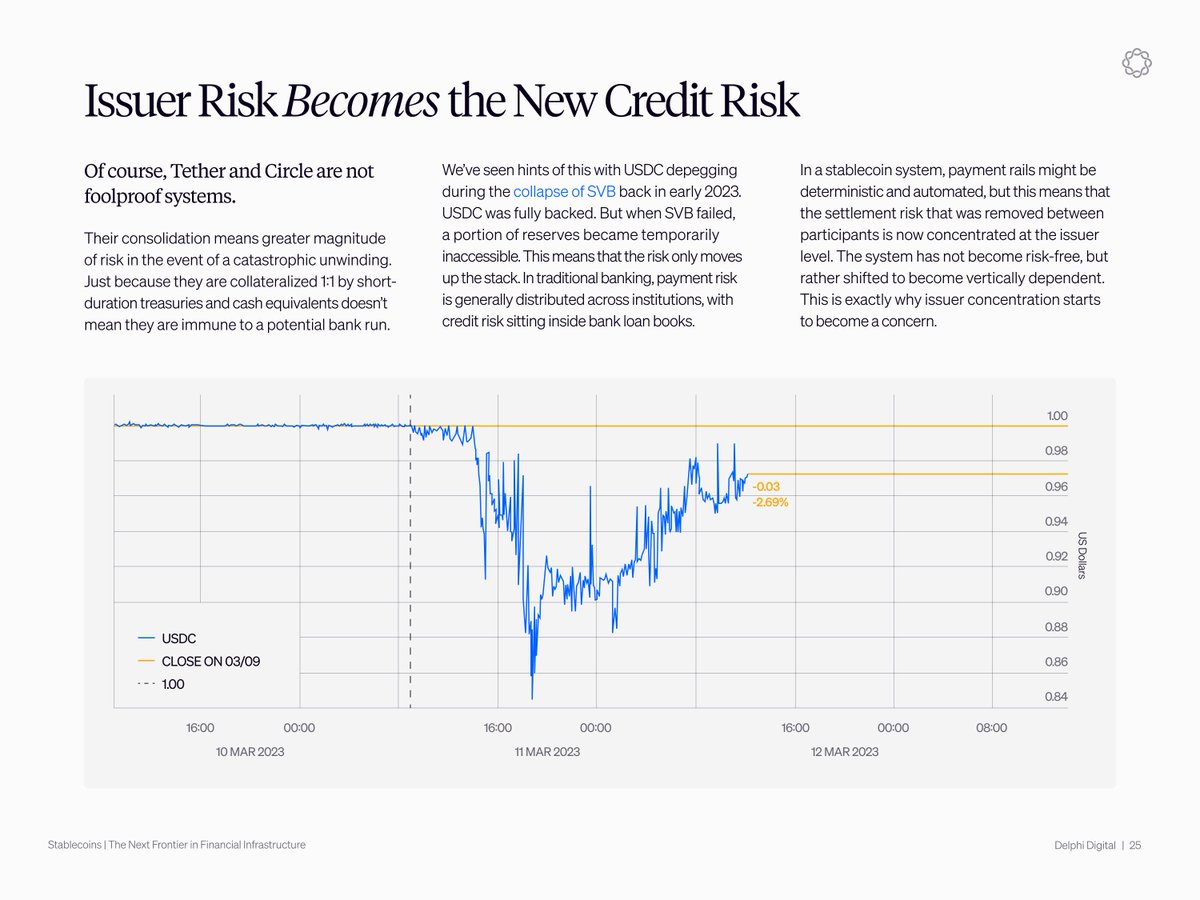
A stablecoin can be fully collateralized and still fail.
Issuers can hold enough reserves to cover every dollar in circulation and still depeg if those reserves can't be accessed when they're needed.
The BIS made this point in their paper "On par: A Money View of Stablecoins." They draw the analogy that stablecoins are the modern equivalent of Eurodollars, with onchain private dollar deposits replacing offshore ones.
Traditional banking maintains par through central bank settlement, primary dealer networks, standing repo facilities, and a lender of last resort.
Stablecoins don't have any of these mechanisms. If there's a run there's no forward market, no credit facility, and no mechanism to absorb the pressure before it hits the reserves directly.
The analogy extends beyond Eurodollars. In their current form stablecoins resemble the wildcat banks of 19th century America.
They operate across fragmented jurisdictions without any of the institutional infrastructure that keeps the traditional banking system stable.
But this is the same trajectory the banking system itself went through. Wildcat banking was fragmented but it eventually led to federal oversight and consolidation that made the system functional at scale.
The regulation coming for stablecoins is what made the banking system functional at scale too.
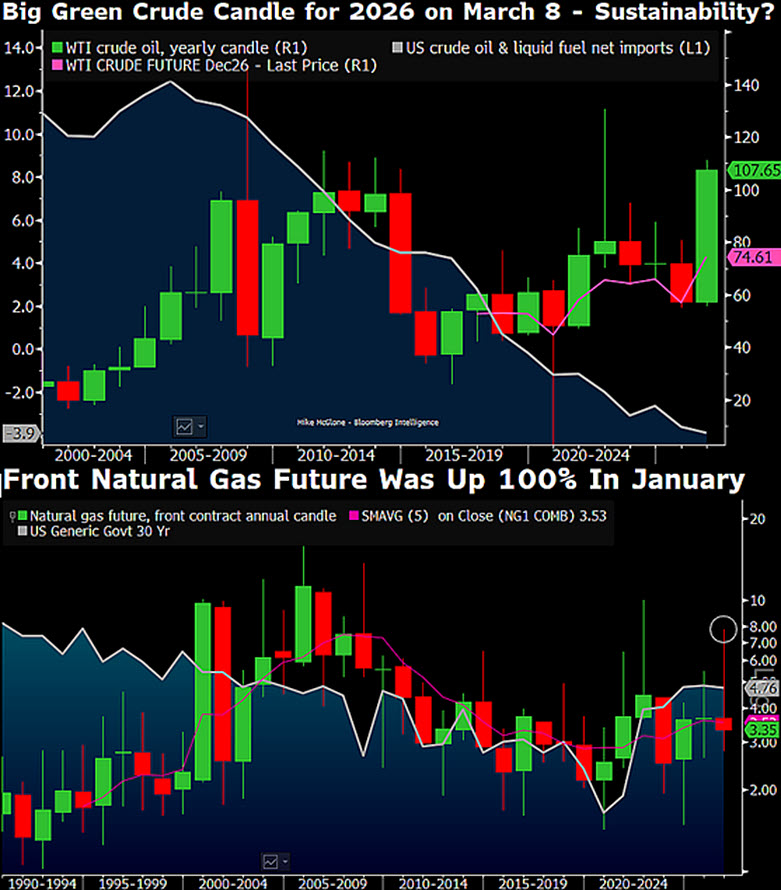
If the front-month WTI crude oil future matches natural gas’s 100% gain in 2026 to its January peak, it would reach about $115 a barrel -- then what by the midterms?
Gas has reversed all of those gains.
Spiking crude can be its own worst enemy.
Plunging cryptos and surging volatility in precious metals, and energy are trickling into stocks.
Full report on the Bloomberg here: https://t.co/JWGsCezSNn {BI COMD}
#crudeoil #naturalgas #energy #stockmarket
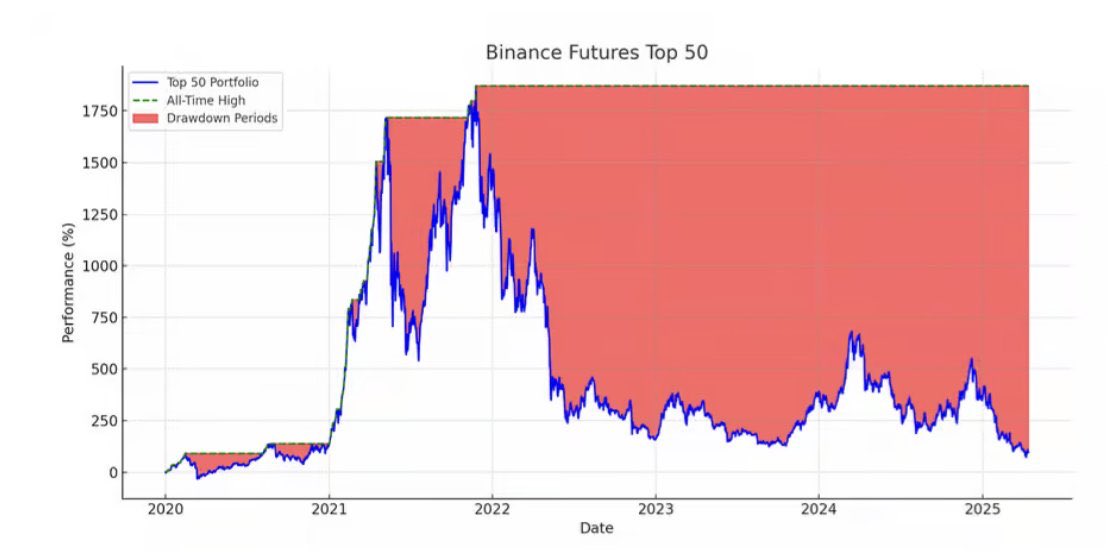
This chart perfectly illustrates why sentiment is bearish/tired even though $BTC still above $100k
A basket of the top 50 altcoins now trading BELOW where they were post-FTX crash in 2022
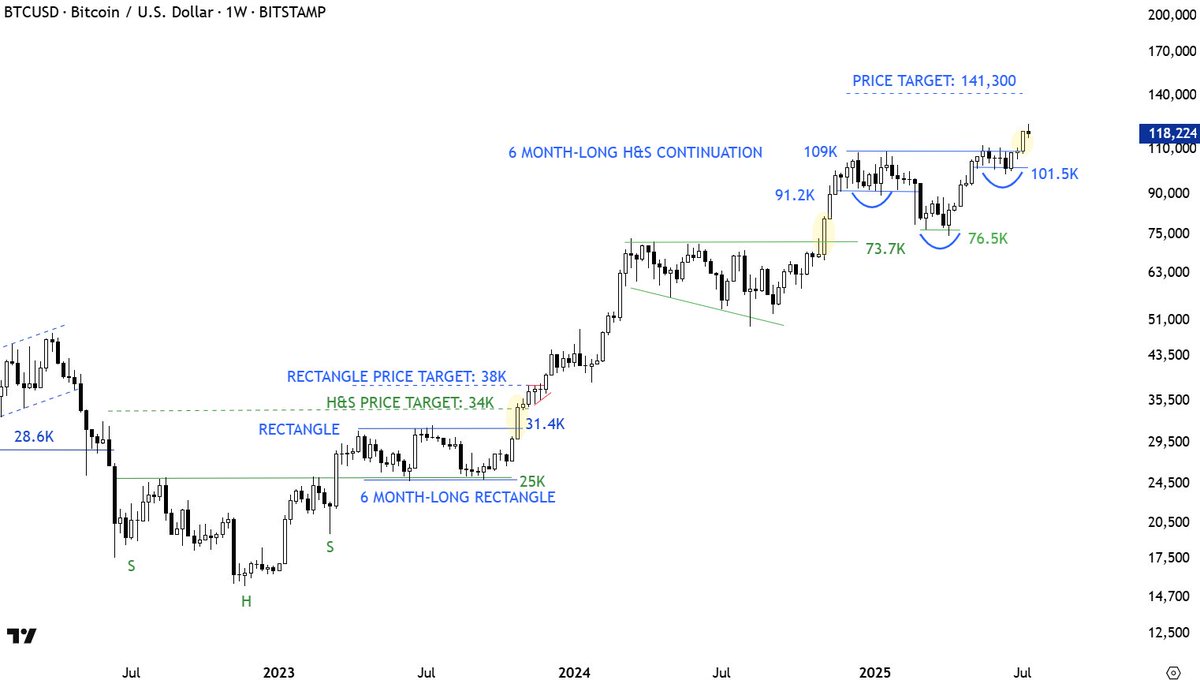
If $BTCUSD holds on to its gains without retracting much of last week's candle, I will see this as bullish. Not pulling back to the pattern boundary is usually a sign of impatience of buyers.
Excited to announce the official listing of #Carmin on @Poloniex 💫💫 Get ready to join us on this new journey towards growth and success.
📲 CARMIN Deposit: https://t.co/wLGRZQKOks
💹 CARMIN/USDT: https://t.co/xQKZpal2z2
Details: https://t.co/0gB8ovs7yD
#Listing#ZKrollups