🔥 Shifting the Paradigm of Tamil Geopolitical Discourse!
I am officially launching this dedicated platform to provide rigorous, long-form English analyses on Eelam Tamil nationalism, regional geopolitics, and human rights discourses affecting South Asia.
As Editor-in-Chief of Ezhukathir & Elugai media, our mission is to bypass superficial populist rhetoric and deliver intellectually grounded, non-partisan critiques that challenge structural hegemony and protect collective memory.
Follow for uncompromised editorial essays, transitional justice updates, and independent geopolitical commentary.
📖 Read our official long-form research publications here:
🔗 https://t.co/fwdA9dvyRo
🔗https://t.co/n3X2sRf2Kh
🔗https://t.co/TWmPuoRuNO
- Krishna Ambalavanar | Geopolitical Analyst & Journalist
Repeating fabricated claims louder does not make them historical truth, @kalaiy. Your latest post contains glaring historical contradictions that collapse under basic scrutiny. Let’s set the record straight once and for all:
(Refuting Point 1 - TELO as "Leftist" & 1986 Context):
Calling TELO a "leftist mass movement" exposes your complete ignorance of Eelam history. TELO was purely a militant group with zero socialist ideology, notorious in Jaffna for internal factional killings (like the murder of Das) and extortion. Meanwhile, in 1986, the LTTE was fighting J.R.’s military siege—not colluding with him. Equating liberation movements with state oppressors is a classic Colombo propaganda tactic.
(Refuting Point 2 - "Pro-American Capitalist" Absurdity):
2. Calling V. Prabhakaran a "pro-American capitalist" is laughable. The US proscribed the LTTE in 1997, armed Sri Lanka’s military, and provided intelligence that aided the 2009 onslaught—precisely because the LTTE refused to become a Western geopolitical proxy. Unlike Colombo’s neoliberal elites, the LTTE built an anti-imperialist, self-reliant cooperative economy.
(Refuting Point 2b - Paper Laws vs. Ground Reality on Caste & Dowry):
3. Claiming caste and dowry were "abolished in the 1950s" ignores ground reality. Colombo’s paper laws (like the 1957 Prevention of Social Disabilities Act) never ended temple exclusion or caste oppression in Jaffna. It was the LTTE’s strict legal enforcement and social reforms that dismantled untouchability and dowry coercion in practice—not toothless statutes from Colombo.
(Refuting Point 3 - Accountability & Closing):
4. Acknowledging a tragic mistake openly, apologizing to affected communities, and inviting them back—as Anton Balasingham and the LTTE leadership did—requires moral courage that the Sri Lankan state has never shown in 78 years of state-sponsored pogroms.
History is recorded in lived reality, not revisionist tweets. This discussion ends here.
A clear message to @kalaiy:
The Liberation Tigers of Tamil Eelam (LTTE) was never merely an armed group—it was a profound, intellectually grounded people’s liberation movement that nurtured us with deep philosophical clarity, geopolitical literacy, and critical lessons on the double games of international media and global intelligence agencies.
From revolutionary socialism to understanding postmodernism and right-wing corporate capitalism, the movement trained its cadres and people to dissect dominant narratives and think critically.
It was never a movement enamored with weapons; rather, it was a mass people’s struggle built upon the blood, sacrifice, and unwavering conviction of thousands of historical heroes marching under the banner: "Let the people's revolution erupt; let independent Tamil Eelam bloom!"
Do not assume you can casually distort that sacred history with passing, unsubstantiated claims.
#TamilEelam #EelamTamils #History #Historiography #SelfDetermination #Elukathir
Calling documented history "fantasy" does not turn your ideological distortions into truth, @kalaiy. Let’s dismantle each of your five claims with verified historical and archival records—not selective propaganda:
(Point 1 & 2 - Fratricidal clashes & Leftist parties):
1 & 2. The 1986 clashes were not an "ideological purge of leftists" at J.R.'s behest; they were survival battles against groups compromised by Indian intelligence (RAW) that engaged in extortion and undermined the liberation struggle. Meanwhile, it was Sri Lanka's pro-state "left" (LSSP/CP) that historically backed Sinhala-only policies and state repression against Tamils, forfeiting moral legitimacy in the homeland.
(Point 3 - "Socialist Tamil Eelam"):
3. Your comparison between J.R. Jayewardene’s 1978 constitutional label and the LTTE’s "Socialist Tamil Eelam" is absurd. The LTTE abolished caste discrimination, banned dowry, institutionalized women's liberation, and ran cooperative economic structures in its de facto state—concrete anti-feudal, socialist practices that J.R.’s neoliberal regime violently opposed.
(Point 4 - Anton Balasingham & 1990 Muslim Expulsion):
4. You claim Anton Balasingham never addressed the 1990 expulsion of Northern Muslims. Fact check: Both Anton Balasingham and the LTTE leadership formally acknowledged the 1990 expulsion as a "historical blunder" (including during the 2002 peace talks and in Balasingham’s own writings) and invited displaced Muslims to return to their homes.
(Point 5 - Victor Ostrovsky & Mossad Myth):
5. You cite a former Mossad agent—referring to Victor Ostrovsky’s By Way of Deception. Even Ostrovsky’s controversial account described rogue intelligence deception games to sell arms to Colombo—never an ideological alignment with Zionism or "compulsory Zionist reading" for LTTE cadres. Weaponizing intelligence double-games to smear an anti-colonial struggle is pure intellectual dishonesty.
(Closing Statement):
Resorting to distorted half-truths to equate an oppressed nation's liberation movement with its oppressors only serves Colombo's narrative. History is recorded in archives and lived struggle—not in revisionist tweets.
Your counterarguments are pure fantasy, manipulating historical facts.
Tell me why:
1. It was the LTTE that banned other Eelam liberation organizations and hunted down and killed hundreds of Tamil freedom fighters. Everyone knows this.
2. Why did the LTTE ban all leftist political parties and trade unions? Their counterpart, the UNP led by J.R., arrested leftists in the South under the PTA. Nevertheless, they could not eliminate all the leftists. What Sinhala chauvinists could not accomplish in the South, the LTTE finished off in the North and East.
3. When the neoliberal guru J.R. Jayewardene named the country the “Socialist Democratic Republic of Sri Lanka,” it is no wonder that the ultra-Tamil-nationalist followers of the LTTE named theirs “Socialist Tamil Eelam”! Birds of a feather flock together.
4. Although Anton Balasingham came from a leftist party, he betrayed its leftist cause. After joining the LTTE, he traded socialism for ultra-nationalism. He never condemned racially motivated attacks by the LTTE. If LTTEers were leftists, as you want to portray them, how could they commit ethnic cleansing of Muslims?
5. The Israeli connection is well documented. In the 1990s, questions were already raised in Parliament about the Sri Lankan Army training together with the LTTE in Israel. A former Mossad agent also confirmed it in his book. Of course, both the Sri Lankan Army and the LTTE would deny it, because they are in the same boat.
Calling documented history "fantasy" does not turn your ideological distortions into truth, @kalaiy. Let’s dismantle each of your five claims with verified historical and archival records—not selective propaganda:
(Point 1 & 2 - Fratricidal clashes & Leftist parties):
1 & 2. The 1986 clashes were not an "ideological purge of leftists" at J.R.'s behest; they were survival battles against groups compromised by Indian intelligence (RAW) that engaged in extortion and undermined the liberation struggle. Meanwhile, it was Sri Lanka's pro-state "left" (LSSP/CP) that historically backed Sinhala-only policies and state repression against Tamils, forfeiting moral legitimacy in the homeland.
(Point 3 - "Socialist Tamil Eelam"):
3. Your comparison between J.R. Jayewardene’s 1978 constitutional label and the LTTE’s "Socialist Tamil Eelam" is absurd. The LTTE abolished caste discrimination, banned dowry, institutionalized women's liberation, and ran cooperative economic structures in its de facto state—concrete anti-feudal, socialist practices that J.R.’s neoliberal regime violently opposed.
(Point 4 - Anton Balasingham & 1990 Muslim Expulsion):
4. You claim Anton Balasingham never addressed the 1990 expulsion of Northern Muslims. Fact check: Both Anton Balasingham and the LTTE leadership formally acknowledged the 1990 expulsion as a "historical blunder" (including during the 2002 peace talks and in Balasingham’s own writings) and invited displaced Muslims to return to their homes.
(Point 5 - Victor Ostrovsky & Mossad Myth):
5. You cite a former Mossad agent—referring to Victor Ostrovsky’s By Way of Deception. Even Ostrovsky’s controversial account described rogue intelligence deception games to sell arms to Colombo—never an ideological alignment with Zionism or "compulsory Zionist reading" for LTTE cadres. Weaponizing intelligence double-games to smear an anti-colonial struggle is pure intellectual dishonesty.
(Closing Statement):
Resorting to distorted half-truths to equate an oppressed nation's liberation movement with its oppressors only serves Colombo's narrative. History is recorded in archives and lived struggle—not in revisionist tweets.
Historical Fabrication and the ‘Zionist’ Smear: A Fact-Based Rebuttal to Kalaiyarasan’s Disinformation
In today’s digital echo chambers, certain commentators devoid of archival rigor or geopolitical literacy routinely manufacture blatant falsehoods to serve narrow ideological vendettas. A recent post by X user @kalaiy (Kalaiyarasan) exemplifies this trend—claiming that contemporary Tamil nationalists are "extreme right-wing fascists," that the Liberation Tigers of Tamil Eelam (LTTE) colluded with J.R. Jayewardene’s government between 1986 and 1990 to eliminate leftist Tamil nationalists, that both the Sri Lankan Army and the LTTE trained at the very same camp in Israel, and that Zionist literature was compulsory reading for LTTE cadres. Dismantling these fabricated claims with verified historical facts is essential.
First, asserting that the LTTE collaborated with J.R. Jayewardene’s regime from 1986 to 1990 turns history upside down. In 1986, Jayewardene imposed a crippling economic blockade on Jaffna, followed in May 1987 by the brutal "Operation Liberation" military offensive in Vadamarachchi. The brief 1989–1990 tactical engagement with the Premadasa administration was strictly aimed at compelling the withdrawal of the Indian Peace Keeping Force (IPKF) from the Tamil homeland—not an ideological alliance with Colombo. Furthermore, the LTTE’s foundational political doctrine was "Socialist Tamil Eelam," intellectually shaped by Marxist-Leninist theoreticians like Anton Balasingham. Branding an anti-imperialist, socialist national liberation movement as "right-wing fascist" is sheer intellectual dishonesty.
Second, the claim that the LTTE and the Sri Lankan military trained in the same Israeli camp and received Israeli arms until 2009 is a pure fabrication contradicted by every credible intelligence and diplomatic record. In reality, it was J.R. Jayewardene’s government that opened an Israeli Interest Section in Colombo in the 1980s, securing Mossad intelligence assistance alongside Israeli Dvora fast-attack craft and Kfir fighter jets to wage war against Tamils. Conversely, the LTTE maintained historic solidarity with Palestinian liberation movements—specifically the PLO and PFLP—and its early cadres received guerrilla training in Palestinian camps in Lebanon during the late 1970s, never in Israel.
Third, the allegation that Zionist texts were mandatory reading for LTTE fighters is completely baseless. Political education within the LTTE centered on global anti-colonial struggles and revolutionary figures such as Che Guevara, Fidel Castro, Ho Chi Minh, Subhas Chandra Bose, and Bhagat Singh. There is a fundamental moral and political chasm between an indigenous nation fighting to liberate its ancestral homeland from state occupation and settler-colonial expansionism. Weaponizing contemporary anti-Zionist sentiment to smear the Eelam Tamil liberation struggle is a cynical attempt to delegitimize a people's rightful quest for self-determination.
By Krishna Ambalavanar for Elukathir
@krishnaambalav1@AgathyanThe5th
At present, almost all so-called Tamil nationalists are in fact extreme right-wing fascists who collaborated with the LTTE and still advocate its Zionist programs.
From 1986 to 1990, the LTTE wiped out all leftist Tamil nationalists in the North and East in collusion with the Sri Lankan government, then led by neoliberal guru J. R. Jayewardene.
Both the Sri Lankan Army and the LTTE received training in Israel at the same training camp! Until 2009, Israel provided military hardware to both the Army and the LTTE.
The LTTE never hid its pro-Zionist stance. Zionist ideology was compulsory literature and required reading for LTTE cadres.
👇👇👇
The continuing struggle for social justice in the north
A large section of a community that spoke one language and worshipped one God was segregated as ‘depressed castes’ solely by virtue of birth, living as slaves denied their basic human rights. The 1960s marked the historical intersection when a generation broke its silence and stood tall against this long-standing injustice.
https://t.co/GbZHg8QsUq
Stranded on the Margins of a 12-Year Exile: A Jaffna Mother’s Plea and the Moral Duty of the Eelam Tamil Community
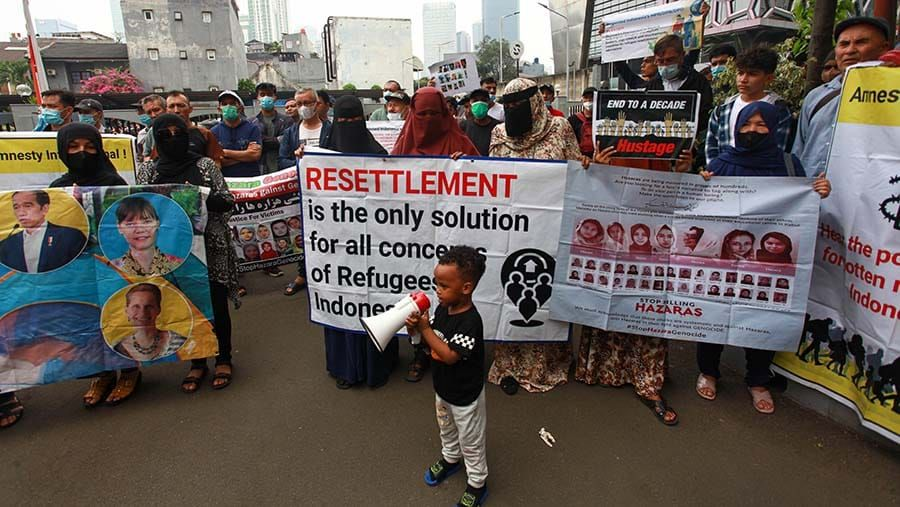
Seventeen years after the guns fell silent in Sri Lanka, the lingering human cost of the conflict continues to play out in forgotten corners of the world. The plight of Geethabanu Pranavan, a Tamil mother from Point Pedro in Jaffna, and her young daughter Anchana, who have been stranded as refugees in Indonesia for the past 12 years, stands as a stark reminder of this unfinished tragedy. Having fled Sri Lanka with her husband Pranavan in 2014, Geethabanu registered with the United Nations High Commissioner for Refugees (UNHCR) in Indonesia—only to find herself trapped in a decade-long limbo with no legal right to work and no clear path forward.
The family’s ordeal deepened catastrophically in 2022 when her husband passed away in Indonesia due to inadequate medical care. Left alone to raise her daughter, Geethabanu relied on modest rent and food stipends provided through UNHCR’s local implementing partner, Yayasan Cita Wadah Swadaya (YCWS). However, in July 2026, YCWS abruptly halted their rent payments and subsequently moved to terminate their food allowance entirely. After two failed prospects for third-country resettlement, Geethabanu issued a heartbreaking appeal on social media: "From next month onwards, my daughter and I may have nothing to eat. I am not asking for resettlement in another country anymore; we simply want to return to our homeland."
Following reports published by Jaffna Monitor and https://t.co/y3LQAWsbaL on October 15, 2026, Sri Lanka’s Deputy Minister of Foreign Affairs and Foreign Employment, Arun Hemachandra, stated in a Facebook comment that he was looking into the matter. Yet, a full month later, there has been no official confirmation regarding whether emergency travel documents have been issued or if arrangements have been made to bring the mother and daughter safely back to Jaffna.
In the face of bureaucratic inertia, the global Eelam Tamil community—both in the homeland and across the diaspora—must step up with concrete, coordinated action rather than passive sympathy:
Sustained Diplomatic & Consular Pressure: Tamil diaspora organizations and human rights advocates must actively press the Sri Lankan Ministry of Foreign Affairs and the Sri Lankan Embassy in Jakarta to expedite Emergency Travel Documents and fund their repatriation without further delay.
Direct Parliamentary Intervention:
Tamil Members of Parliament representing Jaffna and the North-East must raise Geethabanu’s case directly with Foreign Minister Vijitha Herath and Deputy Minister Arun Hemachandra, ensuring accountability until the mother and daughter land safely in Sri Lanka.
Livelihood and Reintegration Support in Jaffna:
Having lost both her own parents and her in-laws, Geethabanu fears returning home with no family safety net. Local civil society groups in Point Pedro, women’s welfare organizations, and diaspora charities must collaborate to guarantee secure housing, schooling for her daughter, and a sustainable livelihood upon their return.
Mapping Forgotten Refugees:
Beyond this single case, diaspora networks should establish a dedicated legal and welfare task force to document and assist other stranded Tamil refugee families languishing in Indonesia, Malaysia, and transit camps across the region.
True solidarity is measured not by rhetoric, but by our collective ability to rescue one of our own from destitution. Bringing Geethabanu and her daughter home—and ensuring they can rebuild their lives with dignity—is an immediate moral test for the Tamil polity.
By Krishna Ambalavanar for Elukathir
“We may have nothing to eat.”
Widowed in Indonesia, a Sri Lankan Tamil refugee asks to be sent home.
Now, with rent support gone and food assistance ending after 12 years in exile, Geethabanu Pranavan, a Tamil widow from Jaffna, is pleading for help to return home with her daughter.
Urging immediate action: @MFA_SriLanka@HMVijithaHerath@Hon_Arun_Hemach@ConsularSL
Read full analysis: 👇
#Jaffna #SriLanka #HumanRights #EelamTamils #Elukathir
How has Buddhist monastic activism evolved in post-war Sri Lanka?
Viewing Ven. Gnanasara Thero and the BBS through Prof. Stanley Tambiah’s seminal 'Buddhism Betrayed?' framework, Prof. Amarasiri de Silva offers a sharp sociological assessment of extra-parliamentary majoritarianism, judicial accountability, and Sri Lanka’s fragile social fabric. A must-read analysis.
Preserving the name “Tamil Eelam National Heroes’ Day” is not a mere debate over words. It is about not allowing the political identity that a liberation struggle created for itself to be diluted for electoral convenience. Calling it “plucking hair from an egg” is a way of ignoring the history behind that identity.
When you have no facts, you attack the person. That is not new. But history will continue to watch the difference.
Philosophical Aberration and Degraded Politics
Politics is neither a mere struggle for power nor an arena for empty rhetoric; it is a noble philosophical journey aimed at guiding human society toward justice and progress. Every transformative mass movement in history has been built upon a profound philosophical foundation. However, in contemporary political discourse—particularly across digital spaces—we are witnessing a severe erosion of ideological depth, giving rise to what can only be termed philosophical aberration. The political sphere, which ought to be a platform for debating principles, historical truths, and social ethics, is increasingly degenerating into a marketplace of personal insults and vulgar rhetoric.
Philosophical aberration occurs when individuals or groups lose sight of the core essence of an ideology, clinging instead to superficial forms and distorting foundational principles to suit narrow, self-serving agendas. When a faction fails to grasp the socio-political nuances and historical evolution of a struggle, it inevitably hollows out the soul of that philosophy. Unable to comprehend complex political realities, such actors resort to degraded politics as a shield to mask their own intellectual bankruptcy.
The hallmarks of this degraded political culture are unmistakable: when confronted with logical arguments and historical facts, those lacking intellectual rigor abandon the debate and launch vicious personal attacks, slander, and character assassination. As Socrates famously observed, "When the debate is lost, slander becomes the tool of the loser." True political thinkers engage with ideas; those suffering from philosophical aberration mistake personal malice for political activism.
At the root of this decay lies blind partisan loyalty and the death of critical thinking. When constructive scrutiny is met not with introspection, but with reflexive labeling, witch-hunts, and hostility, politics crosses the threshold into authoritarianism. History repeatedly demonstrates that any political movement that suppresses critical inquiry ultimately engineers its own demise.
For a society to advance intellectually and politically, it must reject this culture of degradation and return to principled, philosophical discourse. Politics is not a cheap game of linguistic mudslinging; it is a solemn historical responsibility to bequeath truth, ethics, and clarity to future generations. Rising above petty hostility to champion deep philosophical clarity is the urgent imperative of our time.
Krishna Ambalavanar
National Standards and Diaspora Psychology: The Roots of the Debate Over “Tamil Eelam National Heroes’ Day”
The enduring strength of a liberation struggle lies not merely in the immense sacrifices made on the battlefield, but in the political documents, institutional frameworks, and national standards it establishes for posterity. Throughout its decades-long journey, the Liberation Tigers of Tamil Eelam (LTTE) meticulously formulated administrative structures—befitting a de-facto state—and definitive policy decisions. Foremost among these settled national proclamations is the designation of November 27 as “Tamil Eelam National Heroes’ Day” (தமிழீழ தேசிய மாவீரர் நாள்). However, the recent tendency among certain segments of the Tamil diaspora to turn these settled national standards into subjects of casual public debate—driven by personal whims and selective nostalgia—warrants a deeper socio-political and psychological examination.
Digging up archival photographs and posters from the 1990s in London or Canada to argue that it was “previously written only as Heroes’ Day,” or questioning why it cannot simply be called “Karthigai 27,” reveals a profound psychological trap: historical disconnection. A liberation movement is never static; it is an evolving political organism. What began in 1989 as an organizational commemoration naturally matured, alongside the struggle’s transition into a nation-building phase, into “Tamil Eelam National Heroes’ Day”—a sovereign assertion of a nation’s identity. Using early-stage posters to invalidate the movement’s later, definitive policy decisions is akin to using a childhood photograph to deny the legal and intellectual maturity of an adult.
Crucially, one must recognize the profound geopolitical and constitutional weight of the Heroes’ Day speeches delivered by Tamil Eelam National Leader Velupillai Prabhakaran. Those addresses were never mere emotional eulogies; they functioned as the Annual Policy Declarations of the Tamil Eelam nation on the global stage. From the corridors of power in Colombo to diplomatic circles in New Delhi, Washington, and London, the international community closely monitored November 27 to gauge the strategic trajectory of the Tamil liberation struggle. Standing as the leader of a nation, Prabhakaran articulated the political aspirations of the Tamil people, outlining definitive stances on war, peace, and sovereignty. To trivialize a day of such monumental political gravity through semantic nitpicking and archival distractions is to erode the very political legacy those historic addresses forged.
This phenomenon is heavily fueled by the leadership vacuum and identity crisis that emerged within the diaspora following 2009. When a community struggles to advance macro-political objectives on the global stage, individuals and factions often retreat into micro-politics—manufacturing controversies over semantics, dates, and typography to position themselves as self-appointed "gatekeepers" of history. The modern digital attention economy further incentivizes this behavior, where contrarianism against established national consensus is mistaken for critical thinking and intellectual superiority.
More critically, beneath these semantic arguments lies a subconscious—or sometimes deliberate—psychology of depoliticization. There is a monumental political difference between saying “Heroes’ Day” and “Tamil Eelam National Heroes’ Day.” Stripping away the prefix “Tamil Eelam” reduces a sovereign national observance into a mere emotional ceremony of mourning. Conversely, affirming “Tamil Eelam National Heroes’ Day” anchors the concept of the Tamil Eelam nation and its right to self-determination in the global political consciousness. For some, diluting this terminology stems from assimilation anxiety and self-censorship—a desire to soften the political edges of the struggle to remain comfortable within the socio-legal frameworks of their host countries.
Collective trauma and the loss of territorial control often drive a displaced community to assert ownership over its remaining symbols in fragmented ways. Yet, national standards and foundational documents are not malleable playthings subject to individual mood swings; they were forged through immense sacrifice and strategic foresight. True political maturity for the Tamil diaspora lies not in dissecting and diluting settled national principles, but in upholding the integrity of the nation-building vision entrusted to them by the movement and its leadership, passing it intact to future generations.
Krishna Ambalavanar
Questioning the dilution of a settled national terminology is not an attack on any party—it is a defense of Tamil Eelam's historical integrity.
True respect for our history means no political party, however supportive, is above constructive scrutiny when it alters foundational national symbols. Labeling principled critique as the work of "jobless clowns" is pure intellectual bankruptcy.
Electoral Politics Swallowing History: Why Was 'Tamil Eelam National Heroes' Day' Stripped Down to a Mere 'Heroes' Day'?
History is neither a set of numbers marked on a calendar nor bright colors printed on a political poster; it is a living testament written in the blood, flesh, tears, and unmatched sacrifice of a people. Proclaimed by the Liberation Tigers of Tamil Eelam (LTTE) on November 27, 1989 (Karthikai 11), 'Tamil Eelam National Heroes' Day' (Tamileelam Desiya Maaveerar Naal) is a sacred day of remembrance for tens of thousands of fighters who laid down their lives for the liberation of their homeland. Yet, within the electoral political arena of Tamil Nadu today—specifically evident in Naam Tamilar Katchi’s 2026 Maaveerar Naal fundraising campaign—the foundational historical identity of 'Tamil Eelam National' has been omitted, reducing the commemoration to a vague, stripped-down label: 'Heroes' Day - Karthikai 11 (27-11-2026)'. This raises a piercing philosophical and political question: is this a symptom of profound historical ignorance, or is it calculated political opportunism that mortgages sacred history to avoid legal hurdles in Indian electoral politics?
When the fundamental distinction between a national liberation struggle and the electoral ambitions of a regional political party is blurred, sacred history is inevitably reduced to mere political capital. The martyrs of Tamil Eelam did not perish to serve as backdrops for a political party’s public rally or as promotional imagery for a two-million-rupee fundraising drive. They sowed themselves as seeds for the sovereignty and dignity of a nation. Severing the root words 'Tamil Eelam National' and calling it merely 'Heroes' Day' erases the geopolitical context, the revolutionary objective, and the historical truth of their sacrifice. There is a grave danger hidden in this distortion: by stripping away the true context to suit local vote-bank politics, the very essence of that blood-soaked history is slowly being buried alive.
Maaveerar Naal is a solemn day of national mourning and collective introspection, meant to be observed with dignity, silence, and deep accountability. Transforming it into a routine Tamil Nadu political rally and a public crowdfunding spectacle desecrates the sanctity of martyrdom. On one hand, thousands of living fighters—maimed, scarred, and impoverished by war—remain abandoned across the globe without basic support. On the other, the images of the fallen are leveraged to raise funds and deliver theatrical speeches for electoral mileage. Dragging a history forged in blood, tears, and uncompromising ideals into the degraded chessboard of electoral politics is nothing short of a historical erasure. To remain silent when history is distorted and sacrifice is commodified is to become complicit in that betrayal.
For Elukathir Journal,
- Krishna Ampalavanar
@Seeman4TN@NaamTamilarOrg@Saattaidurai@sabas_kris0712@RatnaKing20@KalaranjanK@arulmozhi_25@vennilaVT@Whisperer2024@TamilGuardian@Sunandha_TS@karikalaseelan
Orchestrated Sabotage as Maaveerar Week Approaches: What Lies Behind the Toxic Propaganda Asking Tamils "Not to Commemorate"?
Every year, the moment the month of November arrives, a fierce sense of collective awakening and deep reverence for supreme sacrifice ignites in the hearts of Tamils across the globe. Yet, precisely as Maaveerar Week draws near, calculated networks of psychological sabotage emerge to fracture this unity and erase historical memory. A glaring manifestation of this agenda is the recent wave of toxic, deceptive claims circulating across media and social platforms declaring: "Prabhakaran did not attain martyrdom; do not commemorate him during Maaveerar Week; we will reveal the truth when the time comes."
The true motive behind such narratives is neither genuine loyalty nor concern for the national leader; rather, it is a deliberate conspiracy to desecrate the sanctity of Maaveerar Week and sever the historical continuity of the Tamil Eelam liberation struggle. For over seventeen years, the very same forces have spun endless myths of "when the time comes" to trap the Tamil people in a state of passive illusion, effectively paralyzing their political consciousness and ground-level mobilization. Today, those same tired tactics are being recycled once again to sow confusion and weaken our collective resolve.
'Tamil Eelam National Heroes' Day' is not merely a ritual centered around individuals; it is the lifeblood and vital historical bridge that passes down the unmatched sacrifice of tens of thousands of martyrs and the core ideals of national liberation to future generations. By instructing people "not to commemorate," a covert psychological war is being waged to shatter this bridge and alienate Tamils from their own roots. Our adversaries—and those acting as their instruments—know full well that when memory is erased, history is forgotten, and when history is forgotten, a nation's thirst for freedom dies completely.
Therefore, as November unfolds, the Tamil people must remain fiercely vigilant and decisively reject these fabricated illusions and divisive conspiracies. Refusing to fall prey to baseless speculation and theatrical distractions, we must stand firm, uphold our blood-soaked history, and honor the supreme sacrifice of our martyrs with uncompromising clarity and resolve. That alone is the ultimate weapon to crush every plot designed to erase our identity.
- Krishna Ambalavanar
"Which law?" You ask. Look at the UN Charter (Art 1 & 2), the 1948 Genocide Convention, and the Geneva Conventions. Confusing the absence of a world police with the non-existence of law is a classic rookie fallacy in international relations.
Enforcement doesn't require a "world government." It operates through ICJ/ICC rulings, universal jurisdiction, targeted sanctions, diplomatic isolation, and historical accountability. Just because a powerful criminal evades local police doesn't mean murder is legal.
When "national interest" collides with anti-genocide norms, hiding behind cynical Realism doesn't make you an intellectual—it just makes you an apologist for war crimes. Power without law isn't "geopolitical wisdom"; it is simply organized barbarism.
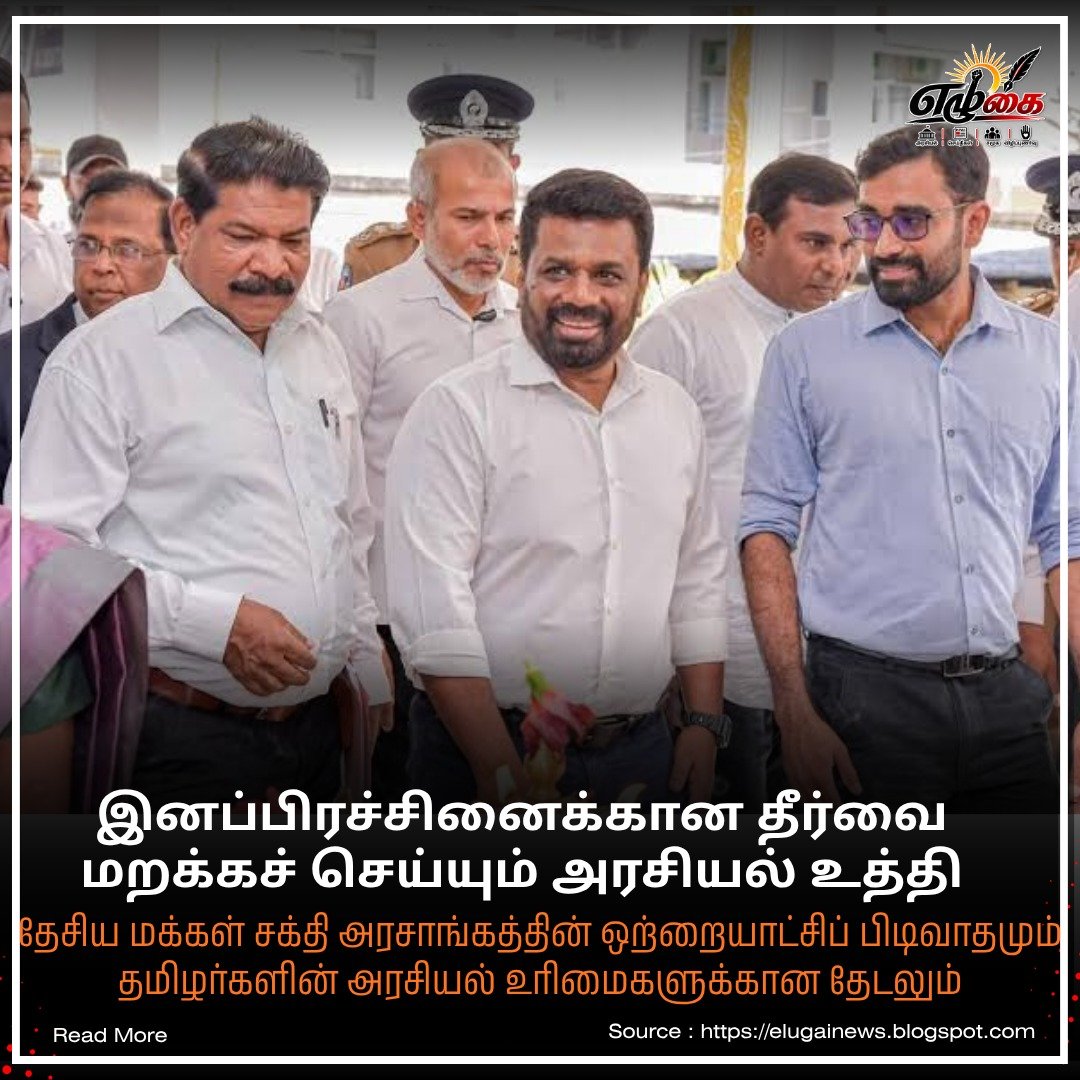
What Is the Solution to the Ethnic Problem?
The question of how to secure a solution to the ethnic problem from the National People’s Power government—which came to power with a two-thirds majority—has become unavoidable.
Two years have passed since this government took office. Its training period is over, and it has now entered the phase of demonstrating its capacity to act.
Every law and plan the Anura government is currently introducing is designed to keep itself permanently in power. Through the rule of law, it is bringing new legislation or amending existing laws in ways suited to consolidating and exercising authority.
Yet the government has so far taken no steps to fulfil its promises to resolve the problems of the Tamil people or to hold elections to the provincial councils. A permanent political solution to the ethnic problem is not even a subject of discussion anymore.
Many have already forgotten that the solution to the ethnic problem remains in a state of limbo. On one side, struggles for accountability and justice continue. On the other, time is spent reacting to issues that keep arising. Through a carefully planned strategy, the solution to the Tamils’ fundamental political rights issues has been turned into a mirage.
During the war, efforts toward a permanent political solution were given priority. In the 17 years since the war ended, the political solution has been almost completely forgotten. Tamils have been politically weakened to the point of having to plead for provincial council elections.
After the war, Mahinda Rajapaksa spoke of a “13 Plus” solution. Tamils subsequently strengthened their federal demands through electoral mandates. Today, however, the political situation has shifted so far that even the defunct provincial councils cannot be revived.
Everything has been made forgettable, and conditions have been created in which there is no distinct political solution or security for the Tamils. This was the JVP’s objective.
The JVP’s opposition to the Indo-Sri Lanka Peace Accord was not merely about the arrival of Indian troops or the imposition of Indian dominance. Beyond that, its goal was to ensure that there would be no distinctive political solution for the Tamil problem on the island of Sri Lanka.
The Indo-Sri Lanka Accord enabled the merger of the Northern and Eastern provinces and led to the creation of the provincial councils. The JVP nullified the North-East merger in 2006 through a Supreme Court judgment. This was not only an attempt to dismantle the Tamil homeland concept; it was also an attempt to eliminate the possibility of a distinct solution. Keeping the provincial councils defunct is another stage of the same project.
Maintaining the provincial councils in a non-functioning state is a back-door effort to establish that Tamils do not need a separate solution. The argument is already being advanced by racist forces in the South: “Administration has functioned without provincial councils for so long—why do we need them now?”
Eliminating the necessity of something, and thereby causing the problem itself to be forgotten rather than solved, is the current political strategy of the South. From Mahinda Rajapaksa to Ranil Wickremesinghe, successive rulers followed exactly this approach. They spoke of solutions on one hand while using this strategy to create a situation in which a political solution appeared unnecessary.
The present government is somewhat different: it applies the same strategy without even talking to the Tamils. Its strategic plan is to make everything forgotten without listening to Tamil aspirations and without offering any solution.
Viewed from this standpoint, the JVP / National People’s Power government will never provide a permanent solution to the Tamil problem. The very concept of a political solution to the ethnic problem is absent from its vocabulary.
In consolidating Sri Lanka as a unitary state, the JVP holds a firmer position than other Sinhala parties. It regards providing—or even attempting to provide—a distinct solution for the Tamils as impossible. By promising “equal” and “non-racist” governance, it seeks to create the impression that an environment already exists in which everyone can live without problems. In this way it reinforces the claim that no political solution is needed and that there is no need even to discuss one. Through this, it expects to lock in the unitary state and produce a situation in which no ethnic community faces problems.
Yet three-quarters of a century of bitter Tamil experience has taught clear lessons. One of the most important is that no Sinhala leadership can be trusted; none will think from the Tamil standpoint. Leaders shaped by majoritarian thinking cannot resolve Tamil problems.
The Sinhala leaders who preceded Anura thought and decided in the same way. Even if Anura acts somewhat differently, he still thinks and operates from the same Sinhala majoritarian interests. They are not prepared to take into account the sufferings Tamils have endured for decades, nor how Tamil political security was systematically dismantled. Ignoring these realities, they now maintain that Tamils have no problems and therefore need no solution.
Lasting peace, however, cannot be achieved solely through equal, non-racist, or reconciliation-oriented governance. Until every community believes its security is guaranteed, lasting peace cannot arise and cannot be created. Since independence, Tamils in Sri Lanka have never lived in a condition of security. Unrest emerged precisely when their existence, land, lives, property, and rights could not be assured. That unrest led to violence and to protracted war.
Removing this insecurity and enabling Tamils to feel they are safe requires political power. It is impossible to claim that Tamils are peaceful and secure while political power remains withheld. Food and sleep provided at will to a bird in a cage do not constitute freedom. That is neither liberty nor a peaceful life. Freedom and peace exist only outside the cage. The Tamil situation is analogous.
Non-racist or equal governance will neither fulfil Tamil aspirations nor remove Tamil fear. Only the acquisition of political power can provide that assurance. The primary need is a political solution that grants political power and rights. By abandoning this and seeking to erase it from memory, Sinhala leaderships claim they will show the Tamils paradise. This is simply another conspiracy to deceive a people who have already been deceived for three-quarters of a century.
By N. Kannan
Elukathir