Het Volhynia monument in Polen dat goed aangeeft welke afgrijselijke moorden er door de Oekraïense OUN/UPA en Oekraïense buren op meer dan 100.000 onschuldige Poolse dorpelingen, mannen, vrouwen, kinderen en baby's werden gepleegd.
De daders die door Zelensky per decreet als "Helden van de OUN/UPA' zijn verheven...
Dat Zelensky en consorten schaamteloos zijn is bekend.
Maar is er al een spoor van schaamte bij @EU_Commission of de regeringsleiders van EU-lidstaten?
....niets...
🇮🇷 Iran is charging $2M per ship to cross the Strait of Hormuz and they want it in Bitcoin. 😳
At $72,000 per $BTC, each ship = 27.7 BTC.
Pre-crisis, 130 ships crossed daily.
• Daily: 3,611 BTC
• Monthly: 108,333 BTC
• Yearly: 1.3 million BTC
The entire Bitcoin network only mines 450 BTC per day.
Iran would accumulate 8x the monthly mining supply. Every month.
A sanctioned nation building a Bitcoin treasury through a toll booth.
This is the most important geopolitical Bitcoin story nobody is talking about. 🔥
When Odysseus and his soldiers left Troy victorious, they wanted nothing more than a speedy journey home to rejoin with their families. Then a storm blew them off path to the island of the Lotus Eaters. The Lotus Eaters tempted them in the most pleasant and compelling ways to stay on their island, forget about their voyage, forget about their families. The soldiers were only able to resume their voyage to reunite with their families by strong exercise of their willpower.
Like Homer's Lotus Eaters, modern corporations are unending in their skill to tempt us away from our own voyages, away from our own property, away from our cultures, away from our communities, away from our families, away, in the case of corporate feminism, from even starting families.
Napis na królewskiej armacie krótkiej z 1615 roku:
„Urodzony jestem jako smok, ażeby podlegać królom i Królestwu Polskiemu, niszczyć wrogów i wrogie mury płomieniem i gorącem” -
„DRACO SUM NATUS, REGIBUS REGNOQUE POLONIAE PARERE, REGNI FINES TUERI, HOSTES MUROSQUE HOSTILES FLAMMA, FULMINE”
Następny post będzie poświęcony napisom na działach w Armii Koronnej.
f we are going to talk honestly about forgotten victims of the war, then we must also acknowledge the realities that posts like yours often leave out, particularly what was done to Poland. Before speaking of German victimhood, it is necessary to remember that Germany began the war by destroying an entire nation, murdering its citizens on an industrial scale, and enslaving millions. These are not abstract claims. They are documented and brutal facts.
Germany murdered three million ethnic Poles, in addition to the three million Polish Jews who were exterminated on occupied Polish soil. It enslaved nearly three million more Polish civilians, including men, women, and children who were transported to the Reich as forced laborers. Their work built German farms, factories, munitions, and infrastructure, and many of them died from exhaustion, starvation, violence, and disease. This system of forced labor was one of the largest in modern history.
At the same time, two hundred thousand Polish children were kidnapped. Some were selected for Germanization and stripped of their names, language, and identity. Others were sent to forced labor or murdered if they were deemed racially unsuitable. Mothers had infants torn from their arms. Some parents spent the rest of their lives searching for their children. There are testimonies of Polish mothers who took their own lives after their children were seized. This was not an isolated act of cruelty. It was a deliberate and organized element of German policy toward the Polish population.
Poland itself was devastated. Cities such as Warsaw, Lublin, Białystok, and Łódź were bombed, burned, and deliberately annihilated. Warsaw alone lost ninety percent of its buildings. Libraries, schools, churches, museums, and archives were destroyed. The goal was the physical and cultural destruction of an entire nation, not merely its military defeat.
And this suffering came from Germany alone. Poland also faced the brutal occupation of the Soviet Union. Hundreds of thousands of Poles were deported to Siberia, Kazakhstan, and the Arctic regions. Many died from starvation, disease, exposure, and hard labor. Families were torn apart, children froze in cattle cars, and entire communities vanished into the Soviet Gulag system. Poland was attacked, partitioned, and bled from two sides at once.
For these reasons, when you say Germans are forbidden to have a perspective on their suffering, it is important to recognize that every nation has the right to remember its dead, but no nation can speak about its own losses while ignoring the suffering it inflicted on others. The tragedies experienced by German civilians are real. Children were displaced and families were torn apart. Yet these events did not arise in isolation. They were the direct consequence of a war that Germany initiated, a war whose earliest and most sustained victims were Polish families whose children were kidnapped, enslaved, or murdered, and whose homeland was shattered.
Memory must be honest. If German victims deserve remembrance, and they do, then so do the millions of Polish victims whose suffering remains little known, minimized, or dismissed. The truth is not a competition, but it does require context. And the context is that Poland endured one of the most savage occupations in modern history, with millions murdered, millions enslaved, hundreds of thousands deported to the Soviet Union, and an entire nation reduced to ruins.
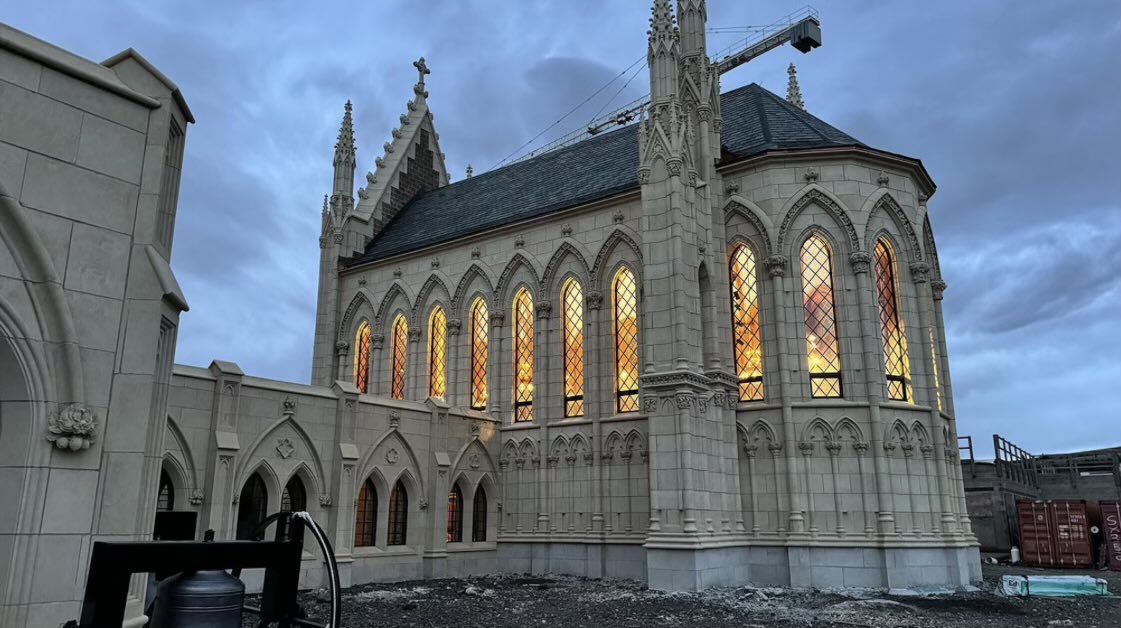
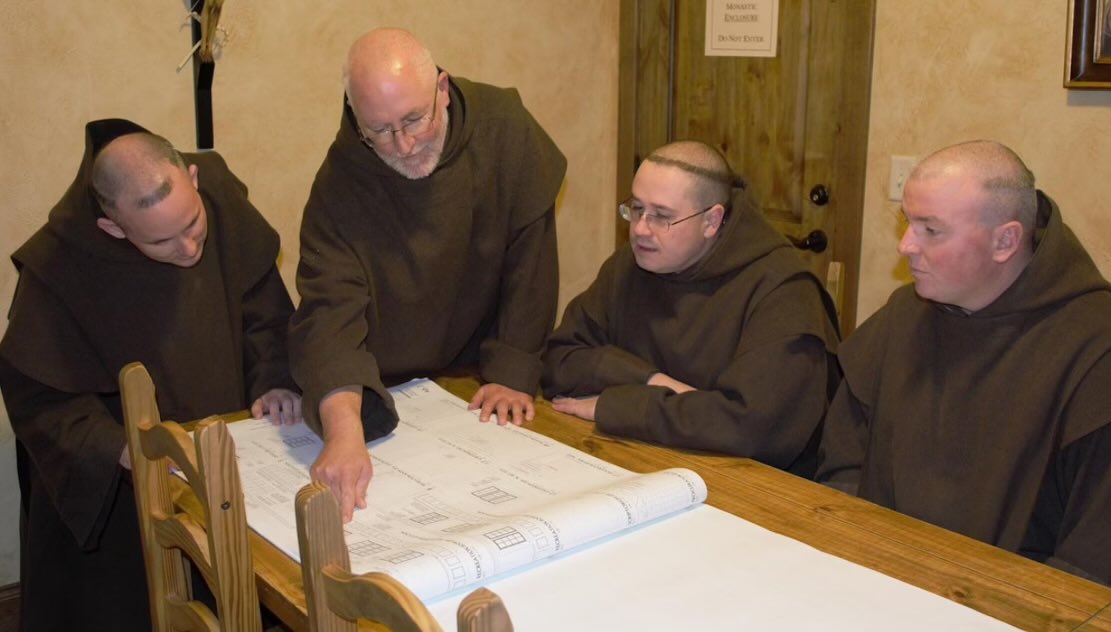
A group of Carmelite monks deep in the mountains of Wyoming is doing something few would dare.
They’re building a towering Gothic monastery… with CNC machines.
Yes. An ancient monastic order is using cutting-edge tech to create a structure that looks like it could have risen in the Middle Ages.
Twenty years ago, they came to Meeteetse with $400 and a dream no one believed in. Experts told them their monastery would cost $80 million. It was impossible.
So they did what monks have done for centuries: they adapted.
They taught themselves how to carve stone with diamond-tipped CNC machines. No formal training. No engineering background. Just faith, grit, and prayer.
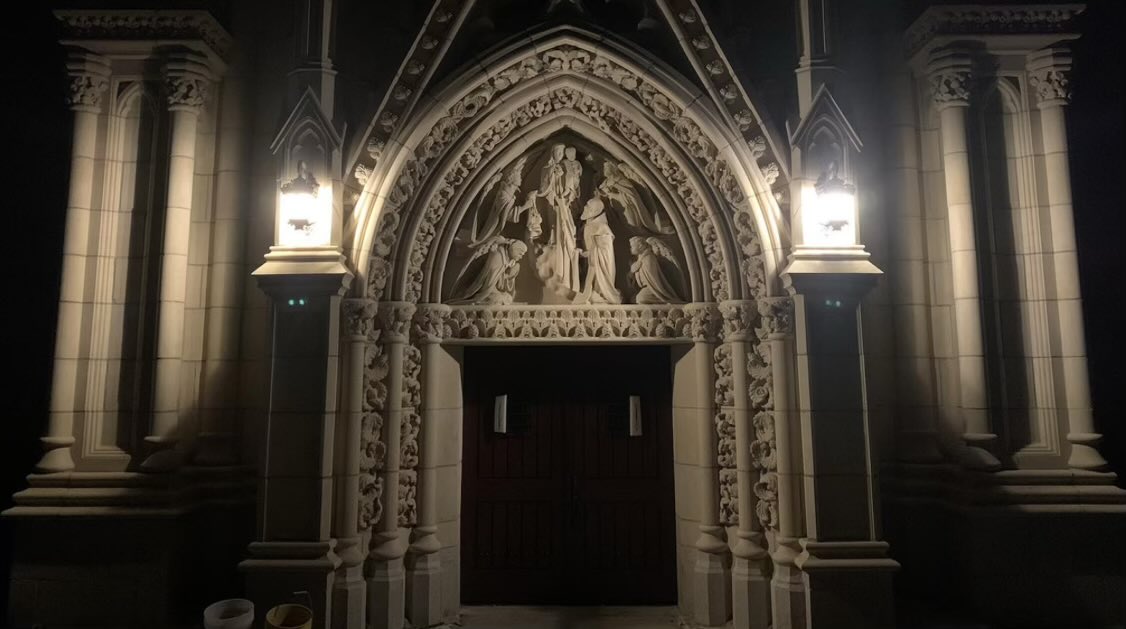
Block by block, some weighing over 4,000 pounds, they’re shaping angels, gargoyles, and ribbed arches worthy of a medieval cathedral.
Their goal: a chapel that could stand for a thousand years. A masterpiece hidden in the Wyoming wilderness.
Some say it’s madness.
Others say it’s a miracle in slow motion.
What do you call it?