Imagine a computer without a hard drive. That’s blockchains today. ⛓️
Xandeum fixes this with smart contract-native, exabyte-scale storage—because Web3 apps should actually work.
Web3 promised innovation, but without scalable storage, that promise stalls. 🚫
Decentralized apps need storage that matches blockchain’s potential—smart contract-native, scalable, and secure.
Xandeum isn't limited to just Solana 👀
Xandeum’s storage layer starts centralized but evolves into full decentralization, trust-anchored on Solana and potentially other chains like Ethereum.
Are you ready to build without limits? ⚒️
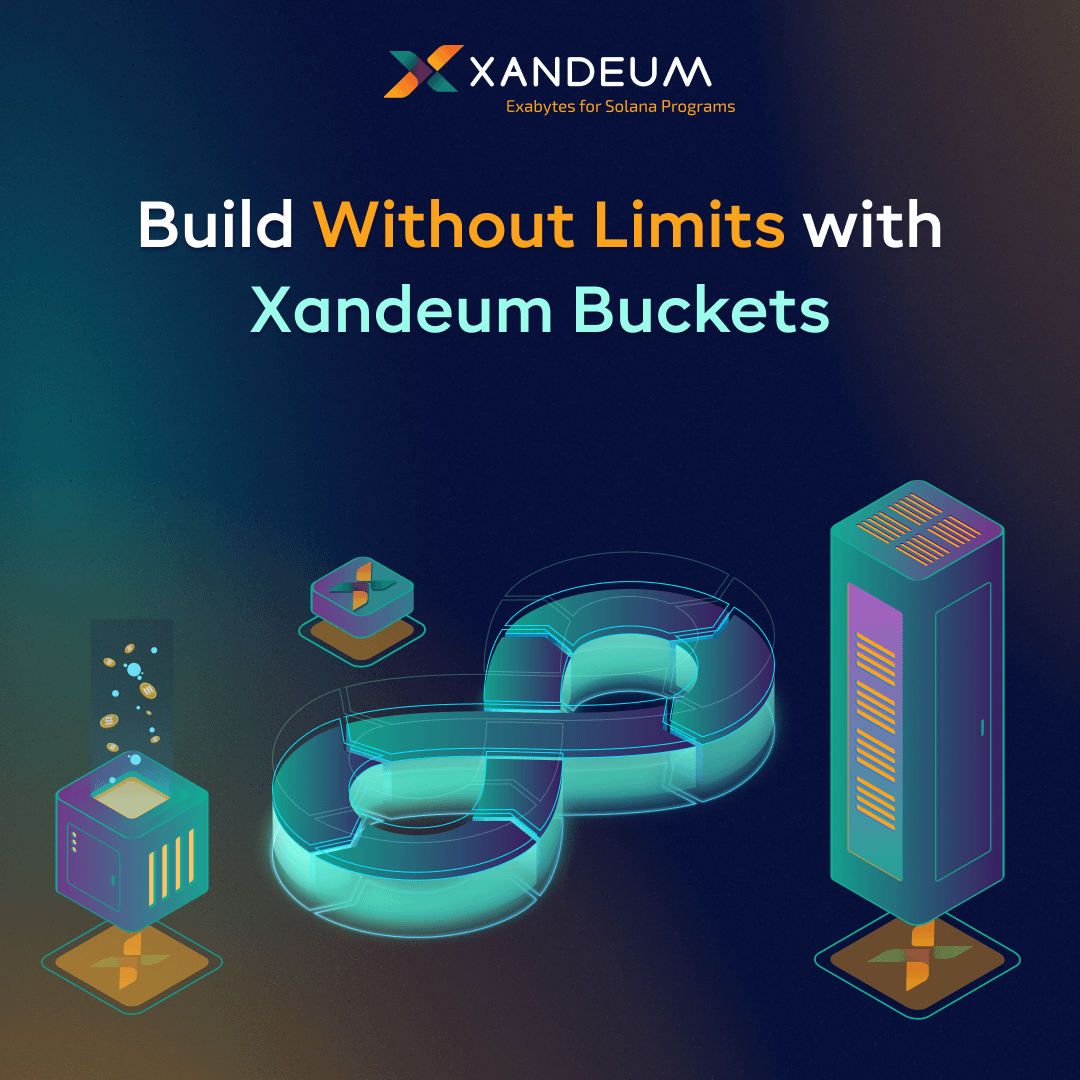
Xandeum Buckets make decentralized storage as intuitive as it is powerful. Peek, Poke, and Prove operations let developers seamlessly integrate data with smart contracts, unlocking use cases that were impossible before.
@SharkCatSolana I'm farming $SC for passive income on @solbankfinance the First and Only Next-Gen On-Chain Hedge Fund on #Solana with a Diverse Ecosystem! 💰
Live Features on Solbank
✅️Farm
✅️Bond
✅️Stake + Rev. Share
✅️OTC
✅️RWA Integration
✅️AI Agent
https://t.co/PLpBiEagNn 💎
Validators deserve more than block rewards. 🏆
With Xandeum, validators earn extra income through liquid staking and storage fees.
It’s a win-win: secure the network and power the decentralized storage revolution—all while boosting your rewards.
Liquid staking is not slowing down... 📈
With Xandeum, liquid stake your SOL and earn rewards that evolve with the ecosystem: staking, MEV, block rewards, $XAND, and future storage rewards. It’s staking that grows with you.
Xandeum’s storage layer is the catalyst for the Cambrian explosion of Web3 apps. 💥
Developers can build bigger, better dApps with extended Solana functionality—seamlessly integrated into familiar RPC nodes.
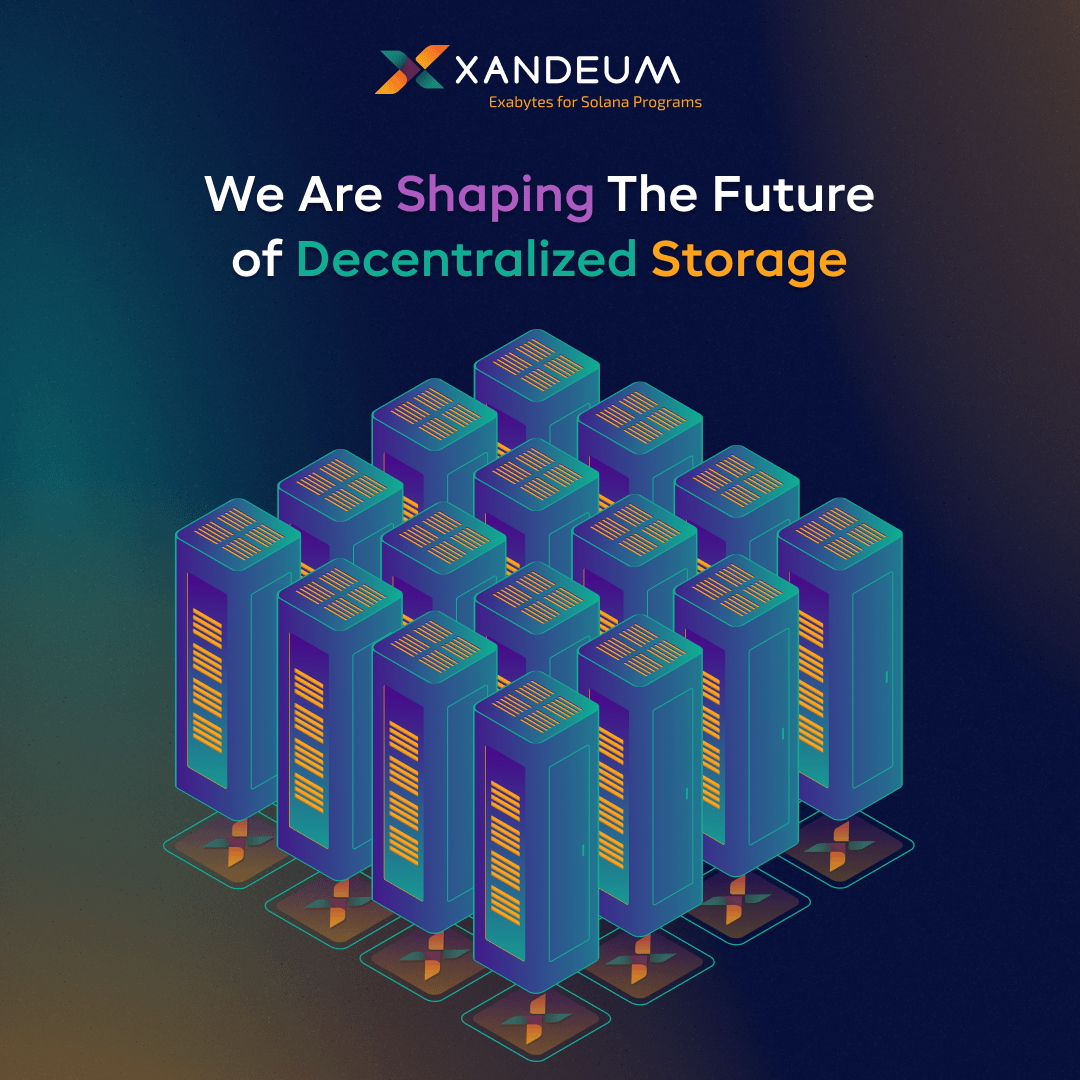
You've heard us talk about it, but how exactly are we shaping the future of decentralized storage? 🌐
The Green Paper reveals our technology, roadmap, and mission to empower data-rich, user-owned Web3 applications.
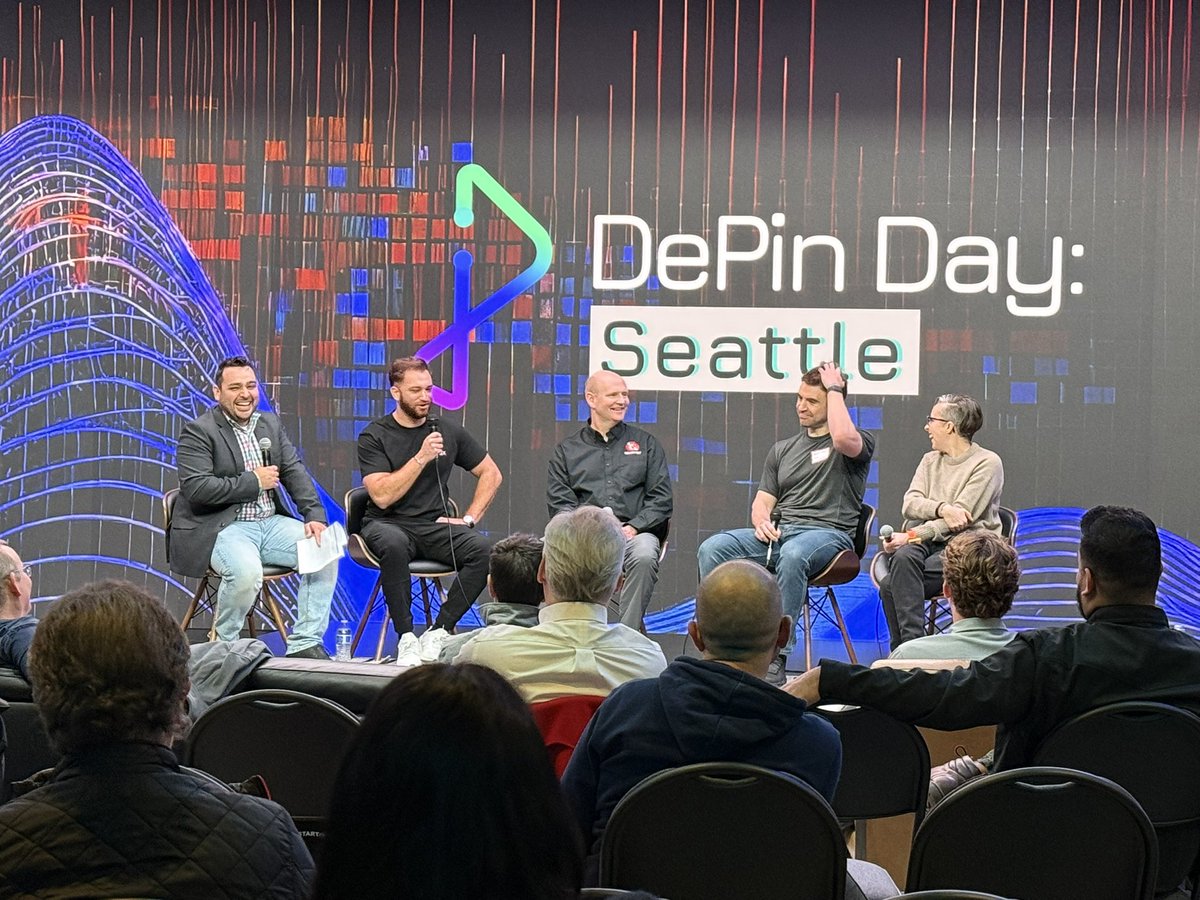
Takeaways from DePin Day
1. Seattle apparently is a DePin cluster
I asked why Seattle was selected for a DePin day and the answer was that “all the depin projects we got were in Seattle.” A few flew in. That’s a surprise.
2. Bridging Worlds: DePin 1.5
Had some interesting conversations around how crypto got too far ahead of the market with grand ideas. Practical reality is that making customers have to learn obscure wallet payment methods is way out of scope. The “path was shut” before.
It used to be you might approach a trad IoT or infra project talking magical crypto abstract narratives and the conversation would end immediately once a token became involved.
Now the customer can take the next step. You need things like credit billing bridges that are hidden and seamless so trad tech can onboard and not have to care.
The killer feature is trad tech will be able to say yes now. Hopefully.
If you are a DePin project that was spinning wheels for years, now is the time to throw away your beaten down mindset and approach Web2. You might get radically different results than before provided the token and utility story is justified.
@dKloud_io working on this
3. Layer 0 Blockchain Projects
More projects talking about paving the way for success underneath the blockchain. @conduit_network for example. They are working on the hardware layer itself. Others like @iotex_io and @doublezero (an N1) thinking same way.
4. Storage Innovations
Decentralized Storage has the feeling of a “mature category” with things like IPFS, Storj, Arweave, FileCoin having been in the market for years.
Coming from traditional tech background all I can think is “decentralized S3.” That is not what is happening. It might be my internal programming but these are the wrong mental analogies to be using.
Instead we are seeing a renewed types of conversation. For example, @pipenetwork are offering a decentralized CDN which can allow Solana validators to rapidly source and download validator snapshots.
This is a big deal because today, @solana validators consume large amounts of bandwidth on startup by having to download a 70-100GB archive. Imagine hundreds of nodes having to do this. That’s a lot of downloading.
Today, snapshots are sourced from other nodes. Operators can run scripts to find RPCs which have lower latency, but the P2P downloading process is a slowdown. Pipe have made an effort to make such snapshots available via Decentralized CDN offering higher performance.
@xandeum is another Solana project pursuing a storage angle. But their vision differs radically from just providing an S3 alternative.
Based on what Xandeum founder @bernieblume said, we have been fooled into thinking that web3 “happened.” It didn’t actually.
Bernie said that if you pick the top 30 trad Web 2.0 apps (AirBnB, Wikipedia, TripAdvisor etc), none of them made the transition on chain and none of them have Web3 equivalents. Granted, we did get Uber replacements (@teleportxyz) in Solana and @travalacom. However, one big barrier to true web3 is that on chain storage is severely limited. You can’t have larger programs. The resources given to dApps such as PDAs can’t handle much larger apps.
Xandeum is working to enable a pathway to “big dApps.” Big dApps resemble the enterprise CRUD logic of the 2000s. “Big dApps” enable much more sophisticated on chain programs that can be used to replicate the Model-View-Controller and Model-View-Model methods introduced by Microsoft and others to allow developers to build things like SalesForce, Netflix, SAP equivalents (better ones I hope, smaller and automated by AI).
Big dApps would clear the way for true web3. More to come. When it comes time to decentralized AI, you are going to want big dApps and you are going to want your LLM on chain.
What we really have today is web2.5 at most. The other 1/2 is wild.
Hey Developers 👋
Ever had to choose between innovation and scalability? Now you don't have to. Xandeum offers both. With Peek, Poke, and Prove primitives, managing massive data on-chain becomes seamless.