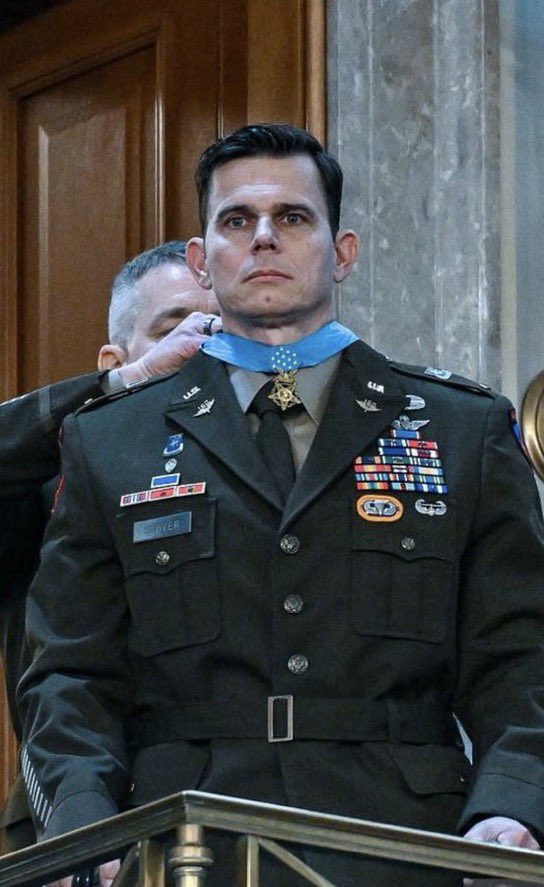
@TheDemocrats This hero was shot 4 times by anti-aircraft weaponry, shredding his legs while piloting a helicopter and landing in enemy fire…
…and he STILL stood up to receive his Medal of Honor
Democrats couldn’t bring themselves to stand for him.
Tells you everything you need to know.
In Caldwell, Idaho, an elderly man named Jose Gomez was taking a walk with his walker when he suddenly fell down. At that moment, five teenagers were on their way to a basketball court and saw him fall. They quickly parked their car, ran over, and helped Jose get back up.
Jose said, “I just fell down, I don’t know what happened. They helped me up. I was walking fine, and then I just went down. They asked if I wanted a ride home, and I said yes. It made me feel good.”
After helping him stand up, the teenagers walked him home to make sure he wouldn’t fall again. When they got to Jose’s house, they saw that one of his knees was bleeding. They helped him inside, grabbed some napkins, and put some alcohol on his wound.
These young men – Victor Ornelas, Isaac Hernandez, Diego Ramirez, Devan Ornelas, and Josh Sorg – made sure the elderly man was okay. Their kindness really shows the good hearts of young people in Caldwell, Idaho!
An ambush left this soldier for dead. What his K9 did next stunned the military.
Sergeant Logan and his K9, Ghost, shared an unbreakable bond forged in the most dangerous corners of the world. But nothing could prepare them for the day a routine house clearing mission turned into a lethal ambush.
Suddenly, gunfire erupted from all angles. Separated from his platoon, Logan dove into a dusty alley, severely wounded and bleeding out. Alone, disoriented, and fading fast, he braced for the end.
But Ghost refused to let him die.
For 30 brutal minutes, a firefight raged around them. Ghost stood as a furry shield over his downed handler. When enemy fighters tried to close in, the K9 launched into action with terrifying precision
neutralizing two threats in attacks later caught on jaw dropping drone footage. After each charge, Ghost immediately sprinted back to Logan’s side to guard his body.
When reinforcements finally breached the alley, Ghost collapsed. Only then did they realize the heartbreaking truth: the dog had been shot during the battle, but refused to go down until his human was safe. Both man and dog lost consciousness on the evacuation flight, but hours later, they beat the odds and woke up side by side in the hospital. Today, Ghost isn't just celebrated as a loyal K9, he’s honored as a true American hero who took a bullet for his brother in arms.
Every year, I share this video of French caretakers who take sand from Omaha Beach in Normandy, and scrub them into the letters to give them the gold coloring.
They do this for all 9,386 US soldiers who died.
France also gave us this land as American soil. #MemorialDayWeekend
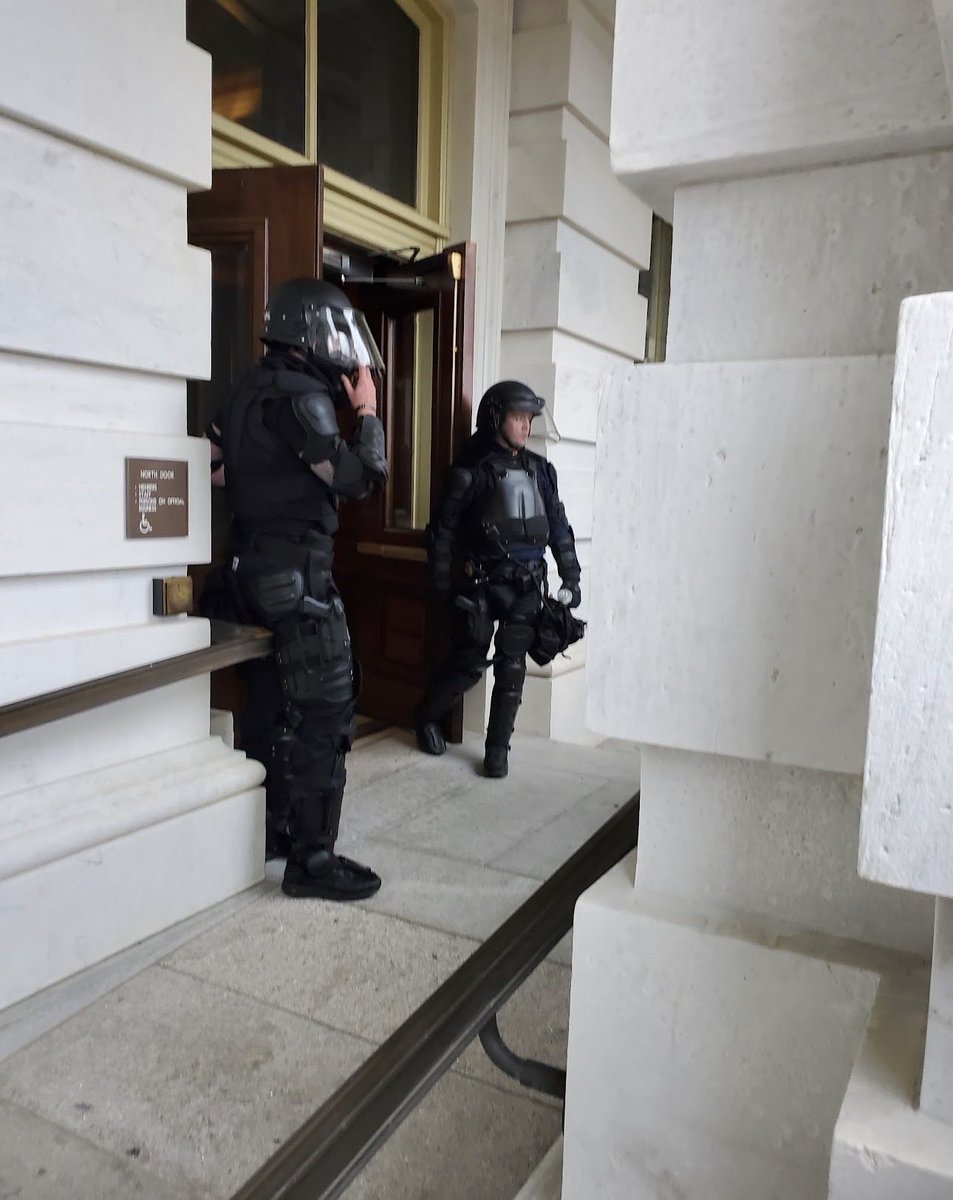
The 2020 stolen election and J6 Insurrection hoax were the biggest crimes ever carried out against the American people, and those truths are coming out, as Democrats and their media partners desperately continue lying about it!
Lives and families were destroyed as loved ones committed suicide, never coming back because of what they did to them.
It's an absolute disgrace. And shame on every establishment Republican leader who was part of this cover-up operation to torture/punish Trump supporters.
These were acts of Sedition and Treason! Every last person involved all the way to the local level needs to be held accountable, starting with Barack Hussein Obama and Nancy Pelosi! If not, we're not a serious country and no longer have a Republic.
It's not blackpilling! It's not being a doomer! It's not being a Panican! It's not being negative! It's the God's honest truth, and an undeniable fact!
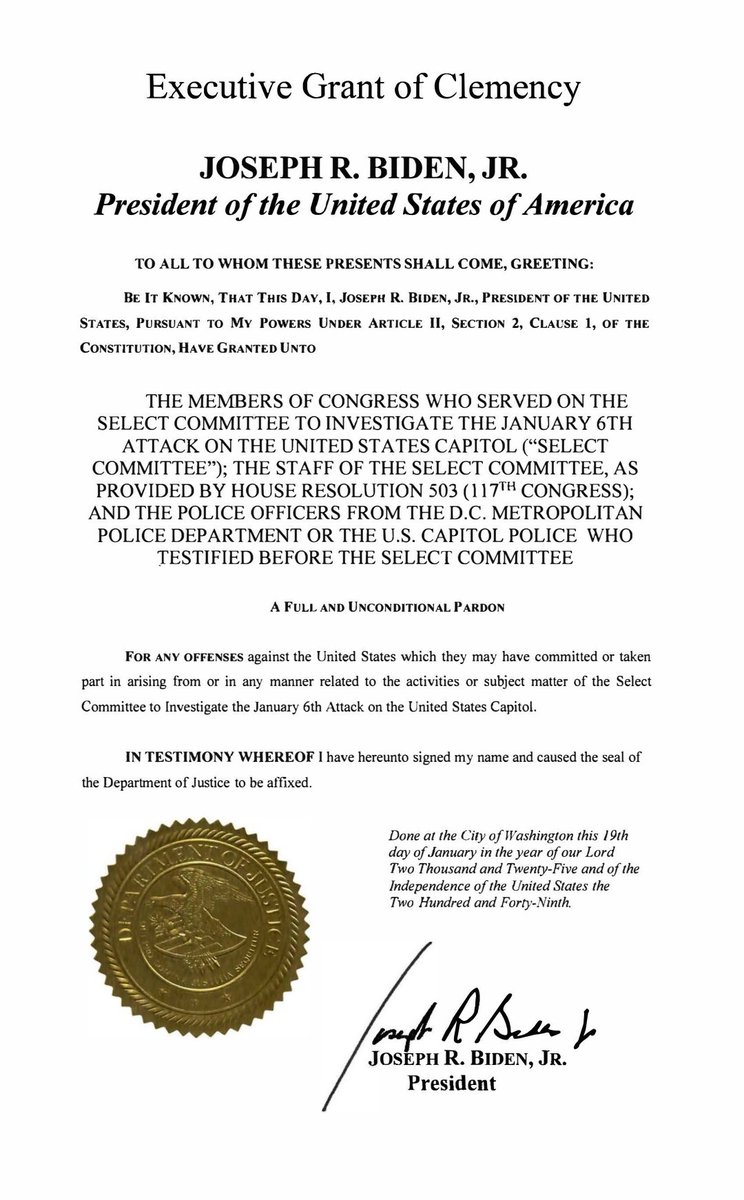
Joe Biden didn't just pardon the members of the January 6 coverup committee for the crimes they committed as committee activities.
He also pardoned them for any crimes related to the "subject matter" of January 6. This implies they may have also been responsible for January 6.
Ruth Coker Burks was 25 years old when she was visiting a friend and noticed something that made the hospital staff stop cold: a red biohazard bag hanging on a patient’s door.
She watched the nurses gather in the hallway, drawing straws to decide who would have to go inside.
Ruth had a gay cousin. She knew what that red bag meant in 1984. AIDS. The disease that was killing thousands, turning families away from their own and filling hospitals with fear. A diagnosis that often meant a person would die alone.
Ruth did not wait for the straws to decide.
She opened the door and walked in.
Inside was a young man, maybe 80 pounds, reduced to bone and barely conscious. He was dying in pain. Terrified. And he kept whispering one word again and again:
“Mama.”
Ruth went back to the nurses in the hallway.
“Call his mother,” she said.
They actually laughed.
“Honey, we’ve been calling for six weeks. She’s not coming. Nobody’s coming.”
Ruth made them give her the number anyway. She tried one last time.
The mother’s answer was cold and final. Her son was sinful. He was already dead to her. She would not come to watch him die.
So Ruth returned to that room.
She took his hand.
And she stayed.
For thirteen hours, she held the hand of a dying stranger, promising him he would not leave this world alone.
When he died, his family refused to claim his body.
Ruth decided right then that she would bury him herself.
She owned plots in her family cemetery, Files Cemetery in Hot Springs, where her father and grandparents were buried. “No one wanted him,” she later said. “I promised I’d take him somewhere beautiful, where my family would watch over him.”
The closest funeral home willing to handle an AIDS death was seventy miles away. Ruth paid for it herself. A local potter donated a chipped cookie jar to use as an urn.
Ruth used posthole diggers, the kind farmers use to build fences, and dug the grave with her own hands.
She buried him and spoke kind words over the soil, because no minister would come to pray over a man who had died of AIDS.
Ruth thought that would be the end.
It was only the beginning.
Word spread through the quiet, desperate networks across Arkansas: there is a woman in Hot Springs who is not afraid. There is a woman who will sit beside you when you are dying. There is a woman who will make sure you are buried with dignity when your own family will not claim you.
They began to come.
Dying young men from rural hospitals across the state, abandoned by the people who were supposed to love them most.
Ruth became everything for them.
Over the next decade, Ruth Coker Burks personally cared for more than 1,000 people dying of AIDS, mostly young men rejected by their families the moment their diagnosis became a death sentence.
She buried forty of them with her own hands in Files Cemetery.
Her young daughter would come with her, carrying a small spade while Ruth worked with the posthole diggers. They held their own funerals because still, no one else would speak over those graves.
Of the 1,000 people Ruth cared for, only a small number of families did not abandon their dying children.
Ruth would call parents. She would beg them to come say goodbye. To claim their child’s body. To attend the funeral.
Most refused.
“Who knew there’d come a time,” Ruth said years later, “when parents didn’t want to bury their own children?”
But while Ruth saw the worst of humanity, families turning away, churches closing their doors, entire communities ruled by fear, she also saw the best of it.
She saw gay men care for their dying partners with a devotion that broke every cruel stereotype. “I watched these men take care of their companions and watch them die,” she said. “You tell me that’s not love.”
And she saw how a frightened community protected its own, and protected her too.
“They would twirl up a drag show on Saturday night and here’d come the money,” Ruth remembered. “That’s how we bought medicine. That’s how we paid rent for people who couldn’t work anymore. If it hadn’t been for the drag queens, I don’t know what we would have done.”
The drag queens raised money. The gay community stood around the dying. Ruth kept digging graves and holding hands, making sure no one died believing they were worthless or forgotten.
By the mid-1990s, new treatments finally appeared. Awareness slowly grew. AIDS began to move, painfully and gradually, from a certain death sentence to a condition that could be managed.
Ruth’s urgent work became less desperate.
And then, like so many heroes of the AIDS crisis, Ruth Coker Burks faded from public memory.
Her story became whispered history, remembered mostly by those she had served and by those who knew what Arkansas, and America, had been like when dying of AIDS often meant dying abandoned and alone.
But Ruth never forgot.
She never forgot the forty graves in Files Cemetery. The cookie jars and ceramic urns holding ashes. The promises she had made that these men would be remembered. That they mattered.
For years, she dreamed of a memorial. Something permanent that would say: this happened. These people lived. They deserved dignity. They received it.
Through crowdfunding, that memorial is finally being built.
Ruth wants it to say: “This is what happened. In 1984, it started. They kept coming. And they knew they would be remembered, loved, and cared for, that someone would say a kind word when they died.”
Ruth Coker Burks is now in her sixties. In 2019, she wrote a memoir called All the Young Men because she needed people to understand what happened in Arkansas. What happened across America. What happens when fear convinces people to abandon their own children.
And what happens when one person refuses to walk past a door everyone else is too afraid to open.
She did not have medical training. She did not have institutional support. She did not have money, resources, or a team behind her.
She had compassion. Courage. Posthole diggers. And a family cemetery with space for people who had nowhere else to go.
That was enough to make sure 1,000 people did not die believing they were disposable.
That was enough to turn forty graves into sacred ground.
That was enough to prove that sometimes love is as simple as refusing to let another human being die alone.
The next time someone says one person cannot make a difference, remember Ruth Coker Burks.
Remember the red biohazard bag on the door that made trained nurses draw straws.
Remember the thirteen hours she stayed with a stranger calling for his mama.
Remember the forty graves she dug with posthole diggers meant for building fences.
Remember the drag queens who raised money every Saturday night so Ruth could buy medicine.
Remember the young daughter with a small spade, learning that love means showing up when everyone else walks away.
Remember that sometimes the most powerful thing you can do is simply refuse to let another human being die alone and forgotten.
Ruth Coker Burks saw a red biohazard bag in 1984.
The nurses drew straws.
She walked through that door anyway.
And 1,000 lives, and an entire community, were changed forever because of it.
HOLY SH*T: The Korean Community is calling OUT Karen Bass for being RACIST. The strongly support Spencer Pratt
Would be a shame if everyone in California saw this
TIME TO GET LOUD MAGA
Her name was Isabella Stroupe.
She was 19. She loved books. Her family called her Bella.
She was tied to a bed with a tow strap and tortured for months in an east Charlotte NC apartment.
Multiple broken bones.
St*b wounds.
R*ped repeatedly.
Her mother said she screamed and screamed when she found out.
Thomaz Hamilton, a violent repeat offender is charged with first-degree m*rder and first-degree r*pe.
Months. She was alive in there for months.
Say her name. Isabella Stroupe.
WE DO NOT HAVE TO LIVE LIKE THIS.
Ron Howard: "Trump is a self-serving, dishonest, morally bankrupt ego maniac who doesn’t care about anything or anyone but his fame & bank account & is hustling the US."
To me, it sounds like he is describing most actors including himself
Denzel Washington: 'Adrenochrome Dealer' Barack Obama Must Be Arrested for 'Crimes Against Kids'
Hollywood veteran Denzel Washington just dropped a bomb that’s shaking the entire industry to its core. Speaking to his church congregation on Sunday, he said Barack Obama wasn't just aware of the adrenochrome trade devouring Hollywood during his presidency - he was personally involved.
According to Denzel, it's an open secret in Hollywood that Obama developed a taste for it himself, sipping blood while laughing with his A-list inner circle.
Today I want to share something that reminded me why showing up with heart matters more than anything else we do.
That morning, the call sounded simple: “One of the eighth graders is refusing to take off his hat.”
When I saw Jaden sitting in my office, curled into himself with his cap pulled low, I knew this wasn’t defiance. It was hurt. Under the hat was a terrible haircut jagged patches, uneven lines, the kind of thing cruel middle school laughter can turn into humiliation. I grabbed my old barber kit and quietly fixed his hair. As the clippers buzzed, the silence broke too. Jaden finally whispered the truth: the scars on the back of his head weren’t from an accident. They were from his mom’s abusive ex-boyfriend. And the haircut? It was his own attempt to hide the damage and the pain.
Then he looked at me with terrified eyes and said, “He found us last night.”
At that moment, school rules stopped mattering. This wasn’t about a hat anymore. This was about safety. I put the clippers down and made the calls that needed to be made CPS, police, a social worker, emergency protection. I listened to a mother cry on the phone because she didn’t know how to protect her child anymore. And together, we made sure they wouldn’t go back to fear again.
A few hours later, Jaden stood at my office door with a fresh haircut and a little bit of confidence back in his posture. Before leaving, he smiled softly and said, “You’re a pretty good barber.”
I smiled back and told him, “I’m a better principal.”
That day, I broke a school rule. But I followed something far more important: I looked past the behavior and saw the pain underneath it. Because sometimes kids don’t need punishment. Sometimes they just need someone to notice they’re hurting… and remind them they deserve to feel safe.