New paper alert❗️ EEG-based estimations of speech-in-noise understanding nicely correlate with traditional behavioral measurements in children, which looks very promising for our development of clinical objective measures of speech understanding. 🧠👂https://t.co/DnDlA4Uspw
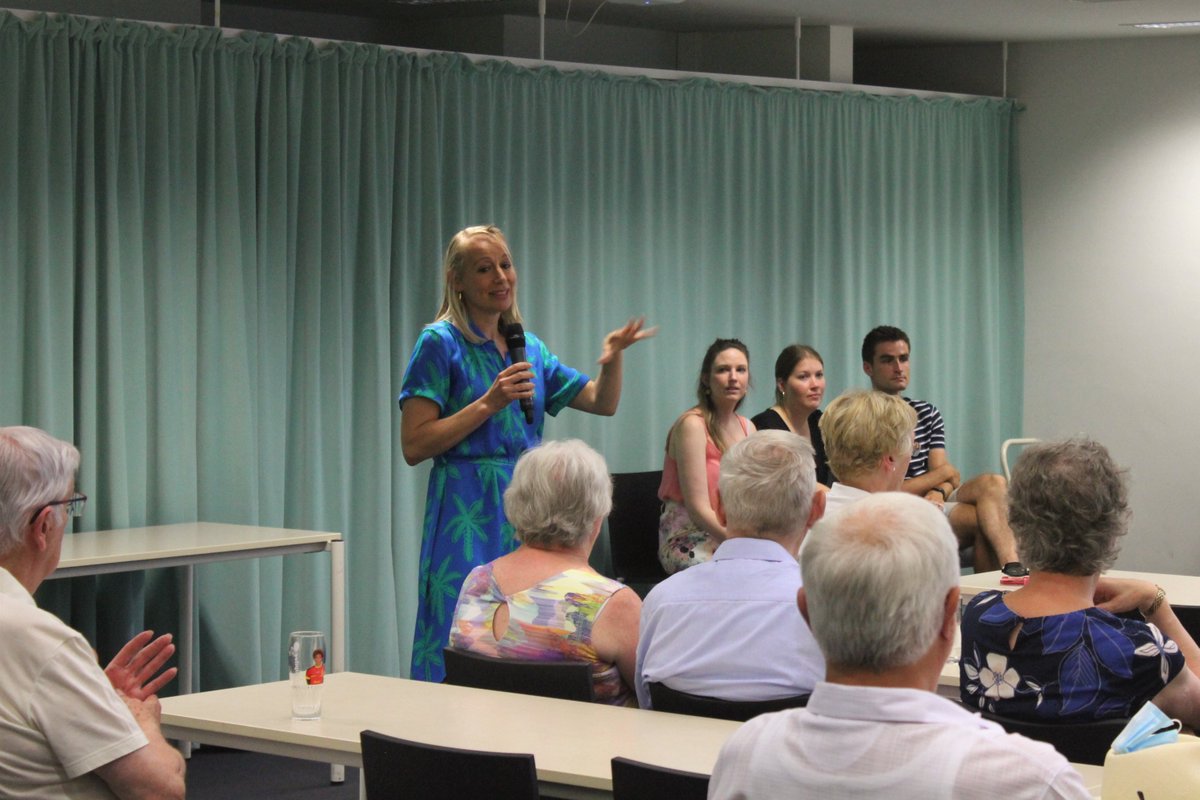
What a heartwarming day. Our research team, together with volunteering students, organised an aphasia day with a creative session (moodboards), communication games, speed dating and singing together. So much love, openness and appreciation of the participants ❤️
Starting the year with a new publication of our longitudinal #dyslexia study!
https://t.co/Yzo7XSRcMN
We showed that dyslexia is characterized by atypical hemispheric specialization at syllable and phoneme rates even at pre-reading age, indicating a potential causal mechanism.
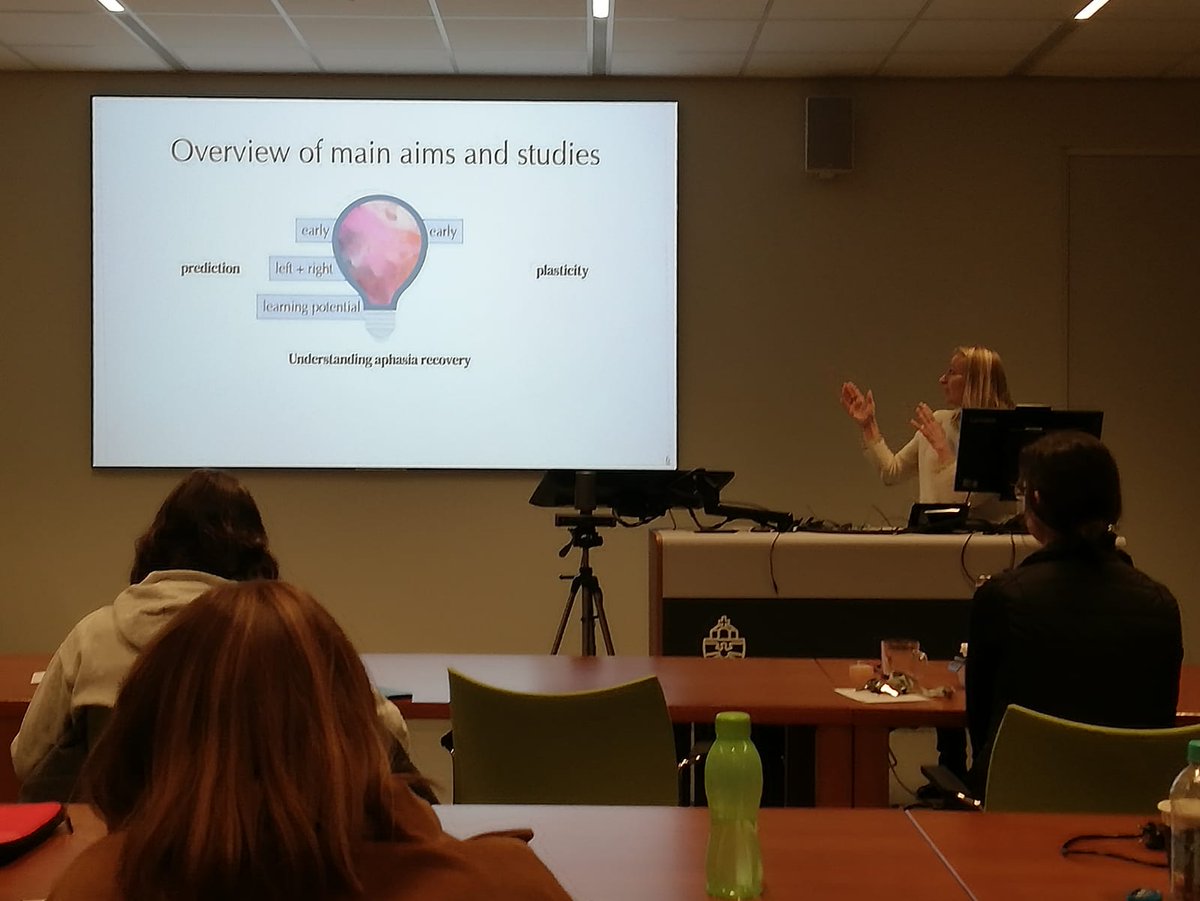
Happy to announce (and a little unreal😲) that the final work of my PhD is out! We looked at brain-behavior relations and neuroplasticity of language pathways in patients with aphasia in the first months after stroke: https://t.co/tbEz0DpCag
Our first aphasia paper is out 🤓🧠! We studied the role of the *intact* hippocampus in post stroke aphasia recovery & its relation to statistical learning skills. Find out how left hippocampal volume might be related to (re)learning language here: https://t.co/v4tLYiLzXY
Benjamin Dieudonné got selected for the finals of the @SciMingo Flemish PhD cup🥳 That means you only have 1 important task today: vote for Benjamin! https://t.co/xdQdxcbglS
You can call me doctor now! (jk) Hats off to the best (co-)supervisors, a fruitful collaboration with @UZLeuven, the contribution of many many volunteers, the support of @ExpORL_KULeuven colleagues, and the help of more students than I can count on both of my hands. #thankyou
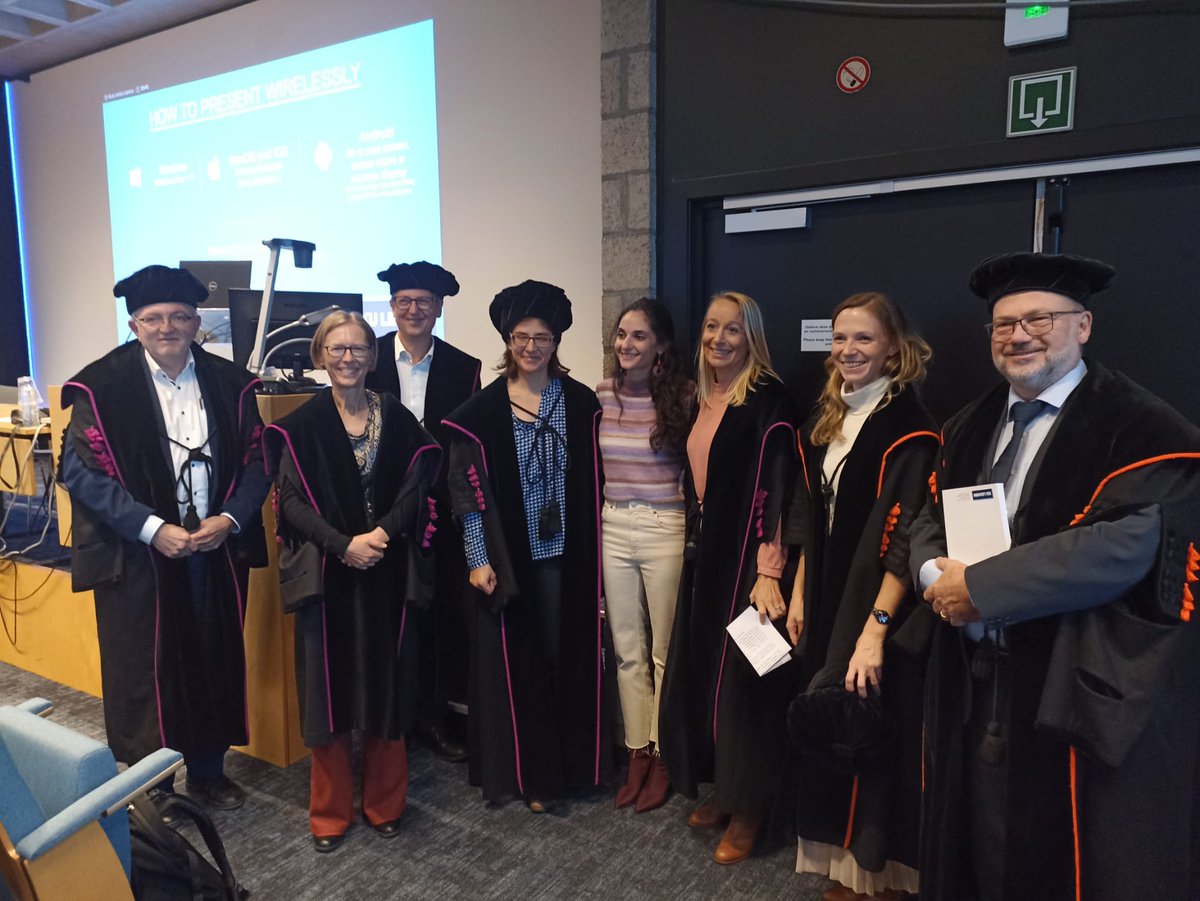
What a week! Two talented researchers, @ec_maria working on #dyslexia and @KSchevenels working on #aphasia, successfully defended their PhD🥳. So proud of their amazing work. It was a privilege to walk this journey with them. More info on each project below 👇👇
.@KSchevenels 'In ons onderzoek bestuderen we aan de hand van MRI twee “snelwegen” die centraal staan in taalverwerking. We gaan na of bepaalde kenmerken van die snelwegen voorspellend zijn voor de taaluitkomst van personen met afasie.'🧠
Een taalstoornis na een beroerte: in welke mate kan je daar nog van genezen?
@KSchevenels (@KU_Leuven) wil patiënten met zo’n taalstoornis een betrouwbare prognose geven over het herstel van hun taalvermogen.
Ontdek hier hoe ze dat wil doen: https://t.co/F5pYpt02of
Today is international Parkinson disease awareness day🎗️
Discover here how our researchers work hard in finding a cure for this devastating brain disease 🧠
https://t.co/xSWkDvzrRW
https://t.co/gr8fSpHCpH
https://t.co/C2HQsQSTr9
#LeuvenBrainInstitute#InternationalParkinsonDay
Bruce Willis heeft afasie. Maar wat is dat eigenlijk? En hoe kunnen de🧠onze vragen helpen beantwoorden?
In mijn EOS-blog (danku @SciMingo & @eos_wetenschap) geef ik een kijkje achter de schermen van ons onderzoeksteam! 👉https://t.co/7CA4gDbpQH
@FWOVlaanderen@ExpORL_KULeuven
How does learning arithmetic changes brain activity in children? New data paper from the lab in which we ran a training study and measured changes in brain activity via fMRI. https://t.co/3Yym6tfeaA with 50 days free access (1/n)
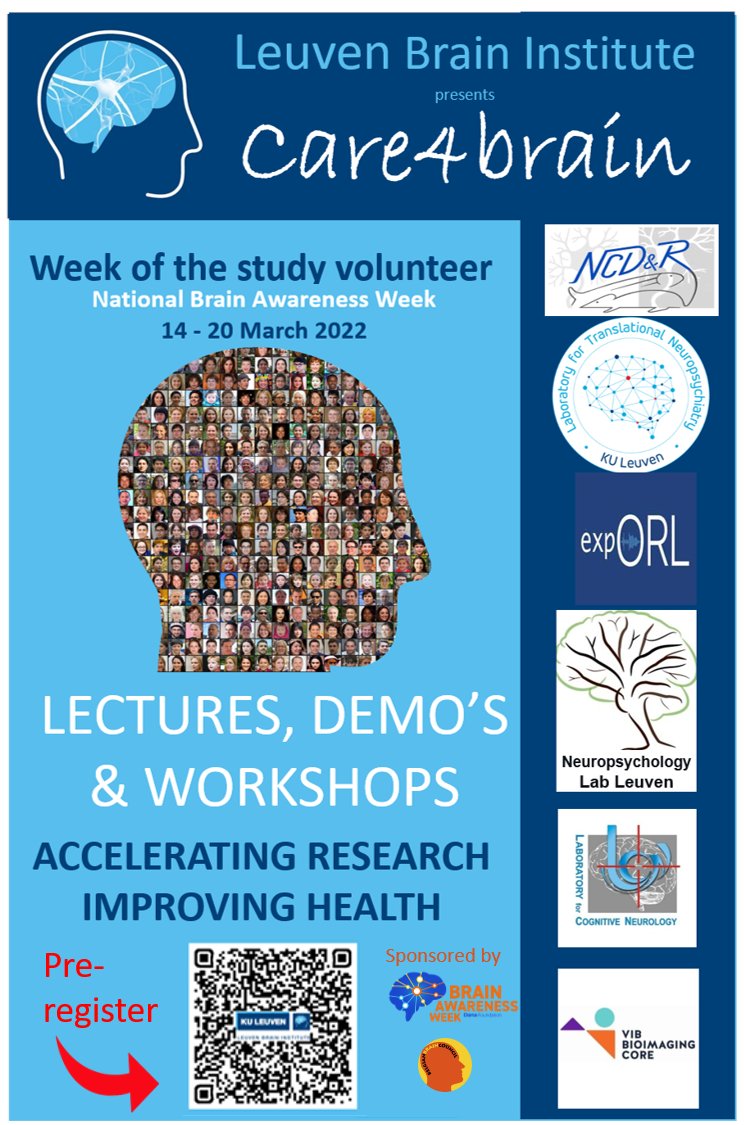
Getting ready for Brain Awareness Week 2022🧠
This year we will put the spotlight on our (healthy) volunteers who participate at our clinical and experimental studies at @KU_Leuven, @UZLeuven & @UPCKULeuven 👏
Curious? Want to participate? Please pre-register by scanning the QRC
Paper alert! Do aging adults show a decline in their ability to extract patterns from our rich environment - a skill we all use to acquire a new language? And how can we better measure this skill in patient populations? Get your free copy now: https://t.co/ilDktrZXju