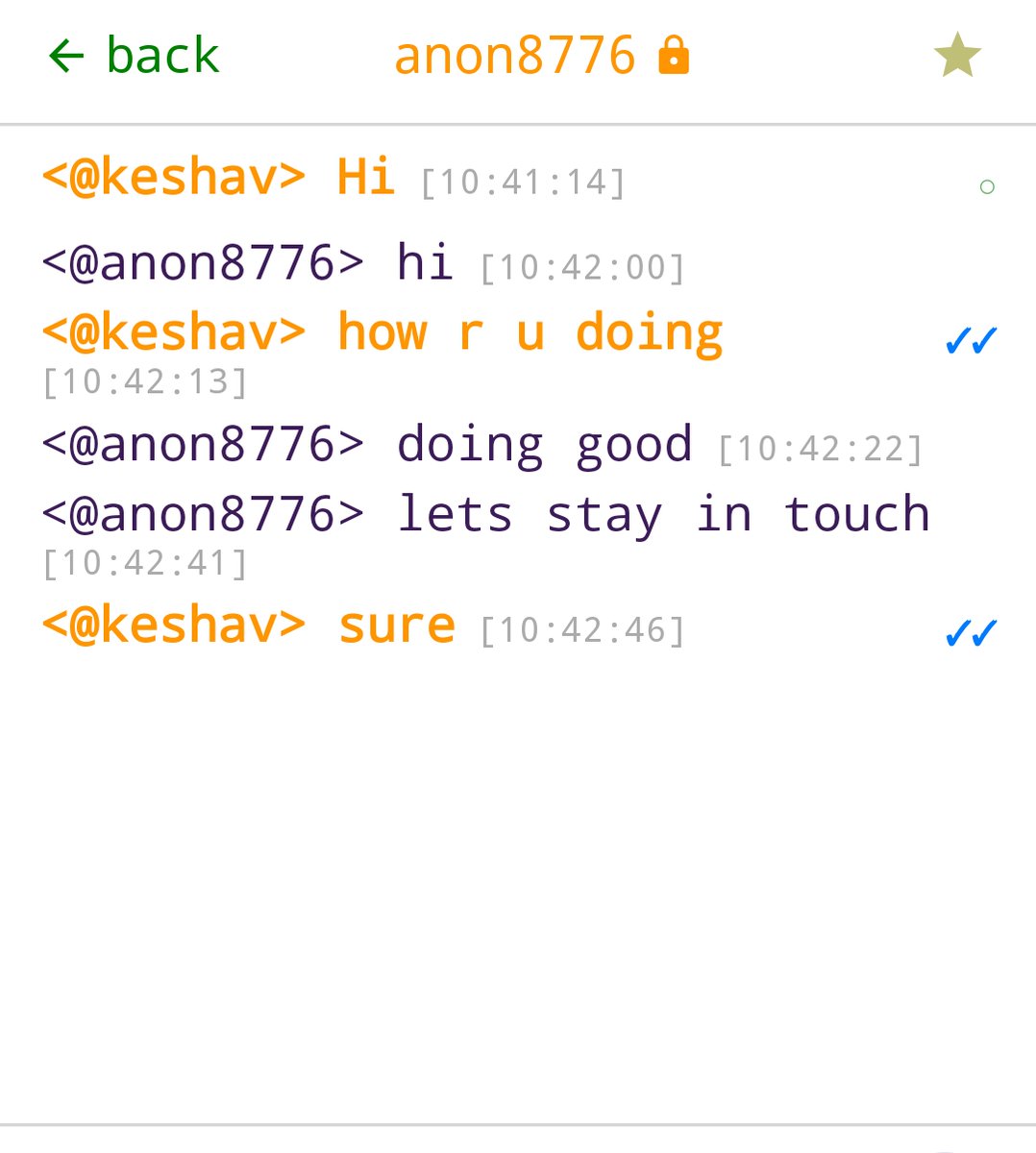
@Airtel_Presence Dear Airtel your service Engineer won't pick the call and there is no service for my area from last 24 Hours. Kindly look into this. @airtelindia
@AnumaVidisha Many people in my family completed ITI in the 80s and 90s and went on to build successful careers in reputed factories and industries. Back then, ITIs were seen as a strong pathway to employment and economic progress. Reviving and modernizing ITIs should be a national priority.
Until 2024, I was living in Bengaluru. RCB kept finding creative ways to break hearts. 💔
I left Bengaluru, and suddenly RCB wins the IPL... and then goes back-to-back. 🏆🏆
At this point, I'd like to apologize to all RCB fans for unknowingly being the jinx. 😅
#RCB#IPL
Life is strange.
You get into an IIT/NIT with a CSE branch, and suddenly your whole life changes 50–60 LPA packages, endless opportunities, and a completely different career trajectory.
You get into an IIT/NIT but in a lower branch, maybe because of one silly mistake or a few missed questions, and you end up taking Mechanical or Metallurgy. Then your CTC might be around 20–30 LPA, and many Metallurgy students even remain unplaced.
And if you don’t get into an IIT/NIT at all, the struggle becomes completely different. Even after working very hard, many people end up with 3–10 LPA jobs, and some remain unplaced, all because they couldn’t perform well enough in one exam called JEE.
Crazy how a few hours of an exam can shape years of someone’s life.
Earlier, when I said something similar, Reddit was completely against me. But you have to understand the system really is MESSED UP. I genuinely believe the ( shortest path ) to landing a good job in India is working hard for JEE because it gives you an unfair advantage from day one. Tier-3 students often have to grind 10x harder just to reach the same opportunities, internships, or interviews that others get much more easily.
And the saddest part is that intelligence or potential doesn’t suddenly disappear after one bad exam. There are insanely talented people in tier-3 colleges who never get the same exposure, network, or chances to prove themselves. In the end, a lot of careers are decided less by capability and more by who got the better starting point at 17 or 18.
6 YEARS: FROM COVID TO IRAN
TIME FOR SOME PAINFUL TRUTHS 🚨
Six turbulent years from Covid to the Ladakh standoff to Ukraine war to Trump’s tariff offensive to the current Iran war have exposed a hard truth. India remains dangerously dependent on the world for things a serious power should control at home.
Energy first, since that’s on everyone’s mind right now. India imports about 85% of its crude oil and roughly 50% of its natural gas. We depend heavily on overseas supply chains for critical minerals like lithium, cobalt and nickel that will power the next generation of batteries and energy systems. Any disruption anywhere from the Strait of Hormuz to sanctions on major producers immediately ripples through LPG prices, electricity costs and inflation. The current LPG anxiety during the Iran war is just the latest reminder of how exposed we are.
Defence is worse. Despite decades of rhetoric about indigenisation, India still imports roughly 45 to 50% of its major weapons systems, making it one of the world’s largest arms importers, if not the largest. During the Ladakh standoff with China (which is still on) the country had to rush through emergency purchases of munitions, drones, artillery shells and winter gear because either we don’t make those items or domestic capacity could not surge quickly enough. A country facing two nuclear adversaries should never have to scramble for weapons in the middle of a military standoff.
Pharmaceuticals reveal another uncomfortable truth. India is known as the pharmacy of the world, yet around 70% of our active pharmaceutical ingredients come from outside, including China. During Covid this vulnerability became obvious as India scrambled for oxygen, PPE kits, ventilators and key medical inputs.
Technology dependence is the most alarming of all. More than 90% of advanced semiconductors are imported, most high end AI chips and servers are foreign made, and critical digital hardware depends almost entirely on global supply chains. In an era where AI will define both economic power and military capability, this is a profound strategic vulnerability.
Add fertiliser precursors, rare earths, electronics components, solar modules and specialised machine tools and the list becomes even longer. Each time the world experiences a shock (Ukraine, Iran, Azerbaijan, Covid) whether it is a pandemic, sanctions on Russia, a war in West Asia or rising great power tensions India is forced into code red emergency management mode.
The uncomfortable reality is that true strategic autonomy requires historically painful decisions. Building domestic capacity in energy, weapons, pharmaceuticals, semiconductors and AI will demand huge investment, long term industrial policy, and years of political risk. It may mean accepting higher costs and slower returns in the short term in order to build resilience for the long term.
But India’s election to election political cycle rewards short term thinking. No government wants to take decisions that may, beyond a point, take a decade to pay off. The decisions these crises compel from a country like India will mean a total dismantlement of our politics as we know it today. It will mean a generation of turning the country on its head.
Yet the alternative is worse. As things stand India remains structurally vulnerable. A country that has to scramble every time the world shakes cannot claim true strategic autonomy.
From COVID to Iran, the last six years have made that painfully clear.
@Mykuhl "50-over cricket's days are numbered. Let's scrap it post-2027. Simplify to two formats: Test (with WTC every 3 years) and T20 (every 4 years). Easier to manage, more exciting for fans."
#WATCH | Delhi: Group Captain Shubhanshu Shukla shows a clip from space, says, "What you would see is the earth upside down and the green glow that you see is prevalent in the upper layers of atmosphere because of oxygen atoms, which are there, which get excited. On the bottom of the screen are the stars and the top portion would be the earth and we would be passing over India and so this is the general setting of the scene. The flashes that you see are the thunderstorms, the lightning that is happening... During this mission, for 18 days, I carried with me seven experiments which were prepared by the Indian researchers, and I never really thought, but it was really challenging to do this in space because everything changes, the space around you changes, your body changes..."
The traffic situation in Bangalore is incomprehensible. I leave for office at 9 or 9:30 and reach around 12! Irrespective of when I leave. It’s only a 6 km ride…can’t even think about taking my own car and driving in such stress, so have to book uber etc which is around 5-600 rs per ride during these peak hours.
Nice that my office has hybrid model but we still have to face this every other morning…Takes all the energy and motivation of working hard out of the picture. Can only do focus work from home.
Everyday we have to postpone meetings because someone is stuck in traffic. The colleagues who live 1/2 km within the office radius also face this and a long walk in the traffic is more preferable to hailing a cab.
This is completely unacceptable for a city like Bangalore. I chose this city about 10 years ago over international opportunities and now I have had enough.