Things to research when bored:
-String theory
-Dark matter
-Analects of Confucius
-The Fermi Paradox
-Quantum Entanglement
-Time dilation and relativity
-Transhumanism
-Lost Civilisations and Myths
-Political Bias in Cartography
-Bioluminescence
-Street art movements
-Legends of Werewolves in Europe
-The Voynich Manuscript
-Green children of Woolpit
@fastpitstop It's too hard not to believe given how they both drove, how they trust and like the car balance for a change, how the race pace gap to Merc was lesser then thought, how starts erase quali results. For once the tools to challenge for titles exist.
Lewis Hamilton talks about a cow he adopted:
“Oh yeah, this is my cow. His name is Max. I didn't name him. I inherited him, by the way. His name is Max. I swear on my life, I swear on my life.” 😂😂
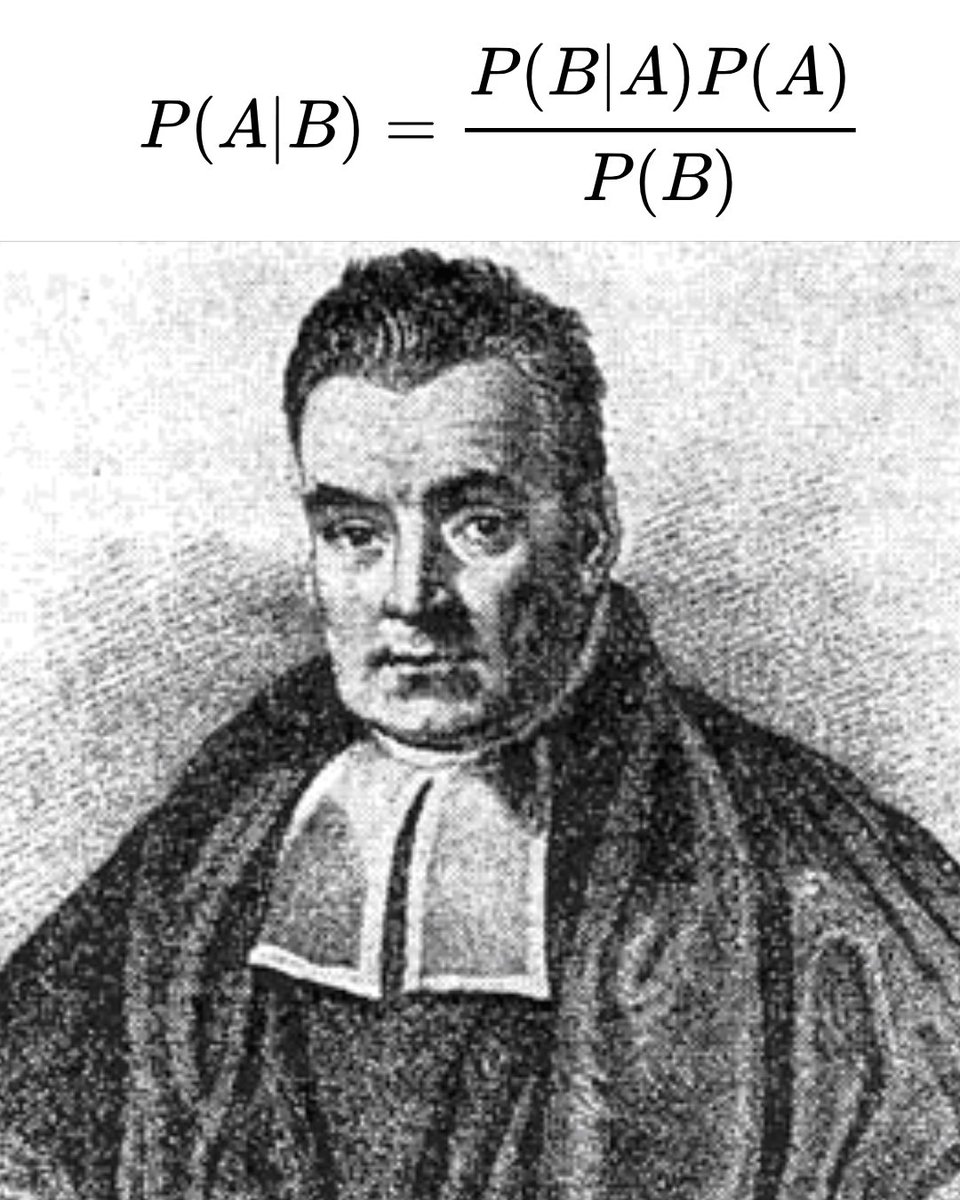
Bayes’ theorem is probably the single most important thing any rational person can learn.
So many of our debates and disagreements that we shout about are because we don’t understand Bayes’ theorem or how human rationality often works.
Bayes’ theorem is named after the 18th-century Thomas Bayes, and essentially it’s a formula that asks: when you are presented with all of the evidence for something, how much should you believe it?
Bayes’ theorem teaches us that our beliefs are not fixed; they are probabilities. Our beliefs change as we weigh new evidence against our assumptions, or our priors. In other words, we all carry certain ideas about how the world works, and new evidence can challenge them.
For example, somebody might believe that smoking is safe, that stress causes mouth ulcers, or that human activity is unrelated to climate change. These are their priors, their starting points. They can be formed by our culture, our biases, or even incomplete information.
Now imagine a new study comes along that challenges one of your priors. A single study might not carry enough weight to overturn your existing beliefs. But as studies accumulate, eventually the scales may tip. At some point, your prior will become less and less plausible.
Bayes’ theorem argues that being rational is not about black and white. It’s not even about true or false. It’s about what is most reasonable based on the best available evidence. But for this to work, we need to be presented with as much high-quality data as possible. Without evidence—without belief-forming data—we are left only with our priors and biases. And those aren’t all that rational.
@Appyg99 Overly unrealistic violence?
Do you think violence is "okay just one blow to your head" in real life??? And that's what Rehman Dakait did in real life??
You are either negligent towards reality or you just have questionable taste
one of my favourite quotes i discovered this week:
"if the rain that touches your skin travelled miles to find you, then so will everything that is meant for you"