In my latest paper published this month (with my amazing co-authors not on x), we examined the effects of extraverted behavior on trust in a crowdfunding context.
Available here: https://t.co/3AEKAAzWRu
As a statistician, I keep asking myself how all these AI people are dealing with the massive potential for catastrophic errors in critical analyses, and the answer keeps being they either didn't think about it at all, or they don't care.
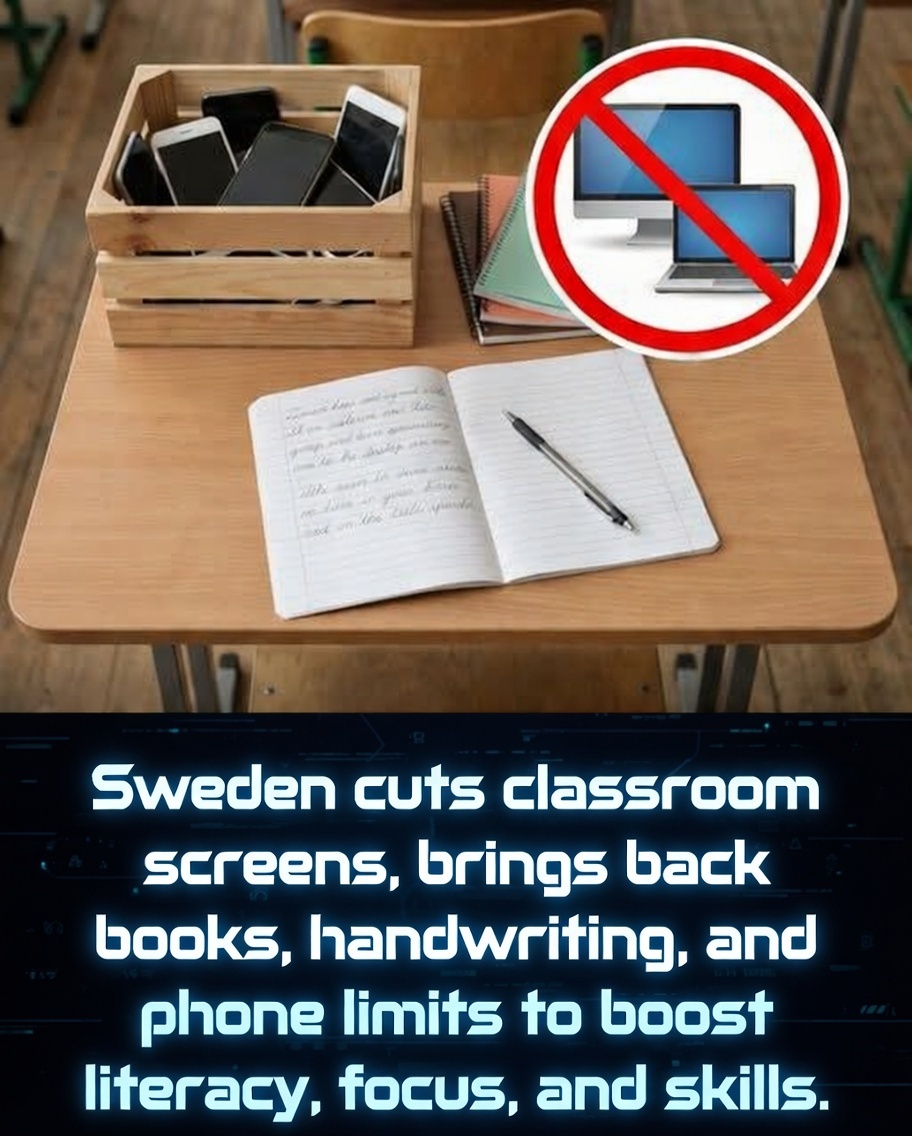
Sweden is committing more than €100 million to a sweeping classroom overhaul: replacing tablets and screens with traditional printed textbooks to help reverse falling student performance and sharpen focus.
After more than a decade of embracing digital-first education, Swedish authorities are now pivoting back to paper-based learning. Official data and recent studies cited by the Ministry of Education show that prolonged screen use in class has been linked to shorter attention spans, weaker reading comprehension, and reduced critical-thinking abilities.
Research consistently finds that reading on illuminated screens requires greater mental effort and invites more distractions compared to the calm, linear experience of physical books—factors believed to have contributed to declining academic outcomes in recent years.
Under the new plan, every student will receive printed textbooks for all core subjects, restoring books as the central learning tool. Digital devices and online resources will remain available as supportive tools, but they will no longer dominate daily instruction.
This bold €100+ million investment signals Sweden’s leadership in rethinking the role of technology in education. It underscores a broader, growing recognition worldwide: while screens provide speed and access, the hands-on, distraction-free engagement of physical books supports deeper concentration, stronger memory retention, and more effective long-term learning.
By choosing paper over pixels, Sweden is charting a path toward a more balanced, evidence-informed classroom future—one that puts proven pedagogical principles ahead of unchecked digital trends.
@JohnHolbein1 Thanks for posting this. I hate this reviewer critique. Where’s the so what? Often the so what is a bunch of papers are building research on these untested assumptions. We’re testing them. That seems valuable, even if unsurprising.
@SandroAmbuehl@JohnHolbein1 A lot of research is built on “obvious” assumptions. Then years later (occasionally) a grad students tests a core assumption in the field and it turns out to be false or at least nuanced.
It’s good for building a career!
Before saying “duh”/“that’s not surprising” to a study, remember science is not meant to surprise you.
It’s shocking how many (supposedly) very sophisticated people don’t seem to realize this!
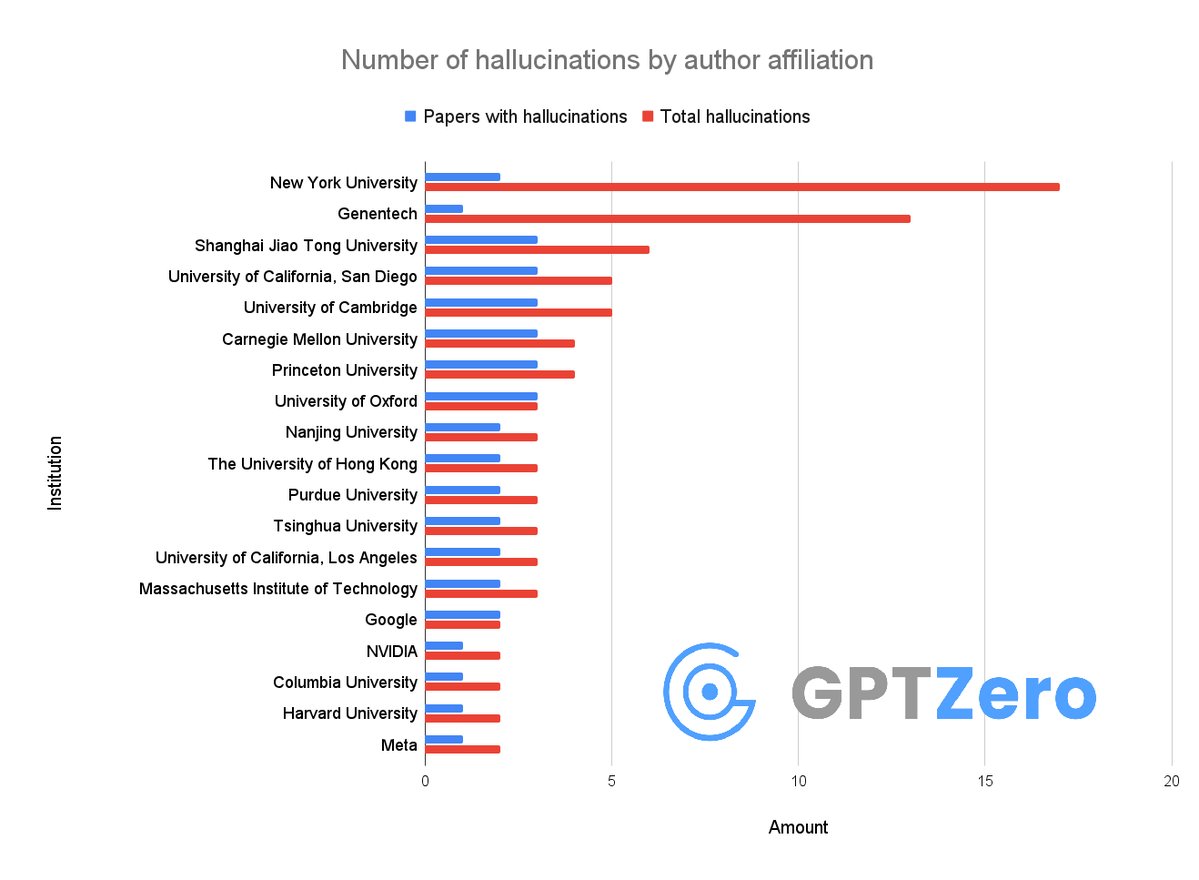
Okay so, we just found that over 50 papers published at @Neurips 2025 have AI hallucinations
I don't think people realize how bad the slop is right now
It's not just that researchers from @GoogleDeepMind, @Meta, @MIT, @Cambridge_Uni are using AI - they allowed LLMs to generate hallucinations in their papers and didn't notice at all.
It's insane that these made it through peer review👇
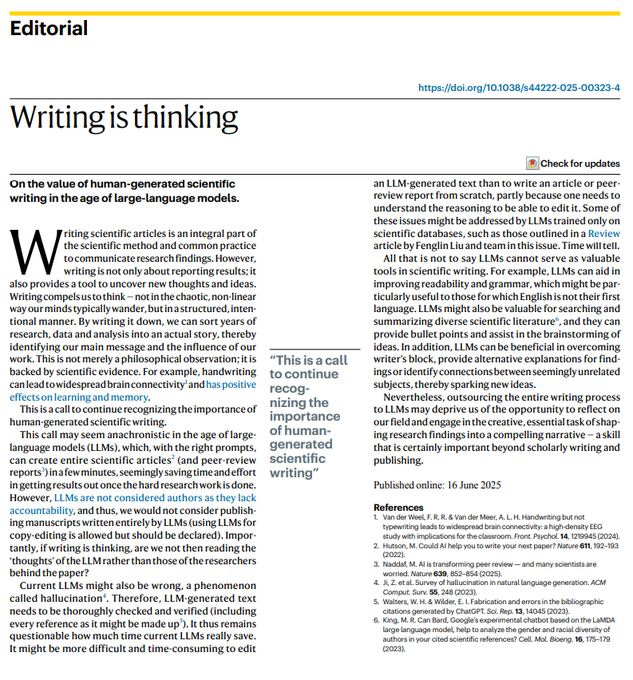
Writing is thinking
Outsourcing the entire task of writing to LLMs will deprive us of the essential creative task of interpreting our findings and generating a deeper theoretical understanding of the world.
IMO it should be considered quite rude in most contexts to post or send someone a wall of 100% AI-generated text. “Here, read this thing I didn’t care enough about to express myself.”
@JustinWolfers The reliance on plentiful and easy student loans is likely a key driver of the massive increases in tuition costs and run-away administrative and facilities bloat.